

What if the very tool meant to protect your health was actually destroying your skin's primary line of defence? For many, searching for the best hand sanitiser for eczema feels like an impossible trade-off between infection control and physical comfort. You likely know the sharp sting of alcohol hitting a fresh crack in your skin, or the frustration of watching your hands bleed after a day of following standard hygiene protocols.
We believe that effective disinfection and skin barrier integrity shouldn't be mutually exclusive. It's a common misconception that only alcohol-based gels can kill germs effectively, yet professional-grade, alcohol-free solutions are now leading the way in both safety and efficacy. By choosing the right formulation, you can maintain rigorous hygiene standards without the trauma of a painful flare-up.
This guide explores our top professional picks for 2026, including advanced options, such as the Serenity Alcohol Free Hand Sanitiser from Serenity Chemicals Limited. You'll discover how to protect your health whilst keeping your skin barrier clear, calm, and resilient. We'll examine the science behind these formulations to give you total confidence in your daily hygiene routine, ensuring your hands stay protected and pain-free.
Key Takeaways
- Understand why traditional ethanol-based gels compromise the skin barrier and how professional alcohol-free alternatives provide protection without causing irritation.
- Discover the specific criteria for selecting the best hand sanitiser for eczema, focusing on pH-balanced formulations that support your skin’s natural defences.
- Learn to distinguish between fragrance-free and unscented labels to avoid the hidden chemical irritants that frequently trigger painful skin reactions.
- Master the professional Sanitise and Shield method to maintain rigorous hygiene standards during active flares without causing further damage.
- Explore how Serenity Alcohol Free Hand Sanitiser delivers a 99.99% kill rate whilst remaining gentle enough for high-frequency use on sensitive skin.
Why Traditional Hand Sanitisers Trigger Eczema Flares
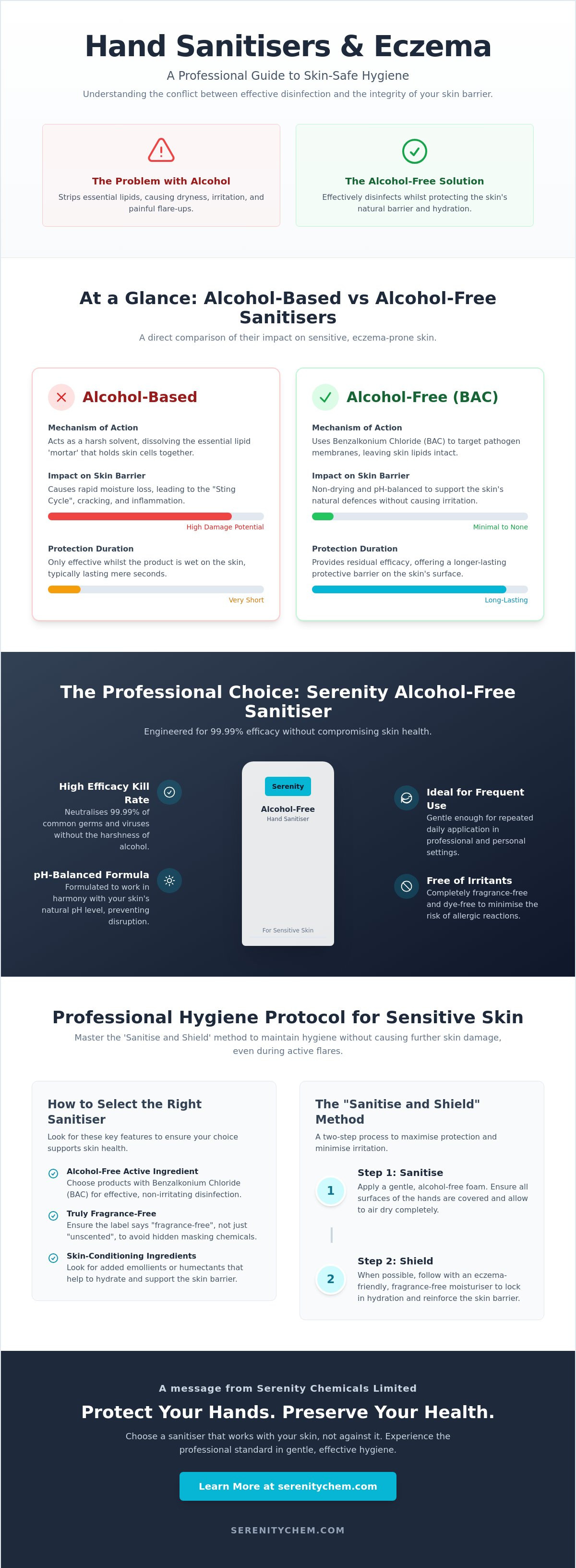
Most people reach for a bottle of clear gel without a second thought. For those with eczema, this simple act of hygiene can feel like a high-stakes gamble. Traditional sanitisers rely heavily on ethanol or isopropyl alcohol to neutralise pathogens. Whilst effective at killing bacteria, these high concentrations of alcohol are inherently aggressive to human tissue. Finding the best hand sanitiser for eczema requires understanding why these standard formulations often fail the skin they are meant to protect.
Alcohol is a powerful solvent. When it touches your skin, it doesn't just target germs; it dissolves the essential lipids that hold your skin cells together. This process triggers what many call the "Sting Cycle". If your skin is already cracked or broken, the alcohol penetrates deep into the dermis, causing immediate, sharp pain and further inflammatory damage. This isn't just a temporary sensation; it's a signal that your skin's structural integrity is being compromised.
The Stratum Corneum and Eczema
Think of your skin's outermost layer, the stratum corneum, as a brick wall. The skin cells are the bricks, and the lipids are the mortar. In a healthy barrier, this wall keeps moisture in and irritants out. Eczema-prone skin often has a genetic deficiency in this "mortar", making the wall naturally porous. When you apply alcohol, the rapid evaporation pulls even more moisture from the skin. Understanding the science of hand sanitizers reveals that the cooling sensation people often enjoy is actually the sound of your skin's hydration escaping into the air. For an eczema sufferer, this rapid moisture loss leads to immediate tightening and eventual cracking.
Signs Your Sanitiser is Damaging Your Skin
It's vital to recognise when your hygiene routine has crossed the line from protection to provocation. Simple dryness is common, but you should look for more specific indicators of chemical damage. If you notice these symptoms, your current product is likely too harsh:
- Erythema: Intense redness that persists long after the product has dried.
- Fissuring: Small, painful cracks, particularly around the knuckles or fingertips.
- Flaking: Large patches of skin peeling away, indicating a severely compromised barrier.
Distinguishing between a standard eczema flare and irritant contact dermatitis is difficult, but the timing is usually the giveaway. If the irritation is localised exactly where you apply the gel, it's likely a direct chemical reaction. If you notice bleeding or weeping, you should stop using alcohol-based products immediately. Chronic use leads to cumulative irritation that can keep your skin in a state of permanent inflammation. This is why many healthcare professionals now suggest switching to the best hand sanitiser for eczema, which prioritises barrier protection alongside germ-killing power.
The Science of Skin-Friendly Disinfection: Alcohol-Free Alternatives
Switching to an alcohol-free alternative isn't just about avoiding the immediate pain of a flare-up. It's about choosing a different chemical mechanism that respects the complex biology of your skin. Most professional alcohol-free sanitisers utilise Benzalkonium Chloride (BAC) as their active ingredient. Unlike ethanol, which dissolves the skin's protective lipids, BAC is a quaternary ammonium compound that targets the lipid membranes of pathogens specifically. This means it can neutralise bacteria and viruses whilst leaving your skin's natural "mortar" intact.
One of the most significant advantages of BAC is its residual efficacy. Alcohol is only active whilst it's wet on your hands. Once it evaporates, which happens in seconds, its protective qualities vanish. In contrast, BAC remains on the skin's surface, providing ongoing protection for a longer period. This reduces the need for constant reapplication, which is a major factor in preventing the cumulative irritation that leads to chronic dermatitis. When looking for the best hand sanitiser for eczema, this persistence is a vital feature to consider.
Foam formulations further enhance this benefit. Gels often require thickeners and polymers to maintain their consistency, and these additives can trap irritants against the skin. Foam spreads more easily across the surface, requiring less mechanical friction during application. This is particularly important for those with active eczema lesions where excessive rubbing can trigger further inflammation.
Alcohol vs. Alcohol-Free: A Technical Comparison
When evaluating the best hand sanitiser for eczema, the primary technical difference lies in the contact time. For a sanitiser to achieve a high "Log Reduction" (the mathematical measurement of germ-killing power), the active ingredient must remain in contact with the pathogen. Alcohol evaporates so quickly that it often fails to meet the required contact time unless used in excessive amounts. Professional alcohol-free solutions are formulated to stay active on the skin without the drying "flash-evaporation" effect. You can find more detailed data on these performance metrics in our Alcohol-Free Hand Sanitiser UK: The Professional Guide (2026).
Understanding EN 14476 and Antiviral Standards
There is a persistent myth that alcohol-free products are less effective against viruses. In the UK, the benchmark for virucidal efficacy is the EN 14476 standard. This rigorous testing ensures that a product can neutralise enveloped viruses, including coronaviruses and influenza. Modern BAC-based formulas are specifically engineered to meet these 2026 benchmarks. Whilst the FDA safety guidelines often focus on alcohol concentrations for consumer products, professional UK formulations are held to these specific EN benchmarks to ensure high-level protection. If you have questions about specific skin sensitivities or technical specifications, please get in touch with our technical team.
Evaluating the Best Hand Sanitiser for Eczema in 2026
Selecting the best hand sanitiser for eczema in 2026 requires a more discerning eye than simply grabbing the first bottle on the shelf. As standards for antiviral efficacy evolve, the focus has shifted toward formulations that provide clinical-grade protection without compromising the skin's delicate ecosystem. The first hurdle for many is navigating the nuances of ingredient labels, specifically the difference between fragrance-free and unscented products. Whilst unscented suggests a lack of smell, it often contains masking fragrances to hide the scent of raw chemicals. For eczema sufferers, these masking agents are frequent triggers for contact dermatitis. You should always opt for fragrance-free to ensure no aromatic compounds have been added to the mix.
The pH level of a product is equally critical for long-term skin health. Healthy skin maintains an acidic mantle with a pH of approximately 5.5. Many standard sanitisers are either too alkaline or too acidic, which strips the skin's natural defences and invites irritation. A professional-grade solution should be pH-balanced to mirror the skin's natural state, helping the barrier remain resilient even with high-frequency use. Additionally, whilst secondary ingredients like glycerin and aloe vera provide much-needed hydration, you must be cautious of natural additions. Essential oils such as lavender or tea tree might sound soothing, but they contain volatile organic compounds like limonene that can be highly sensitising to broken or inflamed skin; however, if you are looking for pure extracts for non-topical aromatherapy, you can explore Lavender Essential Oil from Freshskin Beauty Ltd.
Key Criteria for Professional Selection
When selecting a sanitiser for a business or high-use environment, technical certifications are non-negotiable. The product must meet EN 1500 for bactericidal hand rubs and EN 14476 for virucidal activity. These 2026 benchmarks ensure that the formula is capable of neutralising modern pathogens whilst remaining safe for the user. Foam delivery systems are generally preferred over gels because they provide even coverage without leaving a sticky, film-like residue. These residues can often trap environmental allergens against the skin, leading to secondary irritation throughout the day.
Top Features to Look For
The best hand sanitiser for eczema should also be dye-free and colour-free. Artificial pigments serve no functional purpose in disinfection and only increase the risk of an allergic reaction. Beyond skin health, consider the practical and ethical aspects of the formulation:
- Non-flammable: Alcohol-free formulas are inherently safer for bulk storage and use in professional settings, removing the need for specialised fire-safety cabinets.
- Ethical Manufacturing: Look for cruelty-free and vegan-friendly certifications, which often indicate a more principled approach to chemical sourcing and safety testing, similar to the standards used by Essencera for their clean grooming range.
- Stability: Ensure the formula is stable in various dispenser types to prevent the active ingredients from degrading or separating over time.
By focusing on these specific criteria, you can ensure that your hygiene routine supports your skin's health rather than working against it. Professional-grade products prioritise this balance, offering peace of mind for those managing chronic skin conditions.
In addition to topical care, maintaining internal health can further support skin resilience; for instance, Artemis Curated offers a specialised range of supplements designed to support women through various health needs and life stages.
Managing High-Frequency Hand Hygiene with Sensitive Skin
Maintaining a high standard of hygiene is a non-negotiable requirement in many professional settings, yet for those with chronic skin conditions, the frequency of application is often the primary trigger for a flare-up. When you are required to clean your hands dozens of times a day, the cumulative effect on your skin barrier can be devastating. Managing this requires a strategic approach that goes beyond simply choosing the best hand sanitiser for eczema; it involves a total rethink of how you protect your skin throughout the working day.
If you are dealing with active eczema lesions, your priority should be avoiding further chemical trauma. Traditional alcohol gels will cause immediate inflammation in broken skin. Instead, use a professional alcohol-free foam and apply it with a gentle patting motion rather than vigorous rubbing. To maintain long-term skin integrity, we recommend the "Sanitise and Shield" method. This involves applying your sanitiser first to ensure pathogens are neutralised, followed immediately by a fragrance-free emollient. High-quality products from Synergy Therm Cosmetics are ideal for this secondary layer, as they lock in moisture and provide a physical barrier against environmental irritants, helping to prevent the "mortar" of your skin from being stripped away.
From a corporate perspective, providing eczema-friendly hygiene options is a vital part of fulfilling health and safety obligations. Under UK safety regulations, employers have a duty of care to protect staff from foreseeable harm, which includes the risk of occupational dermatitis. By organising workspaces to include accessible, non-irritating sanitisation stations, businesses can significantly reduce staff absenteeism and improve overall comfort. It's a proactive step that demonstrates a commitment to both safety and employee well-being.
Guidance for Healthcare and Education Workers
Staff in healthcare and education settings often face 50 or more hygiene events per day. At this level of frequency, skin breakdown is almost inevitable if you are using harsh, ethanol-based products. Consistency is your best defence. Many workers make the mistake of using their own gentle product at their desk but then using whatever industrial gel is available in common areas. This "brand hopping" exposes your skin to a cocktail of different preservatives and thickeners. We encourage healthcare and education professionals to advocate for the employer-led provision of alcohol-free alternatives to ensure every sanitisation event is as gentle as possible.
Bulk Procurement for Sensitive Environments
For organisations managing large facilities, switching to the best hand sanitiser for eczema is often more cost-effective when handled through bulk procurement. Alcohol-free foam is typically more efficient than liquid or gel; a single bulk container provides significantly more applications because the foam expands during delivery. Transitioning to refillable wall-mounted systems also reduces plastic waste and ensures the product remains stable and uncontaminated. If your organisation needs to support staff with sensitive skin, you can contact Serenity for bulk eczema-friendly sanitiser solutions tailored to your specific environment.
Serenity Alcohol-Free: The Professional Choice for Eczema-Prone Skin
Serenity Alcohol Free Hand Sanitiser represents the gold standard for organisations prioritising skin health. Our proprietary formulation is the result of rigorous chemical engineering designed to solve the conflict between hygiene and comfort. By removing the aggressive solvents found in traditional gels, we've created a product that many consider the best hand sanitiser for eczema available to professional users today. It isn't just a safer alternative; it's a superior technical solution for high-frequency environments.
Our chemical expertise ensures that removing alcohol doesn't mean compromising on safety. Serenity's formula achieves a 99.99% kill rate against a broad spectrum of bacteria and enveloped viruses. This level of protection is delivered through a gentle, non-greasy foam that respects the skin's natural biology. Our foam is completely dye-free and fragrance-free, eliminating the most common secondary triggers for allergic reactions. This is why UK businesses, from care homes to corporate offices, trust Serenity to protect their most sensitive staff and clients without causing physical distress.
The Serenity Advantage for Sensitive Skin
What sets our formulation apart is the inclusion of advanced skin-conditioning agents. These ingredients are selected to mimic the natural lipids found in healthy skin, providing an immediate soothing effect upon application. Because the formula is non-stinging, it's particularly suitable for children and individuals with broken or cracked skin who would otherwise avoid hand hygiene due to pain. As a UK-based manufacturer, we maintain total control over our supply chain and production. This ensures that every batch meets the highest safety standards and regulatory benchmarks for 2026.
How to Switch Your Organisation to Serenity
Transitioning your workplace from alcohol-based gels to our skin-friendly foam is a straightforward process. The best hand sanitiser for eczema is most effective when it's easily accessible at the point of need. Our products are designed for maximum dispenser compatibility, fitting seamlessly into most existing wall-mounted units or portable stations. We provide flexible bulk supply options to suit organisations of all sizes, ensuring you can maintain a consistent hygiene standard across your entire facility.
Making the switch helps reduce the risk of occupational dermatitis and improves overall hand hygiene compliance amongst your team. If you're ready to provide a more responsible, pain-free solution for your staff, we're here to help you manage the transition. Enquire about our eczema-safe hand sanitiser range today to learn more about our professional procurement options.
Prioritising Long-Term Skin Resilience
Maintaining rigorous hygiene standards shouldn't come at the cost of physical comfort or skin health. By understanding the science of the skin barrier and the technical advantages of alcohol-free formulations, you can break the cycle of inflammation. The best hand sanitiser for eczema is a tool that supports your daily routine rather than disrupting it with pain or irritation. It's about choosing solutions that respect the complex biology of the hands whilst delivering uncompromising protection against modern pathogens; for those who appreciate this level of clinical-grade care, you can discover GLI GLI and their professional at-home whitening solutions.
Serenity provides a principled approach to disinfection. Our UK manufactured, dye and fragrance-free formula is EN 14476 certified, ensuring your organisation remains compliant and your staff stay protected. Transitioning to a professional foam system is a simple yet impactful way to foster a healthier, more inclusive workspace for everyone. If you're ready to upgrade your hygiene protocol, Request a Professional Quote for Eczema-Friendly Hand Sanitiser today. Your team deserves the confidence of clear, healthy skin every day.
Frequently Asked Questions
Is alcohol-free hand sanitiser as effective as alcohol-based for eczema sufferers?
Professional alcohol-free sanitisers are exceptionally effective and provide a reliable alternative for those searching for the best hand sanitiser for eczema. Modern formulations using Benzalkonium Chloride (BAC) achieve a 99.99% kill rate against bacteria and enveloped viruses. These products provide high-level protection whilst respecting the skin's natural lipids, avoiding the destructive drying effects associated with high-concentration ethanol gels.
Can I use hand sanitiser if my eczema is bleeding or cracked?
You can use professional alcohol-free sanitiser on cracked skin, but you must avoid alcohol-based gels entirely. Alcohol causes immediate pain and chemical trauma to open wounds, which can delay the healing process. An alcohol-free foam provides a non-stinging way to neutralise pathogens without the "sting cycle." If your hands are weeping or showing signs of infection, it is best to seek medical advice before applying any hygiene product.
What ingredients should I avoid in hand sanitiser if I have atopic dermatitis?
You should primarily avoid ethanol, isopropyl alcohol, synthetic fragrances, and artificial dyes. These are the most common triggers for atopic dermatitis flares and contact dermatitis. Be cautious of "natural" additions like essential oils. Whilst they sound soothing, compounds like limonene found in citrus or lavender oils can be highly sensitising to broken skin. Always look for products specifically labelled as fragrance-free.
Does alcohol-free hand sanitiser kill viruses like the flu or norovirus?
Professional alcohol-free sanitisers are effective against many viruses, including the flu and coronaviruses, provided they meet the EN 14476 antiviral standard. It is important to note that norovirus is highly resistant to most sanitisers, including standard alcohol-based ones. In cases of known gastric illness, thorough hand washing with soap and water remains the most effective method for total decontamination, ideally using a gentle option like Glamorously Her to prevent further irritation.
How often can I use alcohol-free sanitiser without drying out my hands?
You can use alcohol-free formulations as often as your routine requires without the typical drying effect. Because these products don't rely on rapid evaporation, they don't pull moisture from the skin's surface. The residual protection offered by Benzalkonium Chloride also means your hands stay protected for longer periods, which may reduce the total number of applications needed throughout a busy working day.
Is foam hand sanitiser better than gel for sensitive skin?
Foam is significantly better than gel for sensitive skin types. Gels often contain thickeners and polymers that leave a sticky residue, which can trap environmental pollutants and allergens against the skin. Foam spreads easily with minimal friction, reducing the mechanical stress on delicate or inflamed areas. This makes foam the preferred delivery method when selecting the best hand sanitiser for eczema.
Are Serenity hand sanitisers safe for children with eczema?
Serenity hand sanitisers are safe and highly suitable for children with eczema. The non-sting, alcohol-free formula removes the fear of pain often associated with hand hygiene in schools or nurseries. Because the liquid is non-flammable and dye-free, it provides a safer and more responsible solution for young skin that is prone to irritation or frequent flares.

Hand Hygiene in Food Preparation Areas: The 2026 Professional Guide
The Food Standards Agency estimates that foodborne illness costs the UK economy approximately £9 billion every year, with a s...

Sanitising Commercial Kitchen Hard Surfaces: The Professional UK Guide (2026)
Did you know that the average fine for food hygiene offences in the UK has more than tripled since 2016, now reaching over £7...