

With salmonella infections in England reaching a decade-high of 10,406 cases in 2025, the hidden risks of outdoor dining have never been more apparent. It's a sobering statistic that highlights why hygiene must be your primary priority during the warmer months. We all value the tradition of picnics in the British countryside; however, the absence of running water and the difficulty of maintaining surface hygiene can create genuine anxiety about food poisoning. You deserve to enjoy your meal without the worry of cross-contamination or the discomfort of sticky, drying hand sanitisers.
In this guide, you'll discover how to organise a perfectly safe and hygienic outdoor experience with expert advice on hand hygiene and surface protection. We'll provide you with a clear checklist for food safety, including how to manage temperature control and sanitise reusable hampers effectively. By following these professional standards, you can ensure your summer gatherings are defined by peace of mind and reliable protection rather than health risks. This methodical approach allows you to focus on the experience, knowing that every safety detail is managed.
Key Takeaways
- Identify the unique hygiene challenges of outdoor dining and how to address them effectively during picnics when running water is unavailable.
- Learn why sanitising reusable hampers and shared surfaces is a critical step in preventing the spread of harmful bacteria before you eat.
- Discover the practical advantages of alcohol-free hand sanitisers, which offer non-flammable safety and gentle protection for frequent use in the sun.
- Implement a methodical preparation checklist that ensures every container and utensil is professionally cleaned and ready for safe food transport.
The British Picnic Tradition: Why Hygiene is the Secret Ingredient
A picnic is traditionally defined as a meal taken outdoors, typically in scenic surroundings such as parks, lakesides, or coastal cliffs. Through The British Picnic Tradition, we have developed a unique way to enjoy our natural landscapes whilst socialising with friends and family. However, these excursions present distinct logistical challenges that are often underestimated. Unlike dining in a restaurant or at home, outdoor dining involves a complete lack of running water and soap. This environment requires a more disciplined approach to cleanliness than many planners realise, as the usual safeguards of a domestic kitchen are entirely absent.
The Evolution of Outdoor Dining in the UK
Our relationship with eating al fresco has shifted significantly over the centuries. From the elaborate Victorian feasts that required a small army of servants to modern-day park gatherings and regattas, the spirit of the event remains the same. Yet, our expectations for food safety have increased alongside our appreciation for the outdoors. Today, there is a strong trend towards using high-quality reusable hampers and sustainable containers. Whilst these items are environmentally responsible, they require meticulous hygiene maintenance. Residual food particles or moisture trapped in a wicker basket or fabric lining can become a breeding ground for bacteria between uses, making thorough sanitisation essential before each outing.
Common Hygiene Risks When Eating Al Fresco
Summer temperatures in the UK create the ideal environment for rapid bacterial growth. Perishable items can quickly become hazardous if they aren't kept at the correct temperatures or handled with clean hands. The risk often begins before the first bite is taken. Germs are easily transferred from shared public surfaces, such as weathered wooden picnic benches or park gates, directly to your food. If you don't have access to traditional wash centres, hand sanitisation becomes the most critical line of defence against cross-contamination. Public spaces are high-traffic areas, and assuming a surface is clean just because it looks dry is a common mistake that can lead to preventable illness.
Too often, hygiene is overlooked in favour of complex menu planning or aesthetic presentation. This oversight can lead to an increased risk of illness that overshadows the enjoyment of the day. Modern picnics require a professional approach to sanitisation to ensure the safety of every guest. By prioritising effective surface protection and hand hygiene, you can provide genuine peace of mind for your family and friends. It's about moving beyond basic preparations and adopting a principled strategy for outdoor safety that respects both the tradition and the health of those participating.
Essential Picnic Hygiene: Protecting Your Health Outdoors
Food safety begins long before the first sandwich is packed. It starts with the hands that prepare the meal and continues with the surfaces they touch. While many people focus on the freshness of their ingredients, the technical method of handling those ingredients determines the actual safety of the meal. Practising Essential Picnic Hygiene ensures that common pathogens don't find a way into your basket. This requires a shift from casual preparation to a more methodical, professional approach to cleanliness.
Hand Hygiene Without Running Water
Many people mistakenly rely on wet wipes during picnics. However, these products are often designed for cosmetic cleaning rather than microbial elimination. Wipes can move visible dirt around, but they frequently fail to kill the harmful bacteria that cause food poisoning. Hand sanitisers play a critical role in creating a safe dining environment when traditional wash centres are miles away. To ensure full protection, you must apply enough product to cover all surfaces of your hands. Rub the solution between your fingers, over the backs of your hands, and around your fingernails until completely dry. This process allows the active ingredients the necessary contact time to work effectively against germs.
Sanitising Portable Surfaces and Equipment
Public tables in parks or at lakesides are high-risk zones for cross-contamination. These surfaces are exposed to the elements and high foot traffic, often harbouring bacteria from previous users or local wildlife. Using a professional antibacterial surface spray UK standards approve allows you to establish a safe zone on any weathered bench. Simply spraying and wiping the area before laying out your spread provides a reliable barrier against environmental germs.
Your equipment also requires rigorous attention. Cool bags, hampers, and reusable food containers need thorough disinfection both before and after use. Moisture trapped in the lining of a cool box can lead to bacterial growth over time. You should also consider the following equipment safety steps:
- Disinfect the interior and handles of your picnic hamper before packing.
- Ensure all cutlery is stored in a clean, sealed wrap to prevent contact with the basket lining.
- Designate specific serving utensils for each dish to prevent germs from spreading amongst the group.
Choosing the right hygiene products involves balancing technical efficacy with safety for your family. If you are unsure which formulations are best suited for your specific outdoor activities, you can contact our specialist team for expert guidance. Taking these principled steps ensures your summer remains focused on enjoyment and well-being.
Choosing the Right Sanitising Solutions for Your Picnic
When selecting hygiene products for picnics, the choice of formulation is as important as the efficacy itself. Many high-street alternatives prioritise pleasant fragrances or low price points, which can sometimes come at the expense of technical performance. Professional-grade formulations are developed to meet specific safety standards, providing a level of protection that is essential when you're dining in environments without controlled sanitation. Selecting the right solution also involves considering the context of your event, such as whether you'll be using portable stoves or managing the needs of children with sensitive skin.
The Advantages of Alcohol-Free Hand Sanitiser
One of the most significant advancements in outdoor hygiene is the rise of alcohol free hand sanitiser UK professionals now recommend. Traditional alcohol-based gels can be harsh, stripping the skin of its natural oils and causing irritation after multiple applications. For a long summer afternoon where you might sanitise your hands several times, a water-based, alcohol-free formula is far more sustainable for skin health. These formulations are non-drying and remain effective whilst being gentle enough for all-day use.
Safety is another critical factor. Alcohol is highly flammable, which presents a genuine risk if you're using portable gas stoves or disposable barbecues. Choosing a non-combustible sanitiser removes this hazard entirely. This principled choice ensures that your hygiene routine doesn't introduce new risks to your gathering, providing a dependable solution for families and event organisers alike.
Multi-Surface Protection for Outdoor Dining
The surfaces you use to prepare and serve food must be treated with a solution that is both powerful and safe for consumption areas. It's vital to use a food-safe kitchen surface sanitiser that doesn't leave harmful chemical residues on your plates or cutlery. These professional products are designed to be effective against a broad spectrum of pathogens whilst remaining non-toxic.
According to The Ultimate Picnic Hygiene Checklist, preventing cross-contamination is the most effective way to stop foodborne illness. Professional sprays often provide a level of residual protection, helping to maintain a clean environment even after the initial application. This is particularly useful in dusty or high-traffic outdoor settings where germs can be easily reintroduced to the table.
Finally, we must consider our environmental responsibility. When you're cleaning equipment in nature, you should opt for biodegradable formulations that won't harm the local ecosystem. Using products that balance technical efficacy with ethical integrity allows you to enjoy the British countryside whilst preserving it for future excursions. This methodical approach to product selection ensures that your hygiene standards are as high outdoors as they are in a professional kitchen.
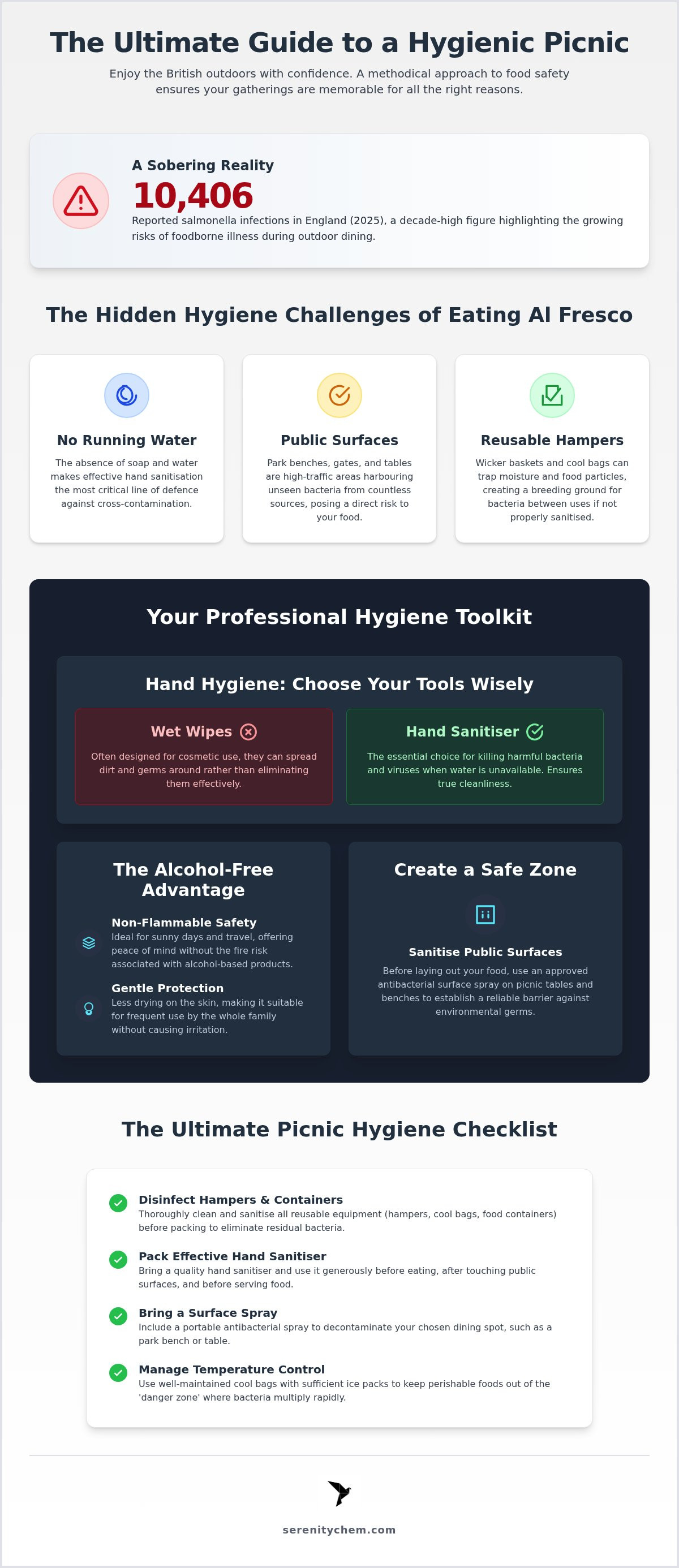
The Ultimate Picnic Hygiene Checklist
A successful outdoor gathering requires more than just a well-curated menu. To ensure your event is both safe and enjoyable, you need a structured hygiene protocol that begins in your kitchen and continues until the final item is unpacked at home. This methodical approach transforms picnics from high-risk dining scenarios into professionally managed, safe experiences. By following a clear sequence of preparation and protection, you can eliminate the variables that often lead to foodborne illness.
- Prepare: Disinfect all reusable containers and the hamper itself before packing. Residual moisture from previous trips can harbour bacteria that thrive in the warmth of a summer day.
- Protect: Pack professional-grade hand sanitiser and an antibacterial surface spray at the very top of your bag for immediate access.
- Separate: Keep raw and cooked foods in sealed, sanitised compartments. Use airtight containers to ensure that juices or contaminants cannot migrate between different food groups.
- Cleanse: Sanitise hands before every stage of food handling, including unpacking, serving, and eating. Consistency is the key to preventing cross-contamination.
- Dispose: Use a dedicated, sealable bag for all waste. This keeps your equipment clean and prevents attracting insects to your dining area.
Hamper Preparation and Maintenance
The internal environment of a picnic hamper or cool bag is a critical control point. If spills occur, you should wipe down the interior with a high-performance degreaser to remove oily residues that can protect bacteria from standard cleaners. Ice packs also require regular attention. They are frequently handled and then placed in damp environments; cleaning them after every use prevents mould growth during storage. It's a principled habit that ensures your cooling equipment remains a sterile environment for your perishables. Always organise your hamper so your hygiene supplies are the first items you reach for upon arrival.
During the Picnic: Real-Time Safety
Managing hygiene in the field during picnics requires constant vigilance. Public benches or picnic mats should be thoroughly wiped down before any food is laid out. If you're serving from shared platters, it's a responsible practice to encourage all guests to use a foam hand sanitiser before touching communal items. Foam formulations often provide better coverage and are easier to manage in outdoor settings. Keeping food covered whenever it's not being served protects it from insects and environmental dust, which are common vectors for germs. If you need assistance choosing the right professional products for your next event, you can get in touch with our hygiene experts for tailored advice.
Serenity Chemicals Limited: Your Partner for Safe Outdoor Dining
Serenity Chemicals Limited operates with a clear focus on integrity and technical excellence. As a UK-based manufacturer, we understand that the hygiene standards required in professional environments are just as necessary for your family outings. We provide solutions that bridge the gap between commercial-grade efficacy and consumer-friendly application. Our range is designed to offer dependable protection without the harsh side effects often associated with industrial cleaners. By choosing our formulations, you're opting for a principled approach to safety that respects both the user and the environment.
Our Serenity Alcohol Free Hand Sanitiser is a flagship example of this balance. It provides a gentle yet effective solution for all-day protection, ensuring that frequent application doesn't lead to skin irritation. Similarly, our multi-surface cleaners are engineered for professional efficacy but packaged in portable formats that are ideal for picnics. Whether you're wiping down a shared table or disinfecting a reusable hamper, our products deliver a thorough result every time. You can equip your next outdoor excursion with the essentials found on our professional cleaning chemicals list to ensure every base is covered.
Why Professionals Trust Serenity for Hygiene
Our commitment to quality standards involves rigorous testing and a refusal to compromise on safety. We develop formulations that prioritise user skin health whilst maintaining high kill rates for harmful bacteria. This is why professionals across various sectors rely on our products for their daily operations. When you use Serenity Chemicals Limited products, you gain the peace of mind that comes from using a solution designed for commercial-grade safety. We don't just sell products; we provide a reliable system for maintaining health and wellbeing in any setting. Our no-nonsense approach ensures that every bottle contains exactly what's needed for maximum protection.
How to Order Your Picnic Hygiene Essentials
Organising the hygiene logistics for your summer events is straightforward with our online platform. You can explore our full range of sanitisers and surface sprays from the comfort of your home. We offer several benefits for our customers:
- Bulk Buy Options: Perfect for large-scale picnics, garden parties, or corporate outings where consistency is key.
- Direct Shipping: We ship directly from our UK manufacturing facility, ensuring you receive the freshest chemical batches.
- Expert Support: Our team is available to help you select the most appropriate products for your specific safety requirements.
By ordering directly from the manufacturer, you're supporting ethical UK production whilst securing the highest standard of hygiene for your guests. We take our responsibility as a hygiene partner seriously, providing the tools you need for a stress-free and safe summer season. Trust in a brand that values long-term trust over short-term persuasion.
Elevating Your Outdoor Dining Standards
Maintaining high hygiene standards shouldn't be a secondary concern when planning your summer outings. By adopting a methodical approach to surface protection and hand hygiene, you can honour the tradition of outdoor dining without the shadow of health risks. The most successful picnics are those where safety is integrated seamlessly into the preparation process, from the initial disinfection of the hamper to the final hand sanitisation before the meal begins. This disciplined strategy provides the peace of mind necessary to truly enjoy the British countryside with your guests.
Serenity Chemicals Limited is dedicated to providing the technical solutions required for these unique environments. Our UK-manufactured range offers professional-grade efficacy whilst remaining alcohol-free and skin-safe. We believe that effective hygiene should be both powerful and responsible, ensuring your family is protected by principled formulations designed for commercial standards. Don't leave your summer safety to chance. Ensure your next picnic is perfectly safe with Serenity Hygiene Essentials. We look forward to helping you create a secure and enjoyable outdoor experience for every gathering.
Frequently Asked Questions
Is alcohol-free hand sanitiser as effective as alcohol-based ones for picnics?
Professional alcohol-free hand sanitisers are just as effective as alcohol-based alternatives for outdoor use. These formulations meet high safety standards whilst offering the added benefit of being non-flammable and non-toxic. This makes them a safer choice when you're using portable stoves or eating with your hands. They provide a reliable barrier against germs without the harsh drying effects of traditional gels, ensuring your skin remains healthy throughout the day.
How should I clean my picnic hamper after use to prevent bacteria growth?
You should clean your picnic hamper by removing all debris and wiping the interior with a dedicated sanitiser. Focus specifically on the corners and fabric linings where food particles and moisture tend to accumulate. Using Serenity Multi-Surface Cleaner ensures that any lingering bacteria are eliminated before storage. It is a principled habit to dry the hamper completely before closing it to prevent mould growth between summer excursions.
Can I use Serenity Multi-Surface Cleaner on food preparation boards?
Serenity Multi-Surface Cleaner is suitable for various hard surfaces, including food preparation boards. It is designed with professional efficacy in mind, allowing you to establish a safe prep area even in outdoor settings. Always ensure the board is wiped clean and allowed to dry before placing ingredients on it. This methodical step is essential for preventing the transfer of environmental contaminants during your picnics.
What is the best way to sanitise my hands if there is no water at the park?
The most effective way to sanitise your hands without water is to use a high-quality, alcohol-free foam sanitiser. Apply a sufficient amount to cover both hands and rub them together thoroughly, ensuring you reach between the fingers and under the nails. This process should continue until the skin is completely dry. This method provides a dependable level of protection that wet wipes alone cannot achieve in high-traffic park environments.
Are Serenity hygiene products safe for children to use during a picnic?
Serenity hygiene products are designed to be safe for the whole family, including children. Our alcohol-free formulations are non-stinging and gentle on sensitive skin, which is particularly important during long picnics where frequent application is necessary. They provide the same professional-grade protection as industrial sanitisers but without the harsh chemical odour or skin-stripping properties of alcohol, making them an ideal choice for younger guests.
How do I prevent cross-contamination when serving food from a shared hamper?
You can prevent cross-contamination by using dedicated serving utensils for every individual dish in your hamper. Avoid using the same spoon for raw salads and cooked meats, and ensure that all food remains in sealed containers until it is time to serve. Encouraging everyone to sanitise their hands before touching shared platters creates a protective environment that significantly reduces the risk of spreading harmful bacteria amongst your group.
Should I sanitise a public picnic table before eating on it?
You should always sanitise a public picnic table before laying out your food or equipment. These surfaces are exposed to the elements and frequent use, often harbouring high levels of bacteria from previous visitors or wildlife. Using Serenity Antibacterial Surface Spray provides immediate disinfection, turning a weathered wooden bench into a safe dining area. This simple, proactive measure is a cornerstone of responsible outdoor food safety.
How long does the protection from an antibacterial spray last on outdoor surfaces?
An antibacterial spray provides immediate disinfection upon application to kill existing pathogens on the surface. Whilst some professional formulations offer a degree of residual protection, outdoor conditions such as dust, wind, and high traffic can reduce this over time. For maximum safety, it is best to sanitise the surface immediately before you begin eating. This ensures that you are starting your meal with the highest possible hygiene standards.

Hand Hygiene in Food Preparation Areas: The 2026 Professional Guide
The Food Standards Agency estimates that foodborne illness costs the UK economy approximately £9 billion every year, with a s...

Sanitising Commercial Kitchen Hard Surfaces: The Professional UK Guide (2026)
Did you know that the average fine for food hygiene offences in the UK has more than tripled since 2016, now reaching over £7...