

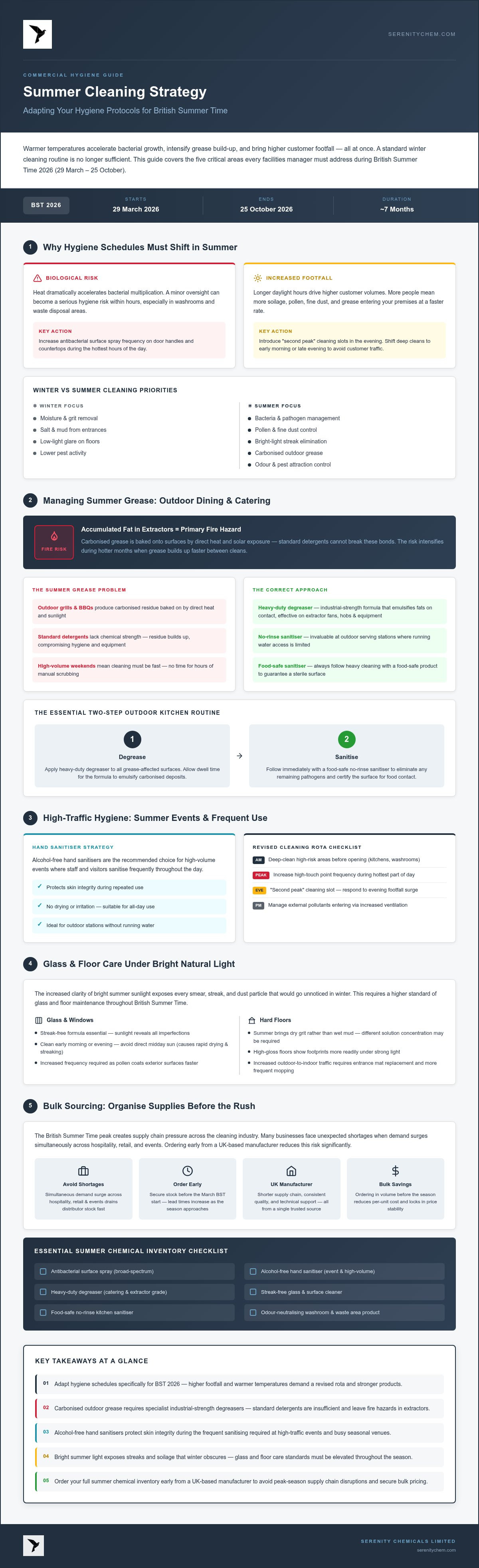
Could the rising mercury be the biggest threat to your business's reputation this season? As the British summer time officially begins, the shift in climate brings more than just longer evenings and increased footfall to your premises. Warmer temperatures create an ideal environment for rapid bacteria growth, whilst outdoor dining areas quickly accumulate stubborn grease from seasonal menus. Managing these hygiene challenges requires more than just a standard cleaning routine; it demands a strategic adaptation to protect both your staff and your visitors.
You likely already understand that a busy hospitality or retail environment during the peak season puts immense pressure on your cleaning protocols. It's difficult to maintain high standards when the volume of customers increases and the heat accelerates hygiene risks. This article will show you how to refine your commercial cleaning schedules to handle these unique seasonal pressures with confidence. We'll explore how to manage increased biological risks, tackle outdoor grease with precision, and ensure your chemical inventory is properly optimised for the busy months ahead.
Key Takeaways
- Learn how to adapt your hygiene schedules for the 2026 British summer time to manage increased footfall and the biological risks of warmer weather.
- Discover specialist methods for removing carbonised grease from outdoor dining areas and catering equipment to maintain high safety standards.
- Understand the advantages of alcohol-free hand sanitisers for protecting skin integrity during frequent use at high-traffic events.
- Master glass and floor care techniques that ensure a professional, streak-free finish even under the intense clarity of bright natural light.
- Explore why organising your chemical inventory early with a UK-based manufacturer helps you avoid seasonal supply chain disruptions.
The Transition to British Summer Time: Why Hygiene Schedules Must Shift
British Summer Time in 2026 begins on March 29th and concludes on October 25th. This period marks a significant shift for facilities managers across the country. It isn't just about the clocks moving forward; it's about the fundamental change in the operational environment. Longer daylight hours naturally encourage higher footfall in retail and hospitality sectors. As more people move between spaces, the volume of soilage and biological matter entering a building increases significantly.
Winter cleaning often focuses on moisture and grit removal. During the summer time, your priorities must pivot. You'll likely see an accumulation of fine dust and pollen, alongside increased grease levels in areas serving food. This seasonal transition requires a proactive adjustment of your chemical stock and staff training. You need to ensure standards don't slip as the temperature rises. Managing these environmental shifts is essential for maintaining a safe and professional atmosphere.
The Biological Impact of Warmer Weather
Heat accelerates the life cycle of many common pathogens. Bacteria can multiply significantly faster when ambient temperatures rise, turning a minor oversight into a hygiene risk within hours. This is particularly noticeable in washrooms and waste disposal areas. Heat intensifies unpleasant odours and can attract unwanted pests. To maintain a safe environment, it's essential to use a high-quality antibacterial surface spray UK businesses can rely on for broad-spectrum protection. Regular application on high-contact surfaces like door handles and countertops becomes a non-negotiable part of daily operations throughout the summer time months.
Adapting the Cleaning Rota for 2026
A static cleaning schedule rarely survives the summer peak. With daylight extending well into the evening, many businesses experience "second peaks" of activity that require a revised rota. Consider shifting deep-cleaning tasks to the early morning or late evening to avoid clashing with customer traffic. High-touch point frequency should be reviewed and likely increased during the hottest part of the day. Additionally, whilst surface cleaning is vital, don't overlook air quality. Increased ventilation is common in summer, but this also brings in more external pollutants. Your team should be briefed on managing these new entry points for dust and allergens. This ensures the indoor environment remains fresh and comfortable for everyone.
Managing Summer Grease: Solutions for Outdoor Dining and Catering
When the British summer time arrives, the hospitality sector shifts its focus to beer gardens and terraces. This transition increases the pressure on kitchen staff, as outdoor grills and BBQs produce high levels of carbonised grease. Unlike standard kitchen oils, this residue is often baked onto surfaces by direct heat and solar exposure, making it incredibly difficult to remove. Standard detergents often lack the chemical strength to break these bonds, leading to a build-up that compromises both hygiene and equipment efficiency.
High-volume service during peak weekends means cleaning must be fast and effective. You can't afford to spend hours scrubbing grills when the next service is just around the corner. Efficient grease management isn't just about aesthetics; it's a critical component of fire safety and pest control. Accumulated fats in extractor systems are a primary cause of commercial kitchen fires, a risk that only intensifies during the hotter months. Managing these deposits daily prevents long-term damage to expensive catering assets.
Heavy-Duty Degreasing for Hospitality
Selecting the right chemical for prep areas is vital for maintaining a productive kitchen. For stubborn, burnt-on deposits, Serenity Heavy Duty Degreaser provides the necessary industrial strength to emulsify fats on contact. It's particularly effective for deep-cleaning extractor fans, hobs, and heavy-duty catering equipment that faces constant use. Using professional-grade solutions ensures your team spends less time on manual labour and more time on service. It's also important to ensure your degreasing routine remains in compliance with a food safe sanitiser for commercial kitchens to guarantee a sterile environment after the heavy cleaning is done.
Sanitising Food Contact Surfaces
Speed is often the enemy of thoroughness in a busy kitchen. No-rinse sanitisers, such as Serenity Kitchen Sanitiser, are invaluable tools for outdoor serving stations where access to running water might be limited. These solutions allow for rapid turnaround of prep surfaces without the risk of leaving chemical residues that could taint food. Preventing cross-contamination is a priority when staff are moving between indoor kitchens and outdoor grills. To meet UK regulatory requirements, food-safe sanitisation is defined by the successful reduction of microorganisms to a safe level as validated by EN 1276 or EN 13697 standards.
Maintaining these standards during the height of the season ensures your business remains protected against health inspections and reputational damage. If you need assistance in auditing your current chemical stock for the upcoming peak, speak with our technical team for tailored advice on the best solutions for your summer time requirements.
High-Traffic Hygiene: Maintaining Safety During Summer Events
Summer events such as music festivals, county fairs, and outdoor markets present a complex challenge for facilities managers. Unlike permanent structures, these temporary environments often lack fixed plumbing and traditional hygiene infrastructure. When thousands of visitors congregate in marquees or around temporary stalls during the British summer time, the risk of cross-contamination rises sharply. Maintaining a safe environment in these settings requires a mobile, highly accessible sanitisation strategy that can withstand heavy use without failing.
Organising portable sanitisation stations is the first step in managing crowd hygiene effectively. These stations should be placed at every entry point, food service area, and near communal seating. Consistency is vital; if visitors find it easy to clean their hands, they're more likely to maintain good hygiene habits throughout the day. For event organisers, ensuring these stations remain stocked is a logistical priority that directly impacts the safety and comfort of every attendee.
The Case for Alcohol-Free Sanitisers
In the heat of July or August, frequent hand cleaning can take a toll on skin health. Traditional alcohol-based gels evaporate quickly in warm conditions, often leaving skin feeling dry, cracked, and irritated. This is particularly problematic for staff and visitors who may be sanitising dozens of times a day. Switching to a professional alcohol free hand sanitiser UK businesses prefer ensures that skin remains hydrated whilst providing robust protection against pathogens. These water-based formulations don't strip away natural oils, making them a much more responsible choice for long-term use during the summer time peak.
Surface Disinfection in Public Spaces
Temporary structures like marquees often feature high-touch points that are easily overlooked. Railings, foldable tables, and counter edges require frequent disinfection to prevent the spread of bacteria. Because warmer temperatures accelerate microbial growth, as discussed in our look at biological impacts, using a product with residual antibacterial properties is essential. This provides a layer of protection that continues to work between scheduled cleans. To manage these demands, event organisers should consider the following:
- High-Frequency Rotas: Increase cleaning intervals for communal dining tables and seating areas.
- Bulk Supply Sourcing: Work with a UK manufacturer to ensure a steady supply of hard surface sanitisers, avoiding the risks of mid-event shortages.
- Clear Signage: Use visual prompts to encourage visitors to utilise sanitisation points.
By prioritising these high-traffic areas, you create a principled hygiene barrier that protects your visitors without disrupting the flow of your event. Ensuring your team has the right tools for surface safety allows you to focus on the operational success of the season.
Maximising Natural Light: Glass and Floor Care for Brighter Months
The arrival of the British summer time brings a welcome increase in natural light, but it also presents a significant aesthetic challenge for commercial premises. Sunlight acts as a high-definition filter that exposes every streak on a window and every layer of dust on a floor. Whilst these imperfections might remain unnoticed during the duller winter months, the clarity of summer light makes them impossible for customers to ignore. Maintaining a pristine appearance is a matter of professional pride and a direct reflection of your business's hygiene standards.
Beyond the visual aspect, floors often carry the residual damage of the previous season. Winter salt and grit can dull the finish of hard surfaces, leaving them looking tired and worn. Salt deposits can etch into certain materials, whilst grit acts like sandpaper under the weight of foot traffic, causing permanent micro-scratches. As footfall increases with the seasonal peak, these abrasive particles accelerate the degradation of your floor's protective seal. Restoring the lustre of your flooring is a critical step in your summer cleaning checklist, ensuring your environment feels fresh and welcoming for the influx of visitors.
Professional Glass and Mirror Cleaning
Achieving a crystal-clear shopfront requires more than just a quick wipe. The heat of the summer time sun can actually hinder your cleaning efforts; if glass is too hot, cleaning solutions evaporate too quickly, leaving behind the very streaks you're trying to avoid. Using Serenity Glass & Mirror Cleaner ensures a professional finish without the need for intensive scrubbing. For large glass fronts, always work in smaller sections and avoid cleaning during the peak heat of the midday sun to maintain control over the drying process. This attention to detail ensures your business projects an image of meticulous care and reliability.
Floor Maintenance and Shine
High-traffic areas require a durable cleaning solution that can handle the accumulation of pollen and fine summer dust. Choosing a reliable commercial floor cleaner supplier allows you to access industrial-strength formulations that protect your surfaces whilst they clean. Serenity Floor Cleaner is designed to lift stubborn grime and fine allergens without stripping away the floor's natural shine or protective coating. It works by emulsifying surface dirt, allowing it to be wiped away without leaving a sticky residue that would only attract more dust. Regular maintenance with the right chemical not only improves aesthetics but also extends the life of your flooring, even under the pressure of increased seasonal visitors.
If you are looking to refresh your premises for the brighter months, contact our specialists today to discuss the best floor and glass care solutions for your specific facility.
Bulk Sourcing for Summer: Why Businesses Should Organise Supplies Early
Logistical foresight is the foundation of a successful season. As the British summer time progresses into the school holiday period, demand for hygiene products across the UK reaches its annual peak. Waiting until your stock is depleted before reordering often leads to operational friction. Supply chain delays are more frequent during this window, as logistics networks face increased pressure from both commercial deliveries and seasonal tourism. By organising your supplies early, you avoid the stress of potential shortages during your busiest weeks.
There are clear economic advantages to partnering with a cleaning products manufacturer UK businesses can trust for direct supply. Direct sourcing removes unnecessary layers from the procurement process, often resulting in better value and more consistent product availability. It also allows for a more tailored approach to your inventory. You can ensure you have exactly what you need, from heavy-duty degreasers for outdoor grills to alcohol-free sanitisers for high-traffic events, without overstocking on less essential items.
Direct Sourcing from Serenity Chemicals
Serenity Chemicals operates with a commitment to UK-based manufacturing, ensuring rapid national distribution even during peak periods. This proximity allows for greater flexibility in managing your orders. Whether you're a single-site retail outlet or a multi-venue hospitality group, having a direct line to your manufacturer provides peace of mind. You aren't just buying a product; you're securing a reliable supply of professional-grade chemicals that meet the highest safety and efficacy standards. This direct relationship ensures your facility remains compliant and fully operational throughout the busiest months.
Preparing for the Autumn Transition
Whilst the focus remains on the current summer time challenges, the most efficient facilities managers are already looking ahead. Reviewing your consumption data from July and August provides invaluable insights for your 2027 planning. It's also the ideal time to begin preparing for the shift back to winter priorities, such as increased floor protection and moisture management. To ensure you have the right solutions for every season, view the full Serenity professional cleaning chemicals list to audit your current inventory against our full range of industrial solutions.
To ensure your facility is fully prepared for the peak season, consider this final readiness checklist:
- Inventory Audit: Check current levels of sanitisers and degreasers against projected visitor numbers for the school holidays.
- Staff Briefing: Ensure the cleaning team understands the specific application protocols for summer-specific chemicals, particularly no-rinse sanitisers.
- Equipment Check: Inspect sprayers, dispensers, and floor scrubbers to ensure they can handle high-frequency use without failure.
- Waste Area Review: Confirm you have sufficient antibacterial surface sprays for waste storage zones to manage odours and bacteria in the heat.
Securing Your Facility for the Peak Season
Adapting your hygiene protocols for the British summer time is a strategic necessity that protects both your reputation and your visitors. By transitioning from winter routines to targeted grease management and high-traffic sanitisation, you ensure your premises remain safe under the pressure of increased seasonal demand. We've explored how professional glass and floor care can restore your business's visual appeal, whilst early bulk sourcing provides the stability needed to navigate the busy school holiday period without interruption.
As a UK-based manufacturer, Serenity Chemicals provides proprietary high-performance formulations designed to meet these specific environmental challenges. Our national wholesale distribution network ensures that you have access to the right solutions exactly when you need them. Taking a proactive approach now allows you to focus on delivering exceptional service throughout the warmer months with total peace of mind.
Explore the Serenity range of professional hygiene chemicals today to refine your summer readiness plan. We're here to help you maintain the highest standards of safety and cleanliness for a successful season ahead.
Frequently Asked Questions
When does British Summer Time 2026 begin and end?
British Summer Time 2026 officially begins on Sunday, 29th March and concludes on Sunday, 25th October. During this period, the clocks are set one hour ahead of Greenwich Mean Time. This transition marks the start of the busiest operational season for many UK businesses, requiring an immediate shift in hygiene and maintenance priorities.
How does warmer weather affect the growth of bacteria on surfaces?
Heat acts as a catalyst for microbial proliferation, allowing bacteria to multiply at a significantly faster rate on communal surfaces. In warm conditions, certain bacteria populations can double in size every twenty minutes. This biological acceleration during the summer time means that standard cleaning intervals may no longer be sufficient to prevent the spread of pathogens.
Is alcohol-free hand sanitiser effective for summer events?
Alcohol-free hand sanitiser is highly effective for summer events and is often the preferred choice for high-frequency use. Unlike alcohol-based gels, these water-based formulations don't dry out the skin or cause irritation in hot, humid weather. They provide robust antibacterial protection whilst remaining non-flammable, which is a critical safety consideration for storage in temporary outdoor structures or marquees.
What is the best way to clean outdoor grease from catering equipment?
The most efficient method for tackling stubborn, carbonised grease is to use a professional-grade heavy-duty degreaser. Serenity Heavy Duty Degreaser is specifically formulated to emulsify the burnt-on fats found on BBQs and outdoor grills. For the best results, apply the solution directly to the surface, allow a short contact time for the chemical to break the grease bonds, and then wipe clean with a damp cloth.
Can I use the same floor cleaner in summer as I do in winter?
You can use a versatile product like Serenity Floor Cleaner year-round, but your focus must shift between seasons. Winter floor care is primarily about removing abrasive salt and grit, whereas summer maintenance targets fine dust, pollen, and the increased soilage brought in by higher footfall. Adjusting your dilution and frequency ensures your floors remain hygienic and aesthetically pleasing throughout the year.
How often should I sanitise high-traffic surfaces during the summer?
High-touch surfaces should be sanitised at least every hour during peak service times in the summer. Because heat accelerates bacterial growth and visitor numbers are typically higher, increasing the frequency of disinfection for door handles, card machines, and counter tops is essential. This consistent approach provides a reliable hygiene barrier that protects both your staff and your customers.
Why is it important to buy cleaning chemicals in bulk before summer?
Purchasing in bulk before the summer time peak ensures you have a consistent supply of essential chemicals during the busiest operational weeks. Logistics networks often face increased pressure during the school holidays, which can lead to delivery delays. Securing your stock early from a UK manufacturer provides peace of mind and protects your business against seasonal supply chain disruptions.
What cleaning standards should I follow for outdoor dining areas?
Outdoor dining areas must adhere to the same food safety standards as indoor kitchens, specifically meeting EN 1276 or EN 13697 requirements for bacterial reduction. Surfaces must be kept free from grease and food debris to prevent cross-contamination and discourage pests. Using a no-rinse kitchen sanitiser allows your team to maintain these high standards quickly and effectively between customer turnovers.

Hand Hygiene in Food Preparation Areas: The 2026 Professional Guide
The Food Standards Agency estimates that foodborne illness costs the UK economy approximately £9 billion every year, with a s...

Sanitising Commercial Kitchen Hard Surfaces: The Professional UK Guide (2026)
Did you know that the average fine for food hygiene offences in the UK has more than tripled since 2016, now reaching over £7...