

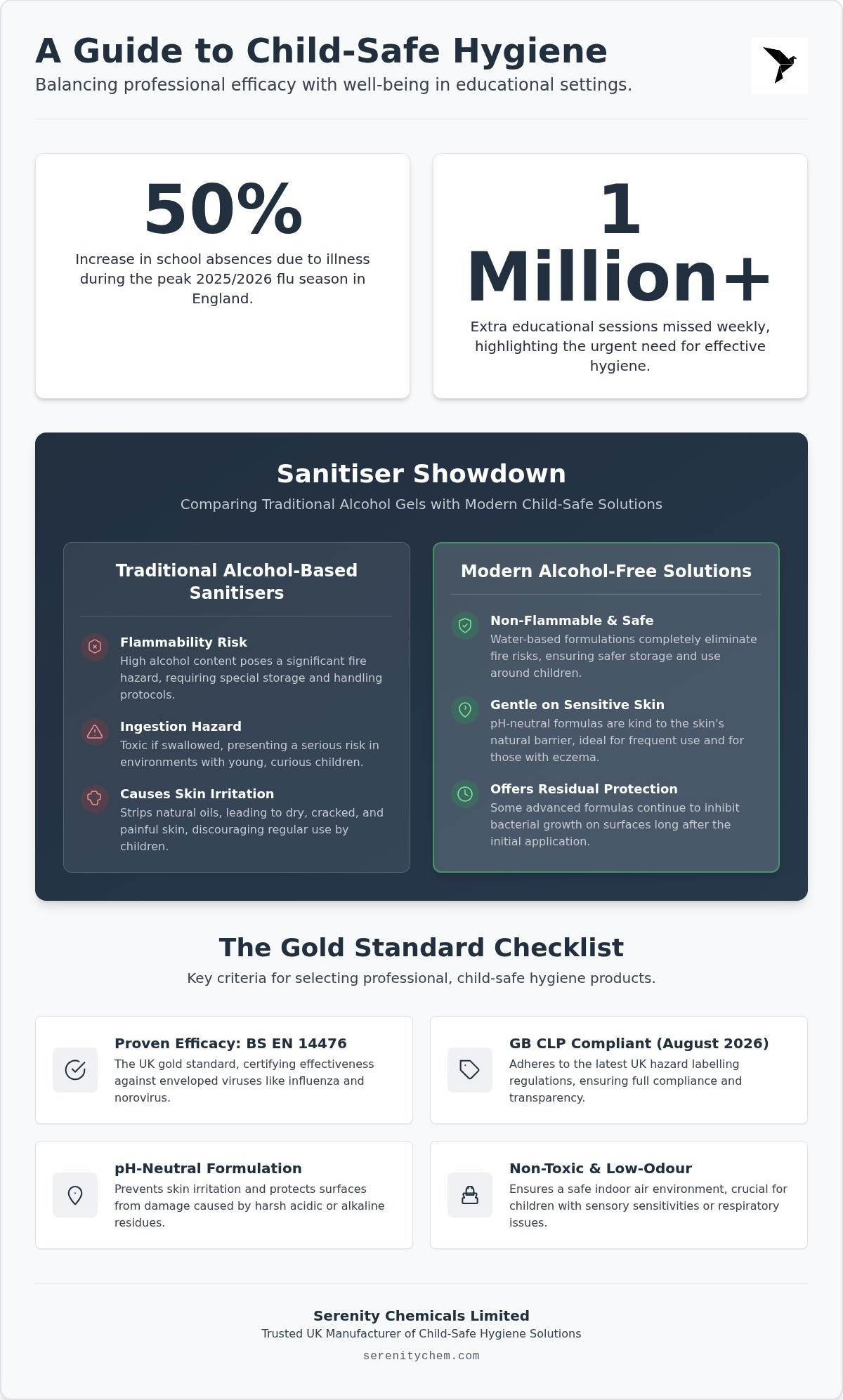
Did you know that during the peak of the 2025/2026 flu season, school absences in England due to illness increased by 50%, leading to an extra million missed educational sessions every week? It's a staggering figure that highlights the vital importance of effective hygiene, yet many caregivers feel caught between a rock and a hard place. You want to eliminate harmful pathogens, but the thought of kids accidentally ingesting flammable alcohol-based sanitisers or suffering from cracked, irritated skin is a constant worry.
We understand that child safety and professional-grade efficacy shouldn't be mutually exclusive. In this article, you'll discover how to maintain a gold-standard hygiene environment for kids using child-safe solutions that prioritise long-term skin health. We'll break down the confusion surrounding EN efficacy standards like EN 14476, explain the upcoming 15 August 2026 GB CLP hazard labelling requirements, and show you how to achieve a germ-free setting without compromising on the well-being of those with sensitive skin.
Key Takeaways
- Learn why pH-neutral and non-toxic formulations are the safest choice for high-traffic play areas and communal learning spaces.
- Understand the critical safety advantages of alcohol-free sanitisers, specifically regarding flammability risks and accidental ingestion hazards for kids.
- Discover how to establish effective sanitisation stations and cleaning rotas that meet stringent UK health and safety standards.
- Evaluate the efficacy of alcohol-free solutions against EN 14476 standards to ensure uncompromising protection against viral pathogens.
- Gain clarity on the August 2026 GB CLP regulation updates to ensure your facility remains compliant with the latest hazard labelling requirements.
Understanding the Importance of Hygiene for Kids in 2026
UK schools and nurseries function as high-traffic ecosystems where communal interaction is constant. Unlike adult workspaces, these environments involve shared toys, close-contact play, and a high frequency of surface touching. This proximity is exactly why educational centres often become the epicentre for community-wide illness. During the peak of the 2025/2026 flu season, illness-related absences in England rose by 50%. This surge isn't merely a seasonal fluke; it highlights the critical need for hygiene protocols that can keep pace with the rapid spread of pathogens in spaces where kids learn and grow.
Children are physiologically more vulnerable than adults. Their immune systems are in a state of development, and their behaviour often involves significant hand-to-mouth contact. Beyond physical health, the state of the learning environment plays a silent role in child psychology. A clean, organised classroom promotes a sense of safety and order, which directly influences student behaviour and focus. Whilst the "hygiene hypothesis" suggests that some exposure to microbes is beneficial for immune priming, this must be balanced against the risk of outbreaks. Professional-grade disinfection isn't about creating a sterile, unnatural bubble; it's about targeted protection against specific, harmful viruses and bacteria that disrupt education.
The Role of Schools and Nurseries in Public Health
Educational centres are the primary front line for public health. When a virus takes hold in a reception class, it quickly spreads to families and the wider community. The resulting absenteeism is a significant hurdle for child development, often leading to missed milestones and educational gaps. In 2026, teachers reported that nearly 26% of children in reception were not yet toilet-trained, which adds another layer of hygiene complexity to the daily routine. Current UK school protocols are shifting towards more frequent, visible sanitisation to maintain attendance levels and protect staff well-being.
Sensitive Skin and Child Health
Maintaining high standards of cleanliness shouldn't come at the cost of physical comfort. A child's skin barrier is thinner and more reactive than an adult's, making them particularly susceptible to irritation from harsh chemical residues. With the rising prevalence of eczema amongst UK school-aged kids, the choice of hygiene products becomes a health priority. Using a traditional Hand sanitizer with high alcohol content can lead to painful stinging and dermatitis, often causing children to avoid hand hygiene altogether. Effective protection must be gentle enough for daily use on sensitive skin whilst remaining lethal to pathogens.
Choosing Child-Safe Cleaning Chemicals: What to Look For
Selecting hygiene products for environments where kids play and learn requires a shift in perspective. It's not enough to simply choose a product that promises to kill germs; you must also consider the chemical footprint left behind on surfaces. Labels like "non-toxic" are frequently used in marketing, but in a professional setting, they carry specific weight. A truly safe product for educational use is one that doesn't contain substances classified as carcinogenic or mutagenic under the updated August 2026 GB CLP standards. Sourcing your supplies from a reputable cleaning products manufacturer UK ensures that these formulations are developed with local safety regulations as the baseline, rather than an afterthought.
The pH level of a cleaner is another critical factor. Surfaces such as desks, chairs, and floor mats are in constant contact with children's hands and legs. Using pH-neutral formulations is essential because it prevents the risk of chemical irritation or mild burns that can occur with highly acidic or alkaline residues. Additionally, modern classrooms benefit from fragrance-free or low-odour chemicals. Whilst a "pine" or "lemon" scent might traditionally signal cleanliness, strong synthetic fragrances can trigger respiratory issues or sensory sensitivities in young children. Prioritising neutral, effective solutions creates a safer indoor air environment for everyone.
Essential Standards: EN 14476 and Beyond
When evaluating efficacy, look for BS EN 14476. This is the gold standard for antiviral testing in the UK, proving the product is effective against enveloped viruses like influenza and norovirus. It's a common misconception that "professional-grade" necessarily means "dangerously industrial." High-performance cleaners can be both powerful and biodegradable. Some modern surface sanitisers even offer residual protection, meaning they continue to inhibit bacterial growth long after the initial wipe, which is invaluable in high-traffic nurseries.
COSHH and Risk Management for Kids
Managing hygiene in a school context requires strict adherence to COSHH (Control of Substances Hazardous to Health) guidelines. This involves maintaining a comprehensive professional cleaning chemicals list accompanied by up-to-date Safety Data Sheets (SDS). Proper risk management isn't just about the chemicals themselves but also their application. For example, guidelines on Safely Using Hand Sanitizer highlight the absolute necessity of adult supervision to prevent accidental ingestion or eye contact amongst younger kids. Training staff on correct dosage and contact times ensures that the environment is disinfected without leaving unnecessary chemical excess. If you're unsure which formulations best suit your specific facility, you can contact our technical team for guidance on child-safe protocols.
Alcohol-Free Hand Sanitiser vs Traditional Gels for Children
Whilst alcohol-based gels are common, they present unique risks in educational settings. High alcohol content makes these products highly flammable and dangerous if swallowed. According to FDA guidance on hand sanitizer safety, accidental ingestion by children can lead to alcohol poisoning, even in small amounts. Alcohol-free alternatives eliminate this toxicological risk entirely; they provide peace of mind for staff who manage large groups of kids throughout the day. By removing the alcohol, you remove the primary hazard without sacrificing the ability to kill 99.99% of bacteria and viruses.
Many people wonder if alcohol-free solutions are as effective. When formulated by a specialist manufacturer, they meet the same stringent BS EN standards as their alcohol-based counterparts. From a budget perspective, foam sanitisers often prove more cost-effective than traditional gels for high-traffic environments. Foam is easier to spread across the hands, meaning less product is required per application. Gels often drip off small hands, leading to significant waste and potential slip hazards on the floor. Switching to a foam-based system ensures that every pump is used effectively, reducing the frequency of refills.
The Non-Flammable Advantage in Schools
Fire safety is a paramount concern in any public building. Fire safety officers frequently prefer alcohol-free solutions because they don't contribute to the fire load of a classroom. Traditional sanitisers can be a liability during science experiments involving Bunsen burners or in craft areas where heat tools are used. Using a non-flammable foam dispenser allows for controlled application. It ensures that kids can sanitise their hands independently without the risk of 'hand sanitiser fires' or accidental spills that create a flammable residue on desks and clothing.
Gentle Care for Sensitive Little Hands
Frequent hand washing and sanitising can be brutal on young skin. Alcohol strips away natural oils, leading to painful drying and cracking. Serenity Alcohol Free Hand Sanitiser is designed to be the best hand sanitiser for eczema because it maintains the skin's natural moisture barrier. This non-drying formula is essential for frequent daily use, especially for children who already suffer from dermatitis. When a product doesn't sting or irritate, children are much more likely to develop positive hygiene habits. A pleasant, non-stinging experience encourages compliance and makes the daily routine easier for both teachers and parents.
Implementing a Robust Hygiene Routine in Educational Settings
Establishing a consistent hygiene routine is about more than just reactive cleaning; it's about making safety an invisible but reliable part of the school day. Highly organised cleaning rotas ensure that high-traffic zones don't become reservoirs for bacteria. By implementing 'Sanitisation Stations' at child-height, we empower kids to take ownership of their own health. This independence is fostered when they understand the purpose behind the pump. Explaining how germs spread helps build lifelong healthy habits that extend beyond the classroom. For rapid transitions, such as clearing a dining hall between lunch sittings, using a professional antibacterial surface spray UK provides the necessary speed and efficacy to maintain a safe environment.
Focus on High-Touch Areas
Shared technology and play equipment are notorious for germ transmission. Tablets, keyboards, and interactive whiteboards require careful disinfection that won't damage the hardware. In nurseries, play equipment and soft furnishings need regular attention with solutions that are safe for close contact. Using Serenity Multi-Surface Cleaner ensures these items are streak-free and, more importantly, free from harmful residues that could transfer to the hands or faces of kids. A methodical approach involves regular spraying and wiping with pH-neutral solutions that don't compromise the material's integrity or child safety.
Kitchen and Dining Hall Standards
The dining hall is a high-risk area for cross-contamination and requires a specialised approach to chemical safety. Surfaces where food is served must be treated with a dedicated food safe sanitiser for commercial kitchens to meet stringent health and safety standards. Managing floor safety is equally vital; spills must be addressed immediately to prevent slips and falls. Partnering with a reliable commercial floor cleaner supplier ensures you have the correct industrial-strength solutions to maintain a safe, slip-resistant environment throughout the school day.
Need help designing a bespoke hygiene plan for your school or nursery? Contact our specialists today to discuss our child-safe product range and compliance support.
Serenity Chemicals: Trusted UK Manufacturer of Child-Safe Solutions
Serenity Chemicals operates as a specialist UK-based manufacturer dedicated to the production of high-performance, ethical hygiene solutions. Since our establishment in 2014, we've prioritised the development of formulations that don't force a choice between uncompromising germ-kill and the safety of vulnerable users. By maintaining our manufacturing base in Southampton, we ensure consistent quality and a robust supply chain for educational centres across the country. Our approach is rooted in the belief that professional cleaning should be both effective and responsible, especially when the health of kids is at the centre of the operation.
We believe in transparency and professional reliability. Every product in our range is developed with a clear moral compass, ensuring that the chemicals used in schools today don't create health problems for tomorrow. This commitment to integrity is why our alcohol-free solutions have become a dependable authority in the education sector. We provide peace of mind to headteachers, site managers, and parents by delivering products that meet the highest British Standards for antiviral and antibacterial efficacy whilst remaining gentle on the environment and the individual.
Our Child-Safe Product Range
- Serenity Alcohol Free Hand Sanitiser: This non-toxic foam solution is the favourite choice for UK schools. It's non-flammable, safe if accidentally ingested in small quantities, and specifically formulated to protect the skin barrier of kids who suffer from eczema or sensitivities.
- Serenity Antibacterial Surface Spray: Designed for high-traffic environments, this spray offers professional-grade power in a child-safe application. It's ideal for quick disinfection of desks and communal areas between lessons.
- Serenity Multi-Surface Cleaner: A versatile and pH-neutral choice for every classroom. It ensures that surfaces remain streak-free and safe for close contact without leaving behind harsh chemical residues.
Partnering with Schools and Local Authorities
We understand the logistical and budgetary pressures facing schools and local authorities in 2026. To support these institutions, we offer bulk-buy options and refillable systems that significantly reduce both long-term costs and plastic waste. Our service extends beyond simple product supply; we act as a "Service-Oriented Guide," assisting with COSHH compliance and providing technical support to ensure staff are confident in their hygiene protocols. This collaborative approach helps schools maintain a gold-standard environment that protects both pupils and staff.
The Serenity promise is built on integrity, efficacy, and the protection of the next generation. If you're looking to upgrade your facility's hygiene standards with professional, UK-manufactured solutions, we're here to help. To discuss bulk wholesale opportunities or to secure a consistent supply for your educational centre, please contact our team for professional guidance and support.
Prioritising Safety in Educational Environments
Maintaining a gold-standard hygiene environment in schools shouldn't involve a compromise on safety. We've explored how transitioning to alcohol-free solutions eliminates flammability risks and accidental ingestion hazards whilst providing skin-friendly care for children with sensitive skin. By choosing products with EN 14476 certified antiviral efficacy, you ensure that your facility remains protected against the pathogens that drive school absences without introducing harsh chemical residues.
As a principled UK manufacturer, Serenity Chemicals is dedicated to providing the tools needed to safeguard the health of kids across the country. Our non-flammable formulations and UK-based support systems are designed to help you meet the August 2026 GB CLP standards with confidence. Whether you're looking for bulk-buy efficiency or specialist advice on COSHH compliance, our team is ready to assist you in creating a safer, healthier learning space.
Protect your pupils today with Serenity Alcohol Free Hand Sanitiser. We look forward to helping you maintain a secure environment for the next generation.
Frequently Asked Questions
Is alcohol-free hand sanitiser safe if a child accidentally licks their hands?
Alcohol-free hand sanitiser is significantly safer than alcohol-based gels because it doesn't pose a risk of alcohol poisoning. Whilst no cleaning product should be intentionally consumed, Serenity's formulation is safe if kids accidentally lick their hands after application. It doesn't contain the toxic ethanol or isopropanol found in traditional gels, which can be dangerous even in small quantities. This makes it the ideal choice for nurseries where hand-to-mouth behaviour is common.
Can I use professional antibacterial sprays on toys and play equipment?
Professional antibacterial sprays are suitable for toys and play equipment if they're specifically formulated to be non-toxic and pH-neutral. Serenity Antibacterial Surface Spray provides a powerful germ-kill without leaving behind the harsh chemical residues that can irritate a child's skin. We recommend spraying the equipment and allowing the required contact time before wiping it clean with a microfibre cloth to ensure the environment remains safe for communal play.
How often should high-touch surfaces in a classroom be disinfected?
High-touch surfaces in a classroom should be disinfected at least twice daily, ideally during midday breaks and at the end of the school day. Areas such as door handles, light switches, and shared desks are primary vectors for transmission. Increasing this frequency during the peak flu season can help mitigate the rise in illness-related absences. Consistent routines ensure that pathogens don't have the opportunity to build up on communal surfaces.
What is the best hand sanitiser for kids with sensitive skin or eczema?
The best hand sanitiser for kids with sensitive skin or eczema is a fragrance-free, alcohol-free foam. Traditional alcohol-based sanitisers strip away the skin's natural moisture barrier, leading to painful cracking and inflammation. Serenity's foam formulation is designed to be non-drying and gentle. It allows children with reactive skin to maintain high hygiene standards without the physical discomfort or stinging associated with industrial-strength alcohol gels.
Does alcohol-free sanitiser kill the same viruses as alcohol-based gels?
Alcohol-free sanitisers are just as effective as alcohol-based ones, provided they meet the BS EN 14476 standard. This certification proves the product kills 99.99% of bacteria and enveloped viruses, including influenza and norovirus. The primary difference lies in the active ingredient; alcohol-free versions use advanced biocides that provide a lethal blow to pathogens whilst remaining non-flammable and far gentler on human skin than traditional ethanol-based formulations.
Are Serenity cleaning products compliant with UK school safety standards?
Serenity cleaning products are fully compliant with current UK school health and safety standards. Our range meets all relevant British Standards (BS EN) for efficacy and is manufactured in accordance with the latest GB CLP hazard labelling regulations. We provide comprehensive Safety Data Sheets (SDS) to support your COSHH assessments, ensuring that your facility remains compliant with the requirements for educational environments.
How can I buy child-safe cleaning chemicals in bulk for my nursery?
You can purchase child-safe cleaning chemicals in bulk by contacting our UK-based team directly. We specialise in supporting nurseries and schools with wholesale supply chains and refillable systems that reduce both costs and plastic waste. Our "Service-Oriented Guide" approach ensures you receive the correct quantities and formulations for your specific needs, along with the technical documentation required for staff training and health and safety audits.
What should I look for on a chemical label to ensure it is safe for kids?
When checking a chemical label, look for compliance with EN 14476 and EN 1276 standards to verify germ-killing power. For child safety, prioritise products that are labelled as non-flammable and pH-neutral. Avoid products with aggressive hazard pictograms where possible. A reputable manufacturer will also provide clear instructions for use and contact details for technical support, ensuring you can make informed decisions about the chemicals used in your learning environment.

Hand Hygiene in Food Preparation Areas: The 2026 Professional Guide
The Food Standards Agency estimates that foodborne illness costs the UK economy approximately £9 billion every year, with a s...

Sanitising Commercial Kitchen Hard Surfaces: The Professional UK Guide (2026)
Did you know that the average fine for food hygiene offences in the UK has more than tripled since 2016, now reaching over £7...