

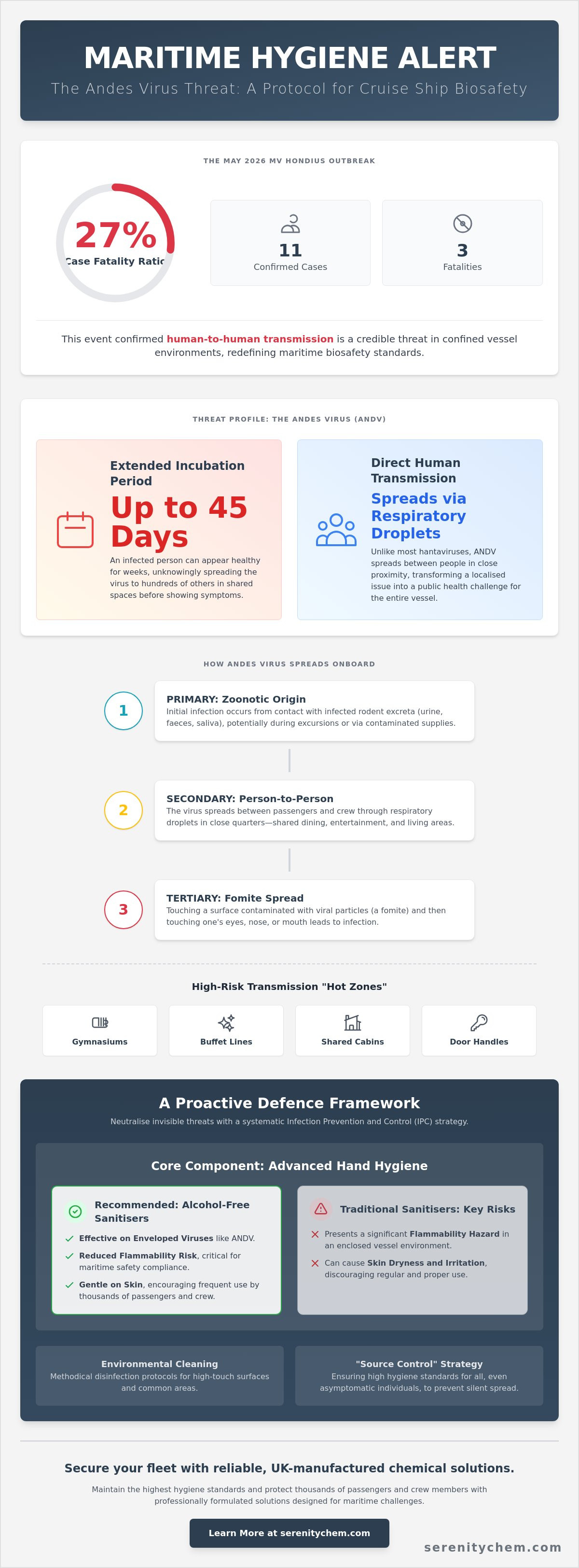
The May 2026 Andes virus outbreak on the MV Hondius has recorded a sobering case fatality ratio of 27%, highlighting a significant shift in how we view maritime biosafety. Whilst Hantavirus is typically associated with rodent contact, this recent event confirms that human-to-human transmission is a credible threat in the close quarters of a vessel. You're likely concerned about how to maintain rigorous standards amongst thousands of guests when the stakes are this high. Effective Hanta Virus cruise ships hand hygiene is no longer just a recommendation; it's a critical operational necessity for every modern fleet.
We understand that managing infection control in a high-traffic environment is a complex task that requires both precision and the right tools. This article provides a clear roadmap for implementing professional-grade hygiene protocols designed to mitigate the risks of the Andes virus (ANDV). You'll discover the specific transmission routes identified by the World Health Organisation and learn which alcohol-free sanitisers provide the best balance of efficacy and skin safety. We'll also outline a methodical approach to environmental cleaning that ensures your crew and passengers remain protected throughout their journey.
Key Takeaways
- Understand how the 2026 Andes virus outbreak has redefined maritime safety, focusing on the critical need to prevent human-to-human transmission in confined spaces.
- Learn how to implement professional-grade Hanta Virus cruise ships hand hygiene protocols to combat both rodent-borne risks and respiratory droplet spread.
- Evaluate the operational benefits of alcohol-free sanitisers, focusing on their efficacy against enveloped viruses and reduced flammability risks aboard vessels.
- Discover a structured IPC framework for cruise operations, including high-touch risk assessments and strategic sanitisation station placement across all decks.
- Gain clarity on sourcing reliable, UK-manufactured chemical solutions to maintain high hygiene standards amongst thousands of passengers and crew members.
The 2026 Hantavirus Outbreak: Navigating Maritime Hygiene Challenges
The notification sent to the World Health Organisation on 2 May 2026 regarding a cluster of respiratory illnesses aboard the MV Hondius serves as a stark reminder of maritime vulnerability. By 13 May, health officials confirmed 11 cases linked to the Andes virus (ANDV) strain, resulting in three fatalities. This 27% case fatality ratio has prompted the UK Health Security Agency (UKHSA) to advise immediate revisions to infection prevention and control (IPC) strategies. Whilst most strains in this viral family are zoonotic, the 2026 outbreak confirms that Hanta Virus cruise ships hand hygiene protocols must now account for direct human-to-human transmission.
A comprehensive Hantavirus overview reveals that these pathogens typically transmit through contact with infected rodent excreta. However, the Andes strain is a notable exception. In the confined environment of a cruise vessel, where thousands of passengers share dining areas and recreational facilities, the risk of a rapid spread increases. This is why global health bodies have prioritised hand hygiene as the primary line of defence for disembarking passengers and crew members alike.
Understanding the Andes Virus Strain
The Andes virus differs significantly from the Hantaviruses typically found in Europe or North America because of its documented ability to spread between people via respiratory droplets. During the 2026 outbreak, patients presented with a combination of fever, gastrointestinal distress, and rapid respiratory decline. Managing this on a ship is particularly difficult because the incubation period can last up to 45 days. This long window means a passenger could board a ship in perfect health and only show symptoms weeks later, long after they have interacted with hundreds of others in shared spaces.
Maritime Vulnerability and Viral Persistence
Cruise ships are unique ecosystems where high-density living meets constant international transit. High-touch surfaces in communal dining rooms, such as buffet tongs and table edges, act as primary vectors for viral transfer. Environmental conditions at sea, including specific humidity levels and temperature fluctuations, can also influence how long the virus remains stable on hard surfaces. Effective Hanta Virus cruise ships hand hygiene requires more than just occasional hand washing; it demands a systematic approach to "Source Control." This involves ensuring that even asymptomatic individuals maintain high sanitisation standards to prevent the silent spread of droplets throughout the vessel's common areas.
Maintaining personal standards of care is an essential part of this proactive approach; you can learn more about Reset Razor to discover how their eco-friendly and reusable razors support a conscious travel lifestyle.
Transmission Mechanics: How Andes Virus Spreads in Confined Environments
The 2026 Andes virus cluster demonstrated that while the virus begins with rodents, it doesn't always end there. Primary transmission occurs when humans come into contact with infected rodent excreta, such as urine, faeces, or saliva. In a maritime setting, this might happen during excursions or through contaminated supplies. However, the secondary transmission route-person-to-person spread-is what makes the Andes strain particularly dangerous for the cruise industry. Unlike most other Hantaviruses, ANDV can spread through respiratory droplets between passengers in close proximity. This shift from zoonotic to human transmission transforms a localized pest issue into a significant public health challenge for vessel operators.
Fomite transmission represents the third major risk factor. This occurs when a passenger touches a contaminated surface and subsequently touches their eyes, nose, or mouth. On a cruise ship, certain "Hot Zones" facilitate this spread more than others. Gymnasiums, buffet lines, and shared cabin facilities are high-traffic areas where viral particles can persist on equipment, serving utensils, and door handles. Maintaining rigorous Hanta Virus cruise ships hand hygiene is the most effective way to neutralise these invisible threats before they lead to infection. Adhering to established CDC hantavirus prevention guidelines is essential for any crew attempting to manage these high-risk areas effectively.
The Role of Respiratory Droplets in Close Quarters
Confined spaces on ships, such as narrow corridors and enclosed lounges, naturally facilitate the concentration of respiratory droplets. Whilst physical distancing is a helpful tool, it's often insufficient in the bustling environment of a modern cruise. The virus is most transmissible during the early 'febrile' stage, when a passenger might only feel mildly unwell but is already shedding viral particles. This makes constant, proactive hand hygiene a non-negotiable requirement for everyone on board, regardless of whether they feel symptomatic.
Breaking the Chain of Infection
The 'Chain of Infection' describes the process by which a pathogen moves from a source to a new host. In a maritime context, hand hygiene acts as a definitive barrier at the 'Port of Entry'. By sanitising hands frequently, passengers and crew effectively break this chain, preventing the virus from moving from a contaminated surface to the respiratory system. This practice is especially critical during disembarkation and repatriation, when the movement of people is most fluid. For those looking to implement these protocols with professional-grade tools, using a high-quality Serenity Alcohol Free Hand Sanitiser can provide the necessary protection without the drying effects or flammability risks of traditional products.
Evaluating Hand Hygiene Solutions: Alcohol-Free vs. Traditional Sanitisers
Selecting the right product for a vessel is a balance between biological efficacy and operational safety. Traditional alcohol-based sanitisers are common, yet they present unique challenges in a maritime setting. Hantaviruses are enveloped viruses, meaning their outer lipid layer is susceptible to chemical disruption. Whilst alcohol achieves this quickly, its rapid evaporation leaves no lasting protection once the skin is dry. For Hanta Virus cruise ships hand hygiene, a solution that offers both immediate kill-rates and sustained activity is often more practical for the high-frequency use required amongst thousands of passengers and crew members.
Compliance is the most significant hurdle in any hygiene protocol. When passengers use alcohol-based products twenty or thirty times a day, the skin often becomes dry, cracked, and painful. This condition, known as contact dermatitis, doesn't just cause discomfort; it creates microscopic breaks in the skin that can act as ports of entry for pathogens. Alcohol-free alternatives typically use advanced surfactants that remain active on the skin for longer periods, providing a layer of residual protection that alcohol simply cannot match.
To further support skin health during intensive hygiene regimes, many professionals suggest using specialised dermatological products. For instance, Synergy Therm Cosmetics provides a range of face and body care solutions designed to protect and restore the skin's natural barrier, which is essential for preventing the irritation caused by frequent washing.
The Science of Alcohol-Free Efficacy
Modern alcohol-free formulations often rely on Quaternary Ammonium Compounds (QACs) to neutralise threats. These compounds work by physically disrupting the viral envelope of the Andes virus, rendering it unable to infect human cells. To ensure these products are fit for purpose, operators should look for the EN 14476 standard, which is the European benchmark for antiviral testing. Alcohol-free sanitisers maintain high-level antiviral efficacy whilst preserving the skin's natural lipid barrier to prevent irritation. This preservation of skin integrity ensures that passengers are more likely to adhere to hygiene stations throughout the duration of their voyage.
Maritime Safety and Regulatory Compliance
Operational safety is a paramount concern on any large vessel. The storage of thousands of litres of flammable liquid presents a significant fire risk, particularly in engine rooms or enclosed storage lockers. Switching to non-flammable products removes this hazard entirely, simplifying fire safety audits and reducing the burden of complex COSHH (Control of Substances Hazardous to Health) assessments. For many operators, sourcing a high-specification alcohol free hand sanitiser UK manufactured ensures that the product meets stringent British safety standards whilst remaining easy to transport and store at sea.
Beyond fire safety, the choice of sanitiser impacts how effectively a crew can manage a potential outbreak. Understanding Hantavirus signs and symptoms is vital for medical teams, but preventing the initial transmission through superior Hanta Virus cruise ships hand hygiene is a more proactive strategy. By providing a product that is both pleasant to use and technically robust, cruise lines can significantly lower the viral load within shared environments like dining halls and theatres.
Establishing a Robust IPC Framework for Cruise Ship Operations
Implementing an Infection Prevention and Control (IPC) framework on a cruise ship requires a methodical approach that accounts for the high volume of passenger movement and shared facilities. Following the 2026 Andes virus outbreak, the focus has shifted towards active prevention rather than reactive containment. A robust Hanta Virus cruise ships hand hygiene strategy must be integrated into the daily rhythm of the ship's operations to be truly effective. This framework relies on five core pillars of operational safety.
- Step 1: Conduct a comprehensive high-touch surface risk assessment across all passenger decks, identifying areas like lift buttons, handrails, and shared touchscreen kiosks.
- Step 2: Ensure strategic placement of sanitisation stations at every entry and exit point, particularly where passengers transition from shore excursions back to the vessel.
- Step 3: Provide intensive crew training on the specific transmission risks of the Andes virus, emphasizing the 45-day monitoring window.
- Step 4: Launch passenger education campaigns using clear, visual signage that bypasses language barriers to encourage frequent hand hygiene.
- Step 5: Establish a regular auditing schedule to monitor hygiene compliance and maintain adequate chemical stock levels for the duration of the voyage.
By following these steps, operators create a layered defence that protects both the well-being of the passengers and the operational integrity of the fleet. This structured environment provides peace of mind for guests, knowing that their safety is managed by principled experts using professional-grade protocols.
This duty of care often extends to broader health concerns beyond infection control. For example, passengers or crew seeking guidance on personal wellness or recovery can be directed to independent consultation services like Detox Rehab Clinics UK for specialist advice on addiction treatment.
Similarly, for those looking to support their natural resilience and well-being through botanical supplements during their journey, you can discover Mental Compass and their range of functional mushroom and flower essence tinctures.
Beyond health and wellness, sustainable travel habits are becoming a priority for modern cruisers. For those looking to upgrade their personal care kit, Reset Razor offers eco-friendly shaving solutions that align with a more conscious approach to maritime travel.
Strategic Placement of Sanitisation Stations
Access at the 'point of use' is the single greatest predictor of passenger compliance. In dining areas, stations should be positioned where guests naturally pause, such as the entrance to buffet lines or seating zones. Utilising foam sanitisers often provides better coverage across the hands and significantly reduces wastage in high-traffic zones compared to traditional gels. For sensitive areas like medical bays, integrating sanitisation dispensers with automated door systems ensures that hand hygiene is a mandatory prerequisite for entry.
Crew Training and Asymptomatic Monitoring
Crew members serve as the frontline of any IPC framework. Training must go beyond basic cleanliness to include the recognition of early Hantavirus symptoms whilst maintaining personal hygiene standards. Staff in housekeeping and catering should adhere to strict 'Hand Hygiene Moments' throughout their shifts. We recommend a 'Clean In, Clean Out' policy for all cabin service operations; this requires staff to sanitise their hands immediately before entering a guest's cabin and again upon exiting. This simple yet disciplined routine is vital for breaking the chain of potential human-to-human transmission. To support these rigorous standards, you can view our range of professional hygiene solutions designed specifically for the unique demands of the maritime industry.
Advanced Chemical Solutions for Large-Scale Maritime Hygiene Management
Managing a fleet's hygiene requirements requires a partner who understands the technical and ethical demands of the maritime sector. Serenity Chemicals Limited supports the industry by providing professional-grade solutions that are both effective and responsible. Sourcing from a UK manufacturer is particularly vital for maintaining reliable supply chains in 2026, as international logistics can often face unforeseen disruptions. By choosing British-made chemicals, cruise lines ensure they have a steady, high-quality supply of essential products to protect their passengers and crew.
Customising hygiene protocols is a necessity for large vessels. This involves more than just hand hygiene; it requires a coordinated approach using everything from multi-surface cleaners to targeted antibacterial sprays. Robust Hanta Virus cruise ships hand hygiene is most effective when it's part of a wider, chemically consistent environment. This prevents chemical cross-reactivity and ensures that every surface meets the same high standard of protection. Ethical, British-made chemicals have become the preferred choice for international cruise lines that value integrity as much as efficacy.
Serenity’s Professional Range for Cruise Lines
Our product line is designed to meet the specific challenges of maritime environments. Serenity Alcohol Free Hand Sanitiser is ideal for high-frequency use by passengers because it doesn't cause the skin irritation often associated with alcohol-based products. For the rapid disinfection of communal areas, we recommend Serenity Antibacterial Surface Spray. It's formulated for quick application on high-touch surfaces like lift buttons and buffet counters. We support national and international fleets with bulk supply and wholesale distribution, ensuring that even the largest vessels remain fully stocked throughout their itineraries.
A Commitment to Safety and Efficacy
Serenity Chemicals Limited ensures all products meet rigorous EN standards, including EN 14476, for proven antiviral protection. We take a "Principled Expert" approach to our partnerships. This means we don't just supply chemicals; we provide comprehensive data sheets and full COSHH support for our maritime clients. This level of detail helps your safety officers manage risks effectively whilst maintaining compliance with international health regulations. It's about providing peace of mind through technical authority and transparent communication. If you're looking to upgrade your vessel's safety protocols, you can contact Serenity Chemicals Limited for professional maritime hygiene solutions to discuss your fleet's specific requirements.
Securing the Future of Maritime Health
The 2026 Andes virus outbreak has fundamentally changed the landscape of maritime biosafety. We've seen that the transition from zoonotic transmission to human-to-human spread requires a more sophisticated approach to infection control. By prioritising EN 14476 tested products and establishing a clear IPC framework, vessel operators can effectively break the chain of infection. Implementing robust Hanta Virus cruise ships hand hygiene is not just a regulatory requirement; it's a principled commitment to the long-term well-being of everyone on board.
Selecting a UK-based manufacturer ensures your supply chain remains resilient against global disruptions whilst providing access to non-flammable, maritime-safe formulations. These professional-grade solutions offer the technical efficacy needed for virus neutralisation without compromising passenger comfort or vessel fire safety. Our team is dedicated to providing the data-driven support you need to manage large-scale hygiene with confidence and integrity. Beyond operational safety, individuals can also support their natural well-being; to learn more about functional mushroom and flower essence tinctures, visit Mental Compass.
Protect your fleet with Serenity’s professional alcohol-free hand sanitisers and secure the peace of mind that comes from working with a dependable authority. We look forward to helping you maintain the highest standards of safety across your international routes.
Frequently Asked Questions
What is the Hantavirus outbreak 2026 linked to cruise ships?
The May 2026 outbreak is linked to the Dutch-flagged cruise ship MV Hondius, which departed from Argentina on 1 April. Health officials identified the cause as the Andes virus (ANDV) strain. By 13 May 2026, 11 cases were reported amongst the 147 passengers and crew, resulting in three fatalities. This event has highlighted the critical need for advanced Hanta Virus cruise ships hand hygiene protocols on all international vessels.
Can Hantavirus (Andes virus) spread from person to person on a ship?
Yes, the Andes virus strain is a rare exception that allows for human-to-human transmission. Whilst most Hantaviruses are transmitted from rodents to humans, ANDV can spread via respiratory droplets in confined spaces. This makes the close-quarters environment of a cruise ship particularly vulnerable. Breaking the chain of infection requires disciplined hand hygiene and the isolation of any passengers displaying acute respiratory symptoms.
Is alcohol-free hand sanitiser effective against Hantavirus?
Alcohol-free sanitisers are highly effective against Hantaviruses because these pathogens are enveloped viruses. These viruses possess a lipid outer layer that is easily disrupted by Quaternary Ammonium Compounds (QACs). For maritime safety, it's vital to use products tested to EN 14476 antiviral standards. These formulations provide the necessary protection whilst being much gentler on the skin than traditional alcohol-based gels during frequent daily use.
What are the symptoms of Andes virus passengers should look out for?
Passengers should monitor for fever, gastrointestinal distress, and rapid onset of respiratory difficulty. The illness often starts with flu-like symptoms but can quickly progress to severe respiratory failure and shock. Because the incubation period for the Andes virus can last up to 45 days, anyone who has travelled on an affected vessel must remain vigilant and self-isolate if they begin to feel unwell after disembarking.
How often should hand hygiene be performed in a maritime environment?
Hand hygiene should be performed at every transition point between ship zones. This includes entering dining areas, returning from shore excursions, and after touching high-traffic surfaces like lift buttons or handrails. Frequent sanitisation is a primary defence in high-density environments where thousands of people share facilities. Consistent use of sanitisation stations ensures that viral loads on hands are neutralised before they can reach the respiratory system.
Are there specific UKHSA guidelines for cruise ship hygiene during this outbreak?
The UKHSA and WHO recommend frequent hand hygiene, active symptom monitoring for 45 days, and rigorous environmental cleaning. They specifically advise against dry sweeping, which can aerosolise viral particles. For Hanta Virus cruise ships hand hygiene, the guidance emphasises using professional-grade products at all entry and exit points. Suspected cases should be isolated in well-ventilated rooms with transmission-based precautions strictly applied by medical staff.
Why is fire safety a concern with hand sanitisers on cruise ships?
Alcohol-based sanitisers are highly flammable liquids that present a significant fire risk in enclosed maritime environments. Storing bulk quantities of these chemicals requires complex COSHH assessments and specialised fire suppression measures. Switching to non-flammable, alcohol-free formulations removes this hazard entirely. This makes them a safer and more responsible choice for vessel operators who must balance infection control with stringent maritime fire safety regulations.
How can cruise lines improve passenger compliance with hand hygiene protocols?
Compliance improves when sanitisation stations are placed at the exact "point of use," such as the entrance to buffet lines. Providing foam-based, alcohol-free products also helps because they don't cause the skin dryness or irritation associated with alcohol. Clear, visual signage that bypasses language barriers ensures all guests understand the protocols. When passengers find the products pleasant and easy to use, they are far more likely to maintain high hygiene standards.

Hand Hygiene in Food Preparation Areas: The 2026 Professional Guide
The Food Standards Agency estimates that foodborne illness costs the UK economy approximately £9 billion every year, with a s...

Sanitising Commercial Kitchen Hard Surfaces: The Professional UK Guide (2026)
Did you know that the average fine for food hygiene offences in the UK has more than tripled since 2016, now reaching over £7...