

What if the subtle bitter aftertaste in your signature dish has nothing to do with the recipe and everything to do with hidden carbonised grease? For many head chefs, the anxiety of an unannounced Food Standards Agency inspection stems from the state of the equipment rather than the skill of the staff. Learning how to clean a commercial deep fat fryer properly is about more than just aesthetics; it's a fundamental safety requirement that prevents grease fires and protects your bottom line. You likely already know that a neglected fryer doesn't just ruin the crispiness of your food; it places a significant strain on your heating elements and risks costly technical failure.
This professional guide will help you master the boil-out procedure and establish maintenance protocols that keep your kitchen compliant and efficient. By following these steps, you'll ensure consistent food quality and extend the lifespan of your equipment. We'll examine the specific chemical processes required for a thorough deep clean, including the use of Serenity Heavy Duty Degreaser for effective carbon removal, and provide a repeatable schedule to keep your operations running safely and smoothly throughout 2026.
Key Takeaways
- Understand how regular maintenance prevents fire hazards in the fryer’s "cool zone" whilst protecting the authentic flavour profile of your food.
- Master the professional "boil-out" technique to learn exactly how to clean a commercial deep fat fryer by stripping away stubborn carbonised grease that standard cleaning methods miss.
- Identify the essential personal protective equipment and specialised L-shaped tools required to safely navigate heating elements without causing equipment damage.
- Follow a structured, step-by-step drainage and cleaning procedure to ensure your kitchen remains fully compliant with UK food safety and waste disposal regulations.
- Implement post-clean sanitisation protocols using professional-grade solutions to maintain high hygiene ratings and extend the operational lifespan of your appliances.
Why Regular Deep Fat Fryer Maintenance is Essential for UK Kitchens
Running a busy kitchen is a balancing act of speed and safety. Whilst the pressure to serve food quickly is constant, neglecting your equipment has dire consequences. When you master how to clean a commercial deep fat fryer, you're doing more than just keeping the health inspector happy. You're ensuring that every portion of chips or fried chicken leaves the kitchen with the exact flavour profile your customers expect. Carbonised grease is a silent thief; it strips away the quality of your oil and leaves behind a bitter, acrid taste.
Safety is the most compelling reason for a strict maintenance schedule. The 'cool zone' at the bottom of your fryer vat is designed to keep food particles away from the heat, but if left uncleaned, this area becomes a reservoir for old grease. This buildup is a primary cause of kitchen fires. Additionally, scale and carbon deposits on heating elements act as insulation. This forces your fryer to work harder to maintain temperature, which eventually burns out expensive thermostats and shortens the machine's life. Understanding The Science of Deep Frying reveals how these chemical changes happen, making it clear that a quick rinse is never enough. Learning how to clean a commercial deep fat fryer effectively is the only way to safeguard your staff and your property.
There is also a clear economic advantage to using the right tools. Buying professional concentrates direct from a UK manufacturer like Serenity Chemicals allows you to use high-strength solutions that work faster. This reduces the labour time your team spends scrubbing and ensures you aren't wasting money on ineffective, supermarket-grade cleaners that can't handle industrial volumes of grease. Efficient cleaning leads to efficient service and lower overheads.
The Dangers of Polymerised Fats
Repeatedly heating oil causes it to undergo a chemical transformation called polymerisation. This process creates a tough, amber-coloured varnish that bonds to the stainless steel. It’s a plastic-like substance that simple detergents can't penetrate. If you don't use a professional solution like Serenity Heavy Duty Degreaser, these 'baked-on' fats will continue to build up. This layer doesn't just look unsightly; it creates a breeding ground for bacteria and further accelerates oil breakdown, forcing you to replace expensive oil more frequently than necessary.
Compliance and the HACCP Framework
The Food Standards Agency (FSA) requires every UK food business to follow a HACCP plan. Your fryer cleaning must be a documented part of this framework. It isn't enough to just do the work; you must prove it with daily and weekly logs. Proper training is also essential. Staff need to understand COSHH regulations when handling powerful degreasers to ensure they stay safe whilst keeping your equipment in peak condition. A clean fryer is a visible sign of a well-managed, compliant kitchen that prioritises both hygiene and safety.
Understanding the 'Boil-Out' Procedure: The Science of Professional Degreasing
A boil-out is more than a simple soak; it's a methodical chemical treatment designed to restore the vat to its original state. When considering how to clean a commercial deep fat fryer, many operators mistakenly rely on domestic remedies like water and vinegar. Whilst these might manage light surface residue, they lack the alkalinity required to break down commercial-grade carbon deposits. Instead, you need a concentrated commercial kitchen sanitiser wholesale or a dedicated degreaser to achieve a professional result. High-performance chemicals are necessary to dissolve the polymerised bonds that form when oil is repeatedly heated to high temperatures.
Heat acts as a critical catalyst in this process. By raising the temperature of the solution, you increase the kinetic energy of the chemical surfactants. This allows the cleaning agent to penetrate the microscopic pores of the stainless steel, lifting grease that would remain trapped during a cold scrub. Adhering to Commercial Kitchen Cleaning Best Practices ensures that your methodology matches the standards expected by industry regulators. Using a professional-grade solution ensures that the process is efficient, saving on labour costs whilst delivering a superior finish that protects the flavour of your food.
The Role of Heavy Duty Degreasers
Serenity Heavy Duty Degreaser is specifically formulated to emulsify oils rapidly. It turns stubborn grease into a fluid state that simply rinses away without the need for excessive abrasive scrubbing. Saponification is the chemical reaction where a strong alkali interacts with fats and oils to convert them into water-soluble soap, allowing for effortless removal during the rinsing stage. These professional formulations are designed to protect the integrity of your stainless steel whilst aggressively attacking carbonised buildup. If you have questions about which concentration is right for your specific equipment, you can speak with our technical team for tailored advice on chemical application.
Temperature Control During Cleaning
Precision is vital during the boil-out. You must never allow the solution to reach a full rolling boil. A violent boil creates a high risk of chemical overflow, which can lead to severe burns or floor contamination. The 'simmer' method is the industry standard. Maintain a steady temperature between 80-90°C. This range provides maximum chemical activity without the instability of boiling water. It's also important to monitor the vat constantly. Don't leave a fryer unattended during a boil-out. Always ensure the area is well-ventilated to manage steam and chemical vapours, protecting your team's respiratory health and maintaining a safe working environment for everyone in the kitchen.
Essential Equipment and Chemical Selection for Fryer Hygiene
To successfully execute the boil-out procedure discussed previously, you must have the correct equipment on hand. Attempting the process without specialised tools isn't just inefficient; it's a safety risk for your team. When planning how to clean a commercial deep fat fryer, your first priority should be a comprehensive kit that addresses both chemical application and physical debris removal. Using the wrong tools often leads to incomplete cleaning, which allows carbonised grease to remain in the "cool zone" and continue degrading your oil quality.
Safety is paramount during this process. High-temperature gauntlets are essential to protect hands from steam and hot oil splashes. You also need heavy-duty waterproof aprons and wraparound eye protection to guard against chemical vapours and accidental spills during the drainage phase. Standard kitchen gloves aren't sufficient; they lack the thermal resistance required for handling equipment that may still be warm. Ensuring your staff have the right Personal Protective Equipment (PPE) is a core part of your COSHH responsibility and builds a culture of safety in the kitchen.
You must also use heat-resistant, secure oil drainage containers. Standard plastic buckets will melt or warp, leading to dangerous leaks and potential floor damage. Partnering with a reputable cleaning products manufacturer UK ensures that you're using chemicals and protocols that meet current 2026 safety standards and environmental regulations. Buying direct also provides the economic benefit of professional-grade concentrates, which are more effective than diluted consumer alternatives.
Choosing the Right Degreaser
Serenity Heavy Duty Degreaser is a versatile choice for most industrial kitchens. For stainless steel vats, it provides deep penetration of carbonised grease without damaging the metal. It's vital to understand dilution rates; a stronger ratio is necessary for a monthly boil-out, whilst a more diluted solution works well for daily maintenance of splashbacks. Always check if your fryer has aluminium components, as these require non-caustic cleaners to prevent pitting and corrosion. Using the correct formulation protects your equipment's integrity whilst ensuring it remains food-safe and compliant with HACCP standards.
Tool Checklist for Efficiency
L-shaped brushes are specifically designed to reach under and around heating elements where carbon buildup is most aggressive. A fryer crumb scoop is another essential tool; it allows for the quick removal of loose sediment between service periods, which helps preserve oil quality and prevents the "burnt" taste in fried foods. Finally, microfibre cloths are perfect for the final exterior polish, ensuring the unit looks as professional as it performs. Store these specialised tools in a dry, organised area to prevent cross-contamination and ensure they're ready for the next deep clean.
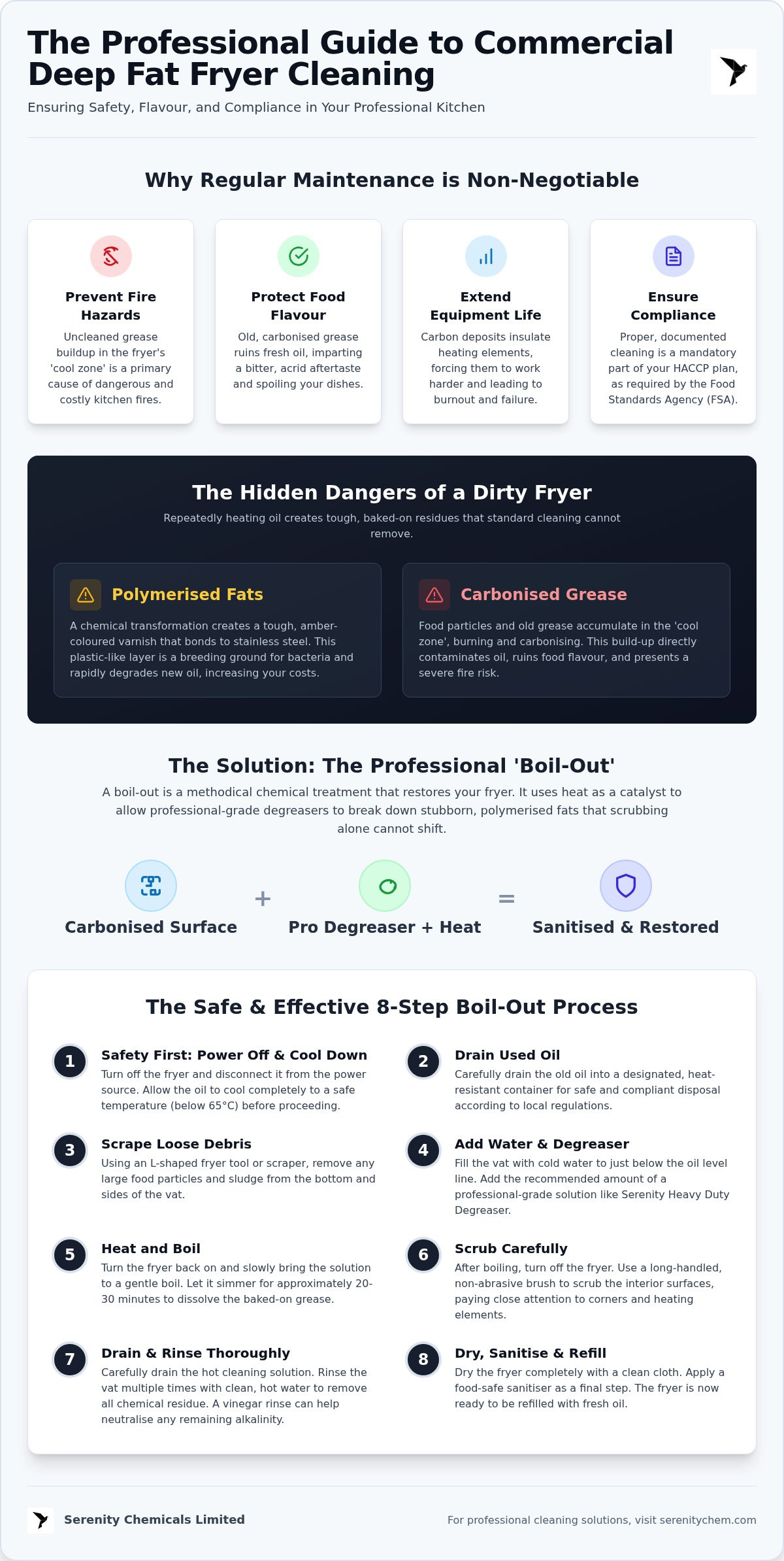
Step-by-Step Guide: How to Perform a Safe and Effective Fryer Boil-Out
Executing a professional boil-out requires a methodical approach to ensure both hygiene and staff safety. When learning how to clean a commercial deep fat fryer, the first rule is patience. Never attempt to drain the oil whilst it is at full cooking temperature. Switch off the unit and allow the oil to cool to approximately 65°C before beginning. Once cooled, drain the old oil into a designated, heat-resistant waste container. Ensure you follow the latest UK waste regulations, including the mandatory digital tracking requirements introduced in late 2026, to remain compliant with environmental standards.
After drainage, clear any loose debris or food particles from the bottom of the vat and the heating elements. Use your fryer crumb scoop for the larger fragments and the L-shaped brush for the stubborn carbonised grease trapped in the corners. This initial clearing prevents the cleaning solution from becoming overly saturated with food waste. It allows the degreaser to work directly on the stainless steel surfaces rather than fighting through layers of loose sediment. A clear vat at this stage significantly improves the efficiency of the chemical simmer that follows.
Execution of the Boil-Out Phase
Fill the vat with water to approximately 10cm below the rim to allow for expansion and prevent overflow. Add the correct dosage of Serenity Heavy Duty Degreaser as specified on the label for a deep clean. Turn the fryer on to a low setting to maintain a steady simmer between 80-90°C for 20 minutes. During this period, use a long-handled brush to gently scrub the heating elements and the walls of the vat. The heat will activate the surfactants in the solution, lifting the polymerised fats mentioned in earlier sections. Once the time has elapsed, switch off the heat and safely drain the cleaning solution into a suitable container.
The Neutralisation and Drying Stage
The final phase is the most critical for both food safety and equipment protection. Rinse the vat thoroughly with clean water to remove the bulk of the chemical solution. Follow this by rinsing with a weak vinegar solution; this neutralises any remaining alkaline residue from the degreaser and prevents chemical carry-over into your fresh oil. A successful clean is only complete once the fryer is 100% dry. Any moisture left in the vat or on the elements will cause dangerous splattering and steam explosions when you add new oil. Perform a final inspection; your heating elements should appear bright and free from dull carbon patches. If you require assistance with establishing these safety protocols, contact our technical support team for expert guidance on chemical application.
Post-Clean Protocols: Sanitisation and Oil Management for Optimal Performance
Completing the boil-out is a significant milestone, but the process of how to clean a commercial deep fat fryer isn't truly finished until the surrounding environment is secured. A common oversight in busy kitchens is focusing solely on the internal vat whilst neglecting the external surfaces and the floor. High-touch areas like handles, dials, and splashbacks require immediate attention to prevent cross-contamination. Using Serenity Kitchen Sanitiser on these exterior components ensures they meet the BS EN 1276 standards required for food-contact safety. This final step provides peace of mind that the entire unit, not just the oil reservoir, is hygienically sound.
Grease migration is an inevitable part of high-volume frying. During the cleaning process, microscopic droplets and accidental splashes often reach the floor, creating a severe slip hazard and attracting pests. It's essential to partner with a reliable commercial floor cleaner supplier to source industrial-strength solutions that can break down these stubborn films. Once the surroundings are clear, you can safely refill the fryer. Always double-check that the vat is completely dry before introducing fresh oil. Introduce the oil slowly to avoid air bubbles and ensure the heating elements are fully submerged before power is restored.
Total Kitchen Hygiene Integration
The "dead zone" behind and beneath the fryer is a frequent hotspot for grease accumulation. If left unchecked, this buildup becomes a fire risk and places an unnecessary burden on your ventilation. Maintaining a clean fryer environment directly supports your compliance with TR19 guidelines for kitchen extraction hygiene. Apply Serenity Antibacterial Surface Spray to prep benches and nearby shelving to maintain a sterile perimeter. By integrating fryer maintenance into your wider kitchen cleaning schedule, you reduce the risk of grease fires and ensure a safer working environment for your entire team.
Oil Longevity Tips
Maximising the life of your oil is a matter of chemical management. Salt and moisture are the primary catalysts for oil breakdown; always season food away from the open vat and ensure all frozen products are shaken to remove excess ice crystals before frying. Don't guess when it's time to change your oil. Use professional oil test strips to monitor the concentration of free fatty acids. This data-driven approach prevents premature disposal whilst ensuring your food remains crisp and free from "off" flavours. To maintain these high standards across your entire facility, Explore the Serenity Professional Kitchen Range for your business and discover formulations designed for the rigours of 2026 catering environments.
Securing Your Kitchen's Efficiency and Safety
Maintaining a professional kitchen requires high standards and the right chemical support. By mastering the boil-out procedure and implementing strict post-clean protocols, you protect your equipment and your reputation. You now have a comprehensive understanding of how to clean a commercial deep fat fryer to ensure full HACCP compliance and superior food quality. Regular maintenance doesn't just prevent fire hazards; it actively extends the operational lifespan of your expensive heating elements and thermostats.
Consistency is the foundation of a high hygiene rating. Setting a repeatable schedule for deep cleaning and daily oil filtration will keep your operations running smoothly throughout 2026. To support your team with dependable solutions, Order Serenity Heavy Duty Degreaser Direct from the Manufacturer. Our HACCP-compliant formulations are manufactured to ISO standards in the United Kingdom and we offer bulk buy discounts for UK catering businesses. Choosing the right tools today ensures a safer, more efficient kitchen for the future.
Frequently Asked Questions
How often should a commercial deep fat fryer be cleaned?
Learning how to clean a commercial deep fat fryer involves daily maintenance and periodic deep cleaning. Filter the oil and skim debris every day to preserve food quality. A full boil-out is typically required every seven to fourteen days, depending on your volume of service. If you observe carbon buildup on the elements or the oil begins to smoke at lower temperatures, you must perform a deep clean immediately to ensure safety and compliance.
What is the best chemical to use for a fryer boil-out?
The most effective solution for how to clean a commercial deep fat fryer is a concentrated alkaline degreaser like Serenity Heavy Duty Degreaser. These formulations are specifically designed to penetrate and dissolve polymerised fats that domestic cleaners cannot touch. By using a professional-grade chemical, you ensure the carbonised buildup is removed from the heating elements. This protects the equipment's efficiency whilst ensuring your food remains crispy and free from unpleasant chemical or burnt aftertastes.
Can I use washing up liquid to clean my commercial fryer?
Washing up liquid is not suitable for a professional boil-out. It is a neutral detergent designed for surface grease rather than the polymerised, carbonised fats found in industrial fryers. Using it won't remove the stubborn "amber" varnish from the heating elements, which can lead to equipment failure. For a thorough deep clean, you must use a heavy-duty degreaser that chemically breaks the bonds of baked-on grease whilst ensuring the stainless steel remains protected.
How do I safely dispose of used cooking oil in the UK?
All UK food businesses have a legal "Duty of Care" for their waste oil disposal. You must use a licensed waste carrier and maintain accurate records. From October 2026, mandatory digital waste tracking provides regulators with real-time data on your disposal habits. Improper disposal can lead to Environment Agency charges of £118 per hour for non-compliance. Recycling this oil into biodiesel is the most sustainable and legally compliant route for your business.
Is a boil-out necessary for every oil change?
Whilst not mandatory for every minor oil top-up, a boil-out is highly recommended during a full oil change. If you add fresh oil to a vat containing carbonised residue, the new oil will degrade significantly faster. This ruins the flavour profile and increases your operational costs. Performing a boil-out ensures a sterile environment, allowing your fresh oil to last longer and maintain the high food quality your customers expect from your kitchen.
What should I do if the fryer elements are still black after a boil-out?
If black carbon remains after a boil-out, it suggests the buildup was too thick for a single cycle. You should repeat the process using a slightly higher concentration of Serenity Heavy Duty Degreaser and extend the simmer time. Ensure you are using a specialised L-shaped brush to scrub the elements whilst the solution is hot. Persistent carbonisation acts as insulation, forcing the elements to overwork and potentially leading to a costly technical burnout.
Are Serenity cleaning chemicals safe for use in food preparation areas?
Yes, Serenity products are designed for industrial catering environments. Serenity Kitchen Sanitiser and Antibacterial Surface Spray meet the BS EN 1276 standard, ensuring they are effective against common food-borne bacteria. Whilst the Heavy Duty Degreaser is a powerful cleaning agent, it is perfectly safe for food areas provided you follow the rinsing and neutralisation protocols. This ensures no chemical residue remains on the equipment, supporting your HACCP compliance and general kitchen safety.
Do I need to wear a mask whilst performing a fryer boil-out?
Wearing a mask is a sensible precaution if your kitchen has limited ventilation. Whilst COSHH assessments primarily focus on skin and eye protection, the steam generated during a boil-out can carry chemical vapours that may irritate the respiratory system. Always ensure your extraction system is running at full capacity during the process. Combining good airflow with the correct PPE, such as gauntlets and eye protection, creates the safest possible environment for your cleaning staff.

Hand Sanitiser for Frequent Use: Professional UK Guide 2026
The very product you use to protect your health might be the primary cause of your skin's deterioration. While alcohol-based ...

Food Safe Antibacterial Spray UK: The Professional 2026 Hygiene Guide
Using the wrong disinfectant in a commercial kitchen isn't just a minor oversight; it's a direct threat to your Food Hygiene ...