

Did you know that by August 2026, every business in the UK must ensure their cleaning chemicals and safety data sheets comply with the latest GB CLP hazard standards? It's a significant shift that leaves many facility managers questioning if their current protocols actually meet professional requirements. You've likely felt the frustration of choosing between a product that's strong enough to kill viruses and one that won't damage your expensive office equipment or irritate your team. This office surface disinfectant guide is designed to remove that uncertainty, providing a clear path toward a safer, more compliant workplace.
We understand that maintaining a germ-free environment whilst protecting staff wellbeing is a delicate balance. You want to ensure your team feels safe without the lingering scent of harsh chemicals or the risk of skin irritation. In this guide, we'll master the technical distinctions between sanitising and disinfecting, ensuring you're equipped with the knowledge to choose the right formulations. We will also outline a practical protocol for high-traffic touchpoints and explain how to align your hygiene programme with essential UK safety standards, such as EN 14476 and EN 1276, for total peace of mind.
Key Takeaways
- Learn the critical distinction between cleaning and sanitising to ensure your hygiene protocol effectively reduces pathogens to safe public health levels.
- Use this office surface disinfectant guide to master technical standards like EN 1276 and EN 14476, ensuring your workplace is protected against both bacteria and viruses.
- Evaluate the practical advantages of alcohol-free formulations, which offer superior surface compatibility and a safer environment for staff in high-traffic areas.
- Implement a professional two-step routine that begins with a site audit to identify high-risk touchpoints before selecting the appropriate EN-certified chemical solutions.
- Recognise the importance of sourcing directly from a UK-based manufacturer to maintain consistent supply and ensure full compliance with the latest 2026 safety regulations.
Understanding Office Surface Disinfection: Cleaning vs Sanitising
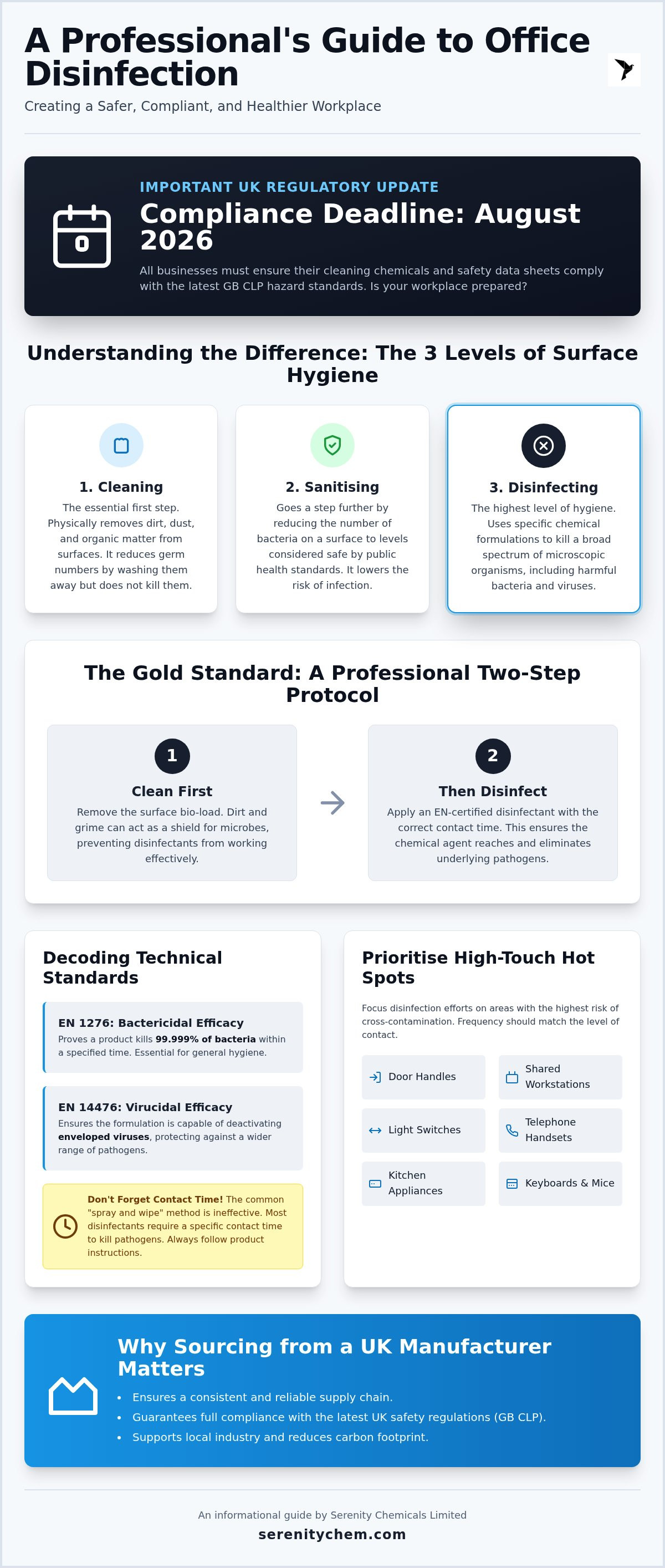
Many facility managers use the terms cleaning, sanitising, and disinfecting interchangeably, but these processes serve distinct roles in an office surface disinfectant guide. Cleaning is the essential first step, focusing on the physical removal of dirt, dust, and organic matter. Whilst it doesn't necessarily kill germs, it reduces their numbers by washing them away. Sanitising goes further by reducing bacteria to levels deemed safe by public health standards. However, to truly eliminate the threat of pathogens, you must understand what is a disinfectant? Unlike sanitising, disinfection uses specific chemical formulations to kill a broader spectrum of bacteria and viruses on surfaces.
Professional hygiene standards dictate a two-step process: clean then disinfect. This approach is considered the gold standard because organic matter can act as a shield for microbes. If a surface is covered in grime or oils, the disinfectant cannot reach the underlying pathogens effectively. By removing the bio-load first, you ensure the chemical agent can perform its job without interference, achieving the level of protection required for a shared workplace.
Identifying High-Touch Surfaces in the Workplace
Effective disinfection requires prioritising "hot spots" where the risk of cross-contamination is highest. Shared kitchen appliances, door handles, and light switches are classic examples of high-traffic zones that require frequent attention throughout the day. Beyond these communal areas, the "desk-bound" risk is often overlooked by standard cleaning regimes. Keyboards, mice, and telephone handsets can harbour significant bacterial colonies, especially in offices with hot-desking policies. The frequency of disinfection should directly reflect the frequency of contact; a shared workstation requires more regular intervention than a private office used by a single individual.
The Role of Multi-Surface Cleaners
Efficiency is a priority in any commercial setting. A high-quality commercial multi surface cleaner prepares a variety of materials, from laminate desks to metal railings, for the final disinfection stage. Using a versatile product across multiple office zones streamlines your inventory and ensures a consistent standard of hygiene. When evaluating these products, you'll encounter technical terminology regarding efficacy. Log Reduction is a mathematical scale used to represent the percentage of bacteria killed by a chemical product, with higher numbers indicating a more thorough elimination of pathogens.
The Technical Standards of Effective Office Disinfection
Maintaining a germ-free workplace requires moving beyond visual cleanliness to technical validation. For any professional office surface disinfectant guide, the primary benchmarks are EN 1276 and EN 14476. EN 1276 is the European standard for bactericidal activity, proving a product can kill 99.999% of bacteria within a specified time. In contrast, EN 14476 focuses on virucidal efficacy. This certification is vital for modern offices, as it ensures the formulation is capable of deactivating enveloped viruses, providing a necessary layer of protection for staff and visitors alike.
A common mistake in commercial hygiene is the "spray and wipe" method. Most disinfectants require a specific "contact time" to work effectively. If you wipe the product away immediately, you haven't achieved disinfection. This is where EPA's technical standards for disinfectants provide useful context on how different pathogens react to chemical exposure. Broad-spectrum activity is another essential factor; it indicates that the chemical is effective against a wide variety of organisms, rather than just a few specific strains. High-traffic commercial areas also benefit from residual protection, where the chemical continues to inhibit microbial growth even after the surface has dried.
Navigating UK Safety Regulations (COSHH)
By August 2026, UK businesses must ensure all chemical products align with the updated GB CLP hazard standards. This involves updating your Control of Substances Hazardous to Health (COSHH) assessments and ensuring a Safety Data Sheet (SDS) is accessible for every product on-site. When using professional-grade concentrates, staff training is mandatory. Team members must understand correct dilution ratios and the required personal protective equipment (PPE) to handle chemicals safely and responsibly.
Kill Times and Efficacy
Efficiency in janitorial tasks is often determined by a product's kill time. Comparing a 30-second kill time to a 5-minute requirement reveals a significant difference in labour costs. Faster kill times allow cleaning staff to move through high-touch zones more quickly without compromising safety. Choosing the right product based on this office surface disinfectant guide means looking for the balance between speed and safety. If you're unsure which EN-certified solutions best fit your facility's specific needs, you can speak with our technical team for guidance.
Evaluating Disinfectant Types: Alcohol vs Alcohol-Free Formulations
Choosing between formulation bases is a critical decision for any workplace hygiene strategy. Alcohol-based disinfectants are known for their rapid evaporation rates, which is useful for quick turnarounds in clinical settings. However, they often lead to skin irritation amongst staff and carry flammability risks that require meticulous storage and handling. Modern alcohol-free technology has emerged as a reliable alternative, providing high-level protection without the associated safety hazards or the drying effect on hands. In an office surface disinfectant guide, the choice of formulation directly impacts both employee wellbeing and the longevity of office assets.
Surface compatibility is a significant concern for facility managers. Alcohol is a solvent, meaning it can react poorly with many modern materials. Frequent use on acrylic desk dividers or plastic equipment housings often leads to clouding or micro-cracking, a process known as crazing. Similarly, alcohol can strip the natural oils from leather seating, leading to premature cracking and wear. Alcohol-free options are generally much gentler on these surfaces, making them the preferred choice for open-plan offices and sensitive environments like schools where staff and visitor safety is paramount.
Protecting Office Electronics and Delicate Surfaces
Modern workstations are filled with delicate hardware that requires specific care. Touchscreens and monitors often feature oleophobic or anti-glare coatings that alcohol or bleach-based products can permanently strip away. Using a dedicated Serenity Antibacterial Surface Spray allows you to balance professional-grade kill rates with surface integrity. It provides a safe way to maintain hygiene on shared devices without risking hardware failure or aesthetic damage. You should also avoid bleach-based products on porous office furniture, as these can cause irreversible staining and structural degradation of the materials.
The Ethics of Chemical Selection
Ethical responsibility is increasingly central to UK procurement. There is a growing demand for cleaning supplies that are cruelty-free and vegan-friendly, reflecting a broader commitment to principled business practices. Beyond the formulation itself, the delivery method matters. Moving away from single-use wipes in favour of refillable spray systems significantly reduces plastic waste and long-term costs. Sourcing from a UK manufacturer further supports sustainability by minimising the carbon footprint associated with international shipping. This approach ensures your hygiene protocol is as responsible as it is effective, building long-term trust with your team and stakeholders.
Establishing a Professional Office Disinfection Routine
Creating a formal Standard Operating Procedure (SOP) is the only way to ensure consistency in workplace hygiene. This office surface disinfectant guide recommends a structured five-step approach to move from reactive cleaning to a proactive safety culture. By following a methodical routine, you can ensure that no high-risk areas are overlooked and that your facility remains compliant with UK health and safety expectations.
- Step 1: Conduct a Site Audit. Begin by mapping your facility to identify high-risk zones. Consider not just the frequency of use, but also the types of materials present, such as porous woods or sensitive electronics that require specific care.
- Step 2: Chemical Selection. Match your identified surfaces with EN-certified chemicals. Ensure the bactericidal and virucidal properties align with the risks identified in your audit, prioritising formulations that offer the correct efficacy for each zone.
- Step 3: Frequency Scheduling. Distinguish between daily maintenance and periodic deep cleans. High-traffic touchpoints require at least daily disinfection, whilst less frequent areas might only need a weekly intensive treatment.
- Step 4: Application Technique. Train staff in the S-shape wipe method. This technique ensures you never pass over the same area twice with a contaminated cloth, effectively lifting pathogens away rather than spreading them across the surface.
- Step 5: Documentation. Maintain detailed logs of all disinfection activities. This provides a clear audit trail for compliance and reassures your team that their environment is being managed with professional integrity.
Protecting Your Workforce during Disinfection
Employee safety must remain a priority during the application of any chemical solution. Even when using gentle, alcohol-free formulations, appropriate personal protective equipment (PPE) like gloves and masks should be provided to prevent long-term exposure. Proper ventilation is also essential, especially when applying large-scale sprays in confined areas. Utilising low-odour formulations is a practical way to maintain comfort and concentration levels, ensuring that the disinfection process doesn't disrupt the working day or cause discomfort for sensitive individuals.
Managing Shared Spaces: Kitchens and Washrooms
Communal areas require specialised attention due to the higher risk of cross-contamination. In kitchen environments, it's vital to use food-safe sanitisers that won't leave harmful residues on preparation surfaces. Conversely, washrooms demand heavy-duty disinfection to manage higher microbial loads effectively. Encouraging a "clean desk" policy amongst staff is a simple but effective strategy. It removes obstacles for cleaning teams, allowing for a more thorough nightly disinfection of workstations. If you need assistance developing a bespoke hygiene protocol for your facility, you can contact our experts for a professional consultation.
Sourcing Disinfectants: Why UK Manufacturing Matters
Sourcing directly from a UK-based manufacturer like Serenity Chemicals Limited provides a level of supply chain transparency that international resellers cannot match. In this office surface disinfectant guide, we've discussed the technical requirements for 2026, but those standards are only met if your supply is consistent and verified. By cutting out the middleman, you avoid the unpredictability of international shipping and gain direct access to the technical experts who formulated the products. This relationship is vital for ensuring your Safety Data Sheets remain current and that any specific application queries are answered by the people who understand the chemical properties best.
Economic resilience is another significant factor for facilities managers. Transitioning from retail-grade products to professional concentrates can reduce annual supply costs by up to 60%, based on industry data from April 2026. These high-performance formulations are engineered for the scale of commercial office complexes, allowing you to maintain rigorous hygiene standards whilst reducing packaging waste. When evaluating a supplier, it's essential to verify their credentials as a UK blender, ensuring they operate with the ethical integrity and quality control expected in a business-to-business environment.
The Serenity Approach to Office Hygiene
Our philosophy centres on providing integrated solutions that protect both people and property. The Serenity Hard Surface Sanitiser is specifically formulated to offer broad-spectrum protection in high-traffic zones without the risks associated with traditional chemicals. To achieve a truly germ-free workplace, surface disinfection should be paired with a high-quality alcohol-free hand sanitiser UK standard. This holistic approach ensures that every link in the hygiene chain is strong, from the communal kitchen surfaces to the hands of every team member.
Future-Proofing Your Office Hygiene Strategy
The next few years will see a continued shift toward wellness-focused cleaning, where the efficacy of a disinfectant is balanced against its toxicity and environmental impact. Staying ahead of emerging threats requires a commitment to broad-spectrum, non-corrosive chemicals that don't compromise indoor air quality. By choosing a UK manufacturer, you're investing in a local supply chain that prioritises safety and responsibility. To begin your transition to a more reliable hygiene protocol, you can organise your professional cleaning supply with Serenity Chemicals Limited today.
Securing Your Workplace Hygiene Standards for 2026
Mastering a professional disinfection routine is about more than just compliance; it's about fostering a culture of safety and care. By prioritising EN 14476 certified formulations and understanding the nuances of contact times, you protect both your team and your physical assets. This office surface disinfectant guide has highlighted how alcohol-free solutions provide a non-corrosive, effective alternative for modern workplaces, ensuring high-traffic zones remain sterile without damaging delicate equipment or irritating skin.
Choosing a UK-based manufacturer ensures your supply chain remains resilient whilst supporting ethical, principled chemical production. As regulations evolve toward the August 2026 GB CLP standards, having a dependable partner becomes essential for maintaining peace of mind. We invite you to browse the Serenity range of professional office disinfectants to find the right solutions for your facility. Taking these steps today guarantees a healthier, more productive environment for everyone who walks through your doors.
Frequently Asked Questions
How often should high-touch office surfaces be disinfected?
High-touch surfaces such as door handles, communal taps, and lift buttons should be disinfected at least once daily. In busy environments with high staff turnover or hot-desking, twice-daily intervention is recommended to keep bacterial loads below dangerous thresholds. This frequency ensures that pathogens introduced throughout the morning are eliminated before the afternoon peak, maintaining a consistent standard of hygiene as part of a proactive workplace safety strategy.
Is it safe to use antibacterial spray on computer keyboards and mice?
Yes, provided you use a compatible alcohol-free formulation and apply it correctly. You should never spray liquids directly onto electronics; instead, apply the disinfectant to a microfibre cloth first. This prevents moisture from seeping into internal components. Using a gentle antibacterial spray avoids the "crazing" or micro-cracking often caused by alcohol-based wipes on plastic housings, protecting your hardware whilst ensuring it remains safe for shared use.
What is the difference between EN 1276 and EN 14476 standards?
EN 1276 is the European standard for bactericidal activity, whilst EN 14476 specifically measures virucidal efficacy. A product meeting EN 1276 is certified to kill 99.999% of bacteria within a set timeframe. EN 14476 certification is critical for deactivating viruses, including enveloped viruses. For a comprehensive protocol, your office surface disinfectant guide should prioritise products carrying both certifications to ensure broad-spectrum protection against a wide variety of pathogens.
Can I use a multi-surface cleaner as a disinfectant?
Not unless the product is specifically labelled as a combined cleaner-disinfectant with independent EN certification. Standard multi-surface cleaners are designed for the physical removal of dirt and grease, which is the essential "cleaning" phase. They lack the chemical potency to kill pathogens. For professional hygiene, you must follow the two-step process: use a multi-surface cleaner to remove debris, then apply a certified disinfectant to eliminate remaining bacteria and viruses.
Are alcohol-free disinfectants as effective as alcohol-based ones?
Alcohol-free disinfectants are equally effective at killing pathogens when they meet the same EN 1276 and EN 14476 standards. They often provide longer-lasting residual protection because they don't evaporate as quickly as alcohol. These formulations are safer for staff with sensitive skin and won't damage modern office materials like acrylics or leather. They represent a principled choice for businesses prioritising safety and surface longevity alongside high-level efficacy.
What should I look for on a chemical safety data sheet (SDS)?
You should prioritise Section 2 for hazard identification and Section 8 for required personal protective equipment (PPE). By August 2026, ensure every SDS is compliant with the latest GB CLP hazard standards. You must also check Section 3 for active ingredients and Section 12 for environmental impact. Keeping these documents accessible is a legal requirement under COSHH regulations, ensuring your team can handle professional-grade chemicals with confidence and safety.
How do I calculate the contact time required for a disinfectant?
You don't need to calculate it; the required contact time is specified by the manufacturer on the product label or technical data sheet. This is the duration the surface must remain visibly wet to achieve the certified kill rate. For many professional sprays, this ranges from 30 seconds to 5 minutes. Failing to observe this period means the disinfection process is incomplete, potentially allowing resilient pathogens to survive on the surface.
Do I need to rinse surfaces after using a professional disinfectant?
Most modern office disinfectants are "leave-on" formulations that don't require rinsing unless they're used on food-contact surfaces. In communal kitchens, you must check if the product is food-safe. If it isn't, a water rinse is necessary to prevent chemical contamination. For desks, handles, and general furniture, leaving the product to air-dry is often beneficial. This allows the formulation to maintain a residual antimicrobial layer that continues to inhibit microbial growth.

Hand Sanitiser for Frequent Use: Professional UK Guide 2026
The very product you use to protect your health might be the primary cause of your skin's deterioration. While alcohol-based ...

Food Safe Antibacterial Spray UK: The Professional 2026 Hygiene Guide
Using the wrong disinfectant in a commercial kitchen isn't just a minor oversight; it's a direct threat to your Food Hygiene ...