

It's 9:00 AM on a Monday morning, a major client is arriving in twenty minutes, and a fresh latte has just pooled across the centre of your reception area. You likely feel the immediate pressure to act before the spill sets into the fibres. Most people reach for the nearest supermarket spray, but these often leave behind sticky residues that attract even more dirt over time. Learning how to remove coffee stains from office carpet properly requires more than just a quick scrub; it demands a methodical approach that protects the long-term integrity of your commercial flooring.
We understand the frustration of seeing a professional environment marred by a stubborn mark that refuses to budge. You need a reliable workflow that your maintenance team can execute with confidence. This guide shares the professional "Blot, Neutralise, Extract" protocol designed to eliminate coffee spills efficiently whilst ensuring your facility remains compliant with the updated GHS Revision 7 safety standards. We will outline the specific chemical solutions you should keep on-site, such as a high-quality Serenity Carpet Shampoo, to ensure your office remains a clean and welcoming space for everyone.
Key Takeaways
- Avoid the common mistake of rubbing spills; learn why blotting with microfibre cloths is the essential first step in preventing permanent fibre damage.
- Understand the tannin chemistry behind coffee to discover how to remove coffee stains from office carpet using professional-grade surfactants instead of ineffective domestic remedies.
- Master the professional dilution and dwell-time techniques required to lift deep-seated pigments without over-wetting the carpet backing.
- Identify the causes of "wicking" and learn the rehydration secrets used by maintenance experts to eliminate coffee marks that reappear after drying.
- Discover how maintaining a dedicated spill kit with Serenity Carpet Shampoo ensures your team can respond to accidents with professional efficiency and safety.
Immediate Action: The Critical First Response to Coffee Spills
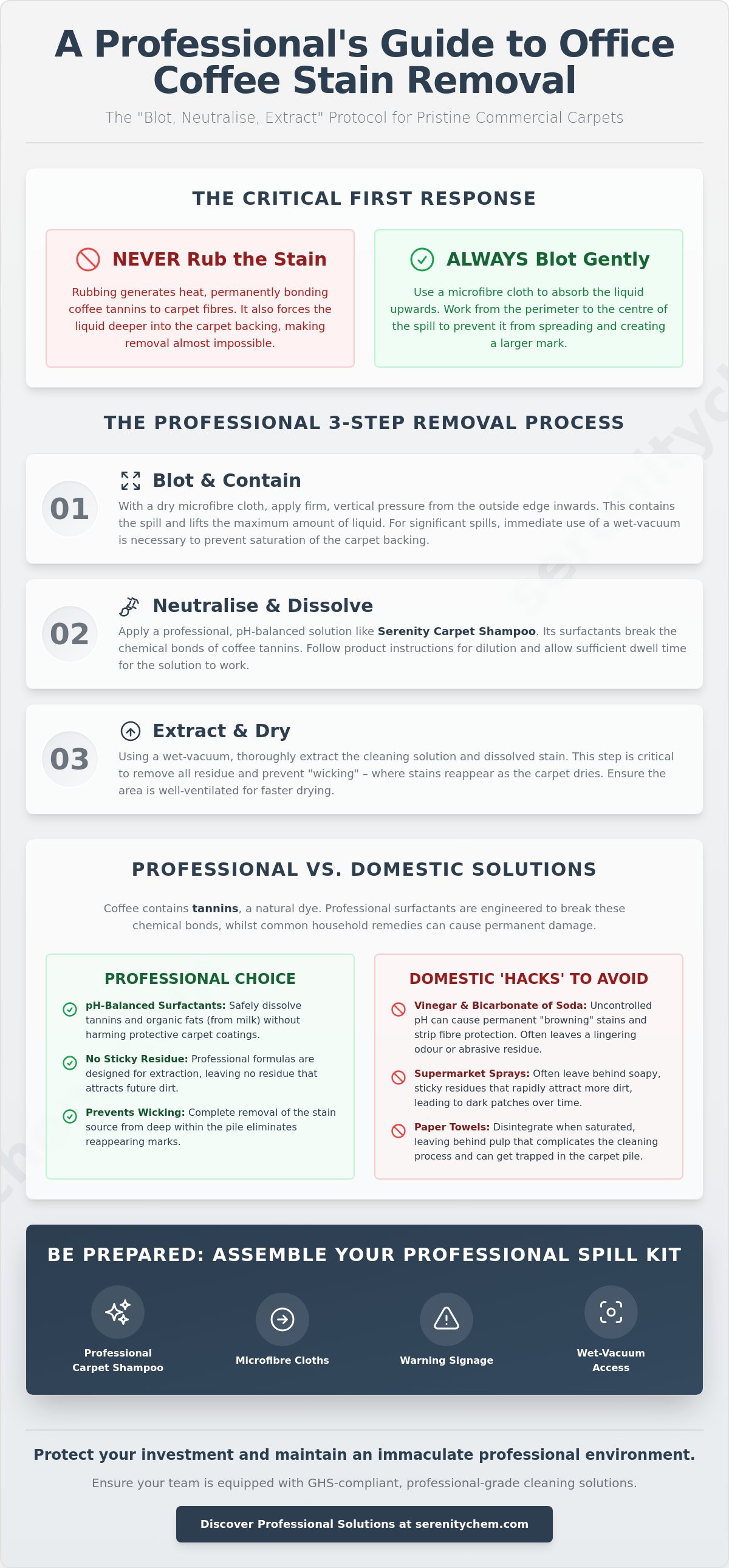
The moments following a spill are the most critical. If you've ever wondered how to remove coffee stains from office carpet without causing permanent damage, the answer lies in your first ten seconds of response. The "Golden Rule" is simple: never rub the spill. Rubbing creates friction that generates heat, which can bond the coffee tannins to the synthetic fibres of industrial carpet. On a structural level, aggressive rubbing often forces liquid through the primary backing and into the subfloor or carpet tile adhesive, making the stain nearly impossible to extract later.
Choosing the right tool is equally vital. Whilst paper towels are a common office staple, they often disintegrate when saturated, leaving behind pulp that complicates the cleaning process. Microfibre cloths are the professional choice for commercial environments. They possess superior capillary action, pulling liquid upwards and away from the carpet pile rather than spreading it. If the spill involves an entire carafe, immediate extraction with a wet-vacuum is necessary to prevent the liquid from seeping into the joins between carpet tiles, which can lead to long-term odours and adhesive failure.
The Perimeter-to-Centre Blotting Method
To contain the spill, always work from the outside in. Starting at the edges prevents the coffee from migrating outwards and creating a larger "halo" mark. Apply firm, vertical pressure using the palm of your hand. Do not move your hand horizontally; simply press down to transfer the liquid into the cloth. As the cloth becomes saturated, fold it to a clean section or replace it. This ensures you are constantly presenting a fresh, absorbent surface to the carpet, which is the most effective way to manage the initial volume of the spill.
Managing Large Spills in High-Traffic Areas
Large spills in hallways or reception areas require immediate cordoning. Foot traffic across a wet spill causes "tracking," where the coffee is carried on shoes to other parts of the building, increasing the cleaning workload significantly. For fresh spills, a light application of cold water can help dilute the pigments whilst you blot. It's also important to distinguish between black coffee and milk-based drinks like lattes. Milk-based spills contain fats and proteins that can turn rancid if not fully removed, necessitating a more thorough extraction process. Understanding different carpet cleaning methods helps in selecting the right approach for these complex spills. Knowing how to remove coffee stains from office carpet effectively means recognising that milk-based residues require specific surfactants to break down organic fats before they set.
Professional Chemicals vs. Domestic Remedies for Coffee Stains
Coffee contains tannins, which are the same organic compounds used to dye leather and fabric. This makes a spill more than just a surface mark; it is essentially a "natural dye" attempting to bond with your flooring. When you're investigating how to remove coffee stains from office carpet, you're fighting a chemical process. Domestic remedies like white vinegar or bicarbonate of soda are popular on social media, but they often lack the precision required for high-traffic industrial environments. Professional surfactants are specifically designed to break down these tannin bonds and the complex oils found in modern coffee blends without damaging the underlying material.
Maintaining a strict pH balance is another reason to favour professional solutions. Industrial carpet tiles are often treated with fire-retardant coatings and stain-resist properties that can be stripped away by harsh household chemicals. A stain removal guide from Iowa State University Extension notes that tannin-based stains like coffee usually respond best to slightly acidic treatments, yet domestic acids lack the stabilising agents found in commercial formulas. Using the wrong concentration can lead to permanent discolouration or fibre degradation.
Why Household Hacks Often Fail Office Carpets
White vinegar is frequently suggested as a fix-all, but it leaves a sharp, lingering odour that can make a professional office feel like a kitchen. More concerning is the risk of "browning," where the chemical reaction between an improper cleaner and the carpet backing causes a dark, permanent stain to rise to the surface. Bicarbonate of soda is also problematic; it often leaves a gritty residue that settles deep into the pile. This residue acts like a magnet for dust and foot traffic grime, eventually making the area look dirtier than before the spill occurred. If you're unsure about which chemicals are safe for your specific flooring, you can contact our technical team for professional guidance.
The Benefits of Professional Carpet Shampoo
Modern professional products, such as Serenity Carpet Shampoo, use advanced encapsulation technology. Instead of leaving a sticky soap film, these solutions surround stain particles and crystallise them as they dry. This allows your maintenance team to simply vacuum away the encapsulated coffee pigments during their regular rounds. These formulas are also engineered for speed. In a business environment, time is a significant cost, and professional-grade chemicals work faster to lift stains, which reduces the labour hours required for your cleaning staff. This efficiency ensures that your office remains presentable whilst protecting the long-term investment of your flooring.
The Step-by-Step Professional Removal Process
Once the initial blotting phase is complete, the chemical extraction process begins. Success depends on following precise dilution ratios; using a professional concentrate at full strength is a common error that leads to excessive residue. When preparing a solution of Serenity Carpet Shampoo, ensure the water temperature and volume match the manufacturer's specifications. This creates the optimal environment for surfactants to suspend the coffee pigments away from the carpet fibres. Understanding how to remove coffee stains from office carpet requires this methodical approach to chemistry. If the solution is too weak, the tannins will remain; if it is too concentrated, the carpet will become a magnet for future soil.
Preparation also involves protecting the wider office environment. Ensure the area is well-ventilated and that any nearby furniture is moved or shielded. Before applying the solution to the centre of the room, always perform a colourfastness test in an inconspicuous area, such as under a desk or inside a cupboard. This confirms that the carpet dyes are stable and won't bleed when the cleaning agent is introduced. It's a simple step that provides peace of mind and prevents a minor spill from becoming a permanent flooring replacement project.
Applying the Cleaning Solution Correctly
Misting is the preferred application method for commercial carpet tiles. You should avoid soaking the area, as excess moisture can penetrate the joins and weaken the adhesive backing. Apply the solution evenly across the stain and allow it to sit for at least five minutes. This "dwell time" is essential; it gives the surfactants the necessary window to penetrate the dried-in coffee oils and lift them to the surface. Let the chemistry do the heavy lifting whilst you prepare your agitation tools. This patience ensures a more thorough clean with less physical effort.
Agitation and Rinsing Protocols
Agitation should be gentle and purposeful. Use a soft-bristled carpet brush and a "tamping" motion, which involves tapping the brush vertically onto the fibres. Never use a horizontal scrubbing motion, as this can fray the carpet pile and permanently alter its texture. Once the stain is suspended, rinse the area with cool, clean water. Professional extraction is the key differentiator here. Unlike domestic "wash and dry" methods, a professional protocol ensures that both the suspended coffee particles and the cleaning agents are fully removed. Any leftover soap will create a sticky patch that attracts dirt, so continue the rinsing and blotting process until the water runs clear. Knowing how to remove coffee stains from office carpet effectively means leaving the fibres as clean and neutral as they were on the day of installation.
Dealing with Stubborn or Dried-In Coffee Stains
Discovering a spill that occurred hours or even days ago presents a different challenge than managing a fresh accident. When coffee has dried, the tannins have had time to penetrate the core of the carpet fibres. To address this, you must first rehydrate the mark. Applying a controlled amount of a professional solution like Serenity Carpet Shampoo allows the dried pigments to liquefy, making them susceptible to extraction once more. Understanding how to remove coffee stains from office carpet that have already set requires patience; rushing the process with aggressive scrubbing will only distort the pile and cause permanent textural damage.
Advanced extraction using a commercial carpet cleaning machine is often necessary for these deep-set tannins. Whilst low-moisture encapsulation is excellent for regular maintenance, a "hot water extraction" or steam cleaning approach is sometimes required to flush out heavy residues from the carpet backing. However, you must be cautious about over-wetting. If the backing remains damp for too long, you risk the return of the stain through a process known as wicking. If you find that a particular area of flooring is consistently problematic, you can contact our technical support team for specific advice on chemical compatibility.
How to Treat Reappearing Stains (Wicking)
Wicking occurs when liquid trapped in the carpet backing or underlay travels up the fibres as the surface dries. This is why a stain might seemingly vanish after cleaning, only to reappear 24 hours later. To prevent this, use weighted towels. Place a stack of clean, white microfibre cloths over the damp area and put a heavy, colour-fast object on top. This creates a "bridge" that draws moisture and residual pigments into the towel rather than allowing them to settle at the tips of the carpet pile. Using office fans or air movers to accelerate the drying process is also essential to stop the capillary action before the stain resets.
Advanced Techniques for Set-In Marks
For particularly stubborn marks, repeated light applications are more effective than a single heavy saturation. Allow the chemical to dwell, blot, and then repeat the cycle. If the coffee contained high levels of sugar or cream, the residue might feel stiff or sticky. In these cases, a specialised rinse may be needed to neutralise the sugars. It's important to recognise the limits of cleaning; if the carpet fibres have been physically "burned" or bleached by a highly acidic coffee blend, no amount of cleaning will restore the colour. At this stage, spot-dyeing or replacing the specific carpet tile may be the only professional solution left to maintain your office's appearance. Knowing how to remove coffee stains from office carpet effectively means understanding when a stain has transitioned from a cleaning task to a repair requirement.
Maintaining Office Hygiene with Serenity Professional Solutions
Effective floor care is not merely about reacting to accidents; it is about establishing a proactive system that protects your commercial assets. Whilst the previous sections have detailed the technical steps of how to remove coffee stains from office carpet, the most successful maintenance teams are those that prioritise preparation. By integrating high-performance chemicals into your daily routine, you ensure that small spills never escalate into permanent flooring damage. A clean office environment reflects a commitment to professional excellence and provides peace of mind for both employees and visitors alike.
Our approach at Serenity Chemicals focuses on providing principled solutions that balance efficacy with safety. We believe that professional-grade cleaning shouldn't come at the cost of the user's well-being or the environment's health. This philosophy is embedded in every product we manufacture, ensuring that your facility remains a safe, welcoming space for everyone. By choosing the right tools, you simplify the complexities of commercial cleaning and allow your team to focus on their core responsibilities without the distraction of unsightly carpet marks.
Building Your Office Spill Kit
The speed of your response is often the deciding factor in whether a mark becomes permanent. We recommend placing a dedicated spill kit in every office kitchenette and high-traffic breakroom. This ensures that staff don't have to search for supplies whilst a spill is soaking into the fibres. Your kit should include high-quality microfibre cloths, a spray bottle for dilution, and a reliable concentrate like Serenity Carpet Shampoo. Training your team on the "Blot, Neutralise, Extract" protocol ensures that everyone knows how to remove coffee stains from office carpet correctly before professional cleaners arrive.
A holistic hygiene strategy extends beyond the floor. Maintaining a pristine environment also involves high-touch surface care and personal hygiene. Integrating your carpet care routine with the use of alcohol-free hand sanitisers helps create a safer workplace, especially in shared spaces where coffee spills and high foot traffic are most common. This comprehensive approach to cleanliness demonstrates a seasoned professional's attention to detail and care for staff welfare.
Why UK Businesses Trust Serenity Chemicals
As a direct-from-manufacturer provider, we offer professional-grade formulations that meet the rigorous demands of the modern British workplace. Our products are engineered to be effective, responsible, and easy to use, ensuring that your maintenance team can achieve consistent results every time. We understand the pressure to maintain a polished office appearance, and our solutions are designed to deliver that outcome with maximum efficiency. If you are ready to upgrade your facility's maintenance standards, you can browse our full range of floor care solutions to find the right match for your specific requirements.
Protecting Your Commercial Flooring Assets
Maintaining a pristine workspace requires more than just reactive cleaning; it demands a systematic approach to spill management. By prioritising immediate, vertical blotting and utilising professional-grade surfactants, you prevent tannin-based spills from becoming permanent eyesores. Mastering how to remove coffee stains from office carpet is an essential skill for any facilities management team aiming to preserve the longevity of their flooring whilst upholding a professional atmosphere. We've seen how the right dwell times and agitation techniques can restore even high-traffic areas to their original standard.
As a UK-based manufacturer of high-performance cleaning chemicals, we provide professional-grade formulations that simplify complex maintenance tasks. Our expert guidance ensures your team remains COSHH-compliant whilst achieving superior results in any commercial environment. Equipping your kitchenette with a dedicated spill kit is the final step in securing your office hygiene strategy. You don't have to face stubborn stains alone; the right chemistry makes all the difference. With a principled approach to cleanliness, you can ensure your office remains a welcoming and safe environment for every visitor.
Invest in Professional Carpet Care: Shop Serenity Carpet Shampoo Today
Frequently Asked Questions
Can I use washing up liquid to remove coffee stains from office carpet?
You should avoid using washing up liquid on commercial flooring. Whilst it is effective for dishes, it leaves a high-foaming residue that is incredibly difficult to rinse out of dense carpet fibres. This sticky film remains in the pile and eventually attracts dust and foot traffic grime, creating a dark patch that often looks worse than the original spill.
How long should I leave the carpet cleaner on a coffee stain?
A dwell time of approximately five minutes is ideal for most professional solutions. This window allows the surfactants in a product like Serenity Carpet Shampoo to penetrate the dried-in tannins and lift them to the surface for easier extraction. You shouldn't let the solution dry out completely; if the carpet is particularly absorbent, you may need to reapply a light mist during this period.
Why does my coffee stain keep coming back after I clean it?
This phenomenon is known as "wicking," where liquid trapped in the carpet backing travels up the fibres as the surface dries. It often happens if the carpet was over-wetted during the cleaning process or if the subfloor remained damp. To stop this, use weighted microfibre towels to draw moisture out of the base rather than letting it evaporate solely from the tips of the pile.
Is it better to use hot or cold water for coffee spill removal?
Cold water is the safest choice for fresh spills because heat can bond coffee tannins to synthetic fibres permanently. If you're wondering how to remove coffee stains from office carpet that are still wet, cold water dilution followed by immediate blotting is the most effective first step. Warm water should only be used in professional extraction machines where the heat is controlled and the liquid is removed instantly.
Will a coffee stain ruin our office carpet tiles permanently?
Most coffee spills won't cause permanent damage if you act quickly and avoid the temptation to rub the area. Permanent staining usually occurs when domestic chemicals cause "browning" or when aggressive scrubbing distorts the pile texture beyond repair. Using professional-grade chemicals ensures the stain is lifted whilst protecting the fire-retardant properties and the colourfastness of your office tiles.
What is the best way to dry an office carpet after cleaning a spill?
Rapid drying is essential to prevent wicking and the development of musty odours. Use office fans or dedicated air movers to circulate air directly across the damp patch as soon as you've finished cleaning. If the area is small, placing a stack of clean towels under a heavy, colour-safe object will pull deep moisture out of the backing through capillary action.
Should I use a brush or a cloth to agitate the cleaning solution?
You should use a soft-bristled brush for agitation and a microfibre cloth for the initial and final blotting. When agitating, use a vertical "tamping" motion with the brush to work the solution into the pile. Avoid horizontal scrubbing at all costs, as this can fray the carpet fibres and lead to permanent textural changes that catch the light differently than the surrounding floor.
How do I remove coffee with milk or sugar differently than black coffee?
Milk and sugar require a surfactant-based cleaner to break down organic fats and proteins that black coffee doesn't contain. Lattes or cappuccinos leave behind sticky residues that can turn rancid and attract bacteria if they aren't fully extracted from the pile. A thorough rinse with a professional carpet shampoo is necessary to ensure these organic components are completely removed from the flooring environment.

Hand Hygiene in Food Preparation Areas: The 2026 Professional Guide
The Food Standards Agency estimates that foodborne illness costs the UK economy approximately £9 billion every year, with a s...

Sanitising Commercial Kitchen Hard Surfaces: The Professional UK Guide (2026)
Did you know that the average fine for food hygiene offences in the UK has more than tripled since 2016, now reaching over £7...