

What if the fresh floral scent you've been chasing is actually preventing you from achieving real hygiene? Why does that persistent damp smell or pet odour often return just days after you've spent hours deep cleaning your floors? It's a common frustration for many who find that standard detergents often fail to address the root cause of the problem. If you're tired of simply masking smells, it's time to understand the role of a professional odour neutralising carpet shampoo. True hygiene isn't about adding perfume; it's about a chemical reaction that breaks down the organic matter responsible for the malodour.
We agree that there's nothing more disheartening than a lingering scent that suggests a lack of cleanliness despite your best efforts. This guide provides a scientifically backed method for permanent odour removal, helping you move beyond the confusion of enzyme versus chemical treatments. You'll learn exactly which active ingredients to look for to protect expensive carpet fibres whilst ensuring a safe, neutral-smelling environment. We'll guide you through the technical standards and professional practices required to achieve a level of fabric hygiene that truly lasts.
Key Takeaways
- Understand why carpets function as an "odour sink" and how porous fibres trap volatile organic compounds that standard cleaning might miss.
- Learn how a professional odour neutralising carpet shampoo uses surfactants and enzymes to physically dismantle malodours at a molecular level.
- Discover the critical difference between temporary masking agents and true chemical neutralisation to avoid "fragrance fatigue" in your environment.
- Master professional application techniques, including the necessity of thorough dry vacuuming and precise dilution ratios for maximum chemical efficacy.
- Identify the benefits of selecting British-manufactured solutions to ensure high-performance results and professional-grade fabric hygiene.
Understanding the Science of Carpet Odour Retention
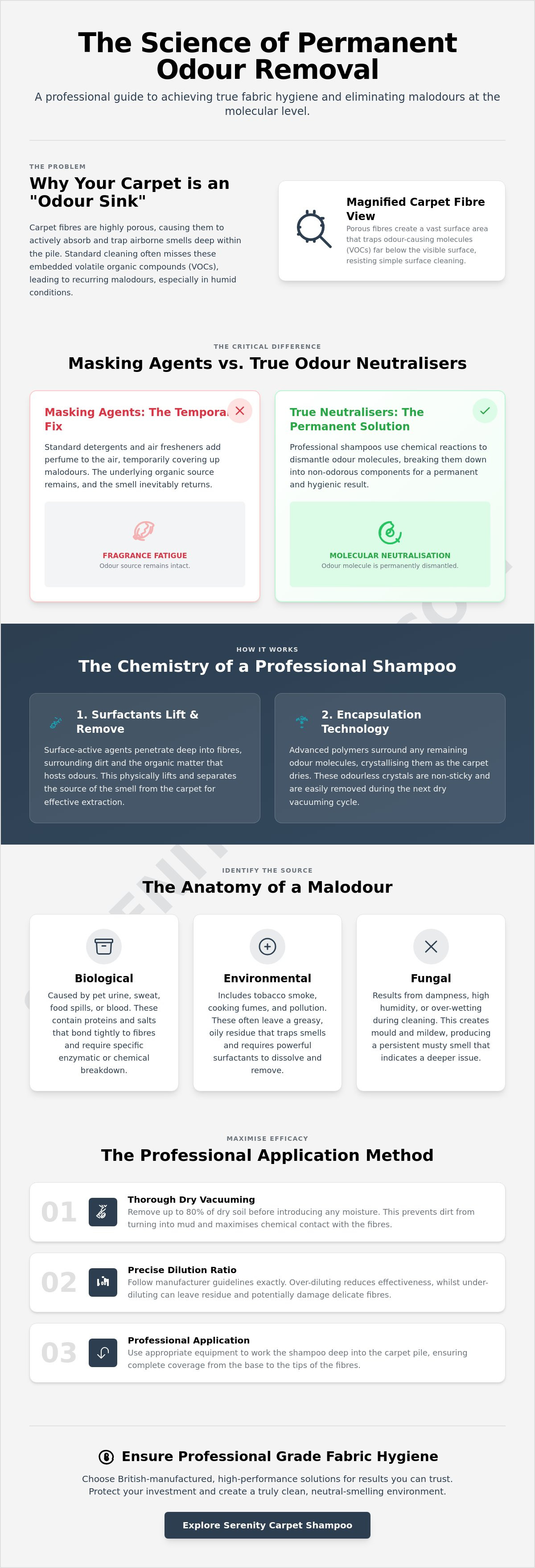
Carpets act as a secondary filter for your indoor environment. Whilst they provide comfort and insulation, their dense structure is designed to trap airborne particulates, dust, and allergens. This functionality becomes problematic when volatile organic compounds (VOCs) and malodour molecules enter the home. Because carpet fibres are highly porous, they create an "odour sink" effect. This means they don't just hold onto dirt; they actively absorb gaseous molecules into the very core of the material, keeping them trapped far below the visible surface.
The presence of moisture is often the catalyst for these smells to resurface. High humidity levels can re-activate trapped molecules, which is why a room might suddenly smell damp or stale on a rainy day. To solve this, professional odour neutralisation is required. This process involves changing a molecule's chemical structure so it no longer triggers the olfactory system. Unlike basic detergents, a high-quality odour neutralising carpet shampoo is formulated to facilitate this structural change, ensuring the scent is removed rather than hidden.
Why Standard Cleaning Often Fails
Surface-level cleaning frequently misses the bacteria and contaminants residing amongst the carpet backing. Many common Carpet cleaning methods focus solely on the pile, leaving the deeper layers untouched. This leads to a phenomenon known as "wicking," where moisture travels down into the base and then rises back to the tips during the drying process, carrying dissolved odours with it. If you use too much water without professional-grade extraction, you risk over-wetting the material. This creates a breeding ground for mould and mildew, which introduces entirely new, persistent fungal smells into your living space.
The Anatomy of a Malodour
Understanding the source of a smell is vital for effective treatment. Malodours generally fall into three categories:
- Biological: Such as pet urine or sweat, which contain proteins and salts that bond tightly to fibres.
- Environmental: Including tobacco smoke or cooking fats that leave an oily residue.
- Fungal: Resulting from dampness and poor ventilation.
These molecules bond differently depending on whether your carpet is made of synthetic or natural fibres. For example, wool is highly absorbent and can hold more moisture than nylon, making it harder to treat. Effective odour neutralising carpet shampoo relies on pH-specific neutralisation. Acidic odours, like those from certain foods, require a different chemical response than alkaline odours, such as decaying organic matter. By matching the treatment to the chemistry of the scent, you ensure a permanent solution to fabric hygiene.
The Chemistry of Odour Neutralising Carpet Shampoo
Effective fabric hygiene relies on sophisticated chemical interactions rather than simple soap and water. At the heart of a professional odour neutralising carpet shampoo are surfactants. These surface-active agents reduce the surface tension of water, allowing the cleaning solution to penetrate deep into the carpet pile. By surrounding and lifting physical contaminants, surfactants ensure that the organic matter holding the scent is physically removed from the fibres. This process is essential because even a small amount of residue can continue to off-gas if left behind.
Modern formulations often incorporate encapsulation technology. This involves polymer-based agents that surround odour molecules, effectively "locking" them into a crystal structure as the carpet dries. These crystals are then easily removed during subsequent dry vacuuming. To maintain the integrity of the floor covering, pH balance is a critical consideration. Whilst synthetic fibres are generally resilient, wool and delicate blends require a neutral pH to prevent fibre swelling or dye bleed. If you have questions about which formulation suits your specific flooring, you can speak with our technical team for tailored guidance.
Enzymatic vs. Chemical Neutralisation
Choosing the right active ingredient depends entirely on the source of the malodour. Enzymatic neutralisers use biological catalysts, such as proteases, to "digest" organic matter like urine, blood, or food spills. These enzymes break down complex proteins into smaller, odourless components. In contrast, chemical neutralisers bond directly to odour-causing molecules to alter their structure. This is often more effective for environmental odours like smoke or VOCs. Understanding the difference between Odor neutralization vs. fragrance is vital for anyone aiming for a truly clean environment, as it ensures you're tackling the chemistry of the smell rather than just competing with it.
The Role of Residual Protection
A successful cleaning process doesn't end once the carpet is dry. High-quality shampoos provide residual protection by inhibiting the growth of odour-producing bacteria amongst the fibres. This prevents the "damp dog" smell from returning when the room's humidity fluctuates. True success is defined by a neutral environment where the "clean" scent is actually the total absence of any smell. In professional terms, residual efficacy in carpet care refers to the ability of active ingredients to remain within the fibres after drying to prevent the return of malodours and inhibit bacterial regrowth. This long-term protection is what separates industrial-grade solutions from standard high-street products. Using an odour neutralising carpet shampoo that meets British safety standards ensures both efficacy and user safety during application.
Masking Agents vs. True Odour Neutralisers: The Critical Difference
Many off-the-shelf cleaning products rely on masking. This process uses heavy perfumes to outcompete unpleasant scents. It's a temporary tactical move rather than a strategic hygiene solution. Whilst the room might smell like citrus initially, the underlying malodour molecules remain trapped amongst the fibres. As the perfume evaporates, the original smell returns. This often leads to "fragrance fatigue" where you become desensitised to the scent mixture whilst guests still notice the underlying dampness.
True odour neutralising carpet shampoo works by initiating a permanent molecular change. Instead of layering scent on top of a problem, these formulations use active agents to bond with and alter the structure of the odour-causing VOCs. This approach aligns with our view as principled experts regarding transparency. We believe you should understand exactly how a chemical solution interacts with your environment. High-performance hygiene is about the total removal of contaminants, not the aesthetic illusion of cleanliness.
Why Perfume-Heavy Products Can Be Counterproductive
In enclosed environments like offices or bedrooms, excessive fragrance can be more than just annoying. It often triggers respiratory sensitivities or headaches for occupants. There's also the common "damp dog and lavender" effect. This occurs when a floral scent clashes with a biological malodour, creating a confusing and often more unpleasant atmosphere. The Carpet and Rug Institute technical bulletin highlights that biological contaminants like pet urine require specific chemical intervention. Without it, the alkaline salts in the urine continue to attract moisture and off-gas, regardless of how much perfume you apply. Fragrance-free or low-scent options are often the superior choice for high-traffic commercial zones where air quality is a priority.
How to Identify a Professional Neutraliser
Identifying a genuine neutralising agent requires a quick look at the product's technical claims. You should look for terms such as "biological action" or "molecular neutraliser" rather than just "deodoriser." Professional-grade products are typically low-residue formulas. This is vital because many high-fragrance consumer products leave behind a sticky film that attracts dirt, leading to rapid re-soiling. Choosing a concentrated odour neutralising carpet shampoo also offers better cost-efficiency for large-scale tasks. It allows you to control the dilution ratio based on the severity of the odour, ensuring you have enough active ingredients to complete the job without wasting resources.
Professional Application Techniques for Maximum Efficacy
Achieving a neutral environment requires more than just high-quality chemistry. Even the most advanced odour neutralising carpet shampoo will underperform if the application process is rushed or haphazard. Professional hygiene is a methodical sequence that ensures contaminants are not just treated, but entirely removed from the textile structure. Success begins with a foundation of thorough dry vacuuming. This step is non-negotiable; you must remove the majority of insoluble dry soil before any liquid touches the fibres to prevent the creation of abrasive mud within the pile.
Precision is equally important during the mixing phase. You must follow manufacturer dilution ratios exactly. Using a higher concentration than recommended doesn't improve results; it simply leaves behind a chemical residue that attracts fresh dirt. Once the solution is applied, dwell time is the critical factor. Enzymes and neutralising agents require several minutes to react with malodour molecules at a molecular level. Rushing to extract the liquid too soon prevents these reactions from completing, which often results in the smell returning once the carpet is dry.
Pre-Treatment for Stubborn Areas
For zones with high-intensity odours, such as pet areas or spill sites, the "spot and spray" method is most effective. Apply a concentrated mist of the odour neutralising carpet shampoo directly to the affected area before the main cleaning begins. Use a dedicated carpet pile brush to gently agitate the solution deep into the backing, ensuring the active ingredients reach the source of the odour. Always test for colour fastness amongst the fibres in an inconspicuous corner of the room first. This simple precaution protects against dye bleed or fabric damage, especially on delicate natural blends.
Machine Extraction Best Practices
Using professional extraction machines is the most efficient way to achieve deep-pile hygiene. Ensure you use warm water rather than boiling; whilst heat helps break down grease, excessively hot water can shrink certain synthetic fibres or damage wool. After the wet cleaning passes, implement the "dry pass" technique. This involves running the extraction tool over the carpet without spraying any more solution. It pulls out excess moisture and prevents the wicking effect mentioned earlier in this guide. If you require technical advice on machine compatibility or specific application protocols, you can contact our specialist team for professional support.
Serenity Carpet Shampoo: British Manufacturing Excellence
Serenity Carpet Shampoo is a professional-grade, odour-neutralising solution designed for those who prioritise long-term fabric hygiene. As a UK-based chemical manufacturer, we oversee every stage of the production process at Serenity Chemicals Limited. This oversight ensures that every batch meets the rigorous safety and efficacy standards required for both commercial and domestic environments. Our formulation is specifically engineered to balance heavy-duty cleaning power with the delicate care needed for fibre protection. By manufacturing our own products, we maintain full transparency over the active ingredients used, ensuring they effectively neutralise malodours rather than simply masking them with temporary scents.
Our commitment to quality means we adhere strictly to UK regulations, including the Detergents Regulation and COSHH standards. This provides our users with the peace of mind that they're using a product that's both effective and responsible. A high-quality odour neutralising carpet shampoo shouldn't only clean but also protect the health of the environment it's used in. We focus on creating solutions that deliver quiet confidence through their performance, allowing you to maintain a neutral, fresh-smelling space without the need for aggressive marketing claims or hidden chemicals.
Why Choose Serenity for Commercial and Domestic Use
Efficiency is a core value in our product development. Serenity Carpet Shampoo is a highly concentrated formula, which offers superior value for money compared to standard ready-to-use alternatives. This concentration allows professional cleaners and homeowners to adjust dilution ratios based on the specific task, whether it's a routine refresh or a deep-seated odour issue. We're committed to responsible chemical sourcing, ensuring that our products are safe for users whilst remaining uncompromising on results. For those looking to maintain a high standard of cleanliness across their entire premises, we offer a range of specialised hygiene products to support a holistic cleaning regime.
The Benefits of Sourcing Nationally
Buying direct from a British manufacturer provides practical advantages that go beyond the product itself. UK-based businesses and professional cleaners benefit from a reliable supply chain, reducing the risk of project delays caused by international shipping issues. Choosing Serenity Chemicals Limited means you aren't just buying a bottle of odour neutralising carpet shampoo; you're gaining access to technical support from the experts who designed the formula. This direct line of communication ensures you have the guidance needed to tackle complex cleaning challenges safely and effectively. We believe that long-term trust is built through consistent quality and expert support. You can explore our full range of Serenity cleaning solutions to find the right tools for your specific hygiene requirements.
Mastering Permanent Odour Removal
Achieving true fabric hygiene requires moving beyond the temporary fix of masking fragrances. By understanding the molecular nature of malodours and the "sink" effect of carpet fibres, you can implement a cleaning strategy that actually works. Successful odour removal depends on the right chemistry and precise application techniques, such as allowing for adequate dwell time and ensuring thorough extraction. Using a professional odour neutralising carpet shampoo ensures that you aren't just hiding problems, but physically dismantling them at the source.
Our solutions are manufactured in England and Wales to the highest UK safety standards. We provide a professional-strength concentrated formula that balances powerful cleaning with essential fibre protection. This principled approach to manufacturing gives you the technical reliability needed for both high-traffic commercial spaces and domestic environments. If you're ready to transform your indoor air quality and achieve a neutral, fresh-smelling environment, you can Order Serenity Odour Neutralising Carpet Shampoo Direct from our specialist team. We're here to help you maintain the highest standards of cleanliness with confidence and ease.
Frequently Asked Questions
Can odour neutralising carpet shampoo remove old pet urine smells?
Yes, a professional odour neutralising carpet shampoo can remove old pet urine smells if it contains the correct active ingredients. Old stains involve concentrated alkaline salts that have bonded with the fibres over time. Our formulation uses molecular neutralisation to break these chemical bonds. For deep-seated issues, we recommend a longer dwell time or pre-treatment to ensure the solution reaches the carpet backing where the source of the odour often resides.
Is it safe to use these shampoos in all carpet cleaning machines?
Most professional shampoos are compatible with standard extraction machines, but you should always verify the manufacturer's instructions for your specific model. Serenity Carpet Shampoo is a low-foam, concentrated solution specifically designed for use in professional and domestic extraction equipment. It's formulated to prevent pump clogging and ensures a clean rinse. Always ensure you follow the correct dilution ratios to maintain machine efficiency and avoid leaving excess residue on the carpet.
Will this shampoo work on natural fibres like wool or sisal?
It's safe for wool and synthetic blends if the product is pH-balanced, but you should exercise caution with sisal or seagrass. Natural plant-based fibres are highly sensitive to moisture and can shrink or brown if over-wetted. For wool, always test for colour fastness in an inconspicuous area first. Whilst our shampoo is gentle on most fabrics, delicate natural textiles often require a low-moisture cleaning method instead of a full wet shampoo treatment.
How long does it take for a carpet to dry after a professional shampoo treatment?
Drying times typically range from 4 to 12 hours, depending on the room's temperature, humidity, and airflow. Synthetic carpets usually dry faster than natural wool. To speed up the process, we suggest using "dry passes" with your extraction machine to remove as much moisture as possible. Proper ventilation, such as opening windows or using floor fans, will also ensure the fabric dries thoroughly and prevents any damp smells from developing during the process.
Does odour neutralising shampoo also kill bacteria and viruses?
Odour neutralisation and disinfection are two different chemical processes. Whilst an odour neutralising carpet shampoo removes the scent by altering the molecular structure of malodours, it isn't necessarily a biocide. If you require a solution that specifically kills bacteria and viruses, you should look for products that meet EN 1276 or EN 14476 standards. Our range includes dedicated sanitisers for environments where high-level microbial control is a priority alongside permanent scent removal.
Can I use this product on upholstery and curtains as well as carpets?
You can use this shampoo on water-tolerant upholstery and curtains, provided you follow the specific fabric care instructions. Check for a 'W' or 'WS' cleaning code on the label before application. Because upholstery often has different backing materials than carpets, it's vital to avoid over-saturating the padding. Using a hand tool with an extraction machine is the best way to apply the shampoo evenly and remove the captured odours from furniture fabrics.
What is the difference between a deodoriser and a neutraliser?
The primary difference is that a deodoriser often masks smells with perfume, whereas a neutraliser permanently changes the odour's chemical structure. Masking is a temporary solution that frequently leads to clashing scents and "fragrance fatigue." A true neutraliser interacts with the volatile organic compounds (VOCs) to render them odourless. This ensures that once the carpet is dry, the environment smells neutral and clean rather than just heavily scented with floral or citrus fragrances.
How often should I use an odour neutralising shampoo in a commercial setting?
We recommend using a neutralising shampoo every 3 to 6 months for high-traffic commercial environments. Regular treatment prevents the "odour sink" effect where porous fibres trap airborne contaminants over time. In spaces like hotels or care homes, more frequent spot cleaning might be necessary. Maintaining a consistent schedule ensures that malodours don't become deep-seated, which protects your investment in the flooring and maintains a professional, hygienic atmosphere for both staff and visitors.

Hand Hygiene in Food Preparation Areas: The 2026 Professional Guide
The Food Standards Agency estimates that foodborne illness costs the UK economy approximately £9 billion every year, with a s...

Sanitising Commercial Kitchen Hard Surfaces: The Professional UK Guide (2026)
Did you know that the average fine for food hygiene offences in the UK has more than tripled since 2016, now reaching over £7...