

Could your choice of cleaning chemicals be contributing to staff absence rather than preventing it? With cleaning costs forecast to rise by 23% by 2030, businesses are under immense pressure to find workplace hygiene supplies UK professionals can trust to deliver high performance without compromising on safety. It's a difficult balance to strike, especially when you're trying to decode complex virucidal standards whilst managing staff complaints about skin irritation from harsh, traditional sanitisers.
We understand that navigating the 2026 GB Mandatory Classification and Labelling (GB MCL) updates can feel like a full-time job. You want a workplace that's both compliant and welcoming, where the products you use are as gentle on people as they are tough on pathogens. This guide provides the clarity you need to select effective, skin-safe solutions that meet the latest BS EN 1276 and BS EN 14476 standards. We'll walk you through streamlining your procurement process with a principled UK manufacturer, ensuring your business stays ahead of changing regulations whilst protecting your most valuable asset: your team.
Key Takeaways
- Learn how to navigate the 2026 GB MCL and COSHH updates to ensure your facility remains fully compliant with the latest safety standards.
- Understand the critical differences between BS EN 1276 and BS EN 14476 to guarantee your chemicals provide verified bactericidal and virucidal protection.
- Discover why choosing alcohol-free workplace hygiene supplies UK can significantly reduce staff skin irritation whilst maintaining a high-performance cleaning regime.
- Develop a strategic buyer’s framework that balances the demands of high-traffic areas with the preservation of sensitive office surfaces and furniture.
- Streamline your procurement process by selecting multi-functional, UK-manufactured solutions that support both cost-efficiency and employee well-being.
Navigating Workplace Hygiene Supplies in the UK: More Than Just Cleaning
The standard for cleanliness in the modern professional environment has undergone a fundamental shift. We've moved beyond the era of visible cleaning, where a polished floor or a dust-free desk was the sole indicator of a well-maintained office. Today, the focus is on microbial hygiene. This transition toward Occupational hygiene as a core business strategy is essential for any organisation. Selecting the right workplace hygiene supplies UK businesses need is now a core pillar of employee retention. When staff feel safe and their well-being is prioritised, they're more likely to remain engaged and productive.
A principled approach to procurement means looking for supplies that align with your company’s ethical standards. It isn't just about ticking a box; it's about reflecting your values through the products you choose. This involves categorising needs into three primary areas. First is hand hygiene, which serves as the primary barrier against cross-contamination. Second is surface disinfection, focusing on high-touch points like door handles and shared desks. Finally, specialised chemicals, such as heavy-duty degreasers, floor cleaners, or carpet shampoos, address specific maintenance challenges. The demand for high-quality workplace hygiene supplies UK wide reflects a deeper commitment to creating a workspace that protects people as much as it cleans surfaces.
The True Cost of Poor Hygiene Supplies
Poor quality supplies often carry hidden financial burdens. While a budget-friendly sanitiser might seem attractive on a balance sheet, it can lead to increased staff sick days if it fails to kill pathogens effectively. There's also the risk of physical asset depreciation. Harsh, acidic cleaners can strip the finish from expensive boardroom tables or degrade the fibres in office seating. High-performance professional chemicals are designed for efficiency; they often require less product and less manual labour to achieve a compliant result. Investing in quality protects your surfaces and your bottom line simultaneously.
UK Regulatory Landscape in 2026
Compliance is no longer optional. The Health and Safety Executive (HSE) has tightened its focus on workplace cleanliness, particularly following the 2026 GB Mandatory Classification and Labelling (GB MCL) updates. Sourcing from a UK-based manufacturer provides essential supply chain stability and ensures that every product, from antibacterial surface sprays to toilet cleaners, meets strict local standards. Professional-grade supplies differ significantly from domestic supermarket alternatives. They're formulated with higher concentrations of active ingredients and undergo rigorous testing to meet BS EN standards, providing a level of protection that consumer products simply can't match.
Essential Categories of Professional Hygiene Chemicals
Selecting the right workplace hygiene supplies UK professionals rely on involves understanding the specific chemical requirements of different zones. A one-size-fits-all approach often fails in a commercial setting. Professional chemicals are categorised by their intended application; hand hygiene, surface disinfection, and specialised cleaners for floors or kitchens. Each category serves a distinct purpose in maintaining a safe, compliant environment. When you're managing a large facility, the efficacy of these workplace hygiene supplies UK wide determines the overall health of your workforce.
Hand Sanitisation: Alcohol vs. Alcohol-Free
There's a persistent myth that alcohol-based sanitisers are the only effective option for killing germs. However, the science behind modern alcohol-free formulations tells a different story. Whilst alcohol sanitisers are undeniably effective, their high-frequency use often leads to dermatitis and severe skin irritation, causing staff discomfort and reduced compliance. Alcohol-free alternatives, such as those discussed in our Alcohol-Free Hand Sanitiser UK: The Professional Guide, utilise advanced quaternary ammonium compounds. These provide verified antiviral efficacy under EN 14476 standards whilst remaining gentle on the skin's natural barrier. Choosing a skin-friendly option isn't just about comfort; it's about ensuring your team actually uses the products provided.
Surface Sanitisers and Multi-Surface Solutions
It's vital to distinguish between cleaning and sanitising. Cleaning involves the physical removal of dirt and organic matter, whilst sanitising focuses on killing the microscopic pathogens that remain. Professional antibacterial surface sprays often provide residual protection, meaning they continue to work long after the surface has dried. For high-touch areas like communal desks or lift buttons, the convenience of professional wipes is undeniable. However, for large-scale disinfection, a concentrated multi-surface cleaner or hard surface sanitiser is typically more cost-effective and reduces plastic waste. Using a dedicated kitchen sanitiser in food prep areas ensures you meet specific food safety standards that a general cleaner might miss.
Commercial Floor and Speciality Care
Floors in commercial buildings endure far more stress than domestic ones. Industrial-grade floor cleaners are formulated to remove heavy soiling whilst maintaining the slip-resistance of the surface. The HSE emphasises the importance of floor cleaning in preventing workplace accidents. Using the wrong chemical can actually make a floor more hazardous by leaving a slippery residue. Similarly, speciality cleaners like heavy-duty degreasers for workshops or carpet shampoos for high-traffic corridors are essential for meeting specific maintenance challenges. If you're looking to simplify your procurement and ensure you have the right mix of products, you can speak with our technical team for tailored advice on your chemical requirements.
Efficacy and Compliance: Understanding EN Standards and COSHH
In the professional sector, "clean" is a technical term rather than a visual observation. To ensure the workplace hygiene supplies UK businesses use are truly effective, you must look for specific European Norm (EN) certifications. These standards provide a scientific guarantee that a product performs as claimed under rigorous test conditions. Without these certifications, you're relying on marketing promises rather than laboratory-verified data. This distinction is critical when protecting staff from seasonal viruses or bacterial outbreaks.
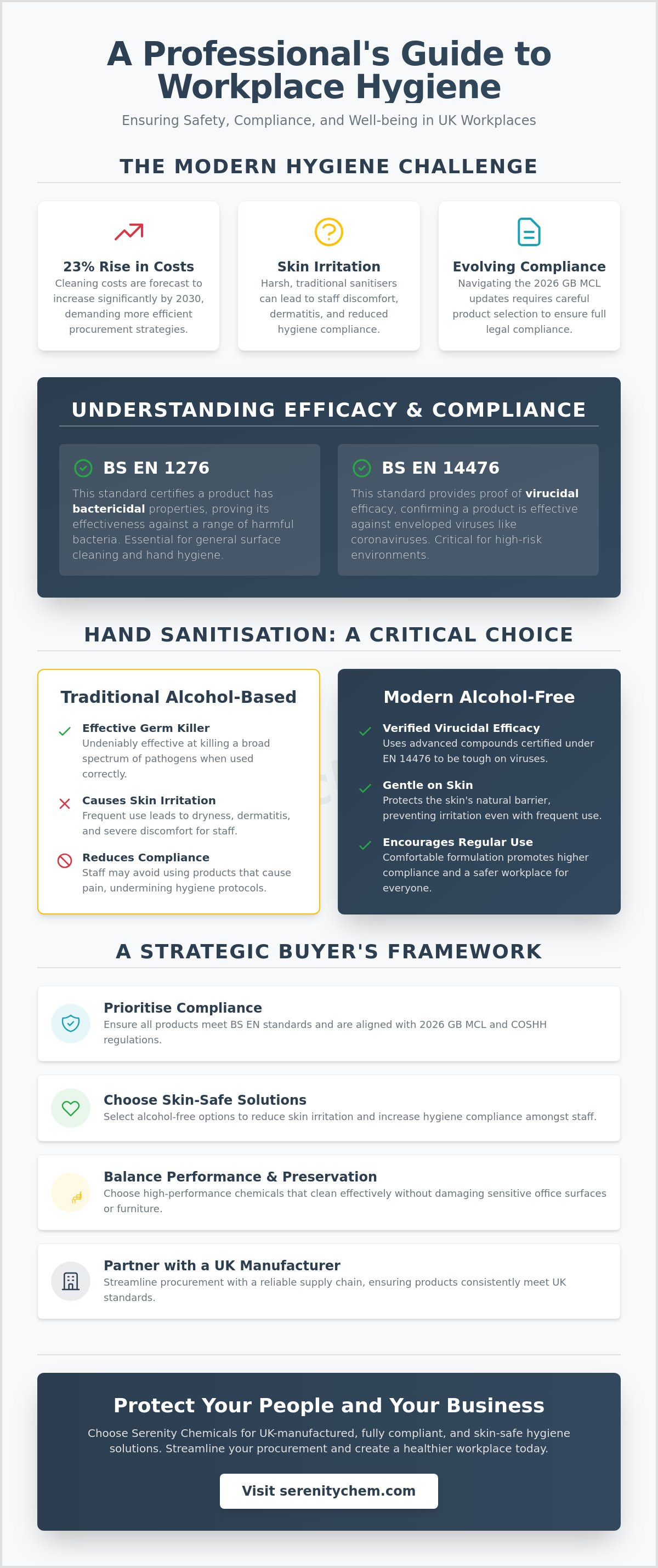
The two most important benchmarks are BS EN 1276 and BS EN 14476. BS EN 1276 certifies that a chemical has bactericidal properties, capable of killing 99.999% of bacteria within five minutes. For antiviral protection, BS EN 14476 is the gold standard, confirming efficacy against enveloped viruses. Compliance also involves meeting the Control of Substances Hazardous to Health (COSHH) regulations. As an employer, you're responsible for assessing the risks of every chemical on-site. This starts with reading the Safety Data Sheet (SDS), which details the chemical's hazards, handling requirements, and emergency procedures.
Why EN Standards Matter for Your Insurance
Using certified products isn't just about hygiene; it's a matter of legal protection. If an illness outbreak occurs, your insurance provider will likely examine whether you've fulfilled your duty of care by providing compliant supplies. You can verify a manufacturer's claims by requesting their independent laboratory test reports. As of 2026, BS EN 14476 remains the essential certification for virucidal efficacy, ensuring that your disinfectants are capable of inactivating pathogens like Influenza A and coronaviruses in accordance with the latest GB Mandatory Classification and Labelling (GB MCL) requirements.
COSHH Management Made Simple
Organising your cleaning supplies to pass a health and safety inspection doesn't have to be overwhelming. Switching to concentrated versions of products, such as Serenity Multi-Surface Cleaner or Serenity Floor Cleaner, reduces the volume of hazardous material stored on-site, which simplifies your COSHH register. Principled chemical selection also means choosing formulations that are safer for the end-user. By opting for skin-safe, alcohol-free sanitisers or pH-neutral cleaners, you often reduce the need for complex PPE, making the cleaning process safer and more efficient for your team.
A Buyer's Framework: Choosing the Right Supplies for Your Workplace
Effective procurement starts with a clear understanding of your environment. You don't need the same intensity of disinfection in a low-traffic storage room as you do in a busy reception area. Selecting the right workplace hygiene supplies UK facility managers need involves categorising your zones by risk and footfall. This ensures you're applying resources where they matter most, preventing waste whilst maintaining high safety standards throughout the building.
Surface sensitivity is another critical factor often overlooked during the buying process. Using a heavy-duty degreaser on a delicate wood veneer or a harsh acidic cleaner on natural stone can cause permanent, costly damage. It's better to choose specialised solutions like Serenity Glass & Mirror Cleaner or Serenity Multi-Surface Cleaner. These provide high-performance results without compromising the integrity of your office furniture or high-end finishes.
The 'High-Touch' Audit
Conduct a walk-through to identify "hot spots" where germs spread most easily. These include door handles, kettle handles in communal kitchens, and shared printer touchscreens. Once identified, set a cleaning schedule that aligns with your workplace's unique rhythm. For instance, high-traffic lobbies might require hourly sanitisation during peak morning and lunch periods. When choosing how to deploy these supplies, consider the efficiency of bulk liquid refills for wall-mounted dispensers. This approach is usually more cost-effective and environmentally responsible than providing individual dispensing units at every desk.
Balancing Performance and Protection
Speed of kill is vital, but it shouldn't come at the cost of user safety. A product that kills pathogens in thirty seconds but requires heavy-duty respiratory protection isn't practical for a shared office. This is why alcohol-free options have become the favourite amongst UK facility managers. They offer the necessary antiviral efficacy without the harsh fumes or skin-drying effects of traditional chemicals. In communal break areas, the rise of no-rinse sanitisers, such as Serenity Kitchen Sanitiser, allows for quick, safe disinfection of food-prep surfaces without the need for a secondary water rinse.
Sustainability goals are increasingly influential in the procurement process. You can balance eco-friendly objectives with high performance by choosing concentrated chemicals. These reduce plastic waste and lower the carbon footprint associated with shipping water-heavy products. With the 2026 ban on plastic-containing wet wipes in Wales already in force, moving toward professional liquid sprays like Serenity Antibacterial Surface Spray is a practical, future-proof choice for your business. If you need assistance developing a bespoke procurement framework for your facility, you can contact our specialists for a technical consultation.
Serenity Solutions: The Professional Choice for Workplace Hygiene
Choosing a partner for your chemical requirements involves more than just selecting products from a catalogue. At Serenity, we operate as a dedicated UK manufacturer, giving us total oversight of the formulation and quality control processes. This direct relationship means you aren't just buying workplace hygiene supplies UK businesses can rely on; you're gaining access to technical expertise and a supply chain that isn't vulnerable to international shipping delays. Our focus remains on creating solutions that are powerful enough for industrial use whilst being gentle enough for the people who use them every day.
The cornerstone of our range is the Serenity Alcohol-Free Hand Sanitiser. As discussed in previous sections, the move away from harsh, skin-drying alcohols is a significant trend for 2026. Our formulation provides a principled alternative that doesn't compromise on efficacy. It offers high-level protection without the risk of dermatitis or irritation, making it the ideal choice for high-frequency use in professional environments. This commitment to user well-being extends to our heavy-duty products, such as Serenity Floor Cleaner and Serenity Antibacterial Surface Spray, which deliver professional-grade results without the aggressive chemical fumes often found in traditional cleaners.
Spotlight on the Personal Hygiene & Wipes Collection
In 2026, desk-side hygiene is no longer an afterthought; it's a requirement for a healthy office. Wipes remain the most efficient way for staff to maintain their own workspaces between scheduled professional cleans. Within our personal hygiene & wipes collection, you'll find products specifically designed for different applications. We offer options that are tough enough to disinfect shared hardware like printers and keyboards, alongside skin-safe variants that protect the user. By providing these tools, you empower your team to take an active role in maintaining a hygienic environment.
Building Your Workplace Hygiene Kit
For a standard 50-person UK office, we recommend a foundational kit to ensure all areas are covered. This should typically include Serenity Alcohol Free Hand Sanitiser for every entry point, Serenity Multi-Surface Cleaner for general workstation maintenance, and Serenity Antibacterial Surface Spray for communal breakrooms. Don't forget specialised areas; Serenity Glass & Mirror Cleaner is essential for a streak-free finish on glass partitions, whilst Serenity Floor Cleaner and Serenity Toilet Cleaner handle the heavy lifting in washrooms and high-traffic corridors.
To simplify your procurement, we recommend organising a bulk order or a recurring subscription. This ensures you never face a stock-out of essential supplies, which is critical for maintaining compliance and staff confidence. Dealing directly with us as the manufacturer allows you to streamline your invoicing and benefit from consistent batch quality. If you're ready to upgrade your facility's hygiene standards with principled, UK-manufactured solutions, you can browse the Serenity Personal Hygiene & Wipes Collection to find the right fit for your team.
Future-Proofing Your Workplace Hygiene Strategy
Creating a safe professional environment in 2026 requires a balanced approach that respects both regulatory compliance and the physical well-being of your staff. By prioritising EN 14476 and EN 1276 compliant formulations, you ensure your facility is protected against evolving viral and bacterial threats. Simultaneously, moving toward alcohol-free, skin-safe technology demonstrates a principled commitment to your team's comfort and long-term health. These choices don't just clean surfaces; they build a culture of care and trust.
Selecting the right workplace hygiene supplies UK businesses need shouldn't be a source of confusion. As a UK-based manufacturer, we're dedicated to providing the transparency and technical support you need to make informed decisions. Whether you're auditing your high-touch points or streamlining your COSHH management, we provide solutions that deliver integrity and efficacy in equal measure. It's about protecting your bottom line whilst safeguarding your most valuable assets. We're here to help you build a safer, more productive workplace for everyone.
Secure your workplace with professional wipes and sanitisers today
Frequently Asked Questions
What are the essential workplace hygiene supplies required by UK law?
Employers must provide adequate soap, clean water, and a means of drying hands under the Workplace (Health, Safety and Welfare) Regulations 1992. Beyond these basics, the Control of Substances Hazardous to Health (COSHH) requires you to provide appropriate cleaning agents to control biological risks. Professional workplace hygiene supplies UK wide help businesses meet these legal obligations by ensuring communal environments are sanitised to a laboratory-verified standard.
Is alcohol-free hand sanitiser as effective as alcohol-based versions?
Alcohol-free sanitisers are highly effective when they carry EN 14476 and EN 1276 certifications. These products typically use advanced quaternary ammonium compounds to disrupt the outer membrane of pathogens. They provide a reliable alternative to alcohol-based sanitisers without the associated risks of skin irritation or flammability, making them a safer choice for many professional office environments where frequent use is expected.
What does EN 14476 certification actually mean for my business?
EN 14476 is the European standard that confirms a product has proven virucidal properties. For your business, this certification provides scientific proof that the disinfectant is effective against enveloped viruses, including coronaviruses and influenza. Relying on EN 14476 compliant supplies ensures you're fulfilling your duty of care to protect staff and visitors from viral outbreaks rather than relying on unverified claims.
How can I prevent staff from getting dermatitis from frequent hand washing?
You can reduce the risk of occupational dermatitis by switching to skin-safe, alcohol-free formulations for daily sanitisation. Traditional alcohol-based sanitisers often strip natural oils from the skin, leading to dryness, cracking, and discomfort. Using Serenity Alcohol Free Hand Sanitiser provides a gentler alternative that maintains high-level protection whilst preserving the skin's natural barrier, even during periods of high-frequency application.
Can I use the same antibacterial spray for both the kitchen and the office?
It's best practice to use a dedicated kitchen sanitiser for food preparation areas rather than a general office spray. Whilst both products might be antibacterial, kitchen-specific sanitisers are formulated to be food-safe and often require no rinsing after use. For general office surfaces like desks and door handles, a standard antibacterial surface spray or multi-surface cleaner is perfectly adequate for maintaining microbial hygiene.
What is the best way to buy workplace hygiene supplies in bulk whilst maintaining quality?
Purchasing directly from a UK manufacturer is the most reliable way to buy workplace hygiene supplies UK manufactured in bulk without sacrificing quality. This approach eliminates middleman costs and ensures you have a direct line to technical support for every product. Buying direct also guarantees that every batch meets the latest 2026 safety standards and labelling requirements, providing essential peace of mind for your procurement team.
How often should high-touch surfaces be disinfected in a professional environment?
High-touch surfaces should be disinfected based on a specific risk assessment of your office footfall. In high-traffic zones like reception desks, shared printers, or communal kitchens, sanitisation should occur multiple times a day or immediately after peak periods. Lower-traffic areas may only require daily disinfection as part of a standard cleaning schedule to maintain a compliant and hygienic environment.
Why should I choose a UK-based chemical manufacturer over an importer?
Choosing a UK manufacturer ensures your supplies are fully compliant with the latest GB Mandatory Classification and Labelling (GB MCL) rules. Importers often struggle with shifting UK REACH deadlines or local labelling updates that are specific to the British market. Sourcing locally also improves your supply chain stability and reduces the environmental impact of your procurement by lowering the carbon footprint associated with long-distance shipping.

Hand Hygiene in Food Preparation Areas: The 2026 Professional Guide
The Food Standards Agency estimates that foodborne illness costs the UK economy approximately £9 billion every year, with a s...

Sanitising Commercial Kitchen Hard Surfaces: The Professional UK Guide (2026)
Did you know that the average fine for food hygiene offences in the UK has more than tripled since 2016, now reaching over £7...