

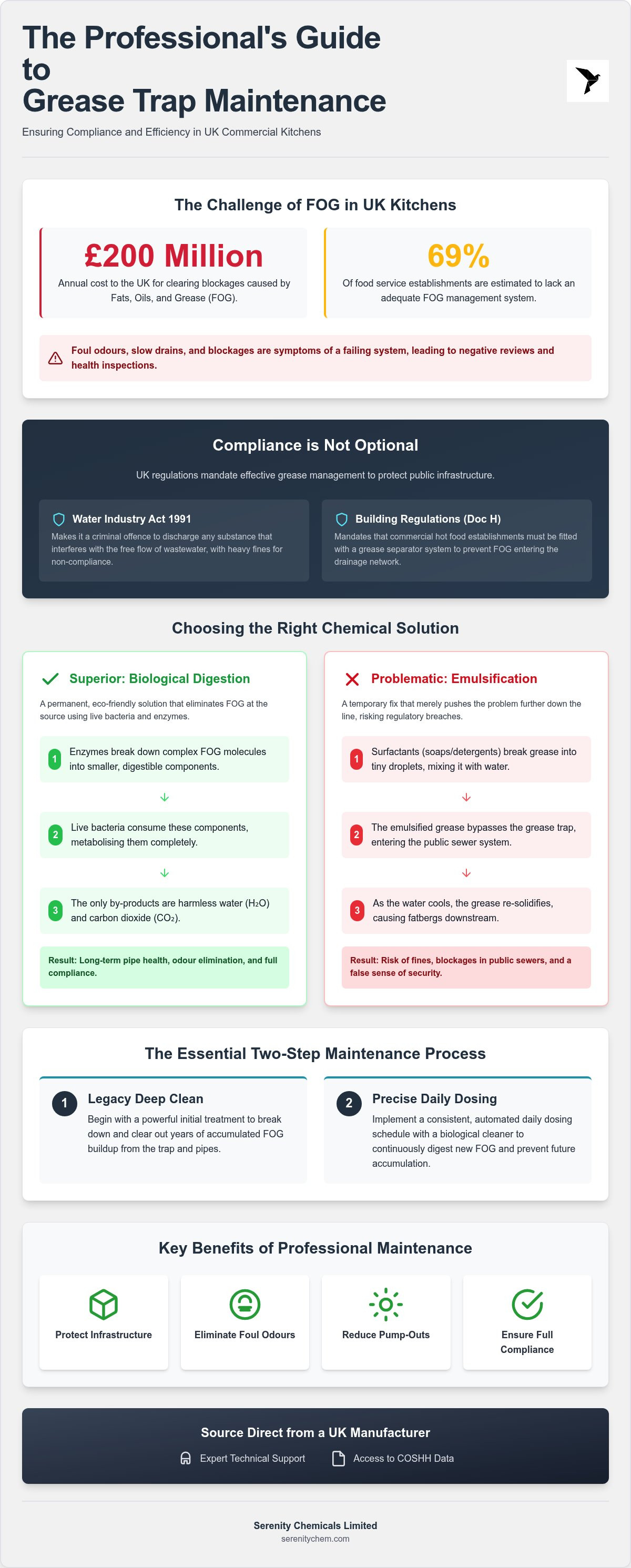
FOG-related blockages cost the UK nearly £200 million every year, yet an estimated 69% of food service establishments still lack an adequate management system. If you're overseeing a busy site, selecting the correct commercial kitchen grease trap cleaner chemical is about more than just keeping the drains flowing; it's a critical step in protecting your infrastructure and your bottom line.
We know the frustration of dealing with foul odours that disrupt the dining experience, or the looming fear of heavy fines under the Water Industry Act 1991. You deserve a solution that reduces the frequency of expensive manual pump-outs whilst ensuring your business remains ethically and legally beyond reproach. This guide will show you how to achieve total odour elimination and maintain a compliant, efficient kitchen using professional-grade formulations.
We'll examine the vital difference between biological digestion and mere emulsification, navigate the latest UK building regulations, and provide the technical insight needed to choose chemicals that offer long-term protection for your drainage system. By focusing on principled maintenance rather than reactive fixes, you can ensure your facility operates at peak efficiency.
Key Takeaways
- Learn how to navigate the Water Industry Act 1991 and the Environmental Protection Act 1990 to ensure your kitchen remains fully compliant and avoids costly fines.
- Discover why biological digestion is superior to emulsification for preventing fatbergs and maintaining the long-term health of your drainage infrastructure.
- Understand how to select a high-performance commercial kitchen grease trap cleaner chemical that significantly reduces the frequency and cost of professional pump-outs.
- Master the essential two-step process for effective grease trap care, starting with a legacy deep clean followed by precise daily dosing based on your kitchen's volume.
- Explore the benefits of sourcing your maintenance solutions direct from a UK manufacturer to access expert technical support and essential COSHH data for your safety records.
The Challenge of FOG Management in UK Commercial Kitchens
Fats, oils, and grease (FOG) represent the most significant threat to the integrity of commercial drainage systems. In the United Kingdom, these substances contribute to a staggering £200 million annual bill for clearing blockages. When warm FOG enters the drainage system, it eventually cools and solidifies, clinging to the internal walls of pipes. This process is the primary driver of the UK's "fatberg" crisis. These hardened masses of grease and debris obstruct our ageing sewer infrastructure, leading to environmental pollution and basement flooding. Every commercial kitchen has a moral and operational responsibility to prevent these discharges at the source.
Compliance isn't optional. The Water Industry Act 1991 makes it a criminal offence to discharge any substance that interferes with the free flow of wastewater. Coupled with Building Regulations (Approved Document H), which mandate grease removal systems for hot food establishments, the legal pressure on operators is immense. A grease trap acts as a critical separator, but its effectiveness depends entirely on maintenance. Without a consistent commercial kitchen grease trap cleaner chemical strategy, these units quickly become saturated and fail to protect the wider network.
Why Traditional Cleaning Methods Often Fail
Many kitchens rely on high-temperature water flushes or standard dish soaps rather than a dedicated commercial kitchen grease trap cleaner chemical. These methods are fundamentally flawed. Whilst hot water may melt grease temporarily, it simply pushes the problem further down the line where the water eventually cools. The grease then solidifies in harder-to-reach areas, causing "slow-drain" syndrome. Standard surfactants often emulsify the grease rather than breaking it down, which can lead to regulatory breaches. The cost of an emergency drainage call-out far outweighs the investment in professional maintenance chemicals.
Odour Control: More Than Just a Cosmetic Issue
The foul smells emanating from a kitchen drain are the result of anaerobic decomposition. When organic matter sits in a trap without proper treatment, bacteria thrive in the low-oxygen environment, producing pungent gases like hydrogen sulphide. These odours are a red flag for customers and can lead to negative reviews or unwanted attention from Environmental Health Officers. Masking these scents with aerosols is a superficial tactic that ignores the underlying rot. Effective management requires treating the biological source of the smell to ensure a hygienic dining environment and a safe workplace for your staff.
How Commercial Grease Trap Chemicals Work: Digestion vs. Emulsification
Not all maintenance solutions achieve the same result. Choosing a professional commercial kitchen grease trap cleaner chemical requires a clear understanding of the chemistry behind grease removal. Some products simply move the grease further down the line, whilst others eliminate it entirely at the source to ensure long-term pipe health.
The Power of Enzyme-Based Formulations
Biological digesters utilise live bacteria and specifically engineered enzymes to metabolise organic waste. Enzymes act as catalysts, breaking down complex fat molecules into simpler components that bacteria can then consume. This process converts FOG into harmless by-products like water and carbon dioxide. Because these formulations are typically pH-neutral and non-corrosive, they protect your pipes from the long-term degradation caused by harsh acids or alkalis. Enzyme digesters are the safest long-term solution for grease interceptors because they permanently break down organic matter rather than just displacing it.
Why Emulsifiers May Breach Your Discharge Consent
Emulsifiers and surfactants work by "liquefying" grease, allowing it to mix with water. Whilst this provides a quick visual fix for a clogged pipe, it's often problematic for the wider environment. These chemicals can interfere with the physical separation process inside the trap, causing grease to bypass the interceptor entirely. Once the emulsified grease enters the cooler public sewer system, it often re-solidifies, contributing to the very fatbergs that water authorities are desperate to prevent.
UK water authorities have become increasingly strict regarding what enters the sewer network. Before selecting a treatment, you should consult the official Pollution prevention for businesses guidance to ensure your maintenance routine doesn't inadvertently lead to a legal breach. If you're unsure which formulation suits your specific site requirements, you can speak with our technical team for tailored advice on professional-grade solutions.
Solvent-based cleaners are occasionally necessary for heavy-duty de-clogging where legacy buildup has hardened significantly. However, for routine maintenance, a biological commercial kitchen grease trap cleaner chemical is preferred. Efficacy in high-volume kitchens depends heavily on "contact time". If the chemical is flushed through too quickly, the bacteria won't have enough time to colonise the grease. Dosing should ideally occur during low-flow periods, such as after the final shift, to allow the solution to work undisturbed overnight.
The Business Case for Professional Chemical Maintenance
Investing in a high-grade maintenance programme is an operational strategy that safeguards your bottom line. Whilst some operators view a commercial kitchen grease trap cleaner chemical as an optional extra, it is actually a primary tool for cost control. Frequent manual pump-outs are expensive and disruptive; by using biological catalysts, you can significantly extend the intervals between professional servicing. This proactive approach prevents the accumulation of solid FOG that leads to emergency drainage call-outs and potential business downtime.
The financial risk of non-compliance is higher than ever. Under the Water Industry Act 1991, businesses face strict penalties for discharging grease into public sewers. Beyond the immediate threat of fines, there are "invisible" costs to consider, such as the damage to your brand's reputation if a drainage failure causes a hygiene-related closure. Maintaining clear inlet and outlet pipes through regular chemical dosing ensures that your facility remains operational and legally compliant.
Manual Cleaning vs. Chemical Dosing
Manual cleaning is a labour-intensive, unpleasant task that takes staff away from their primary duties. Implementing an automated dosing system removes the human error factor and ensures the correct volume of chemical is applied at the optimal time. This method offers superior hygiene benefits; reducing the frequency with which you must open a grease-filled trap limits the release of foul odours and bacteria into the food preparation area. Consistent dosing maintains flow throughout the entire drainage run, preventing legacy buildup in the pipework that manual scraping cannot reach.
Calculating the ROI of High-Performance Chemicals
It's tempting to opt for "cheap" supermarket-grade cleaners, but these often lack the active concentrations required for industrial catering. These diluted products require higher volumes to achieve minimal results, eventually costing more than professional-grade alternatives. Sourcing directly from a UK manufacturer like Serenity Chemicals Limited allows you to access industrial-strength formulations designed for the rigours of commercial use. There are also secondary savings to consider:
- Pest Prevention: Eliminating the food source (grease) significantly reduces the risk of fly and rodent infestations.
- Asset Protection: pH-neutral biological cleaners prevent the corrosion of stainless steel and plastic interceptors, extending equipment life.
- Labour Efficiency: Staff spend less time managing drainage issues and more time on high-value tasks.
A 10-litre container of enzyme-based maintainer typically costs around £45 plus VAT, which is a fraction of the cost of a single emergency drainage visit. By choosing a principled, chemical-led maintenance plan, you protect both your infrastructure and your profits.
Best Practices for Dosing and Grease Trap Care
A maintenance strategy is only as effective as its execution. Simply purchasing a high-quality commercial kitchen grease trap cleaner chemical isn't enough; you must integrate it into a disciplined daily rota. Following a structured application process ensures that the active agents have the best environment to perform their biological work. Consistency is the foundation of a fatberg-free kitchen.
Success begins with a clear operational framework:
- Step 1: The Initial Deep Clean. Before starting a chemical regimen, you must remove legacy buildup through a professional pump-out. Chemicals are designed for ongoing maintenance, not for clearing a trap that is already at 100% capacity.
- Step 2: Determine Dosing Volume. Calculate your requirements based on the number of meals served and the trap's total capacity. A high-volume site will naturally require a more frequent or concentrated application.
- Step 3: Timing the Application. Apply your chemicals during low-flow periods. This usually happens after the final evening service, allowing the solution to sit in the trap overnight without being flushed away by heavy dishwasher use.
- Step 4: Manage External Grease. Use a degreaser on the floor areas surrounding the interceptor. This prevents staff from tracking grease into other parts of the kitchen, which can compromise safety and hygiene.
- Step 5: Weekly Monitoring. Check the thickness of the "grease mat" every seven days. If the mat is thickening despite treatment, you may need to increase the dosage or investigate if unusual volumes of oil are being poured down the sinks.
Automated vs. Manual Dosing Regimens
Consistency is more important than volume when using biological cleaners. Battery-operated peristaltic pumps offer a significant advantage by delivering a precise dose at the same time every night. This removes the risk of staff forgetting a manual application during a busy shift or a late closing. If you must rely on manual pouring, ensure staff compliance through a signed cleaning log. A steady, daily supply of bacteria is essential to keep the colony active and robust.
Maintaining the Surrounding Kitchen Environment
The area around your grease trap is a high-risk zone for slips and falls. Utilising Serenity Heavy Duty Degreaser for floor drains and gulleys ensures that grease doesn't accumulate on walking surfaces. To maintain a truly hygienic workspace, ensure food-safe sanitisers are used on all prep surfaces to avoid cross-contamination. A clean kitchen floor and a clear drain are inextricably linked; one cannot exist without the other. If you need assistance in establishing a compliant dosing schedule for your commercial kitchen grease trap cleaner chemical, contact our technical advisors for a professional consultation.
Sourcing High-Performance Kitchen Chemicals in the UK
Sourcing a professional commercial kitchen grease trap cleaner chemical is about more than just a transaction; it is a partnership in operational safety. Buying directly from a UK-based manufacturer like Serenity Chemicals provides immediate access to technical expertise and industrial-strength formulations that meet stringent UK hygiene standards. For multi-site restaurant groups, maintaining a consistent supply chain is vital to ensure that every kitchen operates with the same level of efficacy. A reliable chemical strategy is only effective if your stock is consistently available when your dosing schedule requires it.
Evaluating Chemical Suppliers for Your Business
When reviewing potential suppliers, your first point of reference should be the Control of Substances Hazardous to Health (COSHH) data sheets. These documents reveal the active ingredients and necessary safety precautions for your staff. High-performance suppliers focus on concentrated formulas; these products reduce plastic waste and save valuable storage space in cramped kitchen environments. Sourcing from a UK primary chemical blender ensures that the products you use are fully compliant with local environmental laws and discharge regulations.
Integrating Serenity Solutions into Your Hygiene Plan
Effective FOG management doesn't stop at the drain. A comprehensive hygiene plan connects your grease trap care with the wider kitchen environment. For example, combining your drain maintenance with professional floor cleaners prevents grease from being tracked into dining areas. This holistic approach is essential for maintaining Hazard Analysis and Critical Control Point (HACCP) compliance.
Using food-safe sanitisers alongside your commercial kitchen grease trap cleaner chemical creates a barrier against cross-contamination. Serenity Chemicals supports this through a proprietary range of kitchen sanitisers and heavy-duty degreasers designed for the rigours of industrial catering. By consolidating your chemical sourcing, you gain better control over your hygiene budget and ensure that every solution works in harmony.
Contact Serenity Chemicals for a bespoke kitchen hygiene quote to discover how our UK-manufactured solutions can streamline your maintenance rota.
Securing Your Kitchen's Operational Future
Effective FOG management is a cornerstone of a responsible catering operation. By prioritising biological digestion over temporary emulsification, you protect the UK's sewer network and your own infrastructure. This proactive stance ensures full compliance with the Water Industry Act 1991, shielding your business from the risk of significant fines and operational downtime.
Choosing the right commercial kitchen grease trap cleaner chemical is a decision that impacts your daily rota and your long-term profitability. As a UK-based chemical manufacturer, we provide industrial-strength FOG management solutions accompanied by full COSHH and safety documentation. This ensures your staff are protected whilst your drainage remains clear and your environment stays hygienic.
You can take the first step towards a more efficient, odour-free environment today. Request a Professional Kitchen Hygiene Consultation to discuss a bespoke plan for your facility. With a principled approach to maintenance, you can focus on delivering exceptional service whilst we help you manage the complexities of kitchen hygiene.
Frequently Asked Questions
Is it legal to use grease trap chemicals in the UK?
It's legal to use a commercial kitchen grease trap cleaner chemical in the UK as part of a wider FOG management plan. However, you must ensure the product doesn't simply emulsify grease and push it into the sewer, which would breach the Water Industry Act 1991. Most water authorities recommend biological digesters that break down grease permanently rather than liquefying it temporarily. Using the wrong type can lead to legal action if blockages occur downstream.
How often should I put chemicals down my grease trap?
Daily dosing is the industry standard for maintaining a healthy biological colony within the trap. Applying the chemical after the final service of the night ensures maximum contact time whilst the drainage system is at low flow. Consistent application is far more effective than sporadic high-volume treatments. This regular routine prevents the grease mat from thickening and reduces the risk of sudden blockages or foul odours that can affect your dining environment.
Can I use bleach to clean my grease trap and kill odours?
You shouldn't use bleach in your grease trap because it's counterproductive. Whilst bleach might temporarily mask smells, it kills the beneficial bacteria needed to digest fats and oils. This halts the biological breakdown process, leading to faster grease accumulation. Additionally, bleach doesn't dissolve grease; it merely sits on top of the solid mass. This leaves the primary cause of the odour completely untreated and can actually worsen the problem over time.
What is the difference between an enzyme and a bacterial grease trap cleaner?
Enzymes act as biological catalysts that break down complex fat molecules into simpler pieces. Bacteria are living organisms that actually consume those pieces, turning them into water and carbon dioxide. Most modern commercial kitchen grease trap cleaner chemical formulations combine both for maximum efficacy. The enzymes provide the initial cut to the grease, whilst the bacteria ensure the organic matter is permanently removed from the system rather than just being displaced further down the pipework.
Will grease trap chemicals damage my PVC or copper pipes?
Professional-grade biological cleaners are typically pH-neutral and non-corrosive, making them completely safe for PVC, copper, and stainless steel pipes. Unlike harsh traditional acids or alkalis, biological formulations won't degrade pipe joints or cause thinning of metal walls over time. This makes them a safer long-term choice for your infrastructure. It ensures that your maintenance routine doesn't inadvertently lead to expensive plumbing repairs or leaks that could disrupt your kitchen's daily operations.
Do I still need to pump out my grease trap if I use chemicals?
Yes, you'll still need professional pump-outs, but using the correct chemicals can significantly extend the time between visits. Chemicals digest organic FOG but cannot remove inorganic solids like coffee grounds or heavy food debris that settles at the bottom. Most operators find that a principled chemical regimen reduces pump-out frequency by half, resulting in substantial annual savings. It's a matter of managing the trap's capacity more effectively rather than replacing manual cleaning entirely.
What happens if my business is found to be discharging FOGs into the sewer?
Discharging FOGs into the public sewer is a criminal offence under the Water Industry Act 1991. If your kitchen causes a blockage, the water authority can prosecute you, leading to unlimited fines and the recovery of costs for clearing the sewer. In 2026, enforcement has intensified with automatic penalties for breaches starting at £10,000. Beyond legal costs, you risk business closure and severe damage to your brand's reputation amongst your local customer base.
Can these chemicals be used in automatic dishwashers?
You shouldn't put biological grease trap chemicals through an automatic dishwasher. The high temperatures and harsh alkaline detergents used in dishwashers will immediately kill the beneficial bacteria before they reach the trap. Instead, chemicals should be dosed directly into the sink drains or the grease trap itself during low-flow periods. This ensures the bacteria remain active and have sufficient time to colonise the grease, which is essential for effective long-term drainage maintenance.

Hand Sanitiser for Frequent Use: Professional UK Guide 2026
The very product you use to protect your health might be the primary cause of your skin's deterioration. While alcohol-based ...

Food Safe Antibacterial Spray UK: The Professional 2026 Hygiene Guide
Using the wrong disinfectant in a commercial kitchen isn't just a minor oversight; it's a direct threat to your Food Hygiene ...