

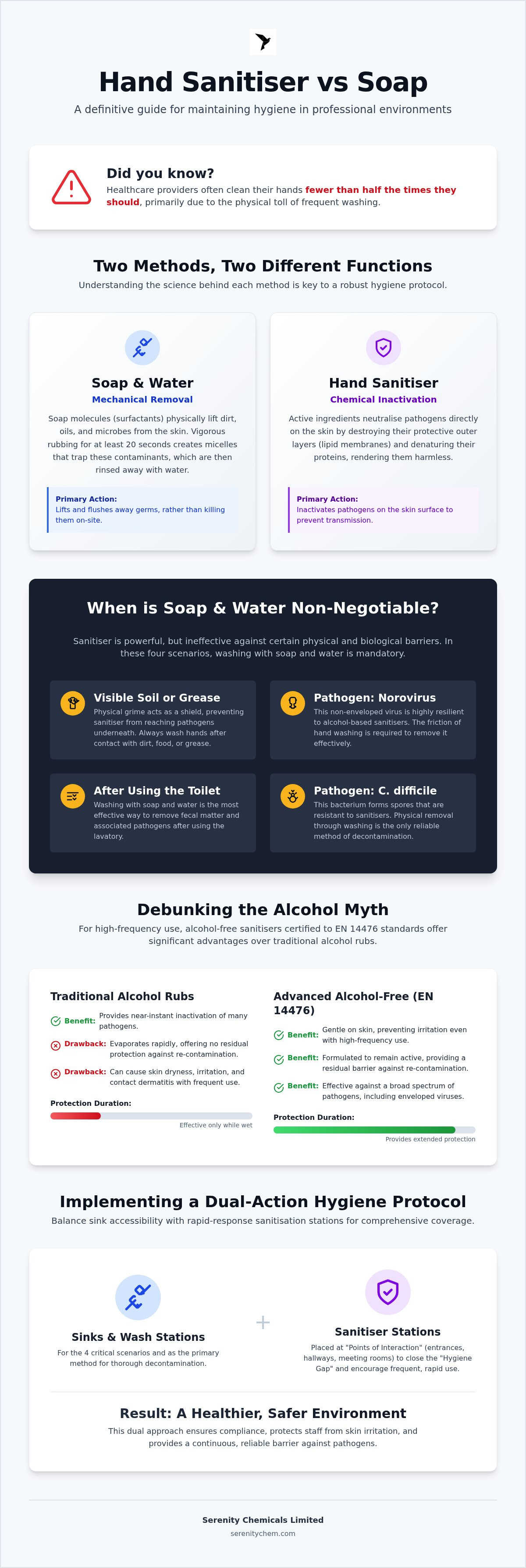
Did you know that healthcare providers often clean their hands fewer than half the times they actually should? In 2026, the primary barrier to hygiene isn't a lack of products, but the physical toll that frequent cleaning takes on the skin. Knowing exactly when to use hand sanitiser vs soap is the difference between a robust safety protocol and a workforce suffering from painful contact dermatitis. While soap and water remain non-negotiable for visibly soiled hands or specific pathogens like Norovirus, they aren't always the most efficient or skin-friendly choice for high-frequency professional environments.
We recognise the challenge of maintaining strict hygiene compliance whilst protecting your staff from the irritation caused by traditional alcohol rubs. This guide provides a definitive framework to help you master the science of hand hygiene. You'll learn when traditional scrubbing is essential and when advanced, non-irritating sanitisers offer a more effective, sustainable solution. We'll break down the technical differences between mechanical removal and chemical inactivation to ensure your facility meets UK health standards without compromising on comfort or care.
Key Takeaways
- Understand the fundamental distinction between mechanical removal with soap and the chemical inactivation provided by advanced sanitisers.
- Identify the four critical professional scenarios where physical scrubbing is essential to ensure you know exactly when to use hand sanitiser vs soap.
- Discover how strategic "Point of Interaction" placement significantly increases hygiene compliance amongst staff and visitors.
- Learn why alcohol-free solutions meeting EN 14476 standards are often superior for high-frequency use without causing skin irritation.
- Master the implementation of a dual-action hygiene protocol that balances sink accessibility with rapid-response sanitisation stations.
Mechanical Removal vs Chemical Inactivation: The Fundamental Difference
Understanding the underlying science of skin hygiene helps facilities managers decide exactly when to use hand sanitiser vs soap to protect their teams. These two methods operate on entirely different principles. Mechanical removal is the process of physically lifting dirt, oils, and microbes from the skin surface. Surfactants in soap reduce the surface tension of water, allowing it to bind with organic matter that would otherwise repel it. This doesn't necessarily kill the microorganisms; instead, it detaches them so they can be flushed away into the drainage system. The fundamental difference between washing and sanitizing is this distinction between physical transit and biological neutralisation.
Chemical inactivation takes a more direct approach by neutralising pathogens where they sit. Rather than moving the germ from point A to point B, the active ingredients in a sanitiser attack the pathogen's biological structure to render it harmless. It's vital to remember that "clean" hands are not the same as "sterile" hands. Even after a thorough wash, the "Hygiene Gap" begins the moment you touch a tap, a towel dispenser, or a door handle. This gap represents the window of vulnerability where hands become re-contaminated before the next scheduled wash, making a secondary layer of protection essential for high-traffic professional environments.
How Soap Works at a Molecular Level
Soap molecules are amphiphilic, which means they have a dual-purpose structure. They consist of hydrophilic (water-attracting) heads and hydrophobic (oil-attracting) tails. When you apply soap and water, these molecules organise into tiny spheres called micelles. The hydrophobic tails point inward to trap pathogens, grease, and debris, whilst the hydrophilic heads stay on the outside to bond with the rinsing water. This molecular mechanism relies heavily on external factors to succeed. Without at least 20 seconds of vigorous friction and a continuous stream of water, the micelles cannot effectively encapsulate and remove the contaminants from the ridges of the skin.
How Sanitiser Inactivates Pathogens
Sanitisers achieve safety through protein denaturation and the disruption of lipid membranes. By breaking down the fatty envelope that protects many viruses, the sanitiser causes the pathogen to lose its structural integrity and die. Alcohol-based products provide near-instant inactivation but lose their efficacy the moment they evaporate from the skin. Conversely, alcohol-free options, like Serenity Alcohol Free Hand Sanitiser, are formulated to remain active on the skin for longer, providing a residual barrier against re-contamination. Log Reduction is the standard mathematical measurement used to define sanitiser efficacy, representing the power of ten by which a product reduces the total number of living pathogens.
When Soap and Water are Non-Negotiable: 4 Critical Scenarios
Visible Soil, Grease, and Organic Matter
Physical contaminants like dirt, grease, and organic matter act as a biological "shield." Sanitisers work by contacting the pathogen directly; if a layer of oil or grime sits on the skin, the active ingredients cannot reach the bacteria underneath. This is why sanitiser often fails in food preparation or mechanical workshops. Maintaining hygiene in these spaces also requires using a commercial multi-surface cleaner to ensure that worktops and equipment don't become reservoirs for the very grease that protects germs from hand rubs.
Pathogen-Specific Requirements (Norovirus and C. Diff)
Certain pathogens possess a structural resistance to chemical inactivation. Non-enveloped viruses, such as Norovirus, and spore-forming bacteria like Clostridioides difficile (C. diff) aren't easily neutralised by alcohol or many common biocides. In healthcare and catering settings, these pathogens can cause rapid "super-spreader" events if staff rely solely on dispensers. Mechanical removal is the only reliable way to flush these resilient microbes off the skin. In these outbreaks, sanitiser serves as a secondary layer of protection, never the primary defence.
In industrial or agricultural environments, hands may come into contact with heavy metals, pesticides, or harsh detergents. Hand sanitisers are designed to kill germs, not to neutralise or remove toxic chemicals. Rubbing sanitiser onto chemically contaminated skin might actually spread the substance across a larger surface area or increase skin absorption. Facility managers should designate "Mandatory Wash Zones" at the following points:
- All entrances to food handling or clinical areas.
- Staff toilets and changing facilities.
- Waste management and recycling stations.
- Areas where hands regularly contact grease, soil, or industrial chemicals.
Establishing these zones ensures that your team remains protected even when facing contaminants that chemical solutions alone cannot handle. If you're looking to refine your workplace safety standards, you can speak with our hygiene specialists for a protocol review.
The Strategic Advantage of Hand Sanitiser in Professional Environments
Strategic placement is the cornerstone of any effective hygiene programme. Whilst sinks are fixed assets, pathogens are mobile. Deciding when to use hand sanitiser vs soap often depends on the "Point of Interaction", which is the exact moment a staff member or visitor touches a shared surface. In environments where plumbing infrastructure is absent, such as reception desks, warehouse loading bays, or open-plan offices, portable dispensers bridge the safety gap. This ensures that hygiene is integrated into the daily workflow rather than being a separate, time-consuming task that requires leaving a workstation.
High-Frequency Touchpoints and Rapid Disinfection
Rapid disinfection is vital in "hot zones" where cross-contamination occurs most frequently. Lift buttons, shared keyboards, and door handles are touched hundreds of times daily by different individuals. A round trip to the washroom for a full soap-and-water scrub can take up to two minutes, leading to a significant drop in compliance rates. By contrast, a 20-second rub with an alcohol-free hand sanitiser UK businesses trust provides immediate protection without the downtime. This efficiency is why high-traffic reception areas and retail centres rely on strategically placed dispensers to maintain safety standards throughout the day.
Maintaining Skin Integrity and Barrier Function
Frequent handwashing can inadvertently damage the skin's natural defences. Over-washing with harsh soaps strips away the acid mantle, which is the slightly acidic film on the skin's surface that acts as a barrier to bacteria. This often leads to micro-fissures and contact dermatitis. These tiny cracks in the skin surface don't just cause discomfort; they actually provide a hiding place for harmful bacteria, shielding them from future cleaning. Using a gentle, moisturising sanitiser helps preserve skin integrity whilst providing a residual barrier that soap cannot offer. According to FDA safety information for hand sanitizer, proper application is key to ensuring these products work effectively without causing long-term irritation. By alternating between washing and sanitising, professionals can maintain high hygiene levels whilst protecting the dermatological health of their staff.
Debunking the Alcohol Myth: Why Alcohol-Free is Often Superior
A common misconception in professional procurement is the belief that a sanitiser must contain high levels of alcohol to be effective. This narrative often overlooks the significant advancements in biocidal technology that have led to the development of high-performance, alcohol-free alternatives. Whilst alcohol-based rubs are common, they suffer from a technical limitation known as "Flash Evaporation." Once the alcohol evaporates, which typically occurs within 15 seconds of application, its ability to kill pathogens ceases entirely. This creates a narrow window of protection that requires constant reapplication to remain effective in busy workplaces.
By contrast, alcohol-free formulations meeting EN 14476 standards provide robust antiviral efficacy without the volatility of ethanol or isopropanol. These products use advanced active ingredients to achieve a high log reduction of pathogens whilst remaining gentle on the skin. When considering when to use hand sanitiser vs soap, the longevity of protection is a critical factor for decision-makers. Serenity formulations are fully compliant with UK biocidal regulations, ensuring they deliver the professional-grade performance required in high-risk environments like hospitals, schools, and offices.
Residual Protection: The 4-Hour Barrier
The most significant advantage of an alcohol-free sanitiser is its persistent activity. Unlike alcohol, which vanishes into the air, alcohol-free sanitisers leave a microscopic barrier on the skin that remains active even after drying. Some formulations provide protection for up to four hours, defending against transient microbes that hands might pick up from shared keyboards or door handles between washes. This residual effect is a game-changer for staff who are constantly on the move. It bridges the gap between opportunities for a full soap-and-water scrub, providing peace of mind in fast-paced professional settings.
Safety, Compliance, and COSHH Considerations
From a facility management perspective, switching to alcohol-free products simplifies COSHH (Control of Substances Hazardous to Health) assessments. Eliminating bulk alcohol storage significantly reduces the fire risk within a building. This is a vital consideration for schools, care homes, and custodial environments where safety is paramount. Beyond fire safety, the non-toxic nature of these foams makes them safer in settings where accidental ingestion or substance misuse is a concern. For employees with sensitive skin or those who avoid alcohol for religious reasons, these skin-conditioning foams offer a more inclusive and comfortable solution. If you're looking to upgrade your facility's safety profile, you can contact our team for a bulk procurement quote.
Implementing a Comprehensive Hygiene Protocol for Your Business
A robust hygiene protocol requires more than just providing the right products; it involves a systematic "Dual-Action" strategy that integrates physical washing with rapid sanitisation. Deciding when to use hand sanitiser vs soap shouldn't be left to chance. Instead, it should be a matter of workflow design. By mapping out your facility's high-traffic areas and communal zones, you can ensure that staff have the right tools exactly where they need them. Training your team on the "5 Moments of Hand Hygiene" ensures that they understand the critical windows for cleaning, such as before touching a patient or after contact with shared equipment, regardless of whether a sink is nearby.
A protocol that clearly defines when to use hand sanitiser vs soap ensures that staff don't over-rely on one method at the expense of skin health or efficacy. Whilst soap and water are the primary choice for deep cleaning at the start and end of shifts, advanced sanitisers provide the essential barrier needed during the hours in between. Integrating these habits with surface disinfection creates a holistic safety environment. Using products like Serenity Antibacterial Surface Spray alongside hand hygiene protocols ensures that pathogens are tackled on both skin and high-touch surfaces simultaneously.
Optimising Dispenser Placement for Maximum Compliance
Strategic placement acts as a psychological nudge, making hygiene a default behaviour rather than an afterthought. Dispensers should be highly visible at entry and exit points, communal breakrooms, and near shared technology like printers or touchscreens. This visibility reassures customers and clients that your business prioritises safety. When selecting hardware, foam dispensers are often the superior choice for professional settings. They are generally more cost-effective than gels because the aeration process uses less liquid per dose, and the thick consistency prevents messy drips on carpets or polished floors.
Sourcing and Bulk Procurement for UK Businesses
Reliability in your supply chain is essential for maintaining consistent hygiene standards. Selecting a cleaning products manufacturer UK businesses can trust, like Serenity Chemicals Limited, ensures that your products meet stringent British safety standards and are always in stock. Buying direct from a UK blender not only offers economic benefits through wholesale pricing but also reduces the carbon footprint associated with international shipping.
Ensure your professional cleaning chemicals list includes compatible solutions that work together to protect your facility. For instance, using Serenity Alcohol Free Hand Sanitiser in conjunction with our hard surface sanitisers provides a unified defence against cross-contamination. You can contact the Serenity Chemicals Limited team today for a bespoke hygiene audit to help determine the ideal placement for your dispensers and secure the most competitive pricing for your bulk requirements.
Elevating Your Facility's Hygiene Standards
Mastering professional hand hygiene is about the intelligent application of science. You now understand that whilst soap is essential for the mechanical removal of grease and resilient spores, advanced sanitisers provide the rapid, residual barrier required for high-frequency touchpoints. Balancing these two methods is the key to protecting both your staff and your operational efficiency. Determining exactly when to use hand sanitiser vs soap allows you to build a protocol that prevents cross-contamination without compromising skin health.
Serenity Chemicals Limited provides the technical expertise to make this transition seamless. Our specialist alcohol-free formulations are manufactured in the UK to EN 14476 standards, offering a non-drying solution that is already trusted by UK schools and commercial facilities. By prioritising products that support the skin's natural barrier, you ensure long-term compliance and peace of mind. We invite you to request a professional hygiene consultation and bulk pricing from the Serenity Chemicals Limited team to refine your strategy. Together, we can create a safer, more responsible environment for your entire organisation.
Frequently Asked Questions
Is alcohol-free hand sanitiser as effective as soap and water?
Alcohol-free sanitiser is highly effective at neutralising pathogens on contact, but it serves a different purpose than soap and water. Whilst soap physically lifts and removes dirt and microbes through mechanical action, sanitiser provides chemical inactivation. In professional settings, sanitiser is often the superior choice for high-frequency use between washes, especially when hands aren't visibly soiled and immediate disinfection is required.
When should I definitely wash my hands instead of using sanitiser?
You must use soap and water whenever your hands are visibly dirty, greasy, or contaminated with organic matter. Soap is also required after using the toilet or when dealing with specific pathogens like Norovirus or C. diff. Understanding when to use hand sanitiser vs soap depends on the presence of physical barriers; if dirt is visible, sanitiser cannot reach the bacteria underneath to be effective.
Can hand sanitiser remove grease or heavy oil from hands?
No, hand sanitiser isn't designed to remove grease, heavy oils, or industrial lubricants. These substances create a physical film that prevents the active ingredients in the sanitiser from contacting the skin. In mechanical or food preparation environments, you should use a dedicated soap or heavy-duty degreaser to physically break down the oil before applying any sanitising agents for residual protection.
Does hand sanitiser work against Norovirus or "stomach bugs"?
Most standard hand sanitisers, particularly alcohol-based ones, are ineffective against Norovirus because it's a non-enveloped virus. Mechanical removal with soap and water for at least 20 seconds is the most reliable way to flush these resilient pathogens off the skin. Whilst some advanced formulations offer limited efficacy, they should only be used as a secondary measure in an active outbreak situation.
How long does the protection from an alcohol-free sanitiser last?
Unlike alcohol-based products that stop working as soon as they evaporate, alcohol-free sanitisers can provide residual protection for up to four hours. These formulations leave a microscopic barrier on the skin that remains active against transient microbes. This persistent activity is a significant advantage for staff moving between different workstations who need continuous protection without the need for constant reapplication.
Is it possible to use hand sanitiser too often?
Frequent use of alcohol-based sanitisers can lead to dry skin and contact dermatitis. However, alcohol-free options like Serenity Alcohol Free Hand Sanitiser are formulated with skin-conditioning agents to prevent irritation. Using these gentle products allows for high-frequency application without damaging the skin's natural acid mantle, ensuring that staff remain compliant with hygiene protocols without suffering from painful micro-fissures.
Are alcohol-free sanitisers safe for children in schools?
Yes, alcohol-free sanitisers are the preferred choice for educational environments. They eliminate the risks associated with flammability and accidental ingestion that come with bulk alcohol storage. These non-toxic, foam-based formulations are gentle on children's sensitive skin and provide a safe way to maintain hygiene in classrooms and communal areas where sinks aren't immediately accessible to every pupil.
What UK standards should I look for when buying hand sanitiser in bulk?
Understanding the technical requirements and when to use hand sanitiser vs soap helps in selecting the right bulk products for your business. Look for EN 14476 for antiviral efficacy and EN 1276 for antibacterial performance. Sourcing from a UK manufacturer ensures compliance with UK Biocidal Products Regulations, providing reliability and safety for your commercial facility.

Hand Sanitiser for Frequent Use: Professional UK Guide 2026
The very product you use to protect your health might be the primary cause of your skin's deterioration. While alcohol-based ...

Food Safe Antibacterial Spray UK: The Professional 2026 Hygiene Guide
Using the wrong disinfectant in a commercial kitchen isn't just a minor oversight; it's a direct threat to your Food Hygiene ...