

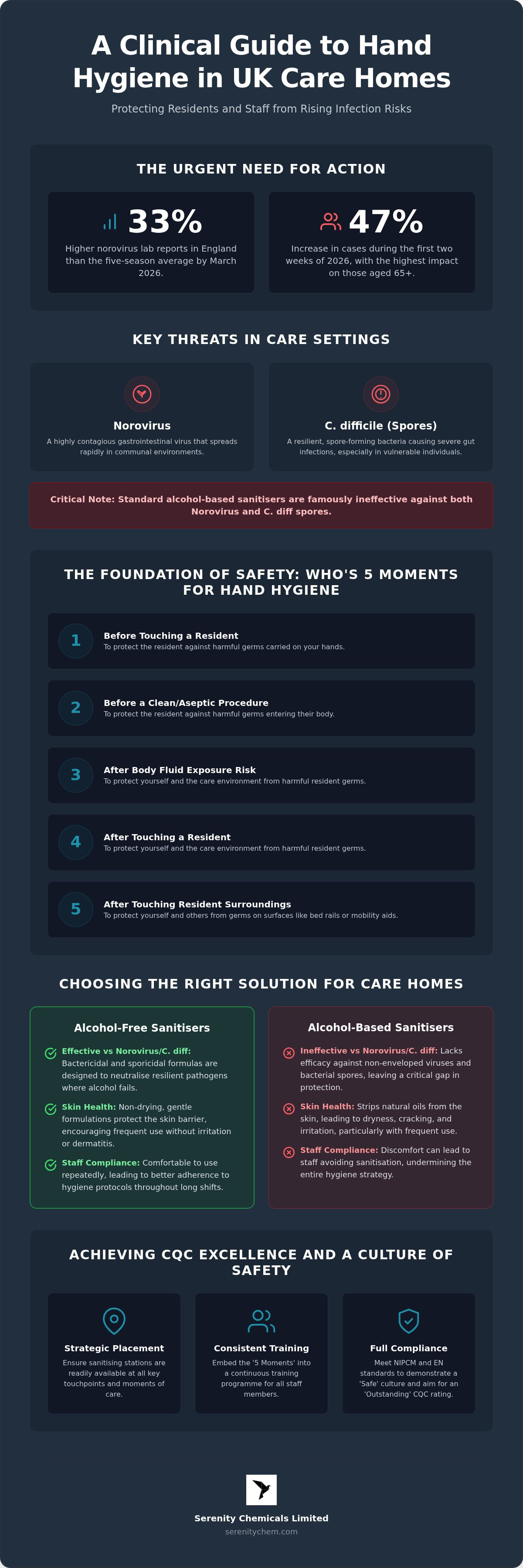
Did you know that norovirus laboratory reports in England were 33% higher than the five-season average by March 2026? This sharp rise highlights why mastering hand hygiene in care homes UK is no longer just a routine task; it is a critical defensive barrier for your facility. You are likely all too familiar with the disruption caused by staff absences and the stress of preparing for a CQC inspection whilst managing the persistent risk of C. diff or norovirus outbreaks.
This professional guide provides a clear roadmap to implementing a clinical-grade hygiene strategy that ensures total compliance, protects your vulnerable residents, and maintains the skin health of your hard-working team. We will examine the latest National Infection Prevention and Control Manual (NIPCM) updates from July 2026 and explore how selecting the right alcohol-free and bactericidal solutions can lead to a safer, more efficient care environment. By balancing technical efficacy with practical staff comfort, you can achieve the zero-outbreak goal that every principled care provider strives for whilst keeping your operational costs under control.
Key Takeaways
- Understand why robust hand hygiene in care homes UK is the primary defence against rising norovirus cases and complex healthcare-associated infections.
- Learn how to interpret EN regulations and WHO protocols to ensure your facility remains fully compliant with the latest 2026 CQC standards.
- Discover the clinical efficacy of alcohol-free sanitisers in protecting both vulnerable residents and the skin health of your care team.
- Identify strategic placement and training methods that turn hygiene protocols into a natural, seamless part of the daily care routine.
- Reduce long-term operational costs by sourcing high-quality chemicals directly from a UK manufacturer to improve your total cost of ownership.
The Critical Importance of Hand Hygiene in UK Care Home Settings
In communal living environments, the risk of infection transmission is naturally elevated due to shared dining areas, lounges, and high-frequency personal care. Effective hand hygiene in care homes UK serves as the primary barrier against Healthcare-Associated Infections (HCAIs). It is not merely a compliance checkbox; it's a fundamental act of care that preserves the health and dignity of residents. When hygiene protocols fail, the consequences are often measured in rapid outbreaks that disrupt the entire facility.
Protecting Vulnerable Residents from Common Pathogens
Elderly residents often face a decline in immune function, making them far more susceptible to skin-to-skin germ transmission. Pathogens like Norovirus and Clostridioides difficile (C. diff) pose a severe threat in these settings. Data from early 2026 showed that norovirus cases increased by 47% in the first two weeks of the year, with the highest impact seen in those aged 65 and over. These gastrointestinal infections spread with alarming speed through shared spaces if staff or visitors miss a single hygiene opportunity.
Breaking the chain of infection requires a rigorous approach during personal care tasks. Foundational hand washing principles establish that physical friction, when combined with effective antimicrobial agents, can reduce the spread of these pathogens significantly. Whilst alcohol-based sanitisers are common, they are famously ineffective against norovirus and C. diff spores. This makes the choice of cleaning agents and the consistency of technique vital for resident safety.
Regulatory Compliance and CQC Expectations
The Care Quality Commission (CQC) places heavy emphasis on infection prevention and control (IPC) under the "Safe" key question. To achieve a "Good" or "Outstanding" rating, providers must demonstrate compliance with the Health and Social Care Act 2008: Code of Practice. Inspectors don't just look for the presence of sanitising stations; they observe staff behaviour and the accessibility of facilities during site visits. They assess whether hygiene is a lived culture or just a policy on paper.
Evidence of documented hygiene policies and comprehensive staff training records is essential. Following the July 2026 update to the National Infection Prevention and Control Manual (NIPCM), facilities are expected to use products that meet specific EN standards. Clear signage and readily available hand rubs help staff maintain compliance even during busy shifts.
Beyond resident safety, robust hygiene protocols have a direct impact on the bottom line. High staff compliance reduces sickness-related absences, which in turn lowers the reliance on expensive agency cover. By investing in high-quality, skin-friendly sanitisers, care home managers can protect their workforce from irritation and keep their teams healthy and present.
Mastering the Technical Standards: EN Regulations and WHO Protocols
Adhering to rigorous technical standards is the only way to move beyond "surface level" cleanliness and achieve true clinical safety. For managers overseeing hand hygiene in care homes UK, understanding the specific European Norm (EN) certifications and World Health Organization (WHO) frameworks is essential for meeting CQC requirements. These protocols provide a structured language for safety, ensuring that every hand-to-resident interaction is protected by verified science rather than just good intentions.
The Five Moments for Hand Hygiene in Care Settings
The WHO "Five Moments" model is the international benchmark for preventing cross-contamination. In a care home layout, these moments must be applied consistently across bedrooms, dining halls, and clinical areas. Moments 1 and 2 focus on prevention; staff must clean their hands before touching a resident or performing an aseptic task to protect the individual and their immediate environment from external pathogens. Moment 3 is a high-risk trigger, requiring immediate hygiene after any body fluid exposure during personal care.
Moments 4 and 5 are designed to protect the wider community. After touching a resident or their surroundings, such as bed rails or mobility aids, staff must sanitise their hands to prevent carrying germs into communal lounges or staff rooms. This disciplined approach ensures that the resident's room remains a controlled environment, limiting the spread of resilient bacteria throughout the home.
Understanding British and European Efficacy Standards
Decoding product labels is a vital skill for procurement. If a product lacks specific EN markings, it may not provide the protection your facility requires. Professional-grade solutions are tested under strict laboratory conditions to prove their efficacy. Key standards to look for include:
- EN 14476: This is the gold standard for virucidal activity. It proves the product is effective against enveloped viruses, which is critical for managing seasonal flu and norovirus risks.
- EN 1276: This certification ensures your antibacterial surface spray UK kills 99.999% of bacteria within a specified contact time.
- EN 1500: Specifically designed for hand rubs, this test measures the reduction of transient microbial flora on the hands, simulating real-world clinical use.
It's important to distinguish between cleaning, sanitising, and disinfecting. Cleaning involves the physical removal of dirt and organic matter, which is a necessary first step. Sanitising reduces bacteria to safe levels, whilst disinfecting involves the use of stronger chemicals to kill almost all pathogenic microorganisms. For a truly integrated strategy, surface hygiene and hand hygiene must be managed together. If you are unsure which standards apply to your specific care environment, you can consult our technical team for specific guidance on compliance and product selection.
Alcohol-Free vs Alcohol-Based Sanitisers: A Comparison for Care Environments
Choosing the right formulation is a decision that impacts everything from clinical safety to staff retention. Whilst alcohol-based rubs have been a traditional staple, the unique challenges of residential care are leading many managers to reconsider their approach. Maintaining high standards of hand hygiene in care homes UK requires a balance between chemical efficacy and the daily reality of staff usage. It isn't just about killing germs; it's about ensuring the product is safe and pleasant enough to be used dozens of times per shift.
A common misconception persists that alcohol-free sanitisers are less effective against viruses. Modern, professional-grade formulations prove otherwise. Many non-alcohol solutions now meet the same EN 14476 virucidal standards discussed in previous sections, providing robust protection against enveloped viruses without the harsh side effects of ethanol or isopropanol. For a principled provider, the goal is to find a solution that offers peace of mind without compromising the safety of the environment.
Improving Compliance through Skin Health
Staff compliance is the heartbeat of any infection control strategy. However, frequent use of high-percentage alcohol sanitisers often leads to occupational dermatitis, a painful condition that causes red, itchy, or cracked skin. When hands are sore or broken, staff are naturally more hesitant to sanitise. This creates a dangerous gap in your facility's defences.
Switching to a high-quality alcohol free hand sanitiser UK professionals trust can solve this issue. These water-based formulations are non-drying and non-irritating, making them far more suitable for high-frequency use. Staff are significantly more likely to adhere to hygiene protocols when the product feels gentle on their skin. Furthermore, for team members with specific religious requirements or those who prefer to avoid alcohol for personal reasons, these alternatives provide an inclusive solution that respects their values whilst maintaining safety.
Safety and Logistics in Residential Care
Residential settings present specific logistical risks that aren't always present in a standard hospital ward. Alcohol-based gels are Class 3 Flammable Liquids, meaning large volumes require specific COSHH-compliant storage and fire-safe placement. In a care home, where residents may have dementia or other cognitive impairments, the risk of accidental ingestion is a serious concern. Alcohol-free sanitisers are non-toxic and non-flammable, eliminating these hazards entirely.
The physical consistency of the product also matters. Liquid gels often drip from dispensers, creating slippery patches on hard floors that pose a significant fall risk for elderly residents. Foam formulations are generally preferred because they stay on the hand during application. This reduces waste, keeps floors dry, and ensures the active ingredients are properly distributed across the skin for maximum protection.
Practical Implementation: Building a Culture of Hygiene Compliance
Establishing a clinical-grade environment goes beyond purchasing the correct chemicals; it requires a fundamental shift in daily habits. For hand hygiene in care homes UK to be truly effective, the practice must become the path of least resistance for every person who enters the building. When safety protocols are intuitive and supported by a positive culture, compliance rates naturally rise without the need for constant policing. It is about creating an environment where hygiene is a shared responsibility rooted in the mutual protection of staff and residents.
Optimising Sanitiser Station Placement
Strategic placement is the most effective way to combat "compliance friction." If a staff member has to walk across a room to find a dispenser during a busy care task, the likelihood of a missed hygiene moment increases. Points of care must have immediate, unobstructed access to hygiene products. This means installing dispensers not just in corridors, but inside every resident room at the point of entry and exit.
Threshold sanitising is equally vital for managing external risks. High-traffic areas such as lift lobbies, dining room entrances, and main reception desks should be equipped with prominent stations. Using clear, professionally designed visual cues can prompt visitors and staff at the exact moment they transition between zones. These prompts serve as a gentle reminder that they are moving into a protected space, helping to reduce the "import" of community-acquired infections into the home.
Training and Staff Engagement
Moving away from "tick-box" exercises is essential for long-term success. Training should focus on the science of "why" hygiene matters rather than just the mechanics of "how" to wash. When a team understands that certain pathogens can survive on surfaces for days, the motivation to maintain rigorous standards becomes personal. Interactive infection control workshops that use tools like UV glow-box demonstrations can provide immediate, visual proof of missed areas, making the training memorable and impactful.
Hygiene fatigue is a real challenge for long-term care teams, especially during demanding winter months. To combat this, managers should foster a supportive, non-punitive environment where peer reviews are encouraged. Empowering staff to remind each other of hygiene moments in a helpful way builds a collective sense of pride in the home's safety record. Regular audits should be used as a tool for improvement rather than a means of discipline, identifying specific "blind spots" in the facility's layout or routine that might be hindering compliance.
Engaging residents and their families in this culture further strengthens your facility's defences. When visitors see that hygiene is taken seriously by the leadership, they are more likely to follow suit. If you need assistance in designing a bespoke hygiene station layout or selecting the most effective dispensers for your facility, you can speak with our specialists for a professional consultation on optimising your care home’s safety protocols.
Strategic Procurement: Sourcing Effective Hygiene Chemicals in Bulk
Procurement is often the silent partner in infection control. Whilst training and protocols are vital, they fail if the supply chain breaks or if the products chosen are economically unsustainable for the facility. For managers overseeing hand hygiene in care homes UK, strategic sourcing ensures that clinical-grade protection is always available without straining the operational budget. It's about moving away from reactive, "off-the-shelf" purchasing and towards a principled, long-term partnership with a trusted supplier who understands the high stakes of residential care.
Why Buy Direct from a UK Chemical Manufacturer?
Choosing a cleaning products manufacturer UK based offers advantages that go far beyond simple logistics. When you buy direct, you gain a direct line to technical expertise and comprehensive COSHH data. This transparency is invaluable during CQC inspections, as it allows you to demonstrate a deep understanding of the chemicals used within your facility. Buying from a domestic source significantly reduces your carbon footprint and eliminates the lead-time uncertainties associated with international shipping. You can customise your orders to meet the specific needs of your care group, ensuring you always have the right volume of foam or spray for your unique layout.
Maximising Budget through Bulk Procurement
Evaluating the Total Cost of Ownership (TCO) is a far more effective way to manage budgets than simply looking at the price per bottle. For instance, calculating the cost-per-use of foam sanitisers often reveals they are more economical than liquid gels. Foam stays on the hand during application, reducing waste from drips and spills. This means each bulk container provides more doses, making your budget stretch further whilst maintaining safety standards. For multi-site care organisations, centralised sourcing allows for better inventory control and ensures that every facility maintains the same high standard of hand hygiene in care homes UK.
Bulk buying also supports your facility's environmental goals. By using large-format containers and refillable dispenser systems, you can drastically reduce single-use plastic waste and simplify your storage requirements. This structured approach to procurement prevents "out-of-stock" crises that can leave your staff and residents vulnerable during peak infection seasons. If you are looking to refine your supply chain and improve your facility's safety standards, you can contact the Serenity Chemicals Limited team today to discuss your care home’s hygiene requirements.
Elevating Safety Standards in Your Care Facility
Ensuring effective hand hygiene in care homes UK is a continuous commitment that requires more than just policy. It's a holistic approach that integrates technical efficacy with the daily needs of your team. By prioritising EN 14476 compliant formulations that are gentle on the skin, you can reduce infection risks whilst maintaining high compliance levels. This principled strategy, supported by strategic procurement and domestic supply chains, ensures you are never left without essential protection during critical outbreak seasons.
As a specialist UK manufacturer, we provide solutions designed for high-frequency professional use. Our alcohol-free sanitisers are trusted by UK care providers for their reliability and skin-friendly properties. To secure your facility's future safety, request a professional hygiene consultation and bulk pricing for your care home today. Taking these proactive steps ensures your residents remain protected and your facility stays ahead of regulatory requirements.
Frequently Asked Questions
Is alcohol-free hand sanitiser as effective as alcohol-based gel for care homes?
Modern alcohol-free sanitisers are highly effective, provided they meet professional standards like EN 14476. Whilst alcohol-based gels are common, they don't kill norovirus or C. difficile spores. Professional alcohol-free formulations offer a broader spectrum of protection against these specific pathogens. They also remain active on the skin longer than alcohol, which evaporates quickly. This makes them a reliable choice for maintaining high standards of hand hygiene in care homes UK.
What are the CQC requirements for hand hygiene in residential care?
The CQC expects providers to comply with the Health and Social Care Act 2008: Code of Practice on infection control. Inspectors assess the availability of handwashing facilities, staff technique, and documented training records. Following the July 2026 update to the National Infection Prevention and Control Manual (NIPCM) is considered best practice. You must demonstrate that your hygiene protocols are consistently applied by all staff, visitors, and residents to ensure a safe environment.
How often should care home staff wash their hands during a shift?
Staff should perform hand hygiene at every "point of care" throughout their shift. This follows the WHO "Five Moments" protocol: before touching a resident, before clean procedures, after body fluid exposure risk, after touching a resident, and after touching resident surroundings. In a busy care environment, this can result in dozens of hygiene actions per hour. Using a skin-friendly sanitiser helps maintain these high frequencies without causing skin damage or irritation for your team.
Can frequent handwashing cause skin problems for care workers?
What is the difference between EN 1276 and EN 14476 standards?
EN 1276 is a quantitative suspension test that evaluates the bactericidal activity of a chemical disinfectant. It ensures the product kills 99.999% of bacteria within a specific contact time. In contrast, EN 14476 measures virucidal efficacy. This is particularly important in care settings for defending against enveloped and non-enveloped viruses like influenza or norovirus. You should always look for both certifications on your product labels to ensure comprehensive protection for your facility and residents.
How should care homes store large quantities of cleaning chemicals safely?
All cleaning chemicals must be stored in accordance with COSHH regulations. This typically involves a secure, lockable cupboard or store room that is well-ventilated and kept away from heat sources. You must maintain an up-to-date folder containing Safety Data Sheets (SDS) for every product. One major advantage of alcohol-free sanitisers is that they are non-flammable. This simplifies storage requirements compared to large volumes of alcohol-based gels that pose a significant fire risk.
Are foam sanitisers better than gels for elderly residents?
Foam formulations are generally preferred in residential care because they are easier to control. Gels often drip from dispensers or hands, creating slippery patches on hard floors that pose a fall risk for elderly residents. Foam stays on the palm during application, ensuring better coverage and reducing chemical waste. It also absorbs quickly without leaving a sticky residue, which is more comfortable for residents with sensory sensitivities or fragile, paper-thin skin.
What should be included in a care home hand hygiene audit?
A comprehensive audit should include direct observation of staff hygiene technique and compliance with the WHO Five Moments. You should also inspect the condition and stock levels of all handwashing stations and dispensers. Check that all products meet current EN standards and that staff training records are up to date. These audits should be conducted regularly and used as a tool for continuous improvement rather than a punitive measure for the care team.

Hand Sanitiser for Frequent Use: Professional UK Guide 2026
The very product you use to protect your health might be the primary cause of your skin's deterioration. While alcohol-based ...

Food Safe Antibacterial Spray UK: The Professional 2026 Hygiene Guide
Using the wrong disinfectant in a commercial kitchen isn't just a minor oversight; it's a direct threat to your Food Hygiene ...