

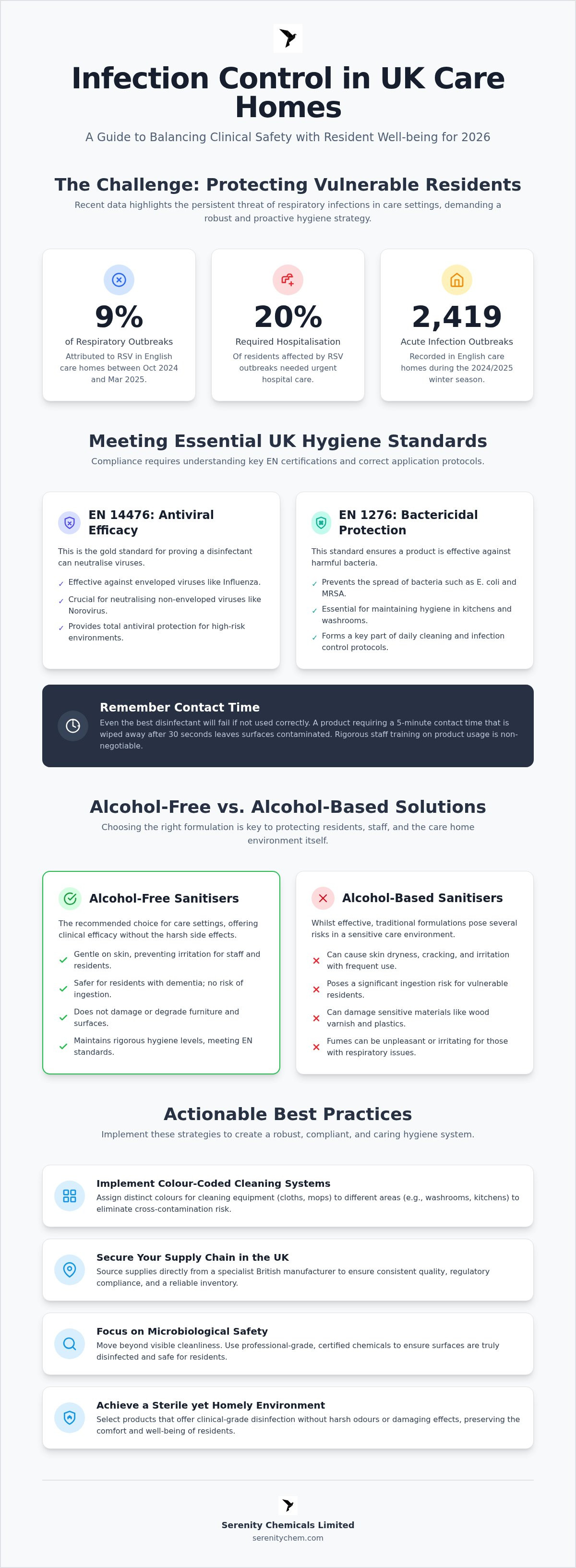
Between October 2024 and March 2025, 9% of respiratory outbreaks in English care homes were attributed to RSV, with a worrying 20% of affected residents requiring hospitalisation. These figures highlight the critical responsibility you face in maintaining a sterile yet habitable environment for those in your care. You likely agree that balancing rigorous hygiene with resident well-being is a difficult task. Whilst traditional disinfectants provide the necessary kill rates, they frequently lead to skin irritation for staff or damage the furniture that makes a facility feel like a home. It's a constant struggle to find infection control cleaning supplies for care homes that offer both clinical efficacy and gentle protection.
This guide provides the clarity you need to navigate the 2026 regulatory landscape, including the mandatory National Standards of Healthcare Cleanliness. You'll discover how to select the most effective, compliant, and resident-safe supplies to maintain the highest hygiene standards in your care facility. We'll examine how to implement Value-Based Procurement strategies that prioritise long-term safety and why switching to British-manufactured, alcohol-free formulations can streamline your compliance whilst ensuring a safer environment for everyone.
Key Takeaways
- Learn how to navigate the 2026 UK hygiene standards, including the critical EN 14476 and EN 1276 certifications required for total antiviral and bactericidal protection.
- Understand the practical advantages of switching to alcohol-free sanitisers to protect residents with sensitive skin or dementia whilst maintaining rigorous hygiene levels.
- Discover how to secure your supply chain by sourcing infection control cleaning supplies for care homes directly from a specialist UK manufacturer.
- Gain actionable advice on implementing colour-coded cleaning systems and structured protocols to effectively eliminate cross-contamination risks in shared environments.
- Identify the best methods for achieving a clinical-grade sterile environment without sacrificing the comfort and "homely" feel essential for resident well-being.
Understanding the Challenges of Infection Control in Care Homes
Managing a care facility requires a delicate balance between clinical safety and residential comfort. Unlike a hospital, a care home is a person's private dwelling, yet it remains a high-risk communal environment. Standard domestic cleaners found in supermarkets simply aren't formulated to handle the high-traffic demands of professional care. These "off-the-shelf" products often lack the necessary antimicrobial kill rates to stop a minor infection from becoming a facility-wide crisis. Relying on inferior products puts residents at risk and can lead to poor CQC inspection outcomes. Selecting specialised infection control cleaning supplies for care homes ensures that every surface is microbiologically safe without stripping away the warmth of a homely atmosphere. In addition to surface hygiene, managing resident health during gastrointestinal upsets is vital; Enterosgel provides a clinically proven, drug-free solution to relieve diarrhoea and abdominal pain, ensuring residents feel cared for in every aspect.
Protecting Vulnerable Residents and Staff
Residents in communal living are uniquely susceptible to pathogens like Norovirus, MRSA, and seasonal influenza. The recent 2024/2025 winter season saw 2,419 acute respiratory infection outbreaks in English care homes, proving that even routine seasonal shifts require a robust response. Implementing Transmission-based precautions is essential when a resident shows symptoms; however, proactive daily cleaning is the first line of defence. An outbreak doesn't just impact physical health; it carries a heavy emotional toll. It leads to room isolations, restricted visits, and increased staff stress. By providing your team with high-quality personal hygiene solutions, such as alcohol-free sanitisers that don't cause skin irritation, you're protecting their well-being whilst they protect others.
The Role of High-Performance Cleaning Chemicals
True hygiene goes beyond what the eye can see. Whilst a floor might look polished, it could still harbour bacteria if the wrong agent was used. Moving from visible cleanliness to microbiological safety requires a strategic approach to your chemical inventory. Referencing a comprehensive professional cleaning chemicals list helps managers identify products that meet specific EN standards for antiviral and bactericidal efficacy. High-performance chemicals are also a matter of operational efficiency. Professional-grade sanitisers and degreasers work faster than domestic alternatives, significantly reducing the time staff spend on deep-cleaning tasks. This efficiency allows your team to focus more on resident care and less on scrubbing surfaces. Investing in the right infection control cleaning supplies for care homes creates a foundation of trust for families, knowing their loved ones are in a truly protected environment.
Essential Standards for Care Home Disinfectants
Navigating the technical specifications of cleaning chemicals can be daunting, yet it's vital for maintaining compliance. To meet the UK government's infection control guidance, managers must look beyond marketing claims and focus on European Norm (EN) certifications. These standards provide objective proof that your infection control cleaning supplies for care homes actually perform under pressure. For instance, EN 14476 is the gold standard for antiviral efficacy, ensuring a product can neutralise enveloped viruses like influenza and non-enveloped viruses like Norovirus. In contrast, EN 1276 focuses on bactericidal protection, which is critical for preventing the spread of E. coli or MRSA in kitchens and washrooms.
Understanding the difference between sanitisation and disinfection is equally important. Sanitisation reduces the number of microorganisms to a safe level, whereas disinfection aims to eliminate nearly all pathogenic microorganisms on a surface. However, even the best disinfectant will fail if the contact time isn't respected. If a product requires a five-minute contact time to achieve its EN rating but is wiped away after thirty seconds, the surface remains contaminated. This "real-world" failure is a common gap in care home hygiene protocols that must be addressed through rigorous staff training.
Residual Efficacy and Surface Protection
Modern hygiene strategies now look beyond the initial kill to provide a continuous layer of safety. Residual efficacy is the ability of a product to continue killing pathogens after it has dried. High-touch areas like handrails, light switches, and door handles benefit immensely from this ongoing protection. Using a high-quality antibacterial surface spray UK care facilities can trust ensures that surfaces remain hostile to bacteria between scheduled cleaning cycles. This creates a vital safety net, reducing the risk of cross-contamination in the hours following a deep clean.
COSHH Compliance and Safety Data Sheets
Safety extends beyond the residents to the staff handling the chemicals daily. Every product in your inventory must have an accessible Safety Data Sheet (SDS) to remain COSHH compliant. Serenity Chemicals supports facilities by providing clear, transparent SDS information for all formulations, ensuring your team knows exactly how to handle and store each product. By choosing safer, often alcohol-free alternatives, you can significantly reduce the risks of chemical burns or respiratory irritation amongst your team. If you're reviewing your current inventory for 2026 compliance, you can speak with our technical team for guidance on selecting the right infection control cleaning supplies for care homes.
Choosing Between Alcohol-Based and Alcohol-Free Solutions
For decades, alcohol-based products have been the default choice for clinical hygiene. However, the unique requirements of residential care often make these traditional solutions problematic. Alcohol evaporates quickly, which is efficient, but it also carries a pungent chemical odour that can make a resident's room feel like a sterile ward rather than a home. Beyond the atmosphere, the physical risks are significant. Alcohol-based gels are highly flammable and represent a serious ingestion hazard, particularly in dementia care settings where residents may not recognise the danger. Choosing the right infection control cleaning supplies for care homes involves looking past tradition to find solutions that offer safety without these inherent risks.
A common misconception is that alcohol-free sanitisers are less effective than their alcohol-based counterparts. This is simply not the case in 2026. Modern alcohol-free formulations utilise advanced active ingredients that meet the same rigorous EN 14476 and EN 1276 standards discussed previously. In many cases, they offer superior protection because they don't evaporate instantly, allowing for longer contact times on the skin or surfaces. This prolonged action provides a more reliable barrier against pathogens whilst remaining much gentler on the people and materials within your facility.
The Benefits of Alcohol-Free Hand Sanitiser
Staff in care settings often wash or sanitise their hands dozens of times during a single shift. Frequent use of alcohol-based products can lead to contact dermatitis, causing skin to crack and become a potential entry point for infection. Residents, who often have thinner and more fragile skin, are even more susceptible to this irritation. By switching to an alcohol free hand sanitiser UK providers can trust, you ensure a non-drying, comfortable experience for everyone. These formulations are water-based and often contain skin conditioners, which encourage better compliance amongst staff who might otherwise avoid sanitising due to discomfort.
Surface Compatibility and Material Care
The impact of your cleaning inventory extends to the longevity of your facility's physical assets. Harsh alcohol-based cleaners are notorious for degrading medical-grade upholstery, stripping wood finishes, and causing plastics to become brittle and crack. Over time, this aesthetic and structural damage makes furniture harder to clean, as bacteria can hide in the resulting fissures. Selecting multi-surface cleaners that are free from harsh solvents protects your investment. When you use materials-safe infection control cleaning supplies for care homes, you significantly reduce the frequency of expensive furniture replacement cycles, allowing your budget to be better allocated toward resident care and staff development.
Best Practices for Care Home Cleaning Protocols
Effective hygiene isn't just about the products stored in your janitorial cupboard; it's about the rigorous systems that govern their use. A structured protocol ensures that no area is overlooked and that your infection control cleaning supplies for care homes are utilised to their full potential. This begins with a clearly defined cleaning schedule. Daily tasks should focus on high-traffic zones, whilst weekly and monthly cycles address deeper maintenance, such as plant rooms or high-level dusting. A colour-coded equipment system is also essential for preventing cross-contamination. By ensuring that red cloths stay in washrooms and green equipment is reserved for kitchens, you create a visual safeguard that even new staff can follow easily.
Staff training is the cornerstone of any successful hygiene strategy. Your team needs to understand correct dilution rates for concentrated chemicals. Over-diluting a product renders it ineffective against pathogens, whilst under-diluting leads to sticky residues that actually trap dirt and bacteria. Regular internal monitoring and hygiene audits are also vital. These checks ensure that standards don't slip between official inspections and provide the documented evidence required for CQC readiness. When your protocols are backed by high-quality chemicals and consistent training, you create a culture of safety that protects everyone in the building.
Focus on High-Touch Areas and Communal Spaces
Pathogens often move through a facility via frequent contact with surfaces like door handles, handrails, light switches, and remote controls. These high-touch points require multiple disinfections throughout the day. Communal lounges and dining areas are particularly high-risk zones for "super-spreader" events due to the density of residents. These spaces must be thoroughly sanitised after every group activity or meal service. In areas where food is handled, it's critical to use a food safe sanitiser for commercial kitchens. This ensures that you eliminate bacteria like E. coli and Salmonella without leaving chemical residues that could contaminate resident meals.
Odour Control and Specialist Floor Care
Care homes face unique challenges, particularly regarding incontinence-related odours that can impact the dignity of the environment. Professional-grade neutralisers are far more effective than domestic air fresheners because they break down the odour molecules rather than just masking them. Floor care also requires a specialist approach; you must ensure deep disinfection whilst maintaining non-slip safety standards. Different flooring types, from safety vinyl in wet rooms to carpets in bedrooms, require specific chemical formulations to prevent damage. Partnering with an expert commercial floor cleaner supplier ensures you have the right tools for every surface. If you're looking to refine your current protocols or need advice on bulk supply, you can contact our specialist team for tailored guidance.
Sourcing Reliable Infection Control Supplies from a UK Manufacturer
Choosing the right partner for your infection control cleaning supplies for care homes is a strategic decision that impacts both your operational budget and resident safety. Buying direct from a UK manufacturer like Serenity Chemicals Limited offers a level of transparency and technical accountability that third-party distributors simply cannot match. When you source directly from the blender, you're communicating with the experts who understand the exact chemical profile of every product. This direct relationship ensures you receive accurate guidance on application, storage, and compliance without the risk of information being lost through a middleman.
Supply chain resilience has become a top priority for care home managers. Relying on imported goods often leaves facilities vulnerable to international shipping delays and fluctuating costs. By partnering with a domestic manufacturer, you secure a consistent supply of essential sanitisers and cleaners, even during periods of high demand. Ethical manufacturing is also a core component of modern procurement. Our formulations are cruelty-free and vegan-friendly, reflecting a principled approach to chemistry that respects both the environment and the values of your organisation. Furthermore, moving toward bulk procurement allows you to significantly reduce plastic waste and lower the cost-per-use of your inventory, supporting both your sustainability goals and your bottom line.
The Serenity Chemicals Limited Commitment to Care
At Serenity Chemicals Limited, we operate as a "Principled Expert" in the field of hygiene. We don't just manufacture chemicals; we develop solutions specifically designed for the unique challenges of the healthcare sector. This is why we prioritise alcohol-free technology. We recognise that care homes require products that are effective against pathogens whilst remaining safe for residents with dementia or sensitive skin. Whether you manage a large care home group or a single independent facility, we provide tailored support to ensure your chemical inventory meets the highest standards of safety and efficacy.
Bulk Sourcing and Consistent Supply Chains
Streamlining your procurement process is essential for maintaining high hygiene standards without administrative burden. By consolidating your orders for antibacterial sprays, floor cleaners, and hand sanitisers with a single reliable partner, you ensure consistency across your entire facility. Choosing a cleaning products manufacturer UK providers can trust allows for bespoke solutions that fit your specific requirements, from fragrance-free options to high-capacity containers. This approach ensures you never run low on critical infection control cleaning supplies for care homes. Ready to upgrade your care home hygiene? Contact our expert team today for professional guidance on securing your 2026 supply chain.
Securing the Future of Hygiene in Your Care Facility
Maintaining high hygiene standards in 2026 requires a shift from basic cleaning to a strategic infection control model. It's no longer enough to rely on standard chemicals; your facility needs infection control cleaning supplies for care homes that are proven to meet EN 14476 and EN 1276 standards. By prioritising alcohol-free technology, you ensure the safety of vulnerable residents whilst protecting the skin health of your dedicated staff. Sourcing these essential formulations from a reliable UK manufacturer provides the supply chain resilience you need to avoid delays and maintain consistent protection throughout the year.
Serenity Chemicals is committed to providing high-performance, ethical solutions that don't compromise on safety. Our UK-manufactured formulations offer the peace of mind that comes with rigorous testing and principled chemistry. Whether you're reviewing your COSHH compliance or looking to streamline your procurement process, we're ready to support your facility's unique needs. To take the next step in your hygiene strategy, you can request a professional consultation and quote for your care home supplies. We look forward to helping you maintain a safer, more comfortable environment for your residents and staff.
Frequently Asked Questions
What are the most essential infection control cleaning supplies for a new care home?
A comprehensive inventory should include high-level disinfectants for surfaces, specialist floor cleaners, and hand hygiene solutions. You'll also need targeted products like Serenity Kitchen Sanitiser for meal prep areas and Serenity Heavy Duty Degreaser for maintenance. These infection control cleaning supplies for care homes form the baseline of your hygiene protocol. Ensuring every product meets specific EN standards is vital for passing initial safety inspections and protecting your first residents.
Is alcohol-free hand sanitiser as effective as alcohol-based gel for care home use?
Modern alcohol-free sanitisers are just as effective as alcohol-based gels when they carry the correct certifications. Formulations like Serenity Alcohol Free Hand Sanitiser meet EN 14476 for antiviral efficacy and EN 1276 for bactericidal protection. These water-based solutions offer the added benefit of being non-flammable and gentler on the skin. It's a safer choice for environments where residents may have sensitive skin or cognitive impairments like dementia.
How often should high-touch surfaces in a care home be disinfected?
High-touch surfaces such as handrails, door handles, and light switches should be disinfected multiple times throughout the day. In communal lounges or dining areas, cleaning should occur after every group activity or meal service. Using products with residual efficacy can provide an extra layer of protection between these scheduled cleans. Consistent frequency is key to breaking the chain of infection in high-traffic residential settings where viruses can spread quickly.
What EN standards should I look for when buying disinfectants for a care facility?
You should prioritise products that have been independently tested to EN 14476 and EN 1276 standards. EN 14476 confirms the product's ability to eliminate viruses, including Norovirus and influenza, whilst EN 1276 proves its effectiveness against bacteria like E. coli and MRSA. Checking for these specific codes on the label ensures your infection control cleaning supplies for care homes provide the clinical-grade protection required by UK regulatory bodies and inspectors.
Can I buy infection control supplies in bulk direct from a UK manufacturer?
Yes, sourcing directly from a UK manufacturer like Serenity Chemicals is a highly efficient way to manage your inventory. Buying direct ensures a more resilient supply chain and often reduces the total cost-per-use through bulk procurement. It also gives you direct access to technical support and accurate Safety Data Sheets. This domestic partnership helps you avoid the delays and price fluctuations often associated with imported cleaning chemicals from overseas distributors.
Are Serenity Chemicals products safe for residents with sensitive skin or allergies?
Serenity Chemicals products are specifically formulated to be safe for use around vulnerable individuals. Our alcohol-free hand sanitisers and surface sprays don't contain the harsh solvents that typically cause skin drying or respiratory irritation. These gentle yet effective formulations are ideal for residents with sensitive skin, allergies, or dermatological conditions. By removing common irritants, you encourage better hygiene compliance amongst both your staff and your residents without causing physical discomfort.
What is the difference between a sanitiser and a disinfectant in healthcare?
A sanitiser is designed to reduce the number of microorganisms on a surface to a safe level, usually within 30 seconds. A disinfectant is more powerful, aiming to eliminate nearly all pathogenic microorganisms, including viruses and fungi. In a care home setting, you'll often use both. Sanitisers are ideal for quick surface refreshes, whilst disinfectants are necessary for deep-cleaning protocols and managing known infection outbreaks to ensure total microbiological safety.
How do I ensure my care home stays compliant with CQC hygiene regulations?
Compliance is best maintained by following the Health and Social Care Act 2008 Code of Practice. You must keep detailed cleaning logs, ensure all staff are trained in COSHH, and only use products with verifiable EN certifications. Regular internal audits of your hygiene protocols will help you identify any gaps before an official inspection. Consistent documentation is just as important as the cleaning itself for demonstrating a safe environment to regulators.

Hand Sanitiser for Frequent Use: Professional UK Guide 2026
The very product you use to protect your health might be the primary cause of your skin's deterioration. While alcohol-based ...

Food Safe Antibacterial Spray UK: The Professional 2026 Hygiene Guide
Using the wrong disinfectant in a commercial kitchen isn't just a minor oversight; it's a direct threat to your Food Hygiene ...