

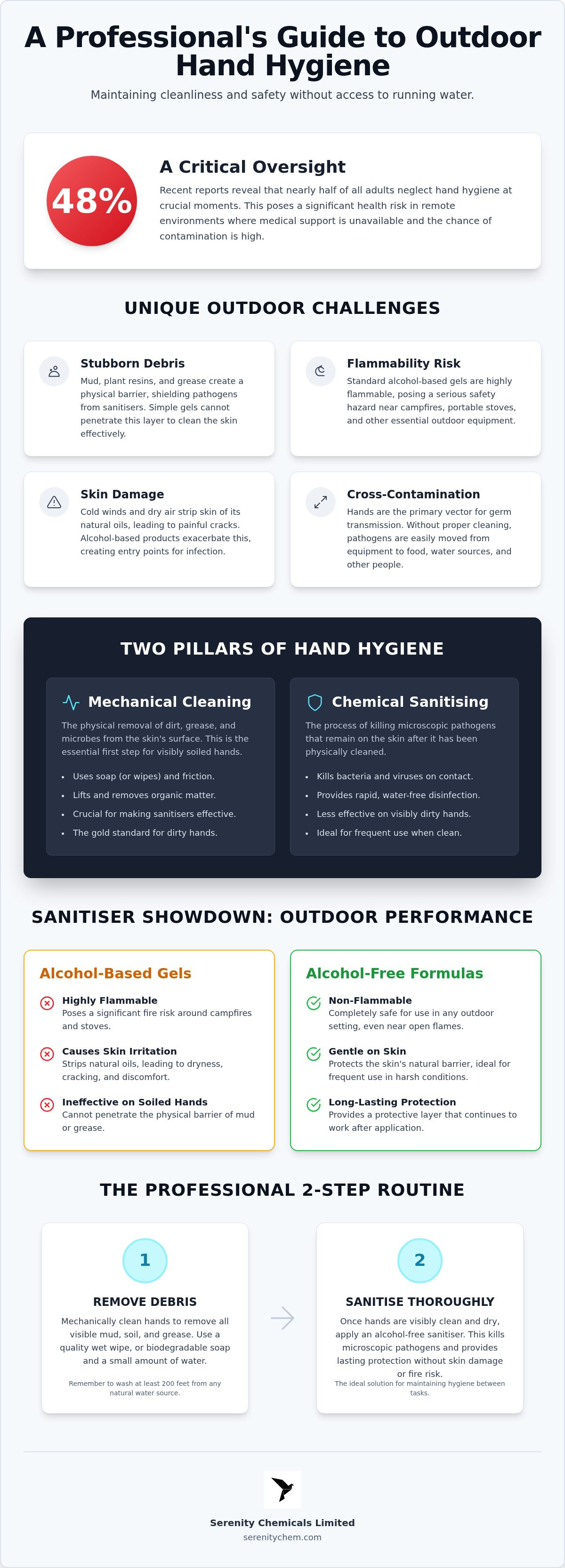
Recent reports suggest that 48% of adults neglect hand hygiene at crucial moments, a statistic that presents a real challenge when you're far from a plumbed sink. Knowing how to keep hands clean outdoors is essential for anyone spending time in remote environments, whether for work or leisure. Many people find that standard alcohol-based sanitisers cause painful skin irritation or simply fail to move the stubborn mud and grease that come with outdoor life. There's also the often-overlooked concern of using flammable gels near campfires or portable stoves.
We believe that effective hygiene shouldn't come at the cost of your skin's health. This guide promises to show you the most professional methods for maintaining cleanliness without running water, from simple portable setups to advanced alcohol-free technology. You'll learn how to establish a reliable routine that works against tough outdoor germs whilst remaining gentle enough for the whole family. We will preview the best products for removing visible debris and explain how to achieve long-lasting protection that keeps you safe and comfortable in the field.
Key Takeaways
- Understand why organic contaminants like soil and resins require a specific approach beyond simple sanitisation to ensure your hands are truly clean.
- Learn the vital difference between mechanical cleaning and chemical sanitising to ensure you're effectively removing pathogens in the field.
- Discover how to keep hands clean outdoors using alcohol-free formulas that eliminate fire risks near campfires whilst protecting your skin's natural barrier.
- Master a reliable two-step routine for maintaining professional hygiene standards even when you don't have access to a plumbed sink or running water.
- Identify why UK-manufactured, alcohol-free solutions offer superior skin-safe protection for frequent use in harsh or remote environments.
The Unique Challenges of Maintaining Hand Hygiene Outdoors
Maintaining professional hygiene standards becomes significantly more complex once you leave the controlled environment of a building with running water. Traditional protocols often rely on the assumption that a sink is nearby, yet in the backcountry, you're faced with a cocktail of organic matter that standard sanitisers aren't designed to penetrate alone. Understanding how to keep hands clean outdoors requires a shift in perspective. You aren't just dealing with invisible bacteria; you're battling thick mud, sticky plant resins, and mineral-heavy soil that physically shield pathogens from disinfection.
Environmental factors like biting winds and freezing temperatures further complicate the issue. Cold weather constricts blood flow to the skin and strips away natural oils, leading to micro-cracks. These tiny fissures provide a haven for germs and increase the risk of infection if you're treating a minor injury or preparing communal food. Cross-contamination happens quickly when your hands serve as the primary tool for every task from pitching a tent to handling raw ingredients. Without a structured approach, you're merely moving pathogens from one surface to another.
Understanding Outdoor Germ Transmission
Bacteria and viruses persist on natural surfaces far longer than many realise. Pathogens can survive in soil or on vegetation amongst wildlife for days, waiting for a host. In remote areas, the role of hands in spreading waterborne illnesses such as Cryptosporidium or Giardia is a major concern. Even if you're using high-end water filters, simply touching your face or the rim of a water bottle with contaminated hands can bypass your safety measures entirely. It's a common mistake to assume that hands are safe simply because they look clean. Microscopic threats remain even after you've dusted off the worst of the grit.
The Problem with Visible Debris
Mud, grease, and heavy soiling create a physical barrier that prevents sanitising agents from reaching the skin's surface. Hand washing is the gold standard for a reason; it uses friction to lift these layers away. If you apply a sanitiser directly over a layer of grease, the active ingredients may never make contact with the underlying bacteria. This makes mechanical cleaning a vital first step in any outdoor hygiene routine. You must remove the visible barrier before you can expect a chemical disinfectant to work effectively. Identifying when a simple wipe is insufficient is a key skill for anyone serious about outdoor safety.
Choosing the Right Method: Soap vs Sanitiser Outdoors
Deciding between soap and sanitiser isn't merely a matter of personal preference; it's a technical choice based on the type of contamination present. Cleaning involves the removal of dirt, grease, and microbes, whereas sanitising focuses on killing pathogens left on the skin's surface. In remote settings, water is often a finite resource that must be managed carefully, making the choice between these two methods a strategic one. Knowing how to keep hands clean outdoors when water is scarce is a vital skill for any professional or enthusiast. Whilst soap and water are superior for removing physical grime, sanitisers excel at providing a quick kill-rate for bacteria in situations where setting up a wash station isn't practical.
The Science of Mechanical Handwashing
Soap works through surfactants, which are molecules that break down the surface tension of water and allow it to bind with oils and dirt. This process lifts microbes away from the skin so they can be rinsed off. Mechanical removal is the physical displacement of pathogens. When dealing with heavy soiling, grease, or sticky resins, this remains the most reliable approach. However, environmental responsibility is paramount in the wild. You should always use biodegradable soap and ensure you're at least 200 feet away from water sources to prevent contaminating local ecosystems. Learning how to keep hands clean outdoors responsibly means protecting the environment as much as your own health.
The Role of Portable Sanitisers
Portable sanitisers offer a rapid, water-free solution for hands that aren't visibly caked in mud. They're particularly useful for frequent application throughout the day, such as after touching communal equipment or before a quick snack. According to CDC guidelines on hand sanitizer, these products are highly effective at reducing germ counts but have limitations. They don't remove harmful chemicals, pesticides, or heavy metals from the skin. For those seeking a professional-grade, skin-kind option, using an alcohol free hand sanitiser UK formulation provides a safe alternative that won't strip your skin's natural defences. These modern solutions bridge the gap between efficacy and convenience in the field. If you're unsure which solution fits your specific outdoor requirements, you can speak with our technical team for tailored advice.
Alcohol-Free vs Alcohol-Based: A Comparison for Outdoor Use
Choosing the right chemical agent is just as important as the method of application. While traditional advice often defaults to high-percentage alcohol, the unique conditions of the wild require a more nuanced approach. Understanding how to keep hands clean outdoors involves balancing efficacy with safety and skin health. Alcohol-based gels are effective at killing many pathogens, but they present specific drawbacks that can be problematic in a remote camp or on a long trek. The choice between these two formats impacts not only your hygiene but also your overall comfort and safety in the field.
The Hidden Risks of Alcohol Gels
Alcohol is a potent solvent. It works by dissolving the natural lipids that keep your skin hydrated and protected. Frequent application, which is necessary for maintaining proper Backcountry Hygiene, often leads to "sanitiser dermatitis." This condition causes red, itchy, and cracked skin, which creates entry points for the very germs you're trying to avoid. There's also a significant safety concern that many hikers overlook. Alcohol is highly flammable. Applying it near a portable stove or a campfire carries a genuine risk of accidental ignition. For families with children, the danger of accidental ingestion is another factor that makes traditional gels a liability on the trail. If you have small outdoor cuts or grazes, alcohol-based products will cause a sharp, painful sting that can be avoided with better technology.
The Advantages of Advanced Alcohol-Free Formulations
Modern chemistry has introduced alcohol-free alternatives that rely on Quaternary Ammonium Compounds, often referred to as Quats. These are professional-grade disinfectants that kill microbes effectively without stripping the skin's moisture. One of the primary benefits is residual protection. Whilst alcohol evaporates almost instantly, leaving your skin vulnerable to the next surface you touch, certain alcohol-free formulations continue to work on the surface for a period after application. These non-drying formulas are essential for users with sensitive skin or eczema who find traditional products unbearable. Professional standards for high-performance antibacterial surface spray UK often mirror this high-end hand hygiene tech, focusing on long-lasting efficacy and safety. Knowing how to keep hands clean outdoors with these advanced solutions ensures you stay protected without compromising the integrity of your skin barrier, which is your body's first line of defence.
A Step-by-Step Routine for Cleaning Hands Without a Sink
Establishing a disciplined routine is the most effective way to ensure safety when you're away from traditional facilities. Simply splashing water or applying a small drop of gel isn't enough to meet professional standards. To master how to keep hands clean outdoors, you must follow a methodical process that prioritises the removal of physical contaminants before addressing microscopic threats. This two-stage approach ensures that your sanitising agent can actually reach the skin's surface to perform its function.
- Step 1: Remove visible debris. Use a biodegradable wipe or a clean, damp cloth to wipe away mud, grease, or grit. This mechanical step is crucial because physical barriers render most sanitisers ineffective.
- Step 2: Apply sanitiser. Dispense a generous amount of professional-grade sanitiser into your palm. You need enough liquid or foam to keep the skin wet for at least 20 to 30 seconds.
- Step 3: Ensure total coverage. Rub your hands together vigorously. Pay particular attention to the areas under your nails, the backs of your hands, and the spaces between your fingers where pathogens often hide.
- Step 4: Air dry. Don't wipe the sanitiser off with a towel. Allow your hands to air dry completely. This contact time is essential for the active ingredients to neutralise bacteria and viruses.
- Step 5: Repeat as necessary. Always perform this routine before handling food, treating an injury, or after touching high-contact surfaces like shared equipment.
Building Your Portable Hygiene Kit
A well-organised kit ensures you don't skip steps when you're tired or in a hurry. Your kit should include a dedicated water vessel, multi-purpose biodegradable wipes, and a high-quality sanitiser. Keep these items in an accessible outer pocket of your backpack so they're easy to reach without contaminating your other gear. It's also helpful to consult a professional cleaning chemicals list to ensure every product you carry meets stringent safety and efficacy standards for remote use.
Best Practices for Field Hygiene
In environments where water is scarce, conservation is a priority. Use a spray bottle to dampen cloths rather than pouring water directly over your hands. When managing groups or children, make hygiene a collective habit by scheduling regular cleaning breaks. Always remember the environmental impact of your presence. Dispose of used wipes in a sealed waste bag and carry them out with you; even biodegradable options take time to break down and can disturb local wildlife. If you need assistance selecting the right products for your next expedition, contact our specialist team for professional guidance.
Why Serenity Alcohol Free Hand Sanitiser is the Ideal Outdoor Companion
Selecting a hygiene product for remote use requires a balance between rigorous efficacy and practical safety. Serenity Alcohol Free Hand Sanitiser is specifically engineered to meet these demands, offering a professional-grade solution for those who need to know how to keep hands clean outdoors without the drawbacks of traditional gels. Unlike alcohol-based alternatives, our proprietary formula is non-flammable. This provides essential peace of mind when you're operating near portable stoves or socialising around a campfire, where the risk of accidental ignition is a genuine concern.
The user experience is equally important in the field. Many standard sanitisers leave a sticky residue that attracts the very dust and grit you're trying to avoid. Our formulation is designed for a superior skin-feel, absorbing quickly and leaving hands feeling clean rather than coated. Beyond comfort, we prioritise technical integrity. Every batch is manufactured to meet rigorous EN 14476 standards, ensuring high-level antiviral protection that professionals can rely on in any environment.
Professional Efficacy for Every Adventure
Outdoor professionals, from expedition leaders to field researchers, require products that perform under pressure. Trusting your hygiene to a reputable cleaning products manufacturer UK ensures that your supplies are backed by consistent quality control and ethical standards. Serenity formulations balance rigorous technical power with a gentle touch, ensuring that high-level disinfection never compromises the user’s skin comfort. This reliability is why our solutions are a staple for those who spend their working lives in the backcountry, where maintaining a healthy skin barrier is just as vital as killing pathogens.
Safe for the Whole Family and the Environment
When you're teaching children how to keep hands clean outdoors, safety is the primary consideration. Our alcohol-free sanitiser is the preferred choice for families because it doesn't sting small cuts and carries no risk of toxic ingestion. It's a principled approach to hygiene that respects both the user and the natural world. As a UK-based manufacturer, we take our ethical responsibilities seriously, producing high-integrity chemicals that reduce the environmental footprint of your adventures. For large expeditions, outdoor centres, or businesses operating in remote locations, we recommend exploring our bulk supply options. This ensures you have a consistent, reliable volume of professional sanitiser to maintain group safety throughout the season whilst managing costs effectively.
Mastering Professional Hygiene in Any Environment
Maintaining high standards of cleanliness shouldn't be a compromise when you're in the wild. By understanding how to keep hands clean outdoors through a structured two-stage process, mechanical removal followed by professional-grade sanitisation, you ensure total protection for yourself and your group. Choosing an alcohol-free solution effectively eliminates the risks of skin irritation and flammability that often plague traditional backcountry setups. This approach respects your skin's natural barrier whilst providing the technical efficacy required to neutralise pathogens in the field.
Serenity Chemicals provides the reliable technology needed for these demanding environments. Our formulations are manufactured in the UK to professional standards, offering a non-flammable and skin-kind alternative that is trusted by industrial and domestic users alike. Whether you're managing a large expedition or a family camping trip, prioritising a principled hygiene routine is the best way to safeguard your health. We invite you to secure your hygiene with Serenity Alcohol Free Hand Sanitiser and enjoy your next adventure with total peace of mind. Establishing these habits now ensures your future excursions remain safe, comfortable, and hygienically sound.
Frequently Asked Questions
Can I use hand sanitiser if my hands are covered in mud?
You shouldn't apply sanitiser directly over mud because it cannot reach the skin's surface to kill pathogens. Mud and organic matter act as a physical shield for bacteria and viruses. You must first remove visible debris using a wipe or a damp cloth. This mechanical cleaning step is essential for anyone learning how to keep hands clean outdoors effectively. Once the skin is clear, apply a professional sanitiser to ensure thorough disinfection.
Is alcohol-free hand sanitiser as effective as alcohol-based versions?
Modern alcohol-free formulations are highly effective and often meet the same professional standards, such as EN 14476, as alcohol-based products. They utilise advanced ingredients like Quaternary Ammonium Compounds to neutralise pathogens without the drying effects of ethanol. These solutions offer a reliable alternative for those working in harsh environments where maintaining skin integrity is vital. They provide high-level protection whilst remaining non-flammable and gentle on the skin's natural protective barrier.
How do I wash my hands whilst wild camping?
When wild camping, you should use a dedicated water vessel and biodegradable soap at least 200 feet from natural water sources. Wet your hands, lather for 20 seconds, and rinse away from streams to protect local ecosystems. If water is limited, prioritise a two-step routine: use a biodegradable wipe followed by a professional sanitiser. This method ensures you understand how to keep hands clean outdoors without wasting precious resources or damaging the environment.
Are alcohol-free sanitisers safe for children to use outdoors?
Alcohol-free sanitisers are the preferred choice for children because they don't sting small cuts or grazes and carry no risk of accidental alcohol poisoning. Children often have more sensitive skin, and these formulations help maintain their natural moisture levels during frequent use. They are also non-flammable, making them much safer to use around campfires or stoves. Always supervise application to ensure they achieve total coverage between fingers and under their fingernails.
What is the best way to clean hands before eating when hiking?
The best method before eating is to remove any visible soil with a wipe and then apply a generous amount of sanitiser. Rub your hands together until they are completely dry, ensuring the product reaches every surface. This routine is vital because hiking involves touching various natural surfaces that may carry bacteria from wildlife. Using a professional-grade, non-sticky solution ensures your hands feel clean and ready for food handling without any unpleasant chemical residue.
Can I use antibacterial surface wipes on my hands?
You should avoid using antibacterial surface wipes on your skin as they are formulated for hard, non-porous surfaces. These products often contain higher concentrations of chemicals that can cause severe irritation or allergic reactions on human skin. Instead, carry wipes specifically designed for skin use alongside your sanitiser. Using the correct product for each task ensures both your equipment and your hands remain hygienically clean without causing unnecessary dermatological damage or painful reactions.
Does hand sanitiser expire if kept in a hot car or backpack?
Hand sanitiser does have an expiry date, and extreme heat can accelerate the degradation of its active ingredients. Alcohol-based gels are particularly susceptible as the alcohol can evaporate, reducing its efficacy. Alcohol-free versions are more stable but should still be kept in a cool, shaded part of your backpack whenever possible. Always check the manufacturer's date and replace any product that's passed its expiry to ensure you maintain professional hygiene standards during your adventures.
How much hand sanitiser should I use for one application?
You should use enough sanitiser to keep your hands visibly wet for at least 20 to 30 seconds of rubbing. For most people, this is roughly the size of a two-pound coin. Using too little product prevents you from achieving total coverage, especially in the crevices of the skin and under the nails. Ensure you rub the product in until your hands are completely air-dried to allow the antimicrobial agents sufficient contact time to work.

How to Keep Hands Clean Outdoors: A Professional Hygiene Guide
Recent reports suggest that 48% of adults neglect hand hygiene at crucial moments, a statistic that presents a real challenge...

Hand Sanitiser for Frequent Use: Professional UK Guide 2026
The very product you use to protect your health might be the primary cause of your skin's deterioration. While alcohol-based ...