

What if the most expensive part of your floor maintenance routine is a step that shouldn't exist at all? For years, the industry standard has required a secondary rinse to prevent sticky residues, but in 2026, this double-labour approach is a significant drain on your resources. With the rising cost of doing business impacting nearly 90% of UK cleaning professionals, every wasted minute spent on a mop translates directly to lost profit.
We understand that you value the safety and appearance of your facility above all else. You likely worry that skipping the rinse cycle will lead to dull streaks or slip hazards, yet the right no rinse floor cleaner technology actually delivers a superior, residue-free finish. This guide promises to show you how to streamline your operations, reduce drying times, and maintain strict compliance with the latest UK safety and GB CLP labelling regulations. We will explore the technical shift toward high-performance formulas that protect your staff, your budget, and your reputation for excellence.
Key Takeaways
- Understand how residue-free chemical formulations eliminate the need for a water flush, preventing the sticky film that attracts dirt.
- Learn to reduce labour hours and improve workplace safety by adopting a cleaning protocol that facilitates significantly faster drying times.
- Identify the importance of pH neutrality for protecting delicate surfaces like marble whilst maintaining high-traffic vinyl and linoleum.
- Use our professional checklist to evaluate dilution ratios and safety documentation when choosing a high-performance no rinse floor cleaner.
- Discover how Serenity Floor Cleaner streamlines your maintenance routine while ensuring full compliance with current UK safety standards.
Defining No-Rinse Floor Cleaners: A Shift in Professional Maintenance
Professional floor maintenance is undergoing a quiet revolution. For decades, the standard protocol involved a heavy detergent wash followed by a secondary water flush to remove soap film. Today, this two-step process is viewed as an unnecessary drain on resources. A high-quality no rinse floor cleaner eliminates the need for that second pass, allowing staff to move onto the next task immediately. This isn't merely a convenience; it's a strategic response to the rising costs of labour and water in the UK.
The "rinse cycle" is often the most expensive part of manual floor care. When you consider that labour accounts for the vast majority of a cleaning budget, doubling the mopping time for a single room is difficult to justify. By removing the rinse requirement, facilities can reallocate those hours to higher-value tasks, such as high-touch point sanitisation or deep-cleaning programmes. This transition ensures that your team remains productive whilst maintaining the highest standards of hygiene and floor aesthetics.
The Chemistry of Residue-Free Cleaning
To understand why this shift is possible, we should first consider the basics: What are cleaning agents? At their core, they are substances designed to remove dirt and prevent its re-deposition. Traditional detergents often rely on high-foaming surfactants that leave a sticky residue if they aren't thoroughly flushed away. This film acts like a magnet, trapping new dirt and causing floors to look dull within hours.
Professional-grade no-rinse solutions use advanced, low-foaming surfactants. These chemicals are engineered to suspend soil in the cleaning solution and then evaporate at a controlled rate, leaving nothing behind but a clean surface. Because these formulas don't rely on heavy soap bases, they avoid the "sticky floor" syndrome that plagues cheaper alternatives. It's a precise chemical balance that ensures the floor is cleaned deeply without the need for additional water to clear away the cleaner itself.
Traditional vs. No-Rinse Protocols
The operational difference between these two methods is stark. A traditional protocol requires a two-bucket system and a significant volume of water to ensure all soap is removed. This process is slow, water-intensive, and often leaves floors wet for extended periods, increasing the risk of slip-and-fall accidents. It also places a greater physical burden on the cleaning staff who must transport and dispose of larger quantities of wastewater.
In contrast, a no rinse floor cleaner supports a single-pass protocol. This method uses less water and chemical concentrate, directly supporting environmental sustainability targets. For large-scale facility management, the impact is measurable. You'll see a reduction in water consumption and a faster return-to-service for busy areas, ensuring that your cleaning operations remain both efficient and principled in their use of resources.
The Core Benefits of Implementing a No-Rinse Cleaning Protocol
Adopting a modern cleaning protocol isn't just about saving time; it's about protecting your assets and your people. Whilst the chemical science behind a no rinse floor cleaner is impressive, the real-world advantages are found in the daily operations of a busy facility. When you eliminate the need to mop twice, you immediately halve the physical strain on your team and reduce the volume of water saturating your flooring surfaces. This shift is essential for businesses looking to maintain high standards whilst managing the rising costs of operation.
The aesthetic result is equally significant. Traditional detergents often leave a microscopic film that dulls the floor's natural lustre over time. A residue-free approach ensures a streak-free finish, whether you're maintaining a high-gloss showroom or a matte healthcare corridor. By avoiding the build-up of "tacky" soap scum, floors stay cleaner for longer, as there is no sticky surface to attract and hold onto new dirt particles.
Safety and Slip Resistance (HSE Compliance)
Slips and trips remain a primary concern for UK businesses, and wet floors are a leading cause of workplace accidents. Traditional mopping leaves surfaces damp for extended periods, necessitating the use of "wet floor" signs that can disrupt the flow of foot traffic and impact the professional appearance of your space. By using a fast-evaporating solution, you significantly reduce this window of risk.
This is particularly vital in environments that must meet strict hygiene standards, such as those referencing FDA requirements for cleanable floors. Faster drying times mean you can remove hazard signage sooner, ensuring your thoroughfares remain safe and accessible. This efficiency is a hallmark of a principled maintenance strategy that prioritises both safety and service quality.
Operational Efficiency and Cost Savings
Efficiency is the cornerstone of a profitable cleaning operation. If your staff can clean a large hall in 30 minutes instead of an hour, the cumulative savings over a single year are substantial. This protocol also minimises the need for heavy scrubbing machinery for routine maintenance. Because there is no residue to trap grime, the frequency of deep-cleaning interventions is reduced, saving on both machinery wear and energy costs.
Precise dilution of concentrates ensures that every drop of product is used effectively, reducing chemical waste and supporting your sustainability targets. If you're looking to optimise your facility's maintenance schedule for the coming year, you can speak with our team about professional solutions. Using a high-performance no rinse floor cleaner allows you to achieve a pristine finish with a fraction of the labour, keeping your floors in peak condition without the hidden costs of outdated methods.
Compatibility Guide: Which Floor Types Benefit Most?
Selecting a no rinse floor cleaner requires a clear understanding of the specific substrate you're treating. Whilst some products claim universal compatibility, the chemical reality is more nuanced. For instance, high-traffic vinyl and linoleum in healthcare or education settings require a solution that removes heavy soil without stripping the factory-applied finish. Similarly, ceramic and porcelain tiles are resilient, but their grout lines are porous and prone to discolouration if residues are allowed to settle and trap grime.
In industrial environments, the requirements shift towards scale and durability. A specialised warehouse floor cleaner must handle forklift tyre marks and grease without requiring a secondary flush that would keep large zones out of operation for hours. By choosing a formula designed for these high-demand areas, you ensure that your maintenance routine remains efficient and your floors stay protected against the rigours of heavy machinery.
Hard Surfaces and Resilient Flooring
Many modern offices and retail spaces now favour Luxury Vinyl Tiles (LVT) and high-quality laminate for their aesthetic appeal and durability. However, these surfaces can become dull or "cloudy" if harsh chemicals are used. A pH-neutral no rinse floor cleaner maintains the integrity of the wear layer, ensuring the floor looks as intended for years.
This level of care is particularly important in specialised environments. Adopting a pet friendly floor cleaner UK standard approach is essential for veterinary clinics or kennels. In these settings, floors must be sanitised frequently, yet the cleaning agent must not leave behind harmful toxins or sticky films that could irritate animals in close contact with the ground. It's a matter of professional responsibility to use solutions that are as safe as they are effective.
Natural Stone and Polished Concrete
Natural stone, such as marble and limestone, is alkaline-sensitive and highly susceptible to damage from acidic cleaners. Using the wrong product can cause irreversible etching, destroying the stone's polished finish. A neutral no-rinse technology protects these significant investments whilst preserving the natural lustre of the material. This is especially true for large, open-plan stone lobbies where a streak-free finish is the primary indicator of cleanliness.
Polished concrete also benefits from this methodical approach. It requires a cleaner that supports the densification of the surface rather than one that eats away at it. Whilst we operate within the UK, many national procurement officers look to international benchmarks, such as the City of Buffalo's Green Cleaning Specifications, to understand the global move toward non-corrosive and biodegradable agents. By following these principled standards, you can achieve a superior clean whilst respecting the delicate chemistry of your flooring.
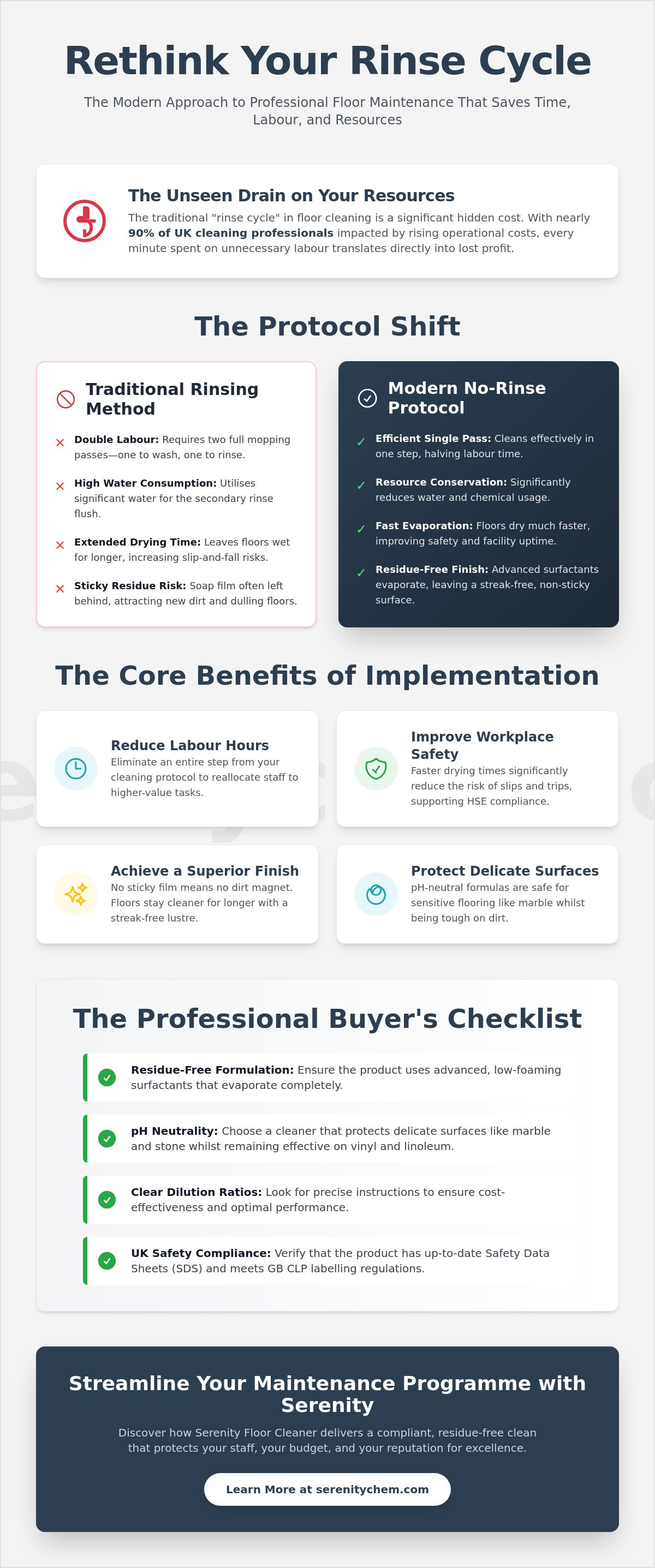
The Ultimate Buyer’s Checklist for No-Rinse Floor Chemicals
Procuring a no rinse floor cleaner for a professional facility involves more than comparing the price per five-litre container. A principled buyer looks beyond the initial invoice to understand the cost-in-use. High-concentration formulas might appear more expensive upfront, but their superior dilution ratios often result in a lower cost per square metre cleaned. It's about evaluating the long-term value and the reduction in storage space required for bulky, less effective alternatives.
Staff training and safety documentation are equally vital. In the UK, COSHH compliance isn't optional; it's a legal cornerstone of your operations. With the GB CLP regulation deadline of 15 August 2026 requiring updated labels and Safety Data Sheets for all products, choosing a supplier that prioritises transparency is essential. This ensures every member of staff understands how to handle chemicals responsibly, reducing the risk of accidents and ensuring a consistent standard of cleanliness across your entire estate.
Technical Specifications to Scrutinise
Technical efficacy is non-negotiable in high-hygiene environments like hospitals or kitchens. You should verify that your chosen no rinse floor cleaner meets specific EN standards, such as EN 1276 for antibacterial performance. These certifications provide peace of mind that the solution is actually killing pathogens rather than just moving them around. Additionally, check the shelf life of the concentrate and its compatibility with your existing mopping systems or automatic floor scrubbers to avoid equipment damage.
Environmental and Ethical Considerations
Sustainability is a core value for modern UK businesses. Sourcing your supplies from a cleaning products manufacturer UK based helps reduce your carbon footprint by minimising transport distances. It also ensures that the products are manufactured to rigorous British standards for safety and environmental protection. Look for surfactants that are fully biodegradable and procurement policies that prioritise cruelty-free testing.
If you're ready to upgrade your maintenance routine to a professional-grade standard, you can contact our specialists for professional guidance on selecting the right formula for your facility. By focusing on these technical and ethical benchmarks, you can build a cleaning protocol that is both efficient and responsible.
Why Serenity Floor Cleaner is the Leading Choice for UK Businesses
Choosing a maintenance partner requires more than just finding an effective chemical solution; it demands a relationship built on trust and technical reliability. Serenity Floor Cleaner is engineered to meet the specific challenges of the 2026 professional landscape, where efficiency and regulatory compliance are paramount. As a high-performance no rinse floor cleaner, our formulation addresses the primary pain points of modern facility management by removing the redundant rinse cycle and delivering a pristine, streak-free finish in a single pass.
The Serenity Advantage: Efficacy and Ethics
Our high-concentration formulas are specifically designed to maximise your commercial return on investment. Unlike diluted alternatives, Serenity Floor Cleaner allows for precise control over cost-in-use, ensuring you only use what is necessary for the task at hand. This versatility makes it safe for diverse environments, ranging from quiet corporate offices to heavy-duty industrial units.
Integrity is at the heart of our brand. We provide direct access to comprehensive technical support and up-to-date Safety Data Sheets (SDS), ensuring your team is fully equipped for COSHH assessments. You won't have to navigate complex third-party hierarchies to get the safety information you need. We operate as a "Service-Oriented Guide," offering the transparency and expert knowledge required to keep your facility compliant with the latest GB CLP labelling standards.
Streamlining Your Procurement
Buying direct from a British chemical manufacturer offers distinct advantages in an unpredictable global market. By maintaining our production facility within the UK, we can offer reliable lead times and a consistent supply chain that national businesses depend on. This proximity reduces the carbon footprint associated with long-distance shipping and ensures that our products are manufactured to the highest domestic quality standards.
We offer flexible bulk buying options to support national distribution, making procurement straightforward for large-scale organisations. If you are looking to standardise your hygiene protocols across multiple sites, you can explore our professional cleaning chemicals list for a complete suite of solutions. Integrating a professional no rinse floor cleaner into your inventory is the first step toward a more efficient, responsible, and profitable maintenance strategy.
Future-Proofing Your Facility Maintenance Protocol
Moving away from the rinse cycle is no longer a luxury; it's a strategic necessity for the modern cleaning professional. We've explored how eliminating the water flush reduces labour costs and improves workplace safety through faster drying times. By prioritising pH-neutral chemistry and high-performance surfactants, you can protect your flooring assets whilst maintaining a streak-free finish that lasts. This methodical approach ensures your operations remain lean and your surfaces remain pristine.
Our commitment to UK-based manufacturing excellence ensures that every bottle meets the highest standards of quality and ethical responsibility. With COSHH compliant formulations trusted by national facility managers, we provide the peace of mind you need to lead your team with confidence. Implementing a professional no rinse floor cleaner is an investment in your business's long-term efficiency and reputation. We're here to help you make that transition seamless.
If you're ready to achieve pristine results with a fraction of the effort, Browse our range of professional Serenity Floor Cleaners. Embracing these advanced solutions today will set a new benchmark for excellence in your facility.
Frequently Asked Questions
Does no-rinse floor cleaner actually disinfect surfaces?
It depends on the specific formulation. Whilst a standard no rinse floor cleaner is designed to remove soil without residue, specialised versions meet EN 1276 standards for antibacterial efficacy. It's vital to check the product's technical data sheet to ensure it meets your facility's hygiene requirements for pathogen reduction. A cleaner removes dirt, but only a certified sanitiser or disinfectant will kill bacteria and viruses.
Can I use a no-rinse cleaner in a floor scrubbing machine?
Most professional no-rinse solutions are perfectly compatible with automatic floor scrubbers. Because these formulas are typically low-foaming, they don't cause the recovery tank to overflow with suds. This compatibility allows for a single-pass mechanical clean, which is far more efficient than traditional two-stage processes. Always verify that the chemical is safe for your specific machine's seals and internal components before use.
Will a no-rinse cleaner leave my floors slippery?
A high-quality no rinse floor cleaner actually reduces the risk of slippery floors by eliminating soap film. Traditional detergents often leave a "tacky" residue that can become dangerously slick when damp. In contrast, no-rinse technology evaporates cleanly, leaving the floor dry and safe in a fraction of the time. This rapid drying is a key component of HSE-compliant slip and trip prevention in public spaces.
Is it safe to use no-rinse chemicals around pets and children?
Professional solutions like Serenity are formulated to be safe for use in environments where pets and children are present. Because the product doesn't leave a chemical film behind after evaporation, there is no risk of skin irritation or ingestion from the floor surface. It's a principled choice for schools, nurseries, and veterinary clinics that prioritises the well-being of all occupants without compromising on hygiene.
How much time can my business save by switching to no-rinse protocols?
Businesses typically see a reduction in mopping time of approximately 50% by removing the secondary rinse step. This efficiency gain is particularly noticeable in large facilities or high-traffic areas that require frequent maintenance. By streamlining the protocol, your staff can reallocate saved labour hours to critical sanitisation tasks, ensuring a higher overall standard of cleanliness across your entire site throughout the day.
What happens if I use too much concentrate in a no-rinse solution?
Using an excessive amount of concentrate can lead to the very streaks and sticky residues you are trying to avoid. The chemistry relies on a specific balance to ensure total evaporation; too much product disrupts this process. For the best results, always follow the manufacturer's dilution ratios. This ensures a streak-free finish and prevents the unnecessary waste of expensive chemical resources within your cleaning budget.
Do I need to strip my floors before switching to a no-rinse cleaner?
You don't need to strip your floors unless there is a significant build-up of old soap scum or wax from previous cleaning methods. If your floors currently feel "tacky" or look dull, a deep clean or strip will provide a fresh start for the no-rinse technology to work effectively. Once you've moved to a residue-free protocol, the need for future aggressive stripping is often greatly reduced.
Are no-rinse cleaners suitable for high-gloss marble floors?
pH-neutral no-rinse solutions are arguably the best choice for high-gloss marble and natural stone. These delicate surfaces are easily etched by acidic cleaners and dulled by soapy residues. A professional-grade no rinse floor cleaner maintains the stone's natural lustre without damaging the alkaline-sensitive finish. This makes it an essential tool for maintaining prestigious lobbies and high-end retail environments where aesthetics are a priority.

Hand Hygiene in Food Preparation Areas: The 2026 Professional Guide
The Food Standards Agency estimates that foodborne illness costs the UK economy approximately £9 billion every year, with a s...

Sanitising Commercial Kitchen Hard Surfaces: The Professional UK Guide (2026)
Did you know that the average fine for food hygiene offences in the UK has more than tripled since 2016, now reaching over £7...