

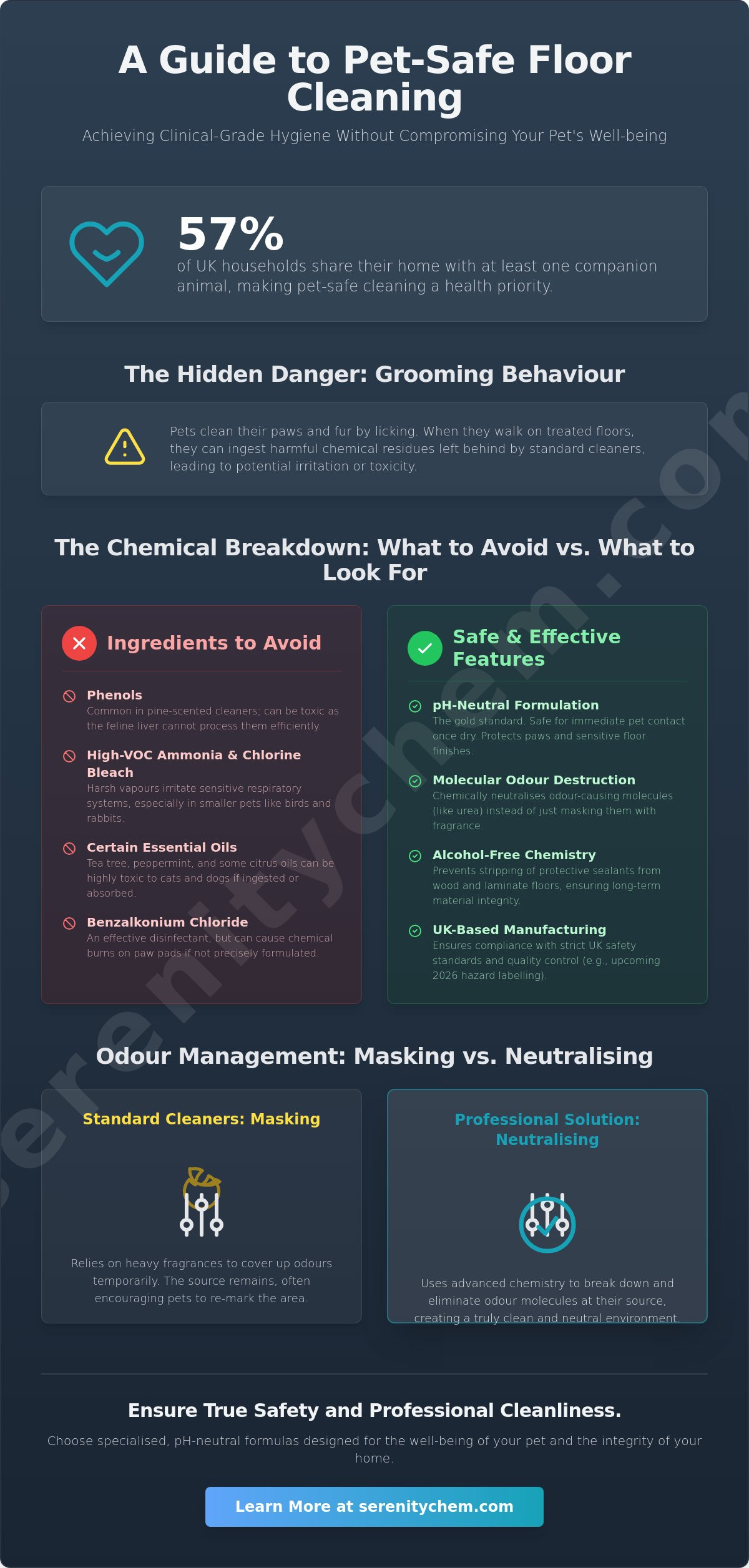
With 57% of UK households now sharing their living spaces with at least one companion animal, the search for a high-performance pet friendly floor cleaner UK has become a matter of health as much as hygiene. It's common to feel caught between the need for clinical-grade cleanliness and the fear of leaving toxic residues that could irritate sensitive paws or be ingested during grooming. You shouldn't have to choose between a sterile environment and the safety of your pets.
We understand that standard domestic cleaners often fail to address the root cause of organic stains and urea odours, frequently relying on heavy fragrances to mask the problem rather than solving it. This specialist reference reveals how to maintain professional-grade floor hygiene whilst ensuring absolute safety through precise chemical insights. You'll discover how to navigate the 15 August 2026 UK hazard labelling regulations, which specific ingredients to avoid, and how pH-neutral formulations provide a bacteria-free finish that is safe for immediate pet contact the moment it dries.
Key Takeaways
- Identify the specific chemical groups, including phenols and high-VOC ammonia, that pose the greatest risk to animals during their natural grooming behaviour.
- Learn why a high-quality pet friendly floor cleaner UK should utilise molecular odour destruction rather than simply masking organic scents with heavy fragrances.
- Understand how to select specialised formulations that prevent acid-etching on natural stone or moisture damage to laminate whilst ensuring deep sanitisation.
- Master professional application techniques, such as the distinction between blotting and scrubbing, to prevent organic stains from setting into floor surfaces.
- Discover the importance of UK-based manufacturing and alcohol-free chemistry in maintaining the highest standards of ethical and effective hygiene.
What Defines a Pet Friendly Floor Cleaner in the UK?
Defining a pet friendly floor cleaner UK requires a shift in perspective. Most consumers view cleanliness through the lens of visual clarity or floral scent; however, for animal owners, hygiene is defined by the chemical footprint left on a surface. A truly safe formulation is characterised by the total absence of three primary irritants: phenols, chlorine bleach, and high-VOC ammonia. These substances are effective at sanitisation but pose severe risks to domestic animals when used in enclosed spaces.
The necessity for these exclusions stems from "grooming behaviour." Dogs and cats spend a significant portion of their day cleaning their paws and fur. When they walk across a damp or recently treated floor, they inevitably ingest trace amounts of chemical residue. While a human might only touch the floor with their feet, a pet processes the environment through their mouth and respiratory system. Many common cleaning agents found in supermarkets contain ingredients that are perfectly safe for adult humans but hazardous for smaller, more sensitive biological systems.
The UK regulatory landscape is currently undergoing a significant transition. By 15 August 2026, all cleaning chemicals must comply with updated hazard labelling requirements to ensure greater consumer transparency. Serenity aligns with these national safety expectations by ensuring every batch is manufactured within the UK under strict quality controls. This methodical approach ensures that "pet-safe" isn't just a marketing claim but a verifiable chemical standard that prioritises animal welfare.
It's a common misconception that "natural" is synonymous with "safe." Many essential oils, such as tea tree, peppermint, or certain citrus extracts, are highly toxic to cats and dogs if not professionally stabilised. Controlled synthetic safety often proves superior. It allows for the removal of these natural allergens whilst maintaining the high antimicrobial efficacy required for a bacteria-free home.
The Risk of Standard Household Cleaners
Standard products often rely on benzalkonium chloride for disinfection. While effective, this compound requires precise concentration limits to avoid causing chemical burns on delicate paw pads. Traditional pine-scented cleaners are particularly dangerous; they contain phenols that the feline liver cannot easily process. Additionally, lingering chemical vapours from high-VOC products can irritate the sensitive respiratory systems of smaller pets, such as rabbits or birds, who are more susceptible to airborne toxins than humans.
Criteria for Professional Pet-Safe Certification
Professional-grade solutions must balance antimicrobial power with dermatological safety. The gold standard for any pet friendly floor cleaner UK is pH neutrality. A pH-neutral formula ensures the cleaner won't strip the protective oils from a pet's skin or damage delicate floor finishes like sealed wood. Modern UK floor care also prioritises biodegradability. This ensures the product breaks down safely after use, reflecting an ethical commitment to both animal integrity and environmental protection.
The Science of Safety: Ingredients and Formulations
The efficacy of a pet friendly floor cleaner UK depends on its molecular structure. Achieving a sterile environment requires a balance between two primary cleaning methods: enzymatic action and surfactant-based lifting. Enzymatic cleaners utilise biological catalysts to digest organic proteins, such as those found in urine or vomit. While these are excellent for spot treatments, professional-grade floor maintenance typically relies on advanced surfactants. These agents reduce the surface tension of water, allowing the solution to penetrate deep into floor pores and lift away stubborn grime without leaving a sticky residue that attracts more dirt.
Odour management is another area where professional chemistry diverges from domestic products. Standard cleaners often rely on heavy perfumes to mask unpleasant scents. This is an temporary fix. True hygiene involves molecular destruction, where neutralising agents encapsulate and break down the chemical bonds of urea and pheromones. By destroying the odour at the source, you prevent pets from being drawn back to the same spot to "re-mark" their territory. This creates a neutral, calm environment for both the owner and the animal.
Serenity prioritises alcohol-free and bleach-free bases for a specific reason: long-term material integrity. Alcohol-based cleaners can strip the protective sealants from wood and laminate floors, leading to warping or discolouration over time. Similarly, bleach is a corrosive oxidant that can damage floor finishes and irritate a pet's respiratory system. By avoiding these harsh bases, we ensure that your pet friendly floor cleaner UK protects your investment in your home whilst maintaining a safe surface for your pets to inhabit. If you have specific questions about our formulations, feel free to contact our technical team for guidance.
UK residents must also consider the impact of water hardness on cleaning performance. In many parts of the South East and London, high mineral content in the water can interfere with standard detergents, leading to streaking and reduced sanitisation. Specialist formulations are engineered to remain stable in hard water, ensuring that minerals like calcium don't deactivate the cleaning agents or leave behind a cloudy film that pets might lick.
pH Neutrality and Paw Health
The pH scale is a critical factor in animal safety that is often overlooked. A pet's paw pads are sensitive and have a slightly acidic natural balance. Using highly alkaline cleaners (like bleach) or highly acidic ones (like vinegar) can cause caustic burns or chronic dermatitis. A pH-neutral cleaner, sitting at the 7.0 mark, provides the gold standard of safety. It is gentle enough for skin contact whilst remaining powerful enough to emulsify fats and oils on the floor surface.
Odour Neutralisation Without Harsh Fragrances
Modern hygiene moves away from the "fresh linen" or "lemon" scents that dominate the market. Many sensitive breeds, such as French Bulldogs or West Highland Terriers, can suffer from allergic reactions to the synthetic terpenes used in heavy perfumes. Professional neutralising agents focus on encapsulation technology. These molecules surround the odour-producing compound, rendering it inert and scentless. The result is a home that smells like nothing at all, which is the truest indicator of a clean environment.
Choosing the Right Cleaner for Your Floor Type
Selecting a pet friendly floor cleaner UK requires an understanding of how different materials react to moisture and chemical agents. While the primary goal is sanitisation, the physical integrity of your flooring must be preserved to prevent long-term damage that could trap pathogens. For instance, sealed wood and laminate floors are particularly susceptible to moisture ingress. Over-wetting these surfaces during frequent cleaning can cause swelling and warping. A high-quality professional solution allows for effective sanitisation with minimal water usage, ensuring the floor remains dry and safe for pet contact almost immediately.
Natural stone and tiles present a different challenge. Many DIY guides suggest vinegar as a "natural" pet-safe alternative; however, vinegar is an acid that can lead to permanent acid-etching on marble, limestone, and travertine. Professional pH-neutral cleaners provide a safer alternative, lifting organic matter without compromising the stone's finish. For vinyl and linoleum, maintaining slip resistance is paramount. Older pets with mobility issues or arthritis rely on surface traction to navigate safely. Selecting a cleaner that leaves no soapy film is essential to prevent dangerous slips and falls.
In large-scale facilities like boarding kennels or rescue centres, adopting a warehouse floor cleaner methodology is often the most effective. This approach prioritises high-performance concentrates and mechanical application to maintain hygiene over vast areas whilst keeping operational costs manageable. It ensures that even in high-traffic environments, the standard of cleanliness remains consistent and professional.
Hard Surface Sanitisation Standards
The concept of "contact time" is vital for professional hygiene. To effectively eliminate pathogens, most cleaners must remain wet on the surface for a specific duration, typically between 30 seconds and 5 minutes depending on the targeted bacteria. No-rinse formulations represent a significant advancement in this area. By eliminating the need for a secondary rinse, you reduce labour time and ensure that no hazardous residue is left behind for pets to ingest. This "clean and go" approach is the most efficient way to manage pet friendly floor cleaner UK applications in busy households.
Machine vs. Manual Application
For domestic settings, manual mopping is usually sufficient, provided you use a two-bucket system to avoid cross-contamination between "clean" and "dirty" zones. However, in veterinary surgeries or large kennels, a professional scrubber-dryer is superior. These machines apply the solution, agitate the surface, and immediately vacuum up the dirty water, leaving the floor bone-dry. Whether using manual or machine methods, choosing professional concentrates over ready-to-use bottles is more sustainable. It allows you to adjust the dilution strength based on the level of soiling, ensuring you use only as much chemical as is strictly necessary for the task.
Step-by-Step Guide: Cleaning Common Pet Messes
Speed is the primary factor in effective stain management. When an accident occurs, your first instinct might be to scrub the area vigorously. This is often a mistake. Scrubbing forces organic matter deeper into floor grooves or grout lines, making it significantly harder to extract. Instead, use a blotting motion with a highly absorbent cloth to lift as much liquid as possible before applying your pet friendly floor cleaner UK. This mechanical removal ensures that the chemical stage of cleaning is far more effective.
Professional-grade concentrates allow for dilution mastery, which is a level of control that domestic products rarely provide. For routine maintenance cleaning, a light dilution is sufficient to lift dander and dust. However, for deep disinfection following a biological accident, increasing the concentration ensures that the antimicrobial agents can effectively neutralise pathogens. This flexibility is essential for maintaining hygiene without wasting product or leaving unnecessary chemical footprints on your floors.
Safety protocols don't end once the floor looks clean. It's vital to keep pets away from treated areas until they're completely dry. Whilst specialist formulations are non-toxic once evaporated, a damp surface remains a slip hazard. Furthermore, dampness encourages pets to lick their paws, which can lead to minor digestive upset from concentrated surfactants before they've properly bonded with the surface. A final post-clean inspection should confirm the floor isn't "tacky." A tacky residue is a sign of over-concentration and will quickly attract fresh dirt, hair, and grit.
Tackling Muddy Paw Prints and Dander
UK soil is often rich in clay and fine grit, which acts as an abrasive against floor sealants. Surfactant-heavy cleaners are required to encapsulate these particles so they can be mopped away without scratching the surface. During the winter months, we recommend a "Double-Mop" technique for entryways. Use one pass to lift the bulk of the mud and a second pass with a clean mop head to ensure no dander or grit remains. This process significantly improves indoor air quality by preventing dried dander from becoming airborne in high-traffic zones.
Dealing with Urine, Vomit, and Accidents
Biological accidents require a specific chemical response to prevent permanent damage. Pre-treating the area is essential to neutralise the acids in vomit or the ammonia in urine before you begin full-floor mopping. A common error is using boiling water; this actually "sets" the proteins in organic stains, much like cooking an egg, making them nearly impossible to remove. Lukewarm water is far more effective at breaking down these bonds. Total removal of pheromones is the final step. If trace amounts remain, your pet's sense of smell will encourage them to repeat the "marking" behaviour in the same spot. For bespoke advice on managing persistent hygiene challenges, you can speak with our specialist team today.
The Serenity Standard: Professional Integrity in Pet Care
The Serenity Standard is built upon a foundation of technical precision and ethical responsibility. We believe that professional hygiene shouldn't come at the cost of animal welfare or environmental integrity. Every batch of our pet friendly floor cleaner UK is manufactured within the United Kingdom, allowing us to maintain total oversight of the production cycle. This local approach ensures that our products meet stringent national quality controls and provides our users with the peace of mind that comes from knowing exactly where their cleaning solutions originate.
Ethical formulation is a non-negotiable aspect of our chemical engineering. Our commitment to cruelty-free and alcohol-free solutions reflects a deep-seated respect for the animals we aim to protect. This principled approach extends beyond floor care to a holistic hygiene regime. For instance, our alcohol-free hand sanitiser complements our floor range by providing a skin-safe way for owners and staff to maintain personal hygiene without introducing harsh vapours or drying agents into the pet's environment. It's about creating a cohesive, safe ecosystem for everyone in the building.
Professionals in high-stakes environments, such as veterinary surgeries and boarding centres, trust Serenity because we prioritise transparency and efficacy. In these settings, the stakes of a hygiene failure are high. A pet friendly floor cleaner UK must do more than just look clean; it must reliably eliminate pathogens whilst remaining safe for animals that may be recovering from surgery or suffering from compromised immune systems. Our formulas are designed to meet these professional demands without the use of caustic additives.
Direct from Manufacturer Benefits
Buying direct from the manufacturer offers significant advantages for commercial facilities. We provide the following benefits to ensure operational excellence:
- Cost-efficiency: Bulk purchasing options allow commercial facilities to access professional-grade chemistry without the retail markup.
- Technical Support: We provide comprehensive COSHH data sheets for every product, ensuring your facility remains compliant with UK health and safety regulations.
- Consistency: Our controlled manufacturing process ensures that the performance you experience in the first bottle is identical to the performance in the hundredth.
A Principled Approach to Chemical Engineering
Our engineering team works to balance heavy-duty degreasing power with gentle, pet-safe chemistry. This requires continuous innovation, especially as we adapt our formulas to meet the latest 2026 safety standards and hazard labelling regulations. We don't settle for "good enough" when it comes to safety. We invite you to explore the full range of Serenity floor care solutions to discover how our principled approach can transform the hygiene standards of your home or business.
Advancing Your Floor Care Standards for 2026
Maintaining a sterile yet safe home environment requires more than just removing visible dirt. It's about selecting a pet friendly floor cleaner UK that respects the biological needs of your animals whilst providing clinical-grade sanitisation. By prioritising pH-neutral formulations and molecular odour destruction, you protect both your flooring investment and the long-term health of your pets' paws. Professional hygiene doesn't need to be hazardous.
Serenity products are UK manufactured to ISO standards; ensuring every batch delivers consistent, professional results. Our cruelty-free and vegan formulations are trusted by UK veterinary professionals because they provide a bacteria-free finish without leaving toxic residues. Transitioning to professional-grade hygiene provides the peace of mind that every pet owner deserves. It's a principled choice for a cleaner, safer environment.
Browse our professional range of pet-safe floor cleaners and discover a higher standard of care for your home or facility today.
Frequently Asked Questions
Is it safe for my dog to walk on the floor whilst it is still wet?
It's best to keep dogs off the floor until it's completely dry. While a high-quality pet friendly floor cleaner UK is non-toxic, wet surfaces present a slip hazard and increase the likelihood of your dog licking concentrated liquid from their paws. Once the surface is bone-dry, the active agents have bonded or evaporated, making it perfectly safe for immediate contact and grooming behaviour.
Can I use pet friendly floor cleaners in a spray mop or robo-mop?
Yes, you can use specialised pet-safe solutions in most spray mops and robotic cleaners. These devices require low-foaming formulations to prevent internal clogs and ensure a streak-free finish. Serenity Floor Cleaner is engineered to work effectively in these machines, providing consistent sanitisation across large surface areas without the risk of mechanical damage or the sticky residue build-up often caused by domestic detergents.
Do pet-safe cleaners actually kill bacteria like E. coli and Salmonella?
Professional-grade pet-safe cleaners are specifically formulated to eliminate pathogens like E. coli, Salmonella, and Listeria. Unlike standard domestic products that may only lift surface dirt, these solutions use targeted antimicrobial agents to break down bacteria at a cellular level. This ensures your home remains a sterile environment; this is particularly important in households where raw feeding or frequent outdoor access is common.
Why does my floor feel sticky after using a pet friendly cleaner?
A sticky or "tacky" sensation is usually the result of using too much concentrated product. If the dilution ratio is too high, the excess surfactants remain on the surface rather than evaporating. To fix this, perform a single rinse with lukewarm water. Following the precise dilution instructions on your pet friendly floor cleaner UK bottle will ensure a smooth, residue-free finish that doesn't attract fresh dirt or hair.
Are these cleaners safe for use around cats, who are more sensitive to chemicals?
Cats are indeed more sensitive due to their unique liver metabolism, but these cleaners are safe when they exclude phenols and certain essential oils. Felines lack the enzymes to process specific compounds found in traditional "pine" or "citrus" cleaners. Our formulations prioritise alcohol-free and phenol-free chemistry, ensuring that even the most sensitive breeds can inhabit the space safely without respiratory or dermatological irritation.
What should I do if my pet licks the floor immediately after I have cleaned it?
If your pet licks a small amount of properly diluted cleaner, it's unlikely to cause serious harm. You should offer them fresh water to rinse their mouth and monitor for signs of mild digestive upset, such as drooling or lethargy. Because our formulas avoid bleach and caustic acids, the risk of chemical burns is eliminated. However, you should always contact a veterinary professional if you notice persistent unusual behaviour.
Can I use these products on unsealed wooden floors or natural stone?
You can use pH-neutral pet cleaners on natural stone, but unsealed wooden floors require extreme caution. Natural stone like marble or limestone is safe as long as the cleaner isn't acidic. For unsealed wood, the primary risk is moisture absorption rather than chemical damage. We recommend testing a small, inconspicuous area first to ensure the wood doesn't swell or discolour from the liquid application.
How often should I deep-clean my floors if I have multiple pets?
Households with multiple pets should aim for a deep-clean at least once a week. Whilst daily maintenance mops are excellent for managing muddy paw prints, a weekly deep-clean ensures that dander and pheromones don't build up in corners or grout lines. This frequency helps maintain high air quality and prevents the "pet odour" that often occurs when organic matter is allowed to accumulate over time.

Hand Hygiene in Food Preparation Areas: The 2026 Professional Guide
The Food Standards Agency estimates that foodborne illness costs the UK economy approximately £9 billion every year, with a s...

Sanitising Commercial Kitchen Hard Surfaces: The Professional UK Guide (2026)
Did you know that the average fine for food hygiene offences in the UK has more than tripled since 2016, now reaching over £7...