

Professional textile care isn't simply about washing a fabric; it's a precise balance of mechanical extraction and sophisticated chemical suspension. If you've ever watched a high-traffic hallway turn grey despite regular vacuuming, or feared the irreversible browning of a delicate linen sofa, you're not alone. Most experts agree that the greatest risk to expensive floor coverings isn't the dirt itself, but the improper techniques used to remove it. This carpet and upholstery cleaning guide is designed to bridge the gap between basic maintenance and technical mastery.
By following this guide, you'll learn to master the technical principles of professional textile care whilst ensuring safety and fibre integrity. We promise to help you achieve a pristine, hygienic environment and extend the lifespan of your investments in full compliance with UK safety standards. We'll explore the science of pH-balanced cleaning, the mechanics of moisture control to prevent damp odours, and the specific application of solutions like Serenity Carpet Shampoo to ensure your textiles remain as vibrant as the day they were installed.
Key Takeaways
- Learn why dry soil recovery is the most critical first step before any liquid cleaning agent touches the fibre.
- This carpet and upholstery cleaning guide explains how to decipher universal fabric codes and use pH-balanced chemistry to avoid permanent browning or shrinking.
- Master the professional "wet pass" and "dry pass" extraction techniques to ensure thorough soil removal without leaving lingering damp odours.
- Understand the vital distinction between fresh spotting and set-in staining to apply the correct neutralising agents safely.
- Discover how to maintain COSHH compliance and protect your business by using high-concentration, safety-documented cleaning solutions.
Preparing for Professional Carpet and Upholstery Care
Success in textile maintenance isn't just about the machine you use; it's about the groundwork you lay before the power is even switched on. Proper preparation ensures that every subsequent step is efficient and safe for the fabric. This carpet and upholstery cleaning guide highlights that skipping the initial assessment often leads to the very issues professionals try to avoid, such as wick-back or fibre damage. A methodical approach to the workspace protects the property and sets the stage for a truly deep clean.
The Pre-Vacuuming Phase: Removing Abrasive Particles
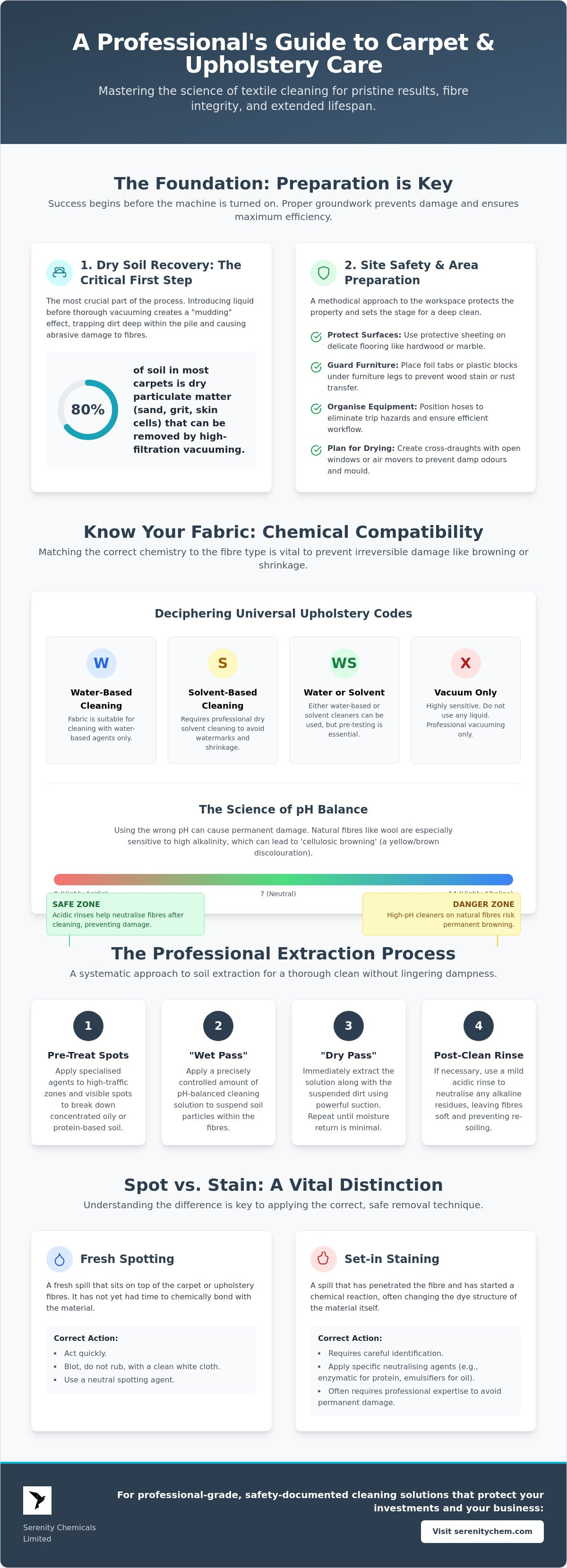
Dry soil recovery is arguably the most critical part of the process. Industry data indicates that approximately 80% of the soil found in carpets is dry particulate matter like sand, grit, and skin cells. If you introduce water before removing these particles, you create a "mudding" effect. This liquid sludge becomes trapped deep within the pile, making it significantly harder to extract. For upholstery, pay close attention to the crevices and seams where grit accumulates. This abrasive material acts like sandpaper against the fibres, causing premature wear and dulling the fabric's appearance. Use a high-filtration vacuum with a power brush head for carpets and a dedicated upholstery tool for furniture to ensure the maximum amount of dry debris is lifted.
Site Safety and Area Preparation
Before you begin the extraction process, you must organise the environment. Start by identifying delicate surfaces that surround the work area, such as polished marble or hardwood flooring. These materials are sensitive to moisture and heat, so protective sheeting is often necessary. Protecting the furniture is equally vital. Use foil tabs or plastic blocks under the legs of any items remaining in the room. This simple step prevents wood stains or rust from transferring onto the damp fibres, a type of damage that is often permanent. When laying out your equipment, ensure extraction hoses are positioned to avoid trip hazards. Understanding the nuances of different carpet cleaning methods will help you determine the most efficient hose run and machine placement for the specific layout of the building.
Finally, identify high-traffic zones. These areas, typically found in doorways and hallways, contain concentrated levels of oily soil that require specialised pre-treatment. Once the area is prepared, consider your drying strategy. Open windows or position air movers to create a cross-draught. Effective ventilation is the best defence against lingering damp odours and the development of mould within the carpet backing. Taking these steps ensures a professional result that respects both the customer's property and the integrity of the textiles.
Understanding Fabric Codes and Chemical Compatibility
Successful textile restoration depends on matching the correct chemistry to the specific fibre type. This carpet and upholstery cleaning guide emphasises that applying the wrong pH level can cause permanent damage, such as fibre distortion or dye migration. Before any solution touches the fabric, you must identify the manufacturer's cleaning code and understand how the chemical properties of your cleaner will interact with the material.
The Upholstery Code Framework
The 'W' code signifies that the fabric is suitable for water-based cleaning agents only. Fabrics marked with an 'S' code require professional solvent-based cleaning to avoid permanent watermarks and shrinkage. Coded 'WS' fabrics allow for more flexibility but still require careful pre-testing. The most challenging is the 'X' code, which signifies that the fabric is highly sensitive and should only be vacuumed, as any liquid application carries a high risk of ruin without expert intervention.
The science of pH is equally vital for long-term fibre integrity. Natural fibres like wool are sensitive to high alkalinity. Using a high-pH cleaner can lead to 'cellulosic browning,' where the fibres turn a straw-like yellow as they dry. To prevent this, professionals often use an acidic rinse after an alkaline pre-spray to return the carpet to a neutral state. You can find more detailed technical specifications in the Carpet and Rug Institute's cleaning and maintenance guide. Matching surfactant types to the soil load is also necessary; for example, grease and oils require heavy-duty emulsifiers, whilst protein-based stains need enzymatic action.
Testing for Colour Integrity
Never assume a fabric is colour-fast, even if it appears high-quality. To perform a professional 10-minute blot test, apply a small amount of your chosen cleaning solution to a clean white cloth. Press the cloth firmly onto an inconspicuous area of the fabric for at least ten minutes. Check the cloth for any 'bleeding' dyes that have migrated from the fabric. If any colour transfer is visible, the fabric is unstable and requires a different approach. If you're unsure about the compatibility of a specific fabric or soil type, you can speak with our technical team for guidance on chemical selection.
A Step-by-Step Guide to Effective Extraction Cleaning
Once the dry soil is removed and the fabric identified, the physical cleaning process begins. This stage of our carpet and upholstery cleaning guide focuses on hot water extraction, often considered the gold standard for deep hygiene. The goal is to suspend soil and remove it without over-saturating the backing or the internal foam of the furniture. Achieving this requires a disciplined approach to moisture management and chemical application.
The Emulsification Stage
Applying a pre-spray is the secret to professional results. You shouldn't simply spray and immediately extract. "Dwell time" is essential; the solution needs five to ten minutes to chemically break down stubborn upholstery grease and oils. During this window, use a soft-bristled brush to gently agitate the fibres. This agitation breaks surface tension and ensures the cleaner reaches every side of the yarn. It's vital to select a professional-grade solution like Serenity Carpet Shampoo. Unlike domestic alternatives, it's formulated to emulsify heavy soil efficiently whilst leaving no sticky residue behind. Residual soap is a magnet for new dirt, which leads to rapid re-soiling after the carpet dries.
Extraction Mechanics and Moisture Management
When you start the machine, your technique determines the final drying time. The most effective method is the "two-dry-passes-to-one-wet-pass" rule. For every pass where you engage the spray trigger, follow up with at least two slow passes using only the vacuum suction. This ensures that the majority of the liquid is recovered immediately. When cleaning sofas, use the hand tool with short, controlled strokes to prevent water from soaking into the internal foam. If the foam becomes saturated, it can lead to lingering damp odours and even structural damage over time. Keep a close eye on the recovery tank; the colour and clarity of the water provide immediate feedback on whether the soil is being lifted effectively.
Work in a systematic overlapping pattern to ensure 100% coverage across the floor or furniture piece. Once the extraction is complete, the final step is grooming. Use a carpet rake or a clean brush to reset the pile in one direction. This doesn't just improve the visual finish; it also aids the drying process by allowing air to circulate more freely amongst the fibres. Proper grooming is the hallmark of a meticulous professional service that respects the integrity of the textile.
Tackling Stubborn Stains and Lingering Odours Safely
Removing a fresh spill is a straightforward task, but dealing with a set-in stain requires a deeper understanding of chemical reactions. This carpet and upholstery cleaning guide distinguishes between "spotting," which is the removal of fresh, surface-level substances, and "staining," which involves a permanent colour change in the fibre itself. Success depends on acting quickly and using the correct neutralising agent for the specific substance involved.
Spills generally fall into two categories: protein-based or tannin-based. Protein spills, such as milk or blood, require cool water and enzymatic cleaners to break down the organic matter. Using hot water on these can "cook" the protein into the fibre, making it nearly impossible to remove. Conversely, tannin-based spills like coffee or tea are acidic and often require a specialised browning remover. Understanding these distinctions prevents you from accidentally setting a stain whilst trying to clean it.
The Myth of the Vinegar Rinse
Many domestic guides suggest using a mixture of vinegar and baking soda to treat stains. Whilst this creates a satisfying fizz, it's often counterproductive. DIY acids like white vinegar can be too harsh for the latex backing of modern carpets, leading to delamination where the secondary backing separates from the primary. More importantly, the wrong pH can set certain dyes permanently. Choosing a balanced professional cleaning chemicals list ensures you have the right tool for every scenario without risking the integrity of the textile.
Molecular Odour Neutralisation
A common mistake in textile care is attempting to mask smells with heavy perfumes. This only provides a temporary solution and often creates an unpleasant "floral-damp" hybrid scent. Professional odour neutralisers work through molecular encapsulation. They surround and chemically alter the odour-causing molecules rather than just covering them up. This is particularly vital when addressing the "wet dog" smell, which is often caused by bacterial growth in damp fibres. In these cases, an antimicrobial approach is necessary to kill the source of the odour. For high-footfall commercial environments or homes with pets, using specialised shampoos ensures a truly hygienic result. If you're struggling with a particularly persistent scent, you can get expert advice on odour control from our technical team.
Why Professional-Grade Solutions are Essential for Business
Mastering the technical skills outlined in this carpet and upholstery cleaning guide is only half the battle. For businesses, the choice of cleaning chemistry is a matter of commercial liability and operational efficiency as much as it is about aesthetics. Using domestic-grade products in a commercial setting often leads to substandard results, potential fabric damage, and a failure to meet mandatory safety obligations. Professional-grade solutions are formulated to handle the high soil loads of commercial environments whilst protecting the long-term value of the building's assets.
Safety and Regulatory Compliance
Compliance with the Control of Substances Hazardous to Health (COSHH) regulations is a non-negotiable requirement for any UK business. When you use professional textile cleaners, you must have access to detailed Safety Data Sheets (SDS) that document the chemical properties and emergency protocols for each product. Selecting a reputable cleaning products manufacturer UK ensures that your supplies meet these rigorous standards. These formulations are specifically designed for use in public spaces, reducing the risk of chemical sensitivity amongst staff and visitors. Unlike supermarket brands, which may contain undisclosed fragrances or harsh surfactants, professional solutions prioritise transparency and user safety.
The Serenity Advantage for Textile Care
Efficiency is the cornerstone of a profitable maintenance programme. Serenity Carpet Shampoo is engineered as a low-foam, high-extraction formulation. This specific chemistry allows extraction machines to work at peak performance without the recovery tank filling with useless bubbles, which would otherwise lead to frequent downtime. Because our solutions are highly concentrated, they offer a significantly lower cost-per-clean compared to ready-to-use retail alternatives. A single five-litre container of professional concentrate can treat a vastly larger area than multiple retail bottles, reducing both plastic waste and shipping costs.
Beyond the economic benefits, using UK-manufactured, ethically produced chemicals provides peace of mind. Our formulations provide a deeper clean by emulsifying oils more effectively, ensuring that high-traffic zones remain pristine for longer. This superior level of cleanliness directly impacts your professional image. A well-maintained environment signals to clients and employees that you value hygiene and detail. By integrating high-performance solutions with the methodical techniques we've discussed, you ensure that your textile investments are protected, your staff are safe, and your premises remain a credit to your brand.
Elevating Your Textile Maintenance Standards
Maintaining carpets and upholstery is a technical discipline that requires a methodical approach to chemistry and mechanical extraction. By understanding fabric codes and mastering moisture control, you can prevent common issues like browning or lingering dampness. This carpet and upholstery cleaning guide has shown that professional results depend on the synergy between expert technique and high-performance solutions.
Serenity provides the principled expertise needed for these demanding tasks. With over five years of industry experience, we offer UK-manufactured, fully COSHH-compliant formulations developed for both high-performance commercial and domestic use. Our solutions ensure a deeper clean whilst protecting the integrity of every fibre. To enhance your results with dependable, professional-grade chemistry, Explore the Serenity Professional Carpet and Upholstery Range today. We look forward to helping you maintain a pristine and hygienic environment with absolute peace of mind.
Frequently Asked Questions
How often should I professionally clean my business carpets?
Business carpets in high-traffic zones like receptions or hallways should be professionally cleaned every three to six months. Areas with lower footfall, such as individual offices, typically require a deep clean once per year. Regular maintenance prevents the build-up of abrasive grit that causes premature wear to the carpet fibres, ensuring the floor covering reaches its full intended lifespan.
Can I use a carpet cleaner on a velvet or silk sofa?
You should not use a standard water-based carpet cleaner on velvet or silk sofas without checking the manufacturer's cleaning code first. These delicate fabrics often carry an "S" or "X" code, meaning they require professional solvent cleaning or dry vacuuming only. Applying water to silk can cause permanent shrinking and watermarks that are often impossible to remove without professional restoration.
What is the difference between a carpet shampoo and a pre-spray?
A pre-spray is a concentrated solution applied before extraction to emulsify oils, whilst a carpet shampoo is added to the machine's clean water tank to aid the extraction process. This carpet and upholstery cleaning guide notes that the pre-spray requires specific dwell time to break down soil. The shampoo then provides the final rinse and soil suspension during the mechanical extraction phase.
How long does it take for carpets to dry after professional extraction?
Most carpets take between four and twelve hours to dry completely after a professional extraction clean. This duration depends on the ambient temperature, the level of ventilation, and the efficiency of your "dry passes" during the cleaning process. Using air movers or opening windows to create a cross-draught can significantly accelerate the drying time and prevent damp odours.
Is it safe to use professional cleaning chemicals around children and pets?
Professional cleaning chemicals are safe to use around children and pets when they are applied according to the manufacturer's instructions and fully extracted from the fabric. Serenity products are formulated with safety as a priority; however, it's a principled practice to keep occupants out of the room until the textiles are completely dry and the area has been thoroughly ventilated.
Why do stains sometimes reappear after the carpet has dried?
Stains often reappear due to a phenomenon called "wicking," where soil trapped deep in the carpet backing travels up the fibres as they dry. This usually happens if the carpet was over-wetted during cleaning or if the initial dry soil recovery was insufficient. A second, more controlled extraction with minimal moisture and a focus on dry passes often resolves the issue.
What should I do if I spill red wine on a light-coloured carpet?
If you spill red wine, you should immediately blot the liquid with a clean white cloth without rubbing the fibres. Rubbing pushes the pigment deeper into the yarn and can cause permanent physical distortion to the pile. Once the excess liquid is removed, apply a professional tannin remover rather than home remedies like salt or vinegar, which can set the stain permanently.
Do I need a special machine to use Serenity Carpet Shampoo?
You do not need a specific brand of equipment to use Serenity Carpet Shampoo; it is compatible with all standard hot water extraction machines. Its low-foam formulation is designed to protect the vacuum motors of any professional-grade extractor whilst providing superior soil suspension. This versatility makes it an ideal choice for both commercial and domestic maintenance programmes.

Hand Sanitiser for Frequent Use: Professional UK Guide 2026
The very product you use to protect your health might be the primary cause of your skin's deterioration. While alcohol-based ...

Food Safe Antibacterial Spray UK: The Professional 2026 Hygiene Guide
Using the wrong disinfectant in a commercial kitchen isn't just a minor oversight; it's a direct threat to your Food Hygiene ...