

Your garden furniture isn't just dirty; it's being slowly reclaimed by the unforgiving British climate. Finding the best cleaner for outdoor furniture often feels like a difficult choice between efficacy and safety, especially when you're dealing with stubborn algae on wooden sets or greasy residue on plastic rattan. It's a frustrating cycle that many homeowners face, wanting a pristine look for the summer whilst worrying about the impact of harsh chemicals on their garden plants and pets.
This guide will show you how to select professional-grade solutions that restore your furniture to a "like-new" finish without compromise. You'll learn the science behind breaking down organic grime and environmental pollutants effectively. We will also clarify which Serenity solutions, from our Multi-Surface Cleaner to our Hard Surface Sanitiser, are best suited for your specific materials. This ensures you gain a clear understanding of how to achieve long-lasting protection against the elements for the 2026 season and beyond.
Key Takeaways
- Learn how to match professional cleaning formulations to your furniture's specific material to prevent structural damage and discolouration.
- Discover why the best cleaner for outdoor furniture uses advanced surfactants to lift organic growth rather than relying on aggressive household bleach.
- Master the "bottom-up" application method and dry-brushing techniques to achieve a streak-free, "like-new" finish for the summer season.
- Understand the unique challenges of the British climate and why moss and lichen require specialised chemical treatment rather than high-pressure water alone.
- Identify which professional-grade Serenity solutions, such as the Multi-Surface Cleaner, offer the safest and most effective results for your garden restoration.
Understanding the Challenges of Outdoor Furniture Care in the UK
Maintaining a garden set in Britain presents a set of challenges that differ significantly from drier, warmer climates. Whilst homeowners in Los Angeles might struggle with desert dust, UK residents must contend with persistent dampness that encourages the rapid spread of green algae, moss, and lichen. These organic growths don't just sit on the surface; they root into the grain of timber or the crevices of synthetic weaves. Relying solely on high-pressure water is a common mistake. Excessive pressure can splinter wood fibres and weaken the structural integrity of plastic rattan without actually killing the microscopic spores. This often leads to the problem returning within weeks.
The real culprit behind stubborn garden grime is the formation of "bio-films." These are microscopic layers of bacteria and fungi that act like a biological adhesive, trapping atmospheric soot and bird droppings against the furniture. A foundational step in understanding outdoor furniture materials is recognising that textured surfaces are particularly vulnerable to this buildup. To achieve a truly professional result, you need the best cleaner for outdoor furniture designed with specific surfactants. These chemicals are engineered to break the surface tension of the bio-film, lifting the dirt away so it can be rinsed off without damaging the material underneath.
The Seasonal Cycle of Garden Grime
Garden furniture endures a relentless cycle of environmental stress throughout the year. During the winter, hard surfaces accumulate a layer of carbon-heavy soot from domestic heating systems and traffic pollution. As spring arrives, this is joined by a sticky foundation of tree sap and wind-blown pollen. This combination creates a nutrient-rich environment for mould to flourish. Regular maintenance isn't just about aesthetics; it's a vital practice to prevent permanent staining and the long-term degradation of your investment. If these layers are allowed to bond, they can cause irreversible "pitting" in metal or deep-seated rot in softwoods.
Why Household Detergents Often Fall Short
It's tempting to reach for standard washing-up liquid, but these domestic soaps are rarely sufficient for outdoor tasks. Most household detergents are high-foaming and leave behind a microscopic, sticky residue that actually attracts new dirt and pollen faster than before. Furthermore, the pH levels in common kitchen cleaners can be too acidic or alkaline for natural materials, potentially stripping the protective oils from hardwoods like teak or oak. Consulting a professional cleaning chemicals list reveals that the best cleaner for outdoor furniture will be a specialised surfactant. These professional-grade solutions are formulated to be low-residue and material-safe, ensuring that the furniture remains cleaner for longer periods whilst protecting the finish.
Evaluating the Best Cleaner for Different Furniture Materials
The search for the best cleaner for outdoor furniture often leads to "all-purpose" solutions that promise much but deliver little in terms of material preservation. Professional maintenance isn't about finding a universal solvent; it's about matching the chemical formulation to the porosity and durability of the surface. A product that performs excellently on non-porous resin might be far too aggressive for the delicate fibres of a softwood bench. Conversely, a mild detergent might fail to penetrate the biological films that bond to textured metal or synthetic rattan.
Hardwood and Softwood Maintenance
Wooden furniture is categorised by its density and oil content. Hardwoods, such as teak or oak, possess natural resins that provide a level of internal protection, whilst softwoods like pine are significantly more porous and prone to moisture absorption. It's critical to use non-acidic cleaners on timber. Acidic solutions can cause the wood fibres to swell and splinter, creating a rough texture that traps even more dirt. Before you consider applying any protective oils, stains, or sealants, a thorough deep-clean is mandatory. Applying a finish over a contaminated surface effectively traps moisture and fungal spores against the wood, which accelerates the rotting process. Wood-specific surfactants are essential for longevity because they penetrate the grain to lift biological contaminants without dehydrating the timber's internal structure.
Metals, Plastics, and Synthetic Rattan
Non-porous materials face different environmental pressures. Aluminium and wrought iron are susceptible to oxidation, which can dull the finish or, in the case of iron, lead to structural rust. When cleaning metal, avoid abrasive pads that can scratch powder-coated finishes, as these micro-scratches become the starting point for corrosion. Plastic and resin sets often suffer from UV degradation, leading to a "greying" effect that makes the furniture look aged and brittle. Synthetic rattan presents a unique challenge because its weave traps body oils, sunscreen residue, and atmospheric grease. These greasy deposits act as a magnet for dust and pollen, creating a stubborn grime that standard water-pressure cannot shift.
For versatile garden sets that combine various materials, using a commercial multi-surface cleaner ensures that you're removing grease and organic matter without risking chemical burns on sensitive finishes. If you're uncertain about the specific chemical compatibility of your garden set, you can always speak with our technical team for guidance on material safety. Selecting the best cleaner for outdoor furniture involves balancing this efficacy with the need to preserve the furniture's aesthetic and structural integrity for years to come.
Professional Formulations vs DIY Home Remedies
Professional results rarely come from pantry staples. Whilst social media forums often advocate for vinegar and baking soda, these home remedies frequently lack the chemical sophistication required to manage the British climate's unique challenges. The best cleaner for outdoor furniture relies on surfactants. These molecules work by lowering the surface tension of water, allowing the solution to penetrate microscopic crevices and lift dirt away from the surface. In contrast, DIY mixes often rely on physical abrasion. This means you're forced to scrub harder, which can damage the protective coatings or delicate fibres of your furniture.
Cost-efficiency is another factor where professional solutions lead. Whilst a bottle of vinegar is inexpensive, its low concentration means you use more product for less result. Professional concentrates are designed for dilution, often making them significantly cheaper per litre of usable solution. This efficiency, combined with reduced labour time, makes them the superior choice for maintaining large garden sets or commercial outdoor spaces. You're not just buying a chemical; you're investing in a formula that respects the material's integrity.
The Problem with Vinegar and Bleach
Bleach is a common recommendation for removing mould, but it's often a counterproductive choice for wood and fabric. Chlorine bleach is an oxidiser that "whitens" the visible part of the mould whilst leaving the microscopic roots intact within the porous material. It can also weaken the structural integrity of wood and cause synthetic fabrics to become brittle and prone to tearing. Additionally, acidic cleaners like white vinegar can be highly corrosive to metal hinges, screws, and fasteners. Using these substances can lead to rust and structural failure over time. For peace of mind, sourcing your solutions from a cleaning products manufacturer UK ensures that the chemicals are formulated to meet strict safety and efficacy standards, protecting both your furniture and the environment.
The Advantage of Professional Degreasers
Organic fats, such as those found in bird droppings or spilled food, require more than just soap and water. Professional degreasers are engineered to break down these complex lipids effortlessly. Many modern formulations also feature rinse-free technology, which significantly reduces the volume of water and labour required to clean large patio arrangements. If your outdoor furniture includes dining tables, it's vital to ensure your cleaning regime is compatible with food safe sanitiser for commercial kitchens. This ensures that the surfaces where you eat remain hygienic and free from harmful chemical residues. By choosing the best cleaner for outdoor furniture from a professional range, you're investing in a solution that balances aggressive cleaning power with the safety required for a family home or a commercial garden.
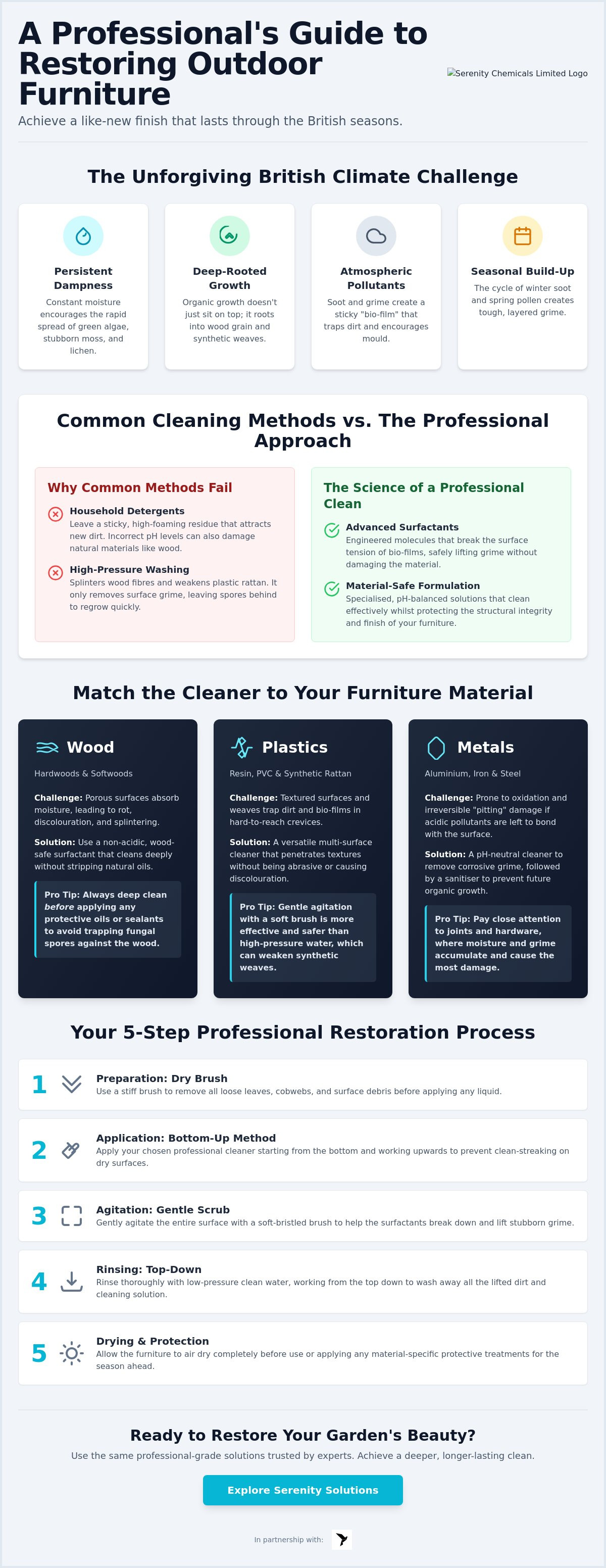
The Step-by-Step Guide to Restoring Your Garden Set
Restoring a garden set to its original condition requires more than a casual rinse. To achieve a professional finish, you must follow a methodical sequence that respects the material's integrity. Identifying the best cleaner for outdoor furniture is only the first step; the application technique determines the final result. A structured approach ensures that you don't just move dirt around, but actually remove it whilst protecting the underlying finish.
Preparation and Initial Soil Removal
Start with a dry surface. Using a stiff brush to remove dried mud, cobwebs, and loose debris is essential. If you wet the furniture immediately, you risk creating a thin slurry of mud that can stain porous wood or lodge deeper into synthetic weaves. Whilst cleaning, ensure you protect surrounding garden features and sensitive plants. Covering nearby flower beds with a light tarpaulin or rinsing foliage with plain water before and after the process helps neutralise any accidental run-off. Organise your workspace by gathering microfibre cloths, soft-bristle brushes for delicate areas, and two buckets for a "clean and rinse" system to avoid cross-contamination.
Deep Cleaning and Rinsing
Once the surface is clear of loose soil, you can apply your chosen solution. For areas used for outdoor dining, applying a professional antibacterial surface spray UK ensures the highest standards of hygiene. Follow the "bottom-up" rule for application. By spraying from the base upwards, you prevent the cleaner from running down dry surfaces and creating permanent drip-streak marks. This is a common mistake that is difficult to correct once the chemical has dried.
Efficiency depends on dwell time. Instead of aggressive scrubbing, allow the chemicals to sit for three to five minutes. This allows the surfactants to break the biological bond between the grime and the furniture. If you are dealing with heavy-duty grease on a table used for barbecues, this dwell time is non-negotiable. When rinsing, use a steady stream of water rather than a high-pressure jet. This prevents water-logging wooden joints, which can lead to internal rot and structural failure. Perform a final inspection once the furniture is dry to ensure no residues remain. If you require specific advice on restoring complex materials or large commercial sets, you can speak with our technical specialists for professional guidance.
Standout Solutions from the Serenity Home & Garden Collection
Serenity provides a range of solutions developed with professional reliability at the core. Being UK-manufactured allows us to maintain strict quality control over every formulation, ensuring that each product meets the rigorous standards required for both domestic and commercial use. We believe that the best cleaner for outdoor furniture should deliver industrial-strength results whilst remaining safe for the surrounding environment. This collection is designed to simplify garden maintenance by providing specific chemicals for specific restoration tasks, rather than relying on ineffective all-in-one alternatives.
Serenity Multi-Surface Cleaner: The All-Rounder
For the majority of garden furniture tasks, the Serenity Multi-Surface Cleaner is the definitive choice. It is formulated to be effective on a wide variety of materials, including high-grade plastics, powder-coated metals, and finished hardwoods. Its streak-free properties are particularly beneficial for glass-topped garden tables and polished surfaces where a smear-free finish is essential for a professional look. This solution removes light organic growth and atmospheric dust without leaving a sticky residue that would otherwise attract new contaminants. You can browse the full Serenity Home & Garden range to find the exact volume required for your outdoor space.
Serenity Heavy Duty Degreaser: For Deep Restoration
When furniture has been neglected or is located near a barbecue area, a standard cleaner may not suffice. The Serenity Heavy Duty Degreaser is engineered for deep restoration. It excels at breaking down carbon-heavy soot and stubborn grease deposits that bond to furniture frames over time. Because it is a highly concentrated formula, it offers exceptional value; it can be diluted significantly to suit the severity of the grime. This ensures a thorough clean whilst being significantly easier on the environment than traditional, harsh solvent-based alternatives. It's an essential tool for those looking to achieve a "like-new" finish on sets that have endured several seasons of heavy use.
These formulations are a favourite amongst professionals because they prioritise safety and ethical responsibility without compromising on efficacy. By using principled chemical engineering, we ensure that our products provide peace of mind for the user whilst protecting the long-term integrity of the furniture. Choosing the best cleaner for outdoor furniture is ultimately an investment in the longevity of your garden environment. By selecting professional-grade solutions, you ensure that your garden set remains a clean, welcoming space for years to come.
Prepare Your Garden for a Pristine 2026 Season
Restoring your outdoor space requires a principled approach that balances cleaning efficiency with material safety. You've seen that the best cleaner for outdoor furniture isn't a harsh household chemical; it's a sophisticated surfactant that respects the integrity of wood, metal, and synthetic rattan. By following a methodical step-by-step process and choosing UK-manufactured professional formulations, you can achieve a "like-new" finish that lasts well beyond the first summer bank holiday.
Our high-concentration formulas are used by industrial cleaning experts nationwide, providing maximum value and reliable protection against the damp British climate. Whether you're managing a private patio or a commercial garden, using the right chemical science ensures your furniture remains a long-term asset rather than a maintenance burden. This focus on principled expertise helps you maintain a beautiful environment whilst ensuring the safety of your plants and pets.
If you need assistance selecting the most appropriate solution for your specific furniture materials, we are here to help. Contact our technical team today for professional restoration advice and discover the difference that expert-led hygiene can make to your garden. We look forward to helping you restore your outdoor space to its full potential.
Frequently Asked Questions
What is the best cleaner for outdoor furniture made of plastic?
Serenity Multi-Surface Cleaner is the most effective choice for plastic and resin furniture sets. It is formulated to lift greasy residues and atmospheric soot without leaving a microscopic, sticky film that attracts new dirt. Since plastic is non-porous, this professional surfactant allows you to wipe away contaminants easily, restoring the original colour and shine without the need for abrasive scrubbing.
Can I use a pressure washer with professional furniture cleaners?
You should generally avoid using high-pressure washers on furniture frames, even when using professional-grade cleaners. Excessive pressure can splinter the fibres of wooden sets and permanently weaken the structure of synthetic rattan weaves. It is safer to apply your cleaner and rinse with a standard garden hose at normal pressure, allowing the chemical surfactants to do the heavy lifting instead of mechanical force.
Is it safe to use multi-surface spray on wooden garden benches?
Yes, Serenity Multi-Surface Cleaner is safe for use on finished hardwoods and softwoods. The pH-balanced formula ensures that the wood isn't stripped of its natural protective oils or structural integrity. It's an ideal solution for removing light organic growth and dust. For the best results, always ensure the wood is dry before application and test a small, hidden area to check for finish compatibility.
How do I remove black mould and algae from my patio set?
The best cleaner for outdoor furniture to remove organic growth is a professional surfactant solution applied with a specific dwell time. You must allow the cleaner to sit on the surface for three to five minutes to break the biological bond of the mould spores. This method ensures that you are lifting the roots of the algae rather than just cleaning the visible surface, which prevents rapid regrowth.
How often should I clean my outdoor furniture in the UK?
You should perform a deep clean at least twice a year to combat the challenges of the British climate. A thorough clean in the spring prepares your furniture for the summer season, whilst an autumn clean removes summer sap and pollen before winter storage. This regular maintenance schedule prevents atmospheric pollution and dampness from causing permanent staining or material degradation over the winter months.
Are professional cleaning chemicals safe for use around garden plants?
Professional formulations are safe for garden environments when they are used according to the manufacturer's instructions. To ensure maximum protection for delicate plants, it is a good idea to rinse nearby foliage with plain water before and after you clean your furniture. This simple step dilutes any accidental run-off and prevents chemical spotting on leaves, keeping your flower beds healthy whilst you work.
What is the difference between a degreaser and a standard surface cleaner?
A degreaser like Serenity Heavy Duty Degreaser is specifically engineered to break down complex lipids, such as bird droppings and food fats. Standard surface cleaners are better suited for regular maintenance and removing light dust or pollen. You should deploy a degreaser for furniture located near barbecues or for sets that have accumulated a heavy layer of carbon soot from nearby traffic pollution.
Can I use these cleaners on outdoor cushions and fabrics?
You must always check the manufacturer's care label on your cushions before applying any hard-surface cleaning products. Whilst some multi-surface sprays are suitable for synthetic outdoor fabrics, others may affect water-resistant coatings. For deep-cleaning upholstery and outdoor rugs, Serenity Carpet Shampoo is a more appropriate choice. It is designed to lift deep-seated dirt from fibres without damaging the delicate weave of the fabric.

Hand Sanitiser for Frequent Use: Professional UK Guide 2026
The very product you use to protect your health might be the primary cause of your skin's deterioration. While alcohol-based ...

Food Safe Antibacterial Spray UK: The Professional 2026 Hygiene Guide
Using the wrong disinfectant in a commercial kitchen isn't just a minor oversight; it's a direct threat to your Food Hygiene ...