

What if the very liquid you're using to refresh your flooring is actually acting as a magnet for future grime? It's a common frustration for many across the UK; you spend hours operating a heavy machine, only to be left with a lingering damp odour or a sticky residue that attracts dirt within days. You aren't alone if you've ever felt confused by complex dilution ratios or worried about the long-term safety of the chemicals used in your living or working environment.
We're here to help you move beyond guesswork and adopt a more methodical approach to floor care. By following our 2026 professional checklist, you'll learn how to select the highest-performing carpet shampoo for machines UK that meets the latest REACH and COSHH safety standards. This guide provides a clear path to achieving perfectly neutralised odours and rapid drying times, ensuring your carpets remain both pristine and safe for everyone. We will examine the three critical stages of chemical selection, mechanical extraction, and fibre restoration to give you total confidence in your cleaning results.
Key Takeaways
- Understand why low-foaming surfactant solutions are essential for extraction machines to prevent mechanical issues caused by excessive foam buildup.
- Learn how to select a high-performance carpet shampoo for machines UK that ensures COSHH compliance whilst leaving no sticky, dirt-attracting residues behind.
- Master the pre-cleaning phase by prioritising thorough dry vacuuming and targeted spot-treatments to protect your machine and enhance final results.
- Discover the "overlap" technique and precise dilution methods to achieve a professional, stripe-free finish across all types of textile flooring.
- Implement essential post-clean maintenance, such as system flushing and pile grooming, to prevent chemical crystallisation and extend the life of your equipment.
Understanding Carpet Shampoo for Machines: The Science of Extraction
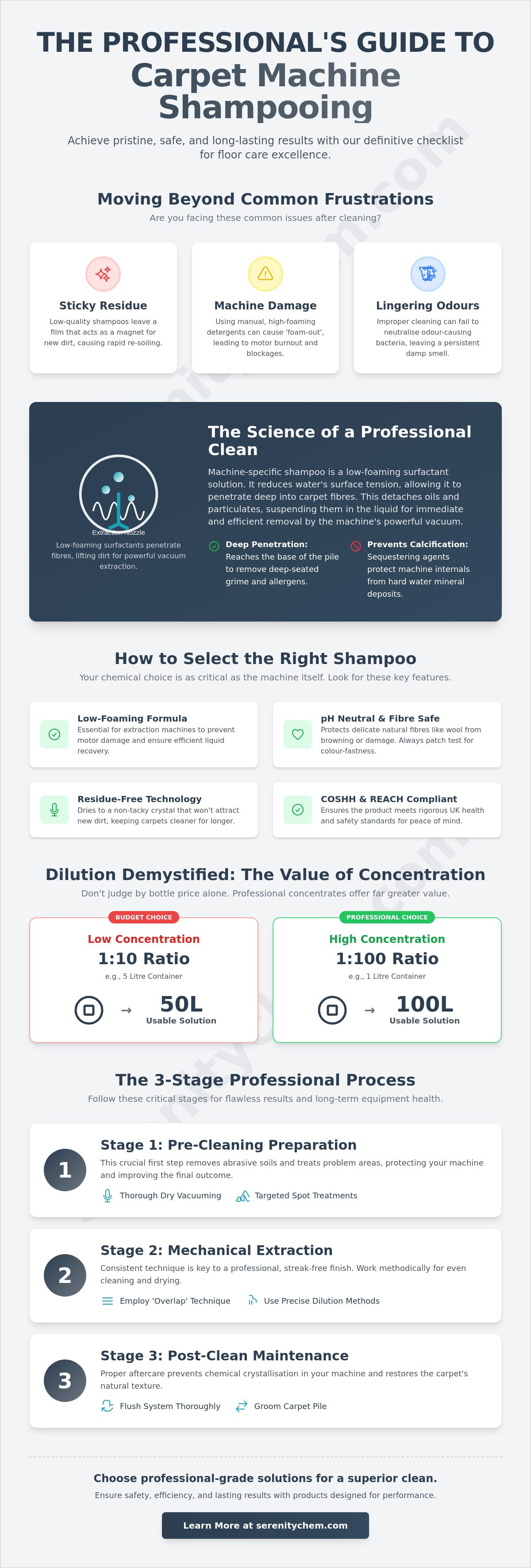
Machine-specific carpet shampoo is a specialised chemical formulation designed to work in harmony with high-pressure extraction systems. Unlike standard detergents, these solutions are primarily low-foaming surfactant blends. Surfactants are surface-active agents that reduce the surface tension of water, allowing the cleaning solution to penetrate deep amongst the carpet fibres rather than simply sitting on top. This molecular interaction is what detaches stubborn oils and particulates from the pile, suspending them in the liquid for immediate removal.
Using manual shampoos in an extraction machine is a common mistake that often leads to mechanical failure. Hand-scrubbing products are engineered to produce high volumes of foam to suspend dirt during a manual wash. However, when these suds are introduced to a vacuum motor, they can cause the machine to "foam out," potentially leading to motor burnout or water ingress into sensitive electrical components. Professional formulations like Serenity Carpet Shampoo are engineered to remain stable under pressure, ensuring the vacuum can recover the liquid without creating a mountain of bubbles in the recovery tank.
Beyond cleaning efficacy, professional grade chemicals serve a protective function for your equipment. In many parts of the UK, hard water can lead to mineral deposits within the internal lines of a carpet cleaner. High-quality shampoos contain sequestering agents that help prevent calcification and blockages in the pump and spray nozzles. This attention to chemical detail ensures your investment remains operational for years while maintaining a high standard of hygiene.
Manual vs Machine Shampooing: Key Differences
The primary advantage of using a machine is the combination of chemical action and mechanical agitation. While hand scrubbing can be effective for small spots, it rarely reaches the base of the carpet pile. Various carpet cleaning methods exist, but hot water extraction remains a gold standard for deep hygiene. Machines provide a consistent application of pressure that flushes out allergens and deep-seated grime that manual methods simply cannot reach. This efficiency is particularly vital in commercial environments or large domestic spaces where speed and drying times are essential for daily operations.
Fabric Safety and Fibre Compatibility
It's vital to identify the material of your flooring before you begin. Synthetic fibres like nylon or polyester are generally resilient, but natural fibres such as wool require a more delicate touch. The pH balance of your carpet shampoo for machines UK is a critical factor here; neutral or slightly acidic solutions are much safer for delicate weaves and help prevent browning or fibre distortion. Colour-fastness is the ability of a fabric to retain its dye during wet cleaning. Always conduct a small patch test in an inconspicuous area to ensure the dyes are stable before proceeding with a full-room clean.
Choosing the Right Carpet Shampoo for Machines in the UK
Selecting the right chemical is as vital as the machine itself. A professional choice prioritises concentration, residue-free results, and effective odour control. Choosing UK-manufactured products ensures compliance with the latest REACH and UK health and safety guidelines for cleaning, providing peace of mind for both commercial and domestic users. These regulations mandate clear labelling and accessible safety data sheets, which are essential for maintaining a safe environment. By opting for locally produced solutions like Serenity Carpet Shampoo, you're guaranteed a product that meets rigorous British quality standards whilst supporting domestic manufacturing.
One of the most overlooked factors in choosing a carpet shampoo for machines UK is "rinse-free" technology. Many budget shampoos leave a sticky film behind. This residue acts like a magnet for dirt, causing carpets to re-soil faster than they did before the clean. A high-quality formulation dries to a fine, non-tacky crystal that is easily removed during subsequent dry vacuuming. This prevents the "crunchy" texture often associated with DIY cleaning and keeps the pile feeling soft and natural for longer.
Professional Concentration and Dilution Ratios
Labels can be deceiving, so it's best to calculate the cost-per-use rather than the price per bottle. A 5-litre container with a 1:10 ratio might seem like a bargain, but it produces far less usable solution than a concentrated 1-litre bottle with a 1:100 ratio. Over-concentration is a common mistake that leads to poor outcomes. It doesn't make the clean "stronger"; it simply leaves the fibres stiff and attracts more grime. In hard water areas, such as London and the South East, you may need to adjust your ratio slightly to account for mineral interference, whilst soft water areas in the North often require less product to achieve the same level of foam control.
Specialist Formulations: Odours and Stains
Don't settle for simple fragrance masking. Synthetic scents often just hide the problem temporarily, allowing damp or organic smells to return as the carpet dries. For a truly hygienic result, you need an odour neutralising carpet shampoo that breaks down organic molecules at the source. This is especially important for pet-related stains or food spills where enzymatic cleaners are necessary to remove urea and proteins. By choosing a formulation that targets the chemical profile of the stain, you ensure a deeper, more permanent clean. If you have specific questions about chemical compatibility for your facility, you can speak with our technical team for tailored advice.
The Pre-Cleaning Checklist: Preparation for Success
Preparation is the foundation of a professional-grade result. Many users make the mistake of jumping straight into machine operation, but skipping the preparatory phase often leads to "wicking," where deep-seated stains travel back up the fibre as the carpet dries. A structured approach ensures that your carpet shampoo for machines UK can work effectively without being hindered by surface-level debris or physical obstacles. By following a methodical workflow, you protect both the textile's integrity and the machine's mechanical components.
Before you even plug in your extraction unit, you must organise the environment. Remove as much furniture as possible to ensure even cleaning across the entire floor. For heavy items that cannot be moved, place plastic tabs or aluminium foil under the legs. This prevents wood stains or rust from transferring onto the damp fibres during the drying process. Plan your navigation carefully; always start at the corner furthest from the door so you don't trap yourself or walk over freshly cleaned areas.
Dry Soiling Removal
It's a verified industry fact that approximately 80% of carpet dirt consists of dry insoluble particulates, such as grit, sand, and skin cells. If you introduce liquid before removing these solids, you effectively create mud at the base of the pile. This sludge is far more difficult to extract and can cause premature wear through abrasion. Use a high-suction vacuum with a rotating brush bar to lift grit from the very bottom of the weave. Whilst vacuuming, check for any loose fibres or damaged seams, as machine agitation can catch on these and cause further unraveling.
The Inconspicuous Area Test
Dye stability varies significantly between different carpet brands and materials. Even if a product is labelled as safe, you must perform a patch test to avoid permanent damage. Apply a small amount of your diluted carpet shampoo for machines UK to a hidden spot, such as the area inside a cupboard or behind a radiator. Understanding the chemistry of cleaning agents is vital here, as different pH levels can cause certain dyes to become unstable.
Wait at least ten minutes after application to observe any reactions. You should use a white cloth to firmly press against the treated area to check for any signs of dye bleed or colour transfer. If the cloth remains clean and the carpet texture hasn't changed once dry, it's safe to proceed with the full clean. If you notice any fading or texture distortion, the chemical may be too aggressive for that specific fibre type.
Once the dry soil is removed and the test is successful, apply a targeted pre-treatment to high-traffic lanes and stubborn spots. This allows the surfactants time to break down heavy oil deposits before the main extraction pass begins.
The Professional Machine Shampooing Checklist for 2026
Once your workspace is prepped and the dry soil is removed, you're ready to begin the mechanical phase. This stage requires a systematic approach to ensure that your cleaning solution is applied evenly and, more importantly, recovered effectively. Modern extraction techniques in 2026 prioritise moisture control to prevent the common pitfalls of over-wetting and lingering dampness. By following a professional workflow, you can achieve results that rival commercial services whilst protecting the long-term health of your flooring.
Mixing and Machine Setup
Start by inspecting your equipment for any debris from previous uses. Checking the machine filters and spray nozzles for existing blockages is a vital first step, as a clogged nozzle will result in uneven chemical distribution. When you're ready to mix, always fill the tank with water first before adding your Serenity Carpet Shampoo. This specific order prevents the chemical from foaming prematurely during the filling process, which can lead to airlocks in the pump or false readings on the recovery tank's float valve.
Water temperature is a critical variable. Whilst most professional machines in the UK are designed for warm water, you should never use boiling water, as it can damage internal seals and potentially melt synthetic fibres. Warm water helps the surfactants in your carpet shampoo for machines UK to break down oily bonds more efficiently, but always consult your machine's manual for its specific thermal limits. If you're cleaning in a hard water area, ensure you're using a professional-grade formulation that includes water softeners to maintain consistent spray pressure.
Execution: The Extraction Process
The "Overlap" technique is the secret to a stripe-free finish. As you move the floor tool across the carpet, ensure each new pass overlaps the previous one by approximately five to eight centimetres. This prevents untreated gaps and ensures that the mechanical agitation is consistent across the entire room. Speed is the enemy of deep extraction; moving the tool too quickly doesn't allow the vacuum enough time to recover the liquid from the base of the pile.
Effective moisture management involves a balance between the "Wet Pass" and the "Dry Pass." A wet pass is when you pull the trigger to spray the solution whilst moving the wand. Immediately follow this with at least two dry passes—strokes where the trigger is released, and only the vacuum is engaged. This process flushes the fibres and then removes as much moisture as possible. Keep the floor tool flat against the carpet at all times; tilting the wand breaks the vacuum seal and leaves the backing damp, which can lead to the "wicking" of old stains. If you have questions about the best application methods for specific carpet types, you can contact our technical support team for expert guidance.
Monitor your recovery tank frequently. Don't wait for the machine's automatic shut-off to engage. Emptying the dirty water when the tank is half-full maintains optimal airflow and prevents the vacuum motor from straining. This keeps your suction power at its peak, ensuring the shortest possible drying times for your facility.
Post-Clean Care and Machine Maintenance
The cleaning process doesn't end when the machine is switched off. Effective post-clean care is what separates a standard wash from a professional restoration. Ensuring the fibres dry correctly and maintaining your equipment are vital steps to prevent common issues like musty odours or mechanical blockages. By following this final stage of the checklist for using carpet shampoo for machines UK, you protect the longevity of both your carpets and your cleaning hardware.
Accelerating the Drying Process
Humidity is the primary obstacle during the drying phase. In the UK climate, especially during cooler months, stagnant air can lead to damp smells if moisture isn't managed. Open windows to create a cross-breeze or use floor fans to accelerate evaporation. Grooming the carpet with a pile brush whilst it's still damp is a professional secret that lifts the fibres and ensures an even, plush appearance. You should strictly avoid walking on the damp pile, as moisture makes the fibres highly susceptible to rapid re-soiling from footwear or dust.
Machine Hygiene and Longevity
Machine hygiene is often neglected, yet it's a frequent cause of equipment failure and hygiene issues. After using a carpet shampoo for machines UK, the recovery tank will contain a thick sludge of recovered dirt and chemical residue. Rinse this tank thoroughly with clean water to prevent bacteria growth and foul smells that can permeate your storage area. It's equally important to wipe down the rubber seals and remove any tangled hair or lint from the brush rollers to maintain mechanical efficiency.
Chemical crystallisation is another risk to your equipment that can lead to costly repairs. We recommend a final flush with plain water through the spray system to clear any residual shampoo and prevent the nozzles from clogging. Once the machine is clean, store it with the tanks open to allow full air circulation. A damp, sealed machine is a breeding ground for mould, which can compromise the air quality of the next room you clean. Finalise your work with a thorough inspection once the carpet is fully dry to check for "wick-back" or missed spots, ensuring the high standard of hygiene your facility deserves.
Elevate Your Floor Care Standards for 2026
Mastering machine-based cleaning is a balance of using the right chemistry and following a disciplined technique. By selecting a high-performance carpet shampoo for machines UK, you ensure that your equipment operates at peak efficiency whilst protecting the delicate fibres of your flooring. The success of your clean is determined as much by your pre-cleaning preparation and post-clean machine maintenance as it is by the extraction process itself.
Our solutions are UK manufactured for professional standards and feature low-foam formulations for machine safety. It's the reason our products are trusted by commercial cleaning contractors nationwide to deliver consistent, residue-free results. If you're ready to transform your cleaning workflow, explore the Serenity Professional Carpet Care Range to find the ideal solution for your facility. With the right tools and this essential checklist, you can maintain a level of cleanliness that truly enhances your environment.
Frequently Asked Questions
Can I use any carpet shampoo in my machine?
You cannot use just any detergent; you must use a specific low-foaming carpet shampoo for machines UK. Manual shampoos are designed to create high volumes of suds that can easily overwhelm an extraction machine's vacuum motor. This leads to mechanical failure or poor suction. Always verify that the chemical is specifically formulated for extraction use to ensure the safety of your equipment and the quality of the clean.
How much carpet shampoo should I use per litre of water?
Dilution ratios vary significantly between products, typically ranging from 1:10 for standard liquids to 1:100 for professional concentrates. You should always follow the manufacturer's instructions on the label to avoid over-concentration. Using too much chemical doesn't improve the result; it simply leaves behind a sticky residue that attracts dirt more quickly. In hard water areas, you might find that adjusting the ratio slightly helps maintain performance.
Is it better to use hot or cold water in a carpet cleaner?
Warm water is generally more effective than cold water for activating surfactants and breaking down oily soils. Most professional machines operate best with water between 40°C and 50°C. You must never use boiling water, as it can damage the internal seals of your machine and cause permanent heat-setting of certain stains or fibre shrinkage. Always check your machine's specific thermal limits before filling the tank.
How long does a carpet take to dry after machine shampooing?
Drying times typically range between 4 and 12 hours depending on the room's ventilation and the carpet's thickness. You can significantly reduce this time by performing extra "dry passes" with the machine and using floor fans to increase airflow. High humidity in the UK can extend this process, so it's best to clean on days when you can keep windows open to encourage evaporation.
Will machine shampooing remove pet urine odours permanently?
Permanent removal of pet urine requires a specialised enzymatic cleaner rather than a standard shampoo. Standard detergents may clean the surface, but the salts in urine remain trapped in the backing and react with moisture to produce odours. An enzymatic carpet shampoo for machines UK breaks down these organic proteins at a molecular level. This ensures the smell is neutralised rather than just masked by a temporary fragrance.
Can I use machine carpet shampoo on my wool rug?
You should only use machine shampoo on wool if the product is specifically labelled as pH-neutral and wool-safe. Natural fibres are sensitive to high alkalinity, which can cause browning or fibre distortion. Always perform a patch test in an inconspicuous area with a white cloth to check for dye transfer before proceeding. If the rug is an antique or has unstable dyes, professional dry cleaning may be a safer alternative whilst protecting your investment.
How often should I professionally shampoo my carpets?
For most domestic settings, a deep machine clean every 6 to 12 months is sufficient to maintain hygiene and appearance. High-traffic commercial environments or homes with pets and children may require a more frequent schedule, perhaps every 3 to 4 months. Regular extraction prevents the buildup of abrasive grit at the base of the pile, which can otherwise cause the fibres to wear out prematurely.
What should I do if my carpet feels crunchy after cleaning?
A "crunchy" texture is usually caused by dried chemical residue that wasn't properly extracted from the fibres. To fix this, you should perform a "rinse-only" pass using plain warm water or a very dilute solution of white vinegar to neutralise the alkalinity. This process flushes out the remaining surfactants and restores the natural softness of the pile. Ensure you use extra dry passes to remove as much moisture as possible.

Hand Hygiene in Food Preparation Areas: The 2026 Professional Guide
The Food Standards Agency estimates that foodborne illness costs the UK economy approximately £9 billion every year, with a s...

Sanitising Commercial Kitchen Hard Surfaces: The Professional UK Guide (2026)
Did you know that the average fine for food hygiene offences in the UK has more than tripled since 2016, now reaching over £7...