

Did you know that whilst alcohol-based rubs stop working after just two minutes, certain alcohol-free alternatives continue to protect your skin for up to four hours? If your staff are currently struggling with dry, cracked hands or you're concerned about storing flammable liquids in high-traffic public areas, you aren't alone. Many facility managers feel torn between the perceived safety of traditional rubs and the practical reality of skin irritation and fire risks. You've likely found yourself asking: are alcohol free sanitisers effective enough to keep your environment truly safe?
The answer lies in the science of residual protection and modern certification. In this article, you'll discover the scientific reality behind alcohol-free hand hygiene and how to identify formulas that offer professional-grade protection without the harshness of ethanol. We'll examine the latest BS EN 14476:2025 standards, debunk common myths regarding kill times, and provide a clear roadmap for choosing legally compliant products. By the end, you'll have the knowledge needed to improve employee skin health whilst maintaining a safer, non-flammable workplace for everyone.
Key Takeaways
- Explore the scientific evidence answering the question are alcohol free sanitisers effective by examining how modern antimicrobial agents outperform traditional rubs in residual protection.
- Understand the physical mechanism of action behind water-based biocides and how they neutralise pathogens without dehydrating or damaging the skin.
- Identify the specific British and European standards, including BS EN 1276 and the updated BS EN 14476:2025, that verify professional-grade viricidal and bactericidal efficacy.
- Discover how to break the dermatitis cycle in high-use environments by switching to non-flammable formulas that offer up to four hours of continuous protection.
- Gain clarity on why alcohol-free solutions are a responsible and superior choice for 2026, providing a safer way to maintain hygiene across your organisation.
The Evolving Science: Understanding the Efficacy of Alcohol-Free Hand Sanitisers
The common question are alcohol free sanitisers effective often stems from a misunderstanding of modern chemistry. In the past, alcohol was the most accessible method for rapid disinfection. However, as we move through 2026, the science has evolved. An alcohol-free sanitiser is a water-based solution that utilises advanced antimicrobial agents, such as Quaternary Ammonium Compounds (QUATs). These formulas aren't "weak" or "chemical-free" alternatives. They're sophisticated biocides engineered to provide high-level protection without the associated risks of ethanol, such as skin damage or flammability.
In the UK, many organisations are shifting procurement strategies toward these non-flammable options. This isn't just about safety; it's about efficacy. Regulatory standards in the UK are binary. A product either meets the required log reduction for a specific pathogen or it doesn't. Efficacy isn't a sliding scale based on alcohol volume; it's a verified result of rigorous testing against established standards. Choosing a water-based solution doesn't mean compromising on safety; it means selecting a different, often more versatile, chemical pathway to achieve the same result.
Common Myths vs. Scientific Reality
One persistent myth is that only alcohol can neutralise enveloped viruses like Influenza or Coronaviruses. The reality is that modern surfactants and QUATs are specifically designed to disrupt viral envelopes. Whilst alcohol dehydrates a pathogen, these advanced agents break down the protective outer layer of the virus. Antimicrobial efficacy is defined by the disruption of pathogen cell membranes through biochemical or physical means. This makes Hand sanitizer formulations without alcohol highly reliable for professional environments where fire safety and skin health are priorities.
Why the '60% Alcohol' Advice is Often Misunderstood
The World Health Organisation (WHO) recommendation for 60% alcohol was primarily designed for resource-poor settings where running water and soap are unavailable. It served as a global baseline for emergency hygiene. In the UK, we have access to sophisticated, multi-active non-alcohol formulations that offer a different profile of protection. Efficacy is measured by log reduction, typically requiring a 99.99% (log 4) or 99.999% (log 5) kill rate. If a water-based product achieves this reduction under BS EN testing, it's just as effective as its alcohol-based counterpart. Modern formulas often exceed these requirements whilst providing the added benefit of residual protection on the skin, which alcohol simply cannot offer.
The Mechanism of Action: How Non-Alcohol Formulas Kill Pathogens
The effectiveness of a sanitiser isn't solely dependent on its alcohol content. It's about the chemistry of the active ingredients. Non-alcohol formulas typically use Benzalkonium Chloride (BAC) or other Quaternary Ammonium Compounds, known as QUATs. Unlike ethanol, which kills through rapid dehydration, these biocides employ a physical method of destruction. They essentially puncture the cell membrane of bacteria or the lipid envelope of viruses, leading to a complete collapse of the pathogen's structure.
This difference in mechanism is why the question are alcohol free sanitisers effective is so vital for modern safety officers. Because water-based carriers don't evaporate instantly, they allow for a much more uniform application across the skin's surface. The biocide has more contact time with the pathogens. This is crucial because many bacteria require a full minute of exposure to be fully neutralised. Alcohol often evaporates before this window is reached, whereas water-based solutions remain active.
The stability of these molecules provides another key advantage. Ethanol is volatile. It disappears into the air almost as soon as it touches the skin. In contrast, the molecules in a water-based sanitiser are non-volatile. They remain on the skin's surface, creating a microscopic barrier. This residual activity is what allows for the extended protection window often cited in modern hygiene studies. It's a proactive approach to safety rather than a reactive one.
Benzalkonium Chloride and QUATs Explained
QUATs are cationic detergents. This means they carry a positive electrical charge. Most microbes, including bacteria and enveloped viruses, carry a negative charge. Opposites attract. This magnetic effect draws the biocide directly onto the pathogen. This targeted approach is highly efficient even at lower concentrations. Because of this, these ingredients are frequently used in child safe hand sanitiser formulations. They offer a low-toxicity profile whilst maintaining professional-grade protection. A notable BYU study on alcohol-free sanitizer confirmed these formulations are just as capable as traditional rubs at neutralising viral threats.
The Role of Organic Acids in Modern Hygiene
Professional-grade sanitisers often include organic acids, such as lactic or citric acid, to act as boosters. These acids manage the pH level of the formula. A slightly acidic environment is often more lethal to specific bacteria, speeding up the kill time. When these acids work in synergy with QUATs, the resulting formula is robust and versatile. It provides a multi-layered defence that stays active on the hands even after the solution has dried.
If you're evaluating the safety protocols for your organisation, you can request technical data sheets to see exactly how these active ingredients perform in real-world settings.
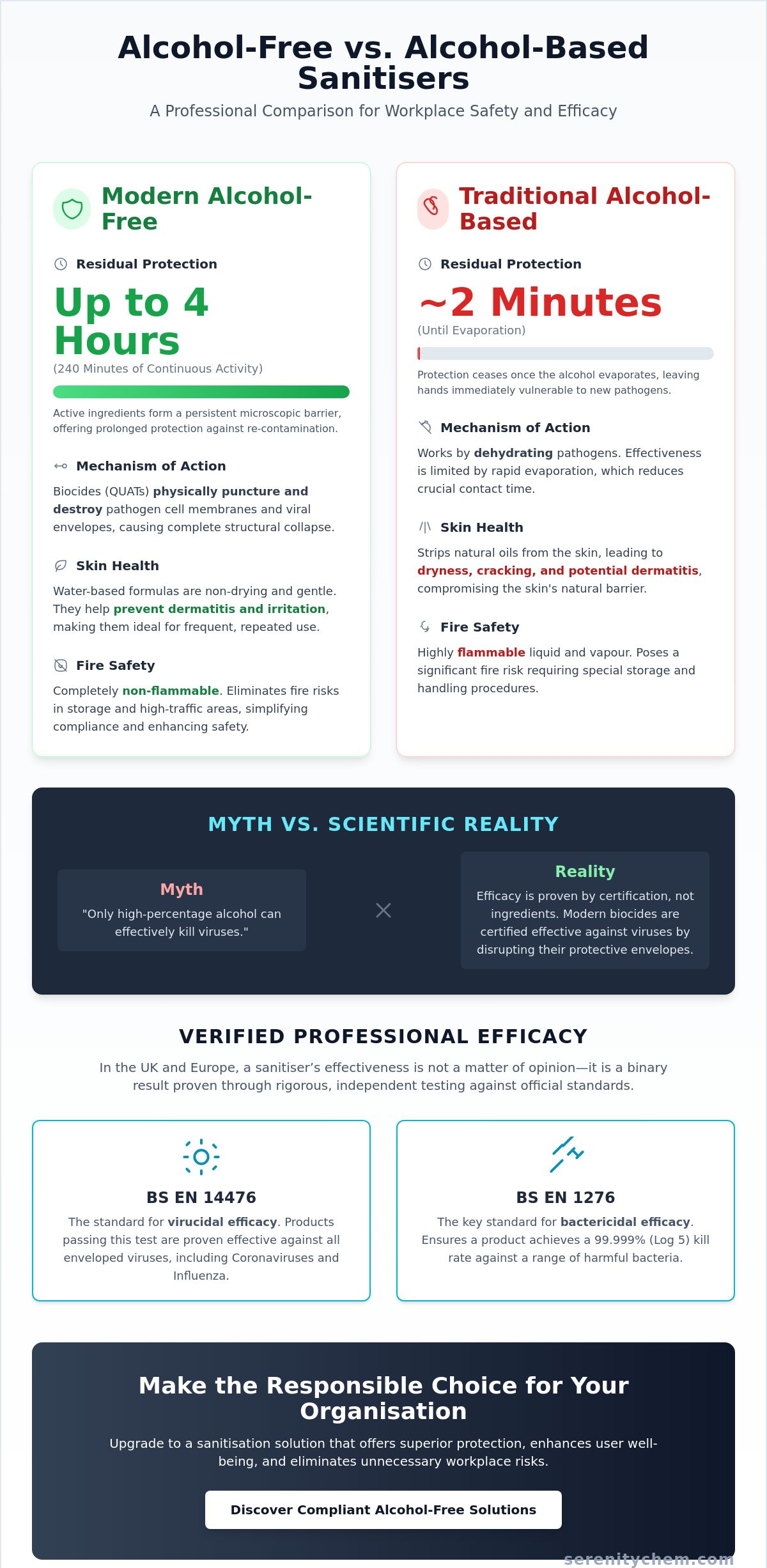
Alcohol vs. Alcohol-Free: A Professional Comparison of Benefits
Choosing between traditional rubs and modern water-based formulas requires an understanding of how they perform in a live environment. Whilst many professionals ask are alcohol free sanitisers effective, the comparison often focuses on the "flash" kill time rather than the total duration of protection. Alcohol-based products are designed for rapid evaporation. This provides a quick sanitising action but leaves the skin completely vulnerable to re-contamination the moment the liquid dries, which typically occurs within 15 seconds. In contrast, alcohol-free solutions offer a more persistent approach to hygiene.
Residual Protection: The Hidden Advantage
Alcohol has zero residual activity once it has evaporated from the skin. This means that if you touch a contaminated surface ten minutes after using an alcohol rub, your hands are no longer protected. Advanced water-based formulas create a microscopic antimicrobial film that remains active for several hours. This "shield" effect is a core reason why many facilities are transitioning to these solutions. For a deeper look at how this fits into a broader hygiene strategy, you can consult the Alcohol-Free Hand Sanitiser UK: The Professional Guide (2026). This long-term efficacy is backed by a BYU study on alcohol-free sanitizer which confirms that these formulas maintain professional standards without the volatility of ethanol.
Dermatological Safety and Skin Health
High-alcohol content is notorious for stripping the skin of its natural oils and moisture. In high-use environments, this leads to the "dermatitis cycle" where cracked skin becomes a breeding ground for bacteria. Maintaining the skin's natural barrier is actually a critical secondary defence against infection. For staff members with sensitive conditions, finding the best hand sanitiser for eczema is not just about comfort; it is about ensuring compliance. When a product is pleasant to use and doesn't cause pain, employees are far more likely to sanitise their hands as often as required.
Workplace Safety and Cultural Inclusivity
The operational benefits extend beyond skin health. Storing bulk quantities of flammable alcohol-based liquids creates a significant fire risk and complicates COSHH compliance. Removing these flammable materials from the site simplifies insurance requirements and improves overall workplace safety. Additionally, alcohol-free formulas are Halal-compliant and suitable for diverse workforces. They also eliminate the risk of accidental or intentional ingestion in sensitive environments such as prisons, schools, or rehabilitation centres, providing peace of mind for facility managers whilst ensuring a high standard of infection control.
Compliance and Standards: What Makes a Sanitiser 'Effective' in the UK?
Navigating the regulatory landscape is essential for any facility manager or health and safety officer. When professionals ask are alcohol free sanitisers effective, they should look beyond marketing claims and focus on British Standard (BS) European Norm (EN) certifications. These numbers aren't just bureaucratic labels; they're the only objective way to verify that a product performs as promised. In the UK, a sanitiser's efficacy is legally defined by its performance in controlled laboratory environments against specific strains of pathogens.
A common mistake is trusting products that claim to be "99.9% effective" without citing the specific EN tests they've passed. This percentage is often a generic marketing figure that doesn't account for the complexity of different germs. For professional environments, you need evidence of a "log reduction" that meets the requirements of BS EN 1500. This is the specific standard for hygienic hand rubs, ensuring the product is effective when applied to human skin rather than just a hard surface in a petri dish. If a product lacks these certifications, it doesn't meet the professional threshold for infection control.
Decoding the EN Certification Numbers
Understanding the hierarchy of testing helps you make an informed choice. The primary standards you should look for include:
- BS EN 1276: This is the standard for bactericidal activity. To pass, a product must achieve a 99.999% (log 5) kill rate of bacteria within five minutes or less.
- BS EN 14476:2025: This is the gold standard for viricidal efficacy. The updated 2025 version confirms a product's ability to neutralise viruses such as Norovirus and SARS-CoV-2.
- BS EN 1650: This standard measures fungicidal and yeasticidal activity, ensuring the formula can handle fungal threats in addition to bacteria and viruses.
The Importance of Independent Lab Testing
A reputable manufacturer should always provide full test reports upon request. These documents reveal whether the product was tested under "clean" or "dirty" conditions. Dirty conditions are more rigorous as they include organic matter, such as bovine albumin, to simulate real-world scenarios where hands might be slightly soiled or sweaty. When determining are alcohol free sanitisers effective for your workplace, the most reliable evidence is a valid test certificate. You should always verify that these tests were conducted by UKAS-accredited laboratories to ensure the results are impartial and accurate.
If you're unsure which standards apply to your specific industry, you can contact our compliance experts for a detailed breakdown of technical data sheets.
Choosing a Responsible Sanitisation Solution for Your Organisation
As we have explored, the evidence supporting modern water-based hygiene is conclusive. When asking are alcohol free sanitisers effective, the answer in 2026 is a resounding yes, provided the formula is backed by the correct BS EN certifications. Choosing a responsible solution like Serenity Alcohol Free Hand Sanitiser allows your organisation to prioritise both safety and employee well-being without compromising on germ-killing power. Transitioning to a non-alcohol regime is a straightforward process that offers long-term benefits for your facility's safety profile. It represents a move toward a more sustainable, skin-friendly, and inclusive workplace environment.
The shift away from ethanol-based rubs often begins with a pilot programme in high-traffic areas. By providing staff with a product that doesn't cause irritation, you'll likely see an increase in hand hygiene compliance. This isn't just about switching one bottle for another; it's about adopting a principled approach to infection control that respects the physical health of the users as much as the cleanliness of the environment. Serenity Alcohol Free Hand Sanitiser provides the professional-grade protection required for modern commercial settings whilst remaining gentle enough for frequent daily use.
Why Buy Direct from a UK Manufacturer?
Sourcing your hygiene supplies direct from a British blender offers several strategic advantages. It ensures a reliable supply chain and significantly reduces the carbon footprint associated with international shipping. When you invest in bulk hand sanitiser UK manufactured, you gain direct access to the technical expertise of the chemists who developed the formula. This transparency is vital for COSHH assessments and safety audits. Dealing with the manufacturer allows for a more responsive service, ensuring that you always have the necessary documentation and support for your specific industry requirements.
Integrating Surface and Hand Hygiene
A holistic hygiene strategy shouldn't stop at hand care. There's a natural synergy between Serenity Alcohol Free Hand Sanitiser and Serenity Antibacterial Surface Spray. Using products with a consistent chemical profile across your site improves safety and reduces the complexity of staff training. It ensures that your surfaces and skin are treated with compatible, non-corrosive agents that maintain a high standard of cleanliness. Whilst some still wonder are alcohol free sanitisers effective for total site protection, the integrated use of these advanced biocides proves they are more than capable of managing complex microbial challenges.
If you're ready to upgrade your organisation's hygiene protocols, Contact Serenity Chemicals for professional hygiene advice and bulk supply.
Securing Your Facility with Modern Hygiene Standards
The transition toward water-based antimicrobial solutions represents a commitment to both safety and employee well-being. We've established that the question are alcohol free sanitisers effective is answered by rigorous BS EN testing rather than simple alcohol volume. These modern formulas provide up to four hours of residual protection, which significantly outperforms the brief two-minute window offered by traditional rubs. By selecting non-flammable alternatives, you aren't just improving skin health; you're also simplifying COSHH compliance and overall workplace safety.
Serenity Alcohol Free Hand Sanitiser is manufactured in the UK to ISO 9001 standards and is fully compliant with EN 1276 and EN 14476. It's a solution trusted by UK schools, healthcare providers, and industrial facilities to maintain high hygiene standards without the risks of ethanol. Transitioning to a more inclusive and responsible hygiene regime is a clear step toward a safer environment for everyone.
View the Serenity Alcohol-Free Hand Sanitiser Range to find a professional-grade solution that protects your team.
Frequently Asked Questions
Are alcohol-free sanitisers as effective as alcohol-based ones against viruses?
Yes, modern alcohol-free formulas are just as capable of neutralising viruses as traditional rubs. To ensure efficacy, you must verify that the product meets BS EN 14476:2025 standards. Whilst alcohol dehydrates pathogens, these water-based solutions use surfactants to physically disrupt the viral envelope. A study by Brigham Young University confirmed that specific non-alcohol sanitisers are effective against enveloped viruses, including SARS-CoV-2, providing a reliable alternative for high-risk environments.
Can I use alcohol-free hand sanitiser in a school or nursery setting?
Alcohol-free sanitisers are highly recommended for schools and nurseries due to their superior safety profile. Unlike alcohol-based rubs, these water-based solutions are non-flammable and carry a much lower risk of toxicity if accidentally ingested by children. They also don't sting small scratches or dry out delicate skin. Because are alcohol free sanitisers effective for up to four hours, they provide a more persistent shield for students throughout the school day.
Does alcohol-free hand sanitiser kill 99.99% of germs?
High-quality alcohol-free sanitisers are formulated to exceed a 99.99% kill rate. In fact, to meet the BS EN 1276 standard for bactericidal activity, a product must demonstrate a 99.999% (log 5) reduction of bacteria within a specified contact time. This professional-grade performance ensures that the solution is capable of handling the most common pathogens found in industrial, domestic, and institutional settings without the need for harsh ethanol.
Is it true that alcohol-free sanitiser is better for people with eczema?
Yes, these formulations are much better for individuals with eczema or sensitive skin. Alcohol is a solvent that strips away natural lipids, leading to painful cracking and contact dermatitis. Water-based sanitisers maintain the skin's natural moisture balance and often include conditioning agents. By protecting the skin's integrity, these products help preserve the body's first line of defence against infection whilst ensuring that sanitising remains a painless process for the user.
Which EN standards should I look for on an alcohol-free sanitiser label?
You should prioritise products that clearly cite BS EN 1276, BS EN 14476, and BS EN 1500 on their labels. BS EN 1276 verifies the ability to kill bacteria, whilst BS EN 14476:2025 is the essential standard for viricidal activity. Crucially, BS EN 1500 tests the product's performance specifically as a hand rub on human skin. Verifying these certifications ensures the formula meets the legal requirements for professional use in the UK.
Are alcohol-free sanitisers flammable or dangerous to store in bulk?
No, alcohol-free sanitisers are non-flammable and safe to store in large quantities. This is a significant advantage for facility managers who need to manage bulk supplies without the complications of specialised fire-safe storage or complex COSHH requirements. Because they are water-based, they don't pose a combustion risk in high-traffic public areas or sensitive environments where flammable liquids are strictly controlled, such as prisons or mental health facilities.
How long does the protection from an alcohol-free sanitiser last on the skin?
Protection from a professional alcohol-free sanitiser can last for up to four hours after application. Whilst alcohol-based products stop working the moment they evaporate, advanced water-based formulas leave a microscopic antimicrobial film on the skin. This barrier continues to neutralise pathogens that hands may come into contact with long after the initial application. This persistent activity makes them an efficient choice for staff who cannot wash their hands every few minutes.
Is alcohol-free sanitiser suitable for use in Halal-compliant environments?
Yes, alcohol-free sanitisers are inherently Halal-compliant as they contain no ethanol. This makes them suitable for use by individuals who avoid alcohol for religious reasons and ensures your organisation remains inclusive for a diverse workforce. Many businesses are finding that are alcohol free sanitisers effective solutions that respect cultural requirements whilst maintaining the highest possible standards of clinical hygiene across their entire site.

Hand Hygiene in Food Preparation Areas: The 2026 Professional Guide
The Food Standards Agency estimates that foodborne illness costs the UK economy approximately £9 billion every year, with a s...

Sanitising Commercial Kitchen Hard Surfaces: The Professional UK Guide (2026)
Did you know that the average fine for food hygiene offences in the UK has more than tripled since 2016, now reaching over £7...