

By August 15, 2026, the margin for error in British commercial kitchen hygiene has effectively vanished. With the updated GB CLP hazard standards now in full force, your choice of chemical solutions is no longer just about aesthetics; it's a matter of strict legal compliance and staff safety. You likely know the frustration of facing stubborn, carbonised grease that refuses to budge, risking failed inspections and damaging expensive equipment. It's a significant challenge to find a heavy duty oven cleaner for commercial kitchens that delivers a deep clean without the risks associated with traditional caustic fumes.
This guide will help you master the science of commercial degreasing and ensure your kitchen meets the highest UK hygiene standards with the right heavy-duty solutions. We'll show you how to reduce scrubbing time and extend the lifespan of your ovens by using an industrial-strength foundation like Serenity Heavy Duty Degreaser. You'll learn how to implement a professional regime that satisfies both COSHH requirements and HACCP principles, providing you with total peace of mind during your next environmental health visit.
Key Takeaways
- Understand the critical chemical distinction between standard kitchen fats and polymerised, carbonised grease to choose the most effective treatment for your equipment.
- Identify a high-performance heavy duty oven cleaner for commercial kitchens by prioritising industrial surfactant concentrations and viscous, "cling-on" formulations.
- Ensure full regulatory compliance by aligning your cleaning protocols with the latest 2026 COSHH and HACCP legal frameworks and up-to-date Safety Data Sheets.
- Master professional application techniques, including the "Heat Factor" method, to reduce labour time whilst protecting the integrity of expensive cooking surfaces.
- Learn how to integrate UK-manufactured degreasers with food-safe sanitisers to establish a robust, professional hygiene foundation that passes every inspection.
The Challenge of Carbonised Grease in Professional Catering
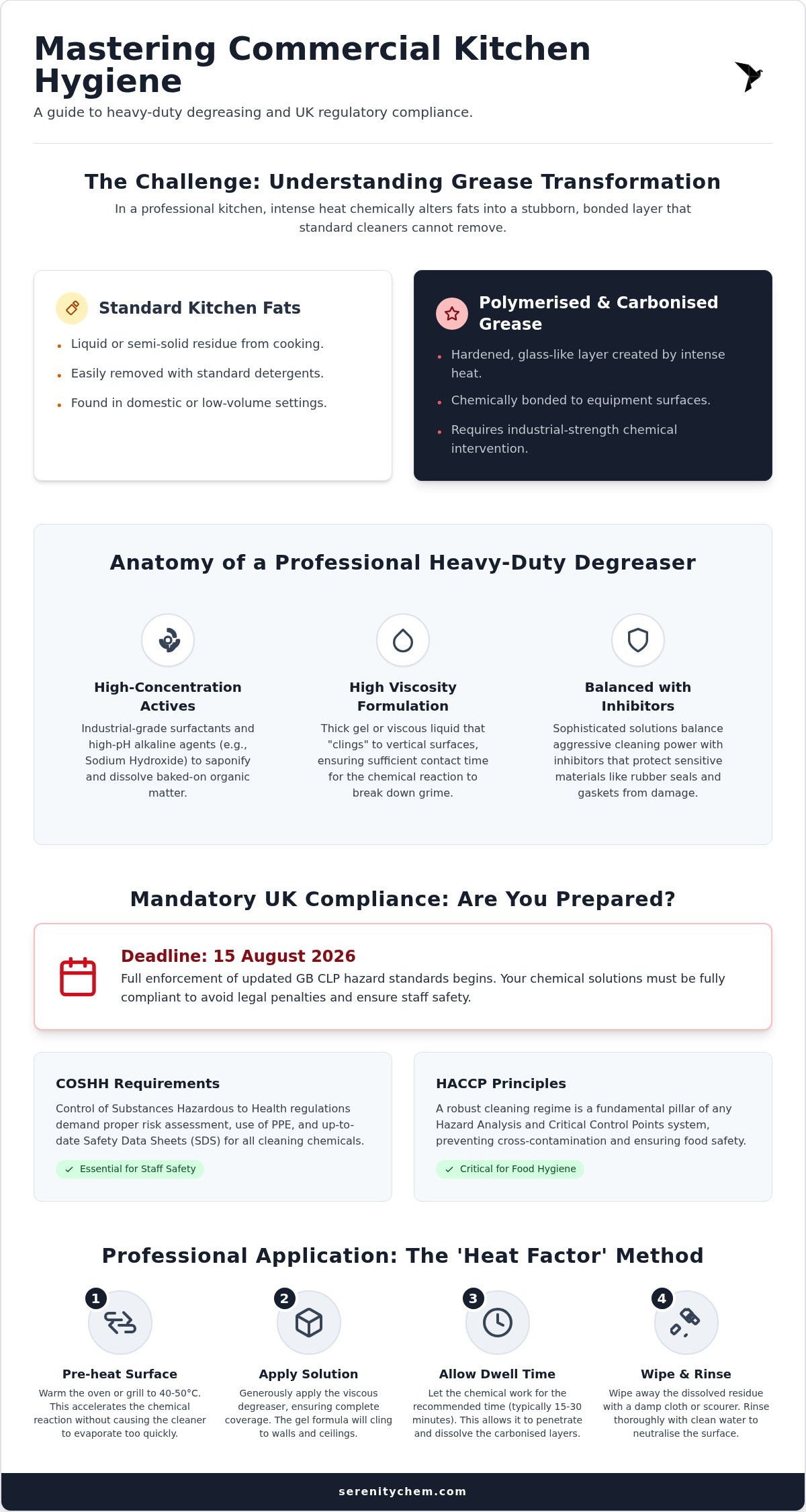
In a high-volume catering environment, the residue found inside ovens and on grills is far more complex than the splashes of oil seen in a domestic kitchen. The intense heat of a professional service causes fats and proteins to undergo a chemical transformation known as polymerisation. This process creates a hardened, glass-like layer that bonds tightly to stainless steel surfaces. Whilst standard detergents might remove fresh grease, they cannot penetrate these carbonised deposits. This is why a specialised heavy duty oven cleaner for commercial kitchens is a necessity rather than an optional extra for any professional chef or kitchen manager.
Relying on domestic-grade products in a commercial setting often leads to frustration and wasted labour. Supermarket cleaners are designed for occasional use on light soiling; they lack the concentration of active ingredients required to dissolve layers that have been "baked-on" over multiple cooking cycles. If these deposits are left unmanaged, they don't just become harder to clean. They pose a genuine fire risk and can lead to immediate hygiene failures during a local authority inspection. Effective degreasing is a fundamental pillar of any robust food safety management system.
Understanding the Chemistry of Commercial Degreasing
To effectively break down carbonised grease, the chemical makeup of heavy duty cleaners must be significantly more aggressive than standard soaps. High pH, alkaline solutions are required to saponify fats, essentially turning them into a water-soluble soap that can be rinsed away. Advanced surfactants play a vital role here by reducing surface tension, which allows the cleaning solution to lift grease from the metal surface. For vertical areas like oven walls and extraction canopies, the best heavy duty oven cleaner for commercial kitchens will often feature a gel or viscous formulation. This ensures the chemical "clings" to the surface, providing the necessary contact time to dissolve the toughest grime without running off.
Impact on Equipment Performance and Longevity
Carbon buildup doesn't just look unsightly; it directly impacts your kitchen's efficiency. When layers of grease coat heating elements or oven interiors, they act as an insulating barrier. This forces your equipment to draw more power to maintain consistent temperatures, leading to increased energy bills and uneven cooking results. Over time, the combination of moisture and food acids trapped beneath these layers can cause permanent pitting and corrosion in stainless steel. Maintaining a pristine kitchen does more than protect your investment in expensive equipment. It instills a sense of pride in your staff and ensures that your business remains fully compliant with UK hygiene standards.
What Defines a Heavy Duty Oven Cleaner for Commercial Kitchens?
In the professional catering sector, the term "heavy duty" isn't a mere marketing label; it represents a specific chemical threshold. A true heavy duty oven cleaner for commercial kitchens contains a significantly higher concentration of active alkaline agents compared to standard degreasers. These formulations often rely on industrial-grade surfactants that break the bond between carbonised grease and the oven substrate. Without these high-performance surfactants, the chemical simply sits on top of the soil rather than penetrating it.
Viscosity is another defining characteristic of a professional solution. A commercial-grade cleaner needs to be thick enough to cling to vertical oven walls and ceilings for extended periods. This dwell time is essential for the chemical reaction to occur. Typical key ingredients include sodium hydroxide or potassium hydroxide, which are highly effective at dissolving organic matter. However, the most sophisticated solutions balance this aggressive cleaning power with inhibitors that protect sensitive components like rubber seals and gaskets.
Caustic vs. Non-Caustic Formulations
Choosing between caustic and non-caustic options depends on the severity of the buildup. Caustic cleaners, often containing sodium hydroxide, are the gold standard for deep restorative cleans where years of carbonisation need stripping. They require rigorous adherence to safety protocols, including the use of chemical-resistant gloves and eye protection. In contrast, high-performance non-caustic degreasers are becoming the preferred choice for daily maintenance. These offer a safer profile for staff whilst still meeting the requirements of COSHH and HACCP Standards in the UK.
Material Compatibility: Protecting Your Investment
Not all kitchen surfaces react the same way to powerful chemicals. Whilst stainless steel and cast iron are generally resilient, aluminium is highly susceptible to "caustic attack," which can lead to permanent blackening and structural degradation. It's vital to identify the material of your oven components before application. If you're unsure about a particular surface, we always recommend testing a small, inconspicuous area first to prevent costly damage. For tailored advice on choosing the right formulation for your specific equipment, you can speak with our technical team today.
Regulatory Compliance: COSHH and HACCP Standards in the UK
Compliance in a professional kitchen isn't just about passing an inspection; it's about protecting your team and your reputation. Under the Control of Substances Hazardous to Health (COSHH) Regulations 2002, employers are legally required to assess the risks associated with every chemical on-site. When you introduce a heavy duty oven cleaner for commercial kitchens into your workflow, a formal COSHH assessment is vital due to the high concentration of active agents. This process ensures that you've identified potential hazards and implemented the necessary control measures to keep staff safe.
A critical part of this compliance is maintaining up-to-date Safety Data Sheets (SDS) provided by your supplier. These documents must reflect the latest hazard standards, especially following the GB CLP compliance deadline on August 15, 2026. Your SDS acts as the primary reference for staff training and emergency response. Without it, you cannot accurately train your team on the specific handling requirements of industrial-strength degreasers.
Integrating your cleaning regime into a Hazard Analysis and Critical Control Point (HACCP) plan is equally important. Documented cleaning schedules for hobs, grills, and ovens are core controls that prevent cross-contamination. Effectively managing the challenge of carbonised grease through a structured system ensures that your cooking equipment remains hygienic. This prevents the buildup of organic matter that could otherwise harbour harmful bacteria or compromise food safety.
Essential Safety Protocols for Kitchen Staff
Staff safety is paramount when dealing with concentrated industrial chemicals. Mandatory personal protective equipment (PPE) must include chemical-resistant gloves, eye protection, and heavy-duty aprons to prevent accidental burns. Since many degreasers can release potent vapours, ensuring adequate ventilation is essential, particularly in smaller, confined kitchen spaces. Your team should also be trained in immediate first aid procedures, such as using eye-wash stations or treating skin contact, to ensure a rapid and calm response to any incidents.
Environmental and Ethical Considerations
Modern kitchen management also involves looking at the wider impact of your procurement. Choosing to source from a UK-based chemical manufacturer offers several advantages, including reduced transport emissions and greater transparency in the supply chain. By selecting products with biodegradable surfactants, you can ensure your cleaning regime aligns with modern sustainability goals. This principled approach to hygiene helps you maintain a clean, compliant kitchen whilst fulfilling your ethical responsibilities to the environment and the local community.
Professional Application Techniques for Optimal Results
Achieving a pristine finish in a high-pressure catering environment requires more than just high-quality chemicals; it demands a methodical approach to application. Before applying any cleaning solution, you must isolate the equipment from its power or gas source. Start by manually scraping away loose debris and heavy carbon deposits using a professional-grade scraper. Removing this surface-level waste ensures that your chemical solution can focus entirely on the bonded, polymerised grease underneath, rather than being wasted on material that could be removed mechanically.
The "Heat Factor" is perhaps the most misunderstood element of kitchen maintenance. Whilst it's tempting to apply cleaner to a hot oven to speed up the process, this often causes the liquid to evaporate too quickly, potentially releasing irritating vapours. For the best results, ensure the equipment is warm to the touch, typically between 40°C and 50°C. At this temperature, a heavy duty oven cleaner for commercial kitchens will react more vigorously with the grease without drying out. This maintains the necessary dwell time, allowing the chemistry to penetrate deep into the carbon layers so that manual scrubbing is kept to an absolute minimum.
Once the contact time is complete, thorough rinsing is the final, non-negotiable step. Any chemical residue left behind can taint food or cause "blooming" on stainless steel surfaces. Use a clean, damp cloth or a low-pressure spray to remove all traces of the degreaser. For equipment that comes into direct contact with food, such as griddles or oven racks, a final wipe with a clean water rinse ensures a safe, neutralised surface ready for the next service.
Cleaning Different Kitchen Equipment
Different appliances require specific care to avoid damage. When treating combi-ovens, you must be careful not to spray chemicals directly into internal fans or sensitive temperature sensors, as this can lead to electrical faults. For deep fat fryers, the "boil-out" method is the industry standard. This involves filling the fryer with a diluted solution of heavy duty oven cleaner for commercial kitchens and heating it to a gentle simmer. This process effectively lifts the polymerised oil from the heating elements and tank walls, reaching areas that are otherwise impossible to scrub by hand.
Common Mistakes to Avoid
The most dangerous error in any kitchen is the mixing of different cleaning chemicals. Combining an alkaline degreaser with an acidic cleaner or bleach can create lethal chlorine gas. Always stick to a single product range and ensure equipment is fully rinsed before switching tasks. Additionally, avoid using overly abrasive scouring pads on stainless steel. These create microscopic scratches which, over time, become "bacteria traps" that are much harder to sanitise. Finally, don't neglect your extraction hoods and filters; these should be cleaned alongside your ovens to maintain proper airflow and reduce fire risks. If you need a specific protocol for your kitchen setup, you can enquire about our technical application guides for professional teams.
Achieving a Serene Clean with Serenity Chemicals
Serenity Heavy Duty Degreaser is specifically formulated to meet the rigorous demands of the 2026 catering environment. As a UK-based manufacturer, we understand that a heavy duty oven cleaner for commercial kitchens must deliver industrial-strength results whilst remaining responsible and safe for the user. Our formulation focuses on breaking down the polymerised grease discussed in previous sections, providing a reliable foundation for your kitchen hygiene regime. Buying direct from a UK manufacturer ensures product consistency and competitive pricing by removing unnecessary intermediaries from your supply chain.
Degreasing is only the first step in a professional cleaning protocol. Once you've removed the carbonised deposits, it's essential to follow up with a professional food safe sanitiser to ensure surfaces are microbiologically clean. This two-stage approach is a cornerstone of HACCP compliance, ensuring that your cooking equipment is not just visually clean, but entirely safe for food preparation. Our specialised formulations are designed to work in harmony, providing a comprehensive solution for professional caterers.
The Serenity Kitchen Hygiene System
Managing a busy kitchen is simpler when your chemical inventory is streamlined. By combining your deep-cleaning degreaser with a daily antibacterial surface spray, you create a cohesive system that simplifies staff training and reduces the risk of chemical misuse. Utilising a unified professional cleaning chemicals list allows for better cost control and ensures that every product in your store cupboard meets the same high standards of safety and efficacy. This systematic approach reduces waste and ensures your team has the right tool for every task.
Expert Support and Reliability
We provide more than just high-performance cleaning solutions. Our team offers technical expertise and safety guidance to help you navigate complex COSHH assessments and specific application challenges. We believe in being a principled partner for UK businesses, offering reliable national distribution to keep your kitchen running without interruption. Our commitment to integrity and protection means you can focus on your service with total peace of mind. Explore our full range of commercial kitchen chemicals to find the right solutions for your professional environment today.
Securing Your Kitchen's Standards for 2026 and Beyond
Maintaining a professional kitchen requires a disciplined approach to hygiene that balances chemical efficacy with strict regulatory compliance. We've explored how understanding the nature of carbonised grease allows you to select the most effective heavy duty oven cleaner for commercial kitchens. By prioritising viscous, high-performance industrial formulations, you ensure that your equipment remains in peak condition whilst significantly reducing the labour burden on your staff.
Integrating these UK manufactured, COSHH compliant solutions into a documented HACCP plan protects both your team and your business reputation. As a dedicated manufacturer, we provide the consistency and technical support needed to meet evolving safety standards with quiet confidence. Taking these proactive steps creates a safer, more efficient environment that lets your team focus on delivering exceptional service.
Shop Serenity Heavy Duty Degreaser for your commercial kitchen to establish a professional hygiene foundation that lasts.
Frequently Asked Questions
Can I use heavy duty oven cleaner on aluminium trays?
You shouldn't use a caustic heavy duty oven cleaner for commercial kitchens on aluminium trays or components. The high alkaline content in these professional formulations reacts with the soft metal, leading to permanent blackening, surface pitting, and structural degradation. For aluminium equipment, it's better to use a non-caustic degreaser specifically designed to be metal-safe to avoid irreversible damage.
How often should a commercial oven be deep cleaned?
Deep cleaning frequency depends on your kitchen's output, but high-volume equipment typically requires a thorough degrease at least once a week. Daily maintenance of hobs and grills is essential to prevent the polymerisation of fats into hardened carbon. Under UK HACCP principles, you're required to maintain a documented cleaning schedule that accurately reflects the usage patterns and risk levels of your catering environment.
Is it necessary to rinse the oven after using a heavy-duty degreaser?
Yes, it's absolutely essential to rinse all surfaces thoroughly with clean water after using any professional cleaning chemical. Residual degreaser can cause "blooming" on stainless steel and, more importantly, may taint food or release irritating vapours during the next cooking cycle. You should continue rinsing until all traces of the chemical's slippery texture have been completely removed from the substrate.
What PPE is required when using caustic oven cleaners in the UK?
In the UK, COSHH regulations mandate specific personal protective equipment for handling caustic chemicals, including chemical-resistant gloves, goggles or a face shield, and a heavy-duty apron. These items are a last line of defence against chemical burns and accidental splashes. It's also vital to ensure the kitchen is well-ventilated to manage any airborne vapours released whilst the cleaner is reacting with the grease.
Can commercial degreasers be used on self-cleaning ovens?
You should generally avoid using a heavy duty oven cleaner for commercial kitchens on ovens with self-cleaning pyrolytic or catalytic coatings. These aggressive chemicals can strip the specialised finish and may damage the internal sensors or heating elements. Always consult the manufacturer's manual first, as many self-cleaning units are designed to work only with high heat or very mild, non-abrasive detergents.
What is the best way to remove burnt-on carbon from a commercial grill?
The most effective method involves applying a viscous degreaser to a warm, not hot, surface to allow for maximum dwell time. This gives the chemistry the opportunity to penetrate and soften the hardened carbon layers. Once the dwell time is complete, use a professional-grade scraper to lift the debris before finishing with a thorough rinse to ensure the surface is neutralised and food-safe.
How do I know if an oven cleaner is HACCP compliant?
A cleaner is HACCP compliant when it's integrated into a documented food safety management system and used according to strict manufacturer protocols. You must ensure the product has an up-to-date Safety Data Sheet (SDS) and that it leaves no toxic residue on food-contact surfaces after the rinsing process. For sanitisers used in the final stage of cleaning, check for BS EN 1276 certification to guarantee bactericidal efficacy.
Why does my oven cleaner smell so strong, and is it dangerous?
The strong odour is usually caused by high-pH alkaline vapours or solvents reacting with organic grease during the saponification process. Whilst these fumes can be irritating to the eyes and respiratory system, they don't pose an immediate danger if you follow safety protocols. Always increase airflow by turning on extraction fans and opening doors to ensure staff aren't working in confined spaces whilst the chemicals are active.

Hand Hygiene in Food Preparation Areas: The 2026 Professional Guide
The Food Standards Agency estimates that foodborne illness costs the UK economy approximately £9 billion every year, with a s...

Sanitising Commercial Kitchen Hard Surfaces: The Professional UK Guide (2026)
Did you know that the average fine for food hygiene offences in the UK has more than tripled since 2016, now reaching over £7...