

Does your current cleaning protocol meet the rigorous new GB Classification, Labelling and Packaging (GB CLP) requirements coming into force on 15 August 2026? For many business owners, the pressure to maintain impeccable hygiene often clashes with the reality of confusing EN standards and the fear of damaging expensive finishes with harsh chemicals. It's frustrating to manage a cleaning cupboard filled with products that leave behind unpleasant odours or fail to meet specific safety benchmarks.
We're here to provide clarity. This guide helps you master the technical distinctions between surface cleaners & sanitisers so you can select the most effective, compliant solutions for your workspace. You'll learn how to achieve high hygiene standards whilst simplifying your inventory with versatile, multi-purpose products that protect both your staff and your surfaces.
We will examine the critical differences between EN 1276 and EN 14476 standards, explain the importance of GB Biocidal Products Regulation (GB BPR) authorisation, and provide a clear roadmap for ensuring your business remains COSHH compliant in an evolving regulatory landscape.
Key Takeaways
- Understand the functional divide between surfactants that remove physical debris and sanitisers that reduce microbial populations to safe levels.
- Recognise the non-negotiable importance of BS EN 1276 and BS EN 14476 standards for ensuring legal compliance and effective viral protection.
- Select the correct surface cleaners & sanitizers for your specific environment to avoid damaging delicate materials like polished stone or aluminium.
- Optimise your hygiene routine by implementing correct dwell times, ensuring chemicals have the necessary contact time to eliminate pathogens.
- Benefit from the safety and consistency of professional-grade, alcohol-free formulations manufactured right here in the UK.
Surface Cleaners vs. Sanitisers: Understanding the Technical Differences
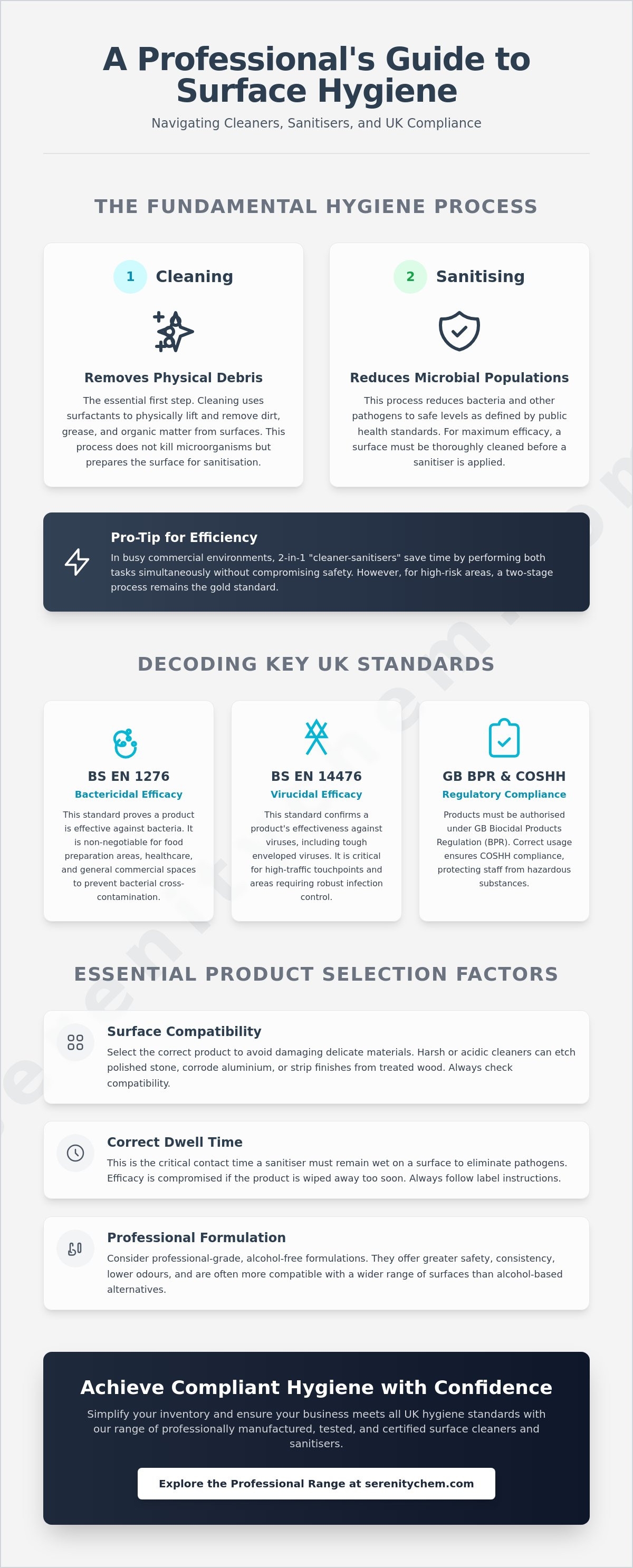
Choosing the right products for your facility begins with a clear understanding of what each chemical actually does. Cleaning and sanitising are often used interchangeably in casual conversation, but they represent two distinct stages of hygiene. Cleaning is the essential first step; it involves the physical removal of dirt, grease, and organic matter from a surface. This process uses surfactants to lift debris, but it doesn't necessarily kill microorganisms. Sanitising, by contrast, focuses on the invisible. It is the process of reducing bacteria and pathogens to safe levels as defined by public health standards.
You cannot effectively sanitise a surface that hasn't been cleaned first. If a layer of grease or dust remains, it acts as a physical shield for bacteria, preventing the sanitising agent from reaching the microbes. In busy commercial environments, many professionals opt for 2-in-1 "cleaner-sanitisers". These formulations are designed to handle both tasks simultaneously, saving time without compromising on safety. However, for high-risk areas, a two-stage process remains the gold standard for maintaining professional surface cleaners & sanitizers protocols.
The Role of Surfactants in Surface Maintenance
Surfactants are the hard-working components of any effective cleaner. These molecules work by breaking down the surface tension of water, allowing it to wet surfaces more effectively and penetrate oily soils. By surrounding dirt particles, surfactants lift them away from the material so they can be wiped or rinsed off. While the chemistry is advanced, physical agitation is still vital. Scrubbing helps break the bond between the soil and the surface, ensuring the cleaner can do its job.
This process is particularly noticeable when using specialised products like Serenity Glass & Mirror Cleaner. In these applications, the goal is a streak-free finish. High-quality surfactants ensure that the cleaning solution evaporates evenly, leaving no residue behind that could obscure visibility or harbour microscopic debris.
While maintaining clarity through cleaning is essential, many facilities also invest in specialised protective coatings from Sunshield Group to provide long-term shielding for windows and glass against environmental wear and degradation.
When to Use a Dedicated Sanitiser
Dedicated sanitisers are required when the goal is microbial control rather than just aesthetic cleanliness. High-traffic touchpoints, such as door handles, light switches, and shared workstations, require frequent treatment to prevent the spread of illness amongst staff. In food preparation environments, using a product like Serenity Kitchen Sanitiser is a legal and ethical necessity to prevent cross-contamination and ensure consumer safety.
It's also helpful to understand the technical differences between disinfectants and sanitizers when selecting your supplies. While sanitisers reduce bacteria to safe levels, disinfectants are designed to eliminate a wider spectrum of pathogens, including fungi and certain viruses. For most commercial settings, a well-applied sanitiser provides the protection needed for daily operations. By matching the product to the specific risk level of the area, you ensure a high standard of hygiene while protecting your budget and your surfaces from unnecessary chemical wear.
Key Features to Evaluate When Buying Surface Hygiene Products
When procuring professional surface cleaners & sanitizers, your decision-making process must extend beyond simple cost-per-litre metrics. A truly effective hygiene programme balances rigorous regulatory compliance with the practicalities of daily use. Selecting the wrong formulation can lead to more than just poor hygiene; it can result in legal non-compliance or permanent damage to expensive facility assets. It's vital to assess how a product interacts with your specific environment before committing to a large-scale order.
Surface compatibility is a frequently overlooked factor. Acidic cleaners can etch polished stone or corrode aluminium, whilst harsh solvents might strip the finish from treated wood. Understanding how to properly sanitize surfaces without causing structural damage is a hallmark of professional facility management. If you're managing a diverse range of materials, you might find it more efficient to request a technical consultation to ensure your chemical choices are safe for every substrate.
Decoding British and European Standards
Compliance isn't just a box-ticking exercise; it's your guarantee of performance. For bactericidal efficacy, the BS EN 1276 standard is the industry benchmark. This certification proves that a product can kill 99.999% of bacteria within a specified contact time, even in "dirty" conditions where organic matter is present. In our post-pandemic landscape, EN 14476 has become equally critical, as it validates a product's ability to eliminate enveloped viruses.
Choosing products that meet these dual standards ensures your surface cleaners & sanitizers provide a robust shield against common workplace pathogens. For a deeper look at how these regulations impact your purchasing, you can refer to our Professional Guide to Antibacterial Surface Spray UK standards and selection.
Fragrance, Colour, and User Experience
The sensory profile of a cleaner dictates where it can be safely used. In food preparation areas, sanitisers should always be unfragranced. This prevents "tainting," where chemical scents are absorbed by food products, potentially ruining stock and violating safety protocols. Conversely, in washrooms or public lobbies, the psychology of "clean" scents like citrus or mint can reassure visitors that the area is well-maintained.
We also recommend utilising colour-coded systems to eliminate the risk of cross-contamination. By assigning specific colours to different zones; such as red for high-risk washroom areas and green for kitchens; you provide your cleaning team with a clear, visual guide. This simple logic prevents a cloth used in a toilet cubicle from ever reaching a food service counter, maintaining the integrity of your hygiene standards throughout the building.
Serenity Surface Cleaners & Sanitisers: Professional Range Overview
Selecting the right products for your business requires a move away from "one-size-fits-all" industrial chemicals that can be too harsh for modern office or retail environments. Our range of surface cleaners & sanitizers is formulated to provide professional-grade efficacy whilst remaining responsible and safe for the end user. By choosing solutions tailored to specific environments, you can ensure high hygiene standards without compromising the integrity of your fixtures or the comfort of your staff.
Every product in the Serenity range is manufactured in the UK, ensuring consistent quality and adherence to the latest safety standards. Whether you're managing a busy commercial kitchen or a high-end corporate office, these solutions provide the technical performance you need with the ethical peace of mind you expect from a principled chemical manufacturer.
The Serenity Multi-Surface Cleaner: Your Daily Essential
For general maintenance across desks, counters, and shared furniture, the Serenity Multi-Surface Cleaner is the cornerstone of a reliable cleaning routine. It's designed to tackle ingrained dirt and oily residues that accumulate throughout the working day. Unlike some industrial alternatives that leave a sticky film, this cleaner ensures a streak-free finish on hard surfaces, including glass and polished metal. It's gentle enough for frequent use, protecting the lifespan of your furniture whilst keeping the environment looking pristine and professional.
Specialised Solutions: Kitchen and Hard Surfaces
In environments where the risk of bacterial spread is higher, specialised formulations are necessary. The Serenity Kitchen Sanitiser is a vital tool for food-safe areas. It is unfragranced to prevent tainting and meets the stringent requirements for food preparation surfaces. For more detailed guidance on maintaining these high-risk zones, you can consult our Professional Food Safe Sanitiser for Commercial Kitchens reference guide.
When dealing with industrial settings or high-traffic public areas, the Serenity Hard Surface Sanitiser offers heavy-duty protection. This formulation is built for durability and can handle the rigorous demands of commercial facilities where microbial control is paramount. It provides a robust shield on non-porous surfaces, ensuring that even the most frequently touched areas remain hygienically safe.
Antibacterial Protection Without the Alcohol
We believe that high efficacy shouldn't come at the cost of user comfort. Our Serenity Antibacterial Surface Spray is an alcohol-free formulation that provides targeted germ protection in high-risk areas. Alcohol-based products can often be drying to the skin and may damage certain sensitive finishes over time. By opting for our alcohol-free alternative, you protect your staff from skin irritation and reduce the risks associated with storing flammable chemicals on-site.
These formulations maintain the high kill rates required for professional compliance whilst being significantly safer to handle and store. You can browse the full Serenity Surface Cleaning collection to find the specific combination of products that best suits your facility's unique requirements.
How to Maximise Efficacy: Application and Dwell Times
Even high-specification surface cleaners & sanitizers will fail if the application technique is flawed. The most common error in commercial cleaning is the "spray and wipe" habit. Wiping a sanitiser away immediately after application effectively turns it into a simple cleaner. It removes the visible dirt but leaves the microbial population largely intact. To actually kill pathogens, the chemical requires "dwell time"; a specific window of contact where the active ingredients can penetrate and neutralise bacteria or viruses.
Dwell times vary depending on the product and the target pathogen, typically ranging from 30 seconds to 5 minutes. If you're using a virucidal product to meet EN 14476 standards, the required contact time is usually longer than for basic bactericidal action. Using microfibre cloths can enhance this process. Their structure allows them to grip surfaces and hold the chemical in place more effectively than paper towels or traditional cotton cloths, ensuring the solution stays where it's needed most.
Step-by-Step Guide to Surface Sanitisation
Following a structured cycle ensures that your surface cleaners & sanitizers perform at their peak. This "Clean-Sanitise-Rinse" approach is the standard for professional hygiene:
- Step 1: Remove loose debris. Clear the surface of crumbs, dust, or larger waste.
- Step 2: Apply cleaner. Use a product like Serenity Multi-Surface Cleaner to lift grease and oils.
- Step 3: Agitate and rinse. Scrub the surface and rinse with water to ensure no organic matter remains to shield bacteria.
- Step 4: Apply sanitiser spray. Saturate the surface with your chosen antimicrobial agent.
- Step 5: Allow for the specified dwell time. Consult the product label for the exact duration needed to achieve the microbial kill.
- Step 6: Wipe or air dry. Use a clean, dry cloth or, in food-safe areas, allow the product to air dry if the formulation permits.
Common Mistakes to Avoid in Surface Hygiene
Chemical safety is as important as efficacy. Never mix different chemicals; combining bleach with ammonia or acidic cleaners creates toxic fumes that can cause severe respiratory distress. Another common pitfall is over-diluting concentrates. Whilst it might seem cost-effective, using too much water renders the antimicrobial properties useless, essentially leaving you with expensive water that provides no protection.
Finally, remember that your tools are only as clean as the way you maintain them. Dirty cloths or mop heads simply redistribute bacteria across your facility. If you're unsure about the specific dwell times or dilution ratios for your environment, it's best to seek expert advice. You can contact our technical team for guidance on creating a compliant and effective cleaning schedule for your business.
Why Choose Serenity: UK Manufacturing and Ethical Integrity
Buying direct from a UK manufacturer ensures a level of oversight that third-party distributors simply can't match. When you source your surface cleaners & sanitizers from us, you're interacting with the experts who formulated the products. This direct relationship guarantees consistency in every batch and provides you with a clear chain of accountability. You aren't just buying a bottle; you're gaining access to the technical knowledge that created it.
Our role as a manufacturer allows us to provide professional support that goes beyond a standard sales transaction. We help businesses navigate the complexities of COSHH assessments and ensure that your hygiene standards meet the latest legal requirements. It's about providing a partnership rooted in trust and safety, ensuring that your staff feel protected and your facility remains compliant with evolving health standards.
British Quality and Innovation
Supporting UK blenders and manufacturers is vital for a resilient business economy in 2026. By keeping production local, we reduce the carbon footprint associated with international shipping and ensure that our supply chains remain dependable. We've organised our production facility to prioritise efficiency, allowing for rapid national delivery across the UK. This means your business isn't left waiting for essential hygiene supplies when you need them most.
For those looking to streamline their procurement process, our Ultimate Professional Cleaning Chemicals List offers a comprehensive view of the inventory required to maintain a modern facility. Having a single, reliable source for your chemical needs simplifies your administrative workload and ensures that all your products work harmoniously together.
Safety and Sustainability
Our commitment to ethical integrity is reflected in our focus on alcohol-free formulations. Many industrial surface cleaners & sanitizers rely on high concentrations of ethanol, which can increase fire risks in storage and cause skin irritation for staff. Serenity's non-flammable, alcohol-free products provide high-level antimicrobial protection without these hazards. This makes them safer to store in bulk and far more suitable for daily use in sensitive environments like schools or healthcare settings.
Sustainability is another core pillar of our operations. We encourage bulk buying because it offers a significant reduction in the cost per litre whilst providing clear environmental benefits. Purchasing larger containers and utilising concentrated refills drastically reduces the amount of single-use plastic waste generated by your business. It's a pragmatic way to lower your operational costs whilst meeting your corporate social responsibility goals. If you're ready to upgrade your facility's hygiene protocol, you can equip your business with professional surface cleaners & sanitisers today and experience the difference of principled, UK-made quality.
Elevate Your Facility’s Hygiene Standards
Effective hygiene is a deliberate process that combines the right chemical formulations with disciplined application techniques. By understanding the critical role of dwell times and the distinction between physical cleaning and microbial sanitisation, you ensure a safer environment for everyone in your building. Prioritising surface cleaners & sanitizers that meet BS EN 1276 and 14476 standards is no longer just a recommendation; it’s a fundamental requirement for modern commercial compliance.
Choosing Serenity means investing in UK-manufactured solutions designed with both efficacy and ethical responsibility in mind. Our alcohol-free and non-toxic options provide the high-level protection you need without the risks associated with traditional harsh chemicals. Whether you’re managing a high-traffic retail space or a food-safe kitchen, the right choice of hygiene products simplifies your maintenance routine whilst protecting your surfaces and your people.
If you're ready to refine your procurement strategy or need assistance navigating COSHH requirements, we're here to help. Please contact our technical team to discuss your requirements. We look forward to supporting your commitment to a cleaner, safer workspace.
Frequently Asked Questions
What is the difference between a disinfectant and a sanitiser?
Sanitisers are designed to reduce the number of bacteria on a surface to levels deemed safe by public health standards. Disinfectants have a higher potency and are capable of inactivating or destroying a wider range of pathogens, including viruses and fungi. Whilst both are essential for hygiene, sanitisers are typically preferred for food-contact surfaces because they often leave less residue after application.
How long should I leave a sanitiser on a surface for it to be effective?
You should typically leave a sanitiser on a surface for between 30 seconds and 5 minutes, depending on the specific formulation. This window is known as "dwell time". It's the period required for the chemical to penetrate and neutralise microbes. Wiping the product away too quickly prevents it from achieving the kill rates specified on the label, such as those required by BS EN 1276 standards.
Can I use the same cleaner for glass and kitchen counters?
It's best to use specialised products for these different tasks to ensure both safety and aesthetic quality. A product like Serenity Glass & Mirror Cleaner is formulated to leave a streak-free finish but doesn't usually contain the antimicrobial agents needed for food safety. For kitchen counters, you should use dedicated surface cleaners & sanitizers like Serenity Kitchen Sanitiser, which is unfragranced and specifically tested for food-contact environments.
Are alcohol-free surface sanitisers as effective as alcohol-based ones?
Alcohol-free sanitisers are just as effective at killing bacteria and viruses as alcohol-based versions, provided they carry the correct BS EN certifications. These formulations often use alternative active ingredients that offer prolonged protection after the product has dried. They're also safer for use on sensitive materials and are much gentler on the user's skin, reducing the risk of dermatitis amongst cleaning staff.
What does EN 1276 mean on a cleaning product label?
EN 1276 is a rigorous European standard that proves a product can kill 99.999% of bacteria within five minutes of contact. To pass this test, the chemical must demonstrate this efficacy even in "dirty" conditions where organic matter like grease or food particles is present. Seeing this code on a label gives you the assurance that the product is capable of professional-grade bactericidal performance.
How often should high-traffic surfaces be sanitised in a workplace?
High-traffic touchpoints like door handles, lift buttons, and shared kettles should be sanitised at least twice daily, though more frequent treatment is better during peak times. In shared workstations or meeting rooms, it's good practice to provide surface cleaners & sanitizers for staff to use before and after every session. Regular intervention prevents the build-up of pathogens and supports a healthier, more productive working environment.
Do I need to rinse a surface after using a sanitiser?
You don't usually need to rinse surfaces after using a modern, food-safe sanitiser as they're designed to air dry without leaving harmful residues. However, if you've used a heavy-duty cleaner-sanitiser to remove significant grease or dirt, a water rinse is often required to ensure the surface is completely clear of chemical traces. Always check the manufacturer's instructions to ensure you're following the safest protocol for your specific area.
Is it safe to use industrial-grade surface cleaners in a home environment?
Industrial-grade cleaners are safe for home use if you follow the dilution instructions and safety precautions meticulously. These products are often much more concentrated than supermarket alternatives, meaning they require careful handling and storage. Whilst they offer exceptional performance, users must ensure the area is well-ventilated and that the chemicals are kept securely away from children and pets, just as they'd be in a professional workplace.

Hand Hygiene in Food Preparation Areas: The 2026 Professional Guide
The Food Standards Agency estimates that foodborne illness costs the UK economy approximately £9 billion every year, with a s...

Sanitising Commercial Kitchen Hard Surfaces: The Professional UK Guide (2026)
Did you know that the average fine for food hygiene offences in the UK has more than tripled since 2016, now reaching over £7...