

Most warehouse managers approach oil spills with brute force; yet the reality is that removing industrial hydrocarbons is a matter of chemistry, not muscle. If you've spent hours scrubbing only to watch the same dark patch resurface or, worse, found yourself facing a failed safety audit due to recurring slip hazards, you aren't alone. It's frustrating when standard cleaning products simply move the slick around rather than lifting it. You need a reliable, professional method for how to remove oil stains from concrete warehouse floor surfaces that protects the integrity of the slab whilst ensuring employee safety.
We've designed this guide to help you master the professional techniques and chemical protocols required to eliminate even the most stubborn industrial stains. By following a repeatable maintenance protocol, you can restore a clean, non-slip environment that remains in full compliance with 2026 safety standards. We'll examine the science of emulsification and show you how to implement a system that your maintenance team can rely on, providing the peace of mind that comes from a principled and effective approach to facility care.
Key Takeaways
- Understand why concrete's porous structure causes oil to "wick" back to the surface and why surface scrubbing alone is often ineffective.
- Discover a rapid 4-step protocol to contain and absorb fresh spills before they penetrate deep into the warehouse slab.
- Master the chemical process of emulsification and how to remove oil stains from concrete warehouse floor surfaces using professional alkaline degreasers.
- Ensure your maintenance team remains COSHH-compliant by following the correct procedures for Safety Data Sheet (SDS) management and chemical storage.
- Establish a proactive cleaning cycle to maintain a slip-resistant environment and prevent the long-term degradation of your industrial flooring.
Understanding Concrete Porosity and the Risks of Oil Saturation
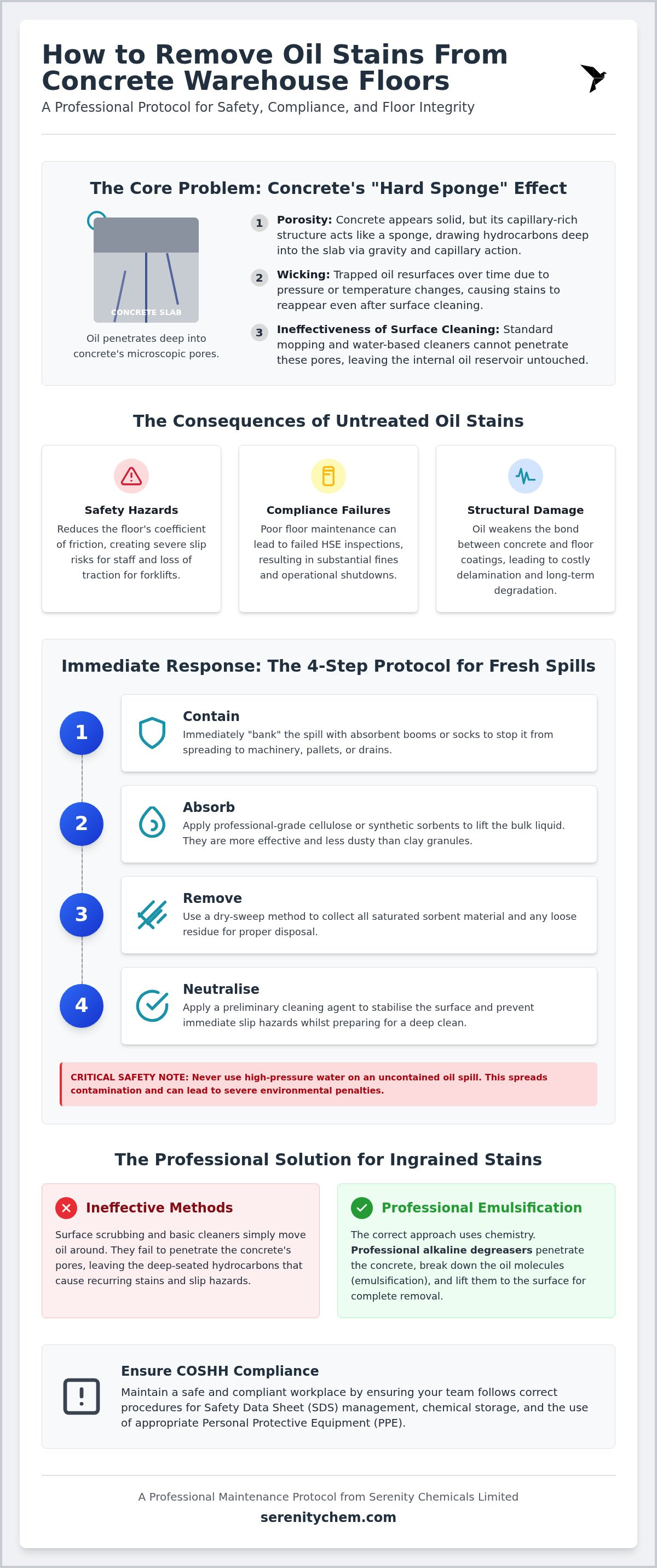
Concrete is a deceptive material. Whilst it appears as an impenetrable, solid barrier, it is actually a capillary-rich substance filled with microscopic pores. When an industrial spill occurs, gravity and capillary action combine to pull hydrocarbons deep into the slab. This internal reservoir is why simply mopping the surface is rarely enough. To truly understand how to remove oil stains from concrete warehouse floor areas, you must first acknowledge that the problem exists beneath the surface as much as on top of it.
When oil remains inside the concrete, it leads to a phenomenon known as "wicking." Even if the surface looks clean after a quick scrub, the oil stored in the pores eventually travels back to the top as the concrete "breathes" or reacts to pressure and humidity. This hydrocarbon saturation doesn't just look unsightly; it creates a structural risk by weakening the bond between the concrete and any floor coatings or sealants. Over time, this can lead to costly delamination and the eventual degradation of the floor itself.
The "Hard Sponge" Effect: Why Oil Dives Deep
It helps to visualise your warehouse floor as a hard sponge. Just as a kitchen sponge pulls in water, concrete’s network of voids draws in liquid oil. Environmental factors play a major role here. During the day, rising temperatures cause the oil trapped within the pores to expand and move. This movement can push the oil deeper into the concrete, making it even harder to reach with standard cleaning methods. Most basic water-based cleaners fail because they cannot penetrate these tight capillaries. They simply glide over the surface, leaving the deep-seated oil untouched and ready to resurface later.
Operational Risks of Untreated Industrial Stains
The presence of oil on a warehouse floor is a primary contributor to workplace accidents. Oil significantly reduces the coefficient of friction, which is the technical measurement of how "grippy" a surface is. For forklift operators, a sudden loss of traction on an oily patch can lead to collisions, tipped loads, or steering failure. The Health and Safety Executive (HSE) takes these hazards seriously. A failed inspection due to poor floor maintenance can result in substantial fines and mandatory operational pauses. Beyond the legalities, a floor covered in stubborn stains sends a negative message to clients and auditors about your facility's standards and overall safety culture.
Immediate Response: The 4-Step Protocol for Fresh Spills
When an oil spill occurs, speed is your most effective tool. The "hard sponge" nature of concrete means that every minute of delay allows gravity to pull hydrocarbons deeper into the slab. A reactive, unorganised response often leads to larger "stain zones" that are significantly harder to treat later. By following a disciplined 4-step protocol, your maintenance team can contain the damage before it becomes a permanent blemish or a long-term safety hazard.
The primary objective during a fresh spill is to stop the liquid from migrating. This involves a transition from containment to neutralisation:
- Step 1: Immediate Containment - Use absorbent booms or socks to "bank" the spill, stopping the spread towards pallets, machinery, or drains.
- Step 2: Absorption - Apply professional-grade sorbents to lift the bulk of the liquid oil from the surface.
- Step 3: Residual Removal - Utilise a dry-sweep method to collect any remaining loose hydrocarbons and saturated sorbent material.
- Step 4: Surface Neutralisation - Apply a preliminary cleaning agent to stabilise the area whilst preparing for a deep chemical clean.
Containment and Absorption Techniques
A common mistake in industrial environments is attempting to hose down a fresh oil spill. You should never use high-pressure water on uncontained oil; this simply spreads the contamination over a larger surface area and risks pushing hydrocarbons into the warehouse drainage system. This can lead to severe environmental penalties during an HSE inspection. Instead, focus on physical containment. By banking the spill with booms, you create a controlled environment where sorbents can work effectively.
Whilst many facilities still rely on clay-based "cat litter" for absorption, professional-grade cellulose or synthetic sorbents offer far better performance. Clay is often dusty, which creates additional respiratory risks, and it can easily clog floor drains. Synthetic sorbents have a higher capacity for hydrocarbon encapsulation, meaning you use less product to achieve a cleaner result. If your team is unsure which materials best suit your specific floor type, you can consult with our technical team for a site-specific recommendation.
Preventing Hydrocarbon Migration
To manage the cleaning effort effectively, you must identify the "spill zone" (the liquid pool) versus the "stain zone" (where the oil has already touched the concrete). Addressing the liquid pool immediately is the only way to limit the eventual stain size. This is why having a "First Responder" kit accessible in high-risk areas is essential. A standard kit should include:
- High-visibility hazard markers and tape.
- Non-sparking shovels and stiff-bristled brooms.
- Oil-only absorbent socks and pads.
- Heavy-duty waste bags with secure ties.
- Personal Protective Equipment (PPE) including nitrile gloves and eye protection.
By equipping your team with these tools, you transform a potential safety crisis into a manageable maintenance task. Mastering these initial steps is the foundation of how to remove oil stains from concrete warehouse floor surfaces successfully, ensuring that the subsequent deep-cleaning phase is as efficient as possible.
Professional Methods for Removing Stubborn, Ingrained Oil Stains
Whilst fresh spills require speed, addressing deep-seated stains demands a fundamental change in chemical state. When hydrocarbons have sat within the slab for weeks or months, they become part of the concrete's internal structure. Understanding how to remove oil stains from concrete warehouse floor areas at this stage is no longer about simple absorption; it's about the science of emulsification. Household hacks, such as using vinegar or standard washing-up liquid, often fail because they lack the high pH required to break the complex molecular bonds of industrial-grade grease and oils.
To achieve professional results, your maintenance team must utilise industrial-strength alkaline cleaners. These products are formulated to penetrate the concrete capillaries and interact with the oil at a molecular level. A critical factor in this process is "dwell time." This is the period where the chemical solution is allowed to sit on the stain, working into the pores without being allowed to dry out. If the solution dries, the oil is simply redeposited. For large-scale warehouse environments, mechanical floor scrubbers are highly effective, as they combine chemical application with consistent physical agitation to lift the emulsified oil from the surface.
If your facility requires a higher level of expertise or specialised equipment, you can explore Commercial and Specialised Cleaning Services to ensure your warehouse remains clean and compliant.
The Science of Chemical Emulsification
Emulsification is the process of making oil and water mix through the use of surfactants. High-performance degreasers contain specific surfactants that surround individual oil particles, creating a barrier that prevents them from re-attaching to the concrete. This allows the oil to be suspended in the cleaning solution so it can be easily rinsed away. To ensure you have the correct formulations for these heavy-duty tasks, sourcing your products from a reputable commercial floor cleaner supplier is essential. These professional-grade agents are designed to handle high hydrocarbon loads whilst maintaining the safety of the floor's finish.
Advanced Techniques: Poultice and Heat
For isolated, extremely deep stains where standard degreasing isn't enough, a poultice may be required. This involves mixing a solvent or strong degreaser with an absorbent powder to create a thick paste. This paste is applied to the stain and covered, allowing it to slowly draw the oil out of the concrete over 24 to 48 hours. As the paste dries, it "pulls" the liquid hydrocarbons from the pores and into the absorbent material.
In other scenarios, steam cleaning or hot water pressure washing can be used to lower the viscosity of old, hardened oil. Heat makes the oil more fluid, which helps the emulsifiers work more effectively. However, caution is necessary. Applying excessive heat too quickly to cold concrete can cause thermal shock, leading to "spalling," where the surface layer of the concrete chips or breaks away. Always ensure a gradual increase in temperature and use appropriate PPE to protect staff from hot vapours and chemical splash-back.
Ensuring COSHH Compliance and Workplace Safety Standards
The legal framework surrounding industrial cleaning is stringent. In the UK, the Control of Substances Hazardous to Health (COSHH) Regulations 2002 dictate that any business using high-performance chemicals must conduct a formal risk assessment. This isn't just a paperwork exercise; it's a criminal offence to ignore these duties. When you're determining how to remove oil stains from concrete warehouse floor areas, your choice of chemical must be justified within your COSHH documentation. You must identify the hazards, decide on precautions, and ensure your staff are trained to handle the substances safely.
A core part of this compliance is the management of Safety Data Sheets (SDS). Every item on your professional cleaning chemicals list must have a corresponding, up-to-date SDS stored where staff can access it instantly. These documents provide critical information on chemical properties, health hazards, and emergency measures. For the cleaning team, proper Personal Protective Equipment (PPE) is non-negotiable. This typically includes chemical-resistant nitrile gloves, wraparound eye protection, and non-slip, oil-resistant footwear to prevent falls on the very surfaces being treated. If you're working in enclosed spaces, ensure adequate ventilation to prevent the buildup of vapours, even when using modern, low-odour degreasers.
Navigating the 2026 GB CLP Regulations
The landscape of chemical safety changed significantly in 2026 with updates to the GB Classification, Labelling and Packaging (CLP) standards. These regulations ensure that the hazards of chemicals are clearly communicated through standardised symbols and phrases. Partnering with a cleaning products manufacturer UK based ensures that your supplies meet these latest legal requirements, with correct "Signal Words" (like Danger or Warning) and "Hazard Statements" clearly visible on every container. This level of transparency is vital for passing HSE inspections and maintaining a safe workplace.
Environmental Responsibility and Disposal
Your "Duty of Care" extends beyond the warehouse walls to the local environment. When you rinse away emulsified oil, you're handling a hazardous waste stream. You must never allow this wastewater to enter surface water drains, which often lead directly to local rivers. Instead, it must be directed to foul water sewers, usually requiring trade effluent consent, or collected for professional disposal. Store all bulk cleaning chemicals in bunded areas to contain any accidental leaks. If you're looking to upgrade your facility's safety protocols, you can speak with our compliance experts to ensure your team is fully equipped and protected.
Strategic Maintenance with Serenity Heavy Duty Degreaser
Maintaining a safe industrial environment requires a transition from reactive cleaning to a strategic, proactive programme. Serenity Heavy Duty Degreaser is specifically formulated to address the high-porosity challenges of warehouse concrete discussed earlier. Unlike generic detergents, this high-performance solution penetrates the capillary structure of the slab to neutralise hydrocarbons before they can cause permanent structural damage. When you understand how to remove oil stains from concrete warehouse floor areas effectively, you realise that consistency is just as important as the chemical itself.
Daily operations inevitably lead to minor forklift leaks and hydraulic drips. Using our degreaser as a targeted spot treatment prevents these small incidents from becoming deep-seated stains. By treating spills the moment they are identified, you maintain the floor's integrity and ensure the surface remains slip-resistant. A clean, well-maintained floor is the visible foundation of a "Safety First" warehouse culture, signaling to employees and auditors alike that facility standards are a top priority.
Implementing a Proactive Floor Care Schedule
An effective maintenance strategy involves dividing your facility into specific zones based on risk and traffic. Loading bays and vehicle maintenance areas should be classified as "High Risk" zones, requiring a weekly deep-clean cycle to prevent heavy oil buildup. Storage aisles may be "Low Risk" zones that only require monthly attention. This targeted approach ensures resources are used efficiently whilst maintaining a uniform safety standard across the site.
The return on investment for professional floor care is measurable. Clean floors reduce the abrasive wear on forklift tyres, leading to fewer replacements and lower maintenance costs. Additionally, demonstrating a disciplined cleaning protocol can often lead to lower insurance premiums, as it reduces the statistically significant risk of slips and trips. Training your staff to recognise and report spills immediately, rather than waiting for a scheduled cleaning shift, creates a collective responsibility for workplace safety.
Securing Your Facility’s Infrastructure
Protecting the concrete slab from chemical degradation is a long-term investment in your business infrastructure. Leaked hydrocarbons that are left untreated eventually break down the cement paste that holds the aggregate together, leading to dusting and cracking. By using Serenity solutions, you ensure your floor remains a pristine, non-slip surface that passes every HSE audit and client inspection with ease. Our formulations provide the professional reliability needed to manage a modern UK warehouse in 2026 and beyond. To find the right protocol for your specific facility, you can contact our technical team for expert advice on warehouse floor care.
Securing Your Facility’s Future with Professional Standards
Mastering how to remove oil stains from concrete warehouse floor surfaces is a shift from reactive scrubbing to a disciplined chemical protocol. By prioritising immediate containment and leveraging the science of high-performance emulsification, you don't just clean the surface; you protect the structural integrity of the entire slab. This proactive approach ensures your facility remains a safe, slip-resistant environment that consistently exceeds 2026 safety standards. It's about moving away from ineffective methods that move oil around and adopting a repeatable system that your maintenance team can trust.
Our UK-manufactured formulations are designed specifically for heavy-duty industrial use, offering high-performance hydrocarbon removal whilst ensuring your team remains fully COSHH compliant. If you're ready to implement a more effective floor care strategy, you can request a technical consultation for your warehouse cleaning needs. Transitioning to a professional-grade maintenance protocol is a principled investment in your infrastructure that pays dividends in safety, reputation, and long-term operational efficiency. We're here to help you maintain a cleaner, safer workspace with confidence.
Frequently Asked Questions
Can I use washing up liquid to remove oil stains from a warehouse floor?
No, washing up liquid is generally ineffective for industrial-grade spills. Whilst it can break down simple kitchen fats, it lacks the high pH and specific surfactants required for heavy hydrocarbons. Using it on a warehouse floor often results in the oil being spread further rather than lifted. Professional alkaline degreasers are necessary to achieve the emulsification required for a truly clean, non-slip surface that meets workplace safety standards.
How long should I leave a degreaser on the concrete before rinsing?
Most industrial degreasers require a dwell time of between 10 and 20 minutes to work effectively. This period allows the chemical to penetrate the concrete pores and emulsify the ingrained oil. You must ensure the solution doesn't dry out during this time, as this can redeposit the lifted oil back into the slab. For very stubborn patches, a second application with light agitation is often more effective than a single long soak.
Is it possible to remove an oil stain that has been there for years?
It is possible to remove aged stains, although they often require more intensive methods such as a poultice or steam cleaning. Over years, oil can penetrate deep into the concrete's capillary structure, making a standard surface scrub insufficient. Using a professional-grade degreaser with multiple applications and mechanical agitation is the most reliable way to learn how to remove oil stains from concrete warehouse floor areas that have been neglected for long periods.
For facilities requiring a broader range of industrial chemistry solutions, Royal Vista Trading provides access to high-quality chemical products and reagents that meet professional standards.
Will pressure washing damage the concrete warehouse floor?
Pressure washing can damage concrete if the pressure is set too high or if the nozzle is held too close to the surface. Excessive force can strip the top layer of the cement paste, leading to a permanent etched appearance and increased porosity. When using heated water, you must also be mindful of thermal shock. It's best to use a wide-angle nozzle and maintain a consistent distance to protect the floor's structural integrity.
What is the best way to dispose of oily water after cleaning?
The best way to dispose of oily wastewater is through a foul water sewer, provided you have the necessary trade effluent consent from your local water authority. You must never pour emulsified oil or contaminated rinse water into surface water drains, as these often lead directly to local watercourses. For large volumes, it's safer to use a licensed waste management contractor to ensure your business remains environmentally compliant and avoids heavy fines.
Do I need to seal my warehouse floor after removing oil stains?
Sealing your warehouse floor after a deep clean is highly recommended to prevent future hydrocarbon saturation. Once the oil has been removed, the concrete pores are open and vulnerable to new spills. Applying a high-quality penetrative sealer or an epoxy coating creates a barrier that keeps liquids on the surface. This makes future maintenance significantly easier and helps maintain the slip-resistant properties of your industrial flooring over the long term.
How often should a warehouse floor be professionally degreased?
High-traffic areas like loading bays and vehicle maintenance zones should be professionally degreased at least once a month. For lower-traffic storage aisles, a quarterly deep clean is usually sufficient to prevent oil buildup. Implementing a regular schedule is a core part of how to remove oil stains from concrete warehouse floor surfaces permanently. Consistent maintenance prevents hydrocarbons from becoming ingrained, which reduces the need for aggressive, time-consuming restoration projects later.
What PPE is required when using industrial-strength oil removers?
Standard PPE for using industrial oil removers includes chemical-resistant nitrile gloves, wraparound eye protection, and oil-resistant, non-slip footwear. These items protect the cleaning team from chemical splashes and the high slip risks associated with oily floors. If the degreaser is being used in a confined space with limited airflow, respiratory protection may also be required. Always consult the Safety Data Sheet (SDS) for specific requirements related to the product you are using.

Hand Sanitiser for Frequent Use: Professional UK Guide 2026
The very product you use to protect your health might be the primary cause of your skin's deterioration. While alcohol-based ...

Food Safe Antibacterial Spray UK: The Professional 2026 Hygiene Guide
Using the wrong disinfectant in a commercial kitchen isn't just a minor oversight; it's a direct threat to your Food Hygiene ...