

Did you know that simply spraying and wiping a surface immediately might actually be doing nothing to stop the spread of harmful pathogens? If you have ever felt frustrated by persistent streaks or wondered why your cleaning routine isn't preventing illness, you aren't alone. Most professionals understand the worry that comes with chemical safety in food preparation areas and the confusion surrounding "dwell time" for an antibacterial multi surface spray. It's a common struggle to balance high hygiene standards with a busy schedule, especially when low-quality retail products leave behind a tacky residue.
We agree that your peace of mind depends on knowing your disinfection process actually works. This guide will help you master professional techniques to ensure a germ-free environment whilst maximising the efficiency of your cleaning programme. You'll learn how to navigate the 2026 regulatory landscape, including why standards like EN 1276 and the updated EN 14476:2025 are essential for your facility. We will provide a clear, repeatable methodology that eliminates guesswork and helps you identify reliable UK-based supplies for your specific needs.
Key Takeaways
- Master the professional two-step method for using antibacterial multi surface spray to ensure pathogens are effectively eliminated rather than simply spread across surfaces.
- Understand the critical difference between cleaning and disinfecting, and why "dwell time" is the secret to achieving professional hygiene standards.
- Learn how to identify essential certifications like EN 1276 and the updated EN 14476:2025 to ensure your facility remains compliant with 2026 regulations.
- Discover how to protect your assets by choosing material-compatible formulas that prevent damage to delicate surfaces like stone, wood, or electronics.
- Gain insights into the efficiency and reliability of sourcing your disinfection solutions directly from a UK-based manufacturer to maintain a consistent supply chain.
What is Antibacterial Multi Surface Spray and Why is it Essential?
An antibacterial multi surface spray is a sophisticated chemical tool engineered for dual-action performance. These formulations do not simply move dirt from one place to another; they are designed to emulsify surface soils whilst simultaneously neutralising harmful microorganisms. Understanding the distinction between cleaning and disinfecting is vital for any effective hygiene programme. Cleaning involves the physical removal of organic matter, grease, and debris. Disinfection, however, requires the use of a chemical disinfectant to kill or irreversibly inactivate pathogens that remain after the initial wipe. Using a professional-grade spray ensures that both tasks are handled with precision, providing a foundation for a truly sanitary environment.
In the context of modern facility management and home organisation, versatility is a primary requirement. Using a high-quality antibacterial multi surface spray across various touchpoints reduces the risk of cross-contamination and simplifies staff training. Relying on one trusted product ensures consistency in safety standards. This consistency is essential to prevent pathogen rebound. Without a methodical disinfection routine, surviving microbes multiply rapidly, often doubling their population in under twenty minutes in favourable conditions. Regular application creates a hostile environment for these pathogens, maintaining hygiene levels that protect both staff and visitors.
Bacteria vs. Viruses: What does your spray actually target?
Most antibacterial products are specifically formulated to target bacteria such as E. coli, MRSA, and Salmonella. These organisms have unique cell wall structures that the spray must penetrate to be effective. However, bacteria often hide within greasy biofilms that shield them from chemical contact. Professional sprays include surfactants that lower the surface tension of liquids, breaking down these fatty layers so the active biocides can reach the hidden microbes. If your environment requires protection against viral threats, you must ensure your product also meets the EN 14476 standard, which is the benchmark for virucidal efficacy in the UK.
The Rise of Residual Protection
Traditional sprays often stop working the moment the surface dries, leaving the area vulnerable to new contamination immediately. Advancements in chemical engineering have introduced formulas that provide a protective barrier. This residual effect continues to neutralise pathogens for hours after the initial application, offering an extra layer of security between cleaning cycles. This technology improves operational efficiency by providing peace of mind without requiring constant manual intervention. You can learn more about residual antibacterial surface spray for long-term hygiene to see how these modern solutions support a safer, more sustainable cleaning strategy.
Understanding the Science and Standards of Surface Disinfection
For British businesses, selecting an antibacterial multi surface spray is not merely a matter of preference; it is a requirement for legal and safety compliance. All disinfectants sold in Great Britain must comply with the GB Biocidal Products Regulation (BPR). By August 2026, updated GB Mandatory Classification and Labelling (GB MCL) rules will also require more stringent Safety Data Sheets (SDS) for these products. Choosing a spray that meets recognised British and European standards ensures that your facility is protected by chemistry that has been rigorously tested in independent laboratories. This level of verification provides the peace of mind that your hygiene programme is built on a foundation of proven efficacy rather than marketing claims.
A critical metric in professional hygiene is the "Log Kill" rate. Whilst many retail products claim to kill 99.9% of germs, this represents only a Log 3 reduction. In a professional environment, we look for a Log 5 reduction, which signifies that the product kills 99.999% of bacteria. This difference is significant. If a surface has one million bacteria, a 99.9% spray leaves 1,000 survivors, whereas a 99.999% spray leaves only 10. For high-risk areas like food preparation zones or clinical settings, this higher standard is essential to prevent the spread of infection. Many professional-grade concentrated solutions offer this superior performance, providing better value and efficacy than ready-to-use retail alternatives that are often diluted for general domestic use.
Maintaining the integrity of your surfaces is just as important as killing the microbes on them. Harsh chemicals can cause long-term damage to delicate materials. Using pH-neutral formulations allows you to disinfect surfaces like polished stone, treated wood, or sensitive electronics without the risk of etching, dulling, or corrosion. This balance of power and protection ensures that your assets remain in good condition whilst your hygiene standards remain high. If you need assistance choosing a formula that suits your specific facility requirements, you can speak with our technical team for tailored advice.
Alcohol-Free vs. Alcohol-Based Formulations
Modern disinfection strategies increasingly favour alcohol-free sprays. These formulations are non-flammable, making them safer for storage and use in large volumes. They are also significantly kinder to the skin, which is a vital consideration for staff who clean frequently throughout the day. Alcohol-free options are particularly popular in schools and healthcare settings where safety and skin sensitivity are paramount. For a comprehensive approach to site hygiene, you can also see our Alcohol-Free Hand Sanitiser UK guide to see how these solutions work together to protect your environment.
The UK Standards: EN 1276 and EN 14476
The primary benchmark for any antibacterial multi surface spray in the UK is BS EN 1276. This standard ensures the chemical is effective against common bacteria like E. coli and Salmonella in food, industrial, and domestic areas. EN 1276 is the benchmark for killing 99.999% of bacteria within 5 minutes. For environments where viral protection is also necessary, look for the EN 14476 certification. This confirms the product's efficacy against enveloped viruses, including Influenza and Coronaviruses, ensuring your cleaning programme is robust enough to handle diverse biological threats.
Selecting the Right Spray for Different Environments
Choosing an antibacterial multi surface spray requires a clear understanding of the specific environment it will serve. High-traffic office spaces present challenges like dust and skin oils on shared desks, whereas a domestic kitchen deals primarily with organic food waste and grease. For professional environments that require meticulous attention to detail, companies like DLT Cleaning Services Ltd provide the expertise needed to handle everything from routine disinfection to specialist cleaning tasks. Using a heavy-duty industrial formula in a home setting may be unnecessary, but using a weak retail spray in a commercial lobby will likely fail to meet professional hygiene targets. Material compatibility is another vital consideration. A professional must ensure the chosen spray doesn't cause swelling in natural wood or clouding on sensitive electronic screens. pH-neutral options are generally the safest choice for preserving these assets whilst maintaining cleanliness. It's about finding a balance between chemical power and surface longevity.
In food preparation environments, fragrance-free options are essential. Scented products can easily taint food, leading to costly waste and safety concerns. Professional teams also utilise colour-coding to prevent cross-contamination. This system typically involves using blue-labelled products for general areas and green-labelled solutions for food zones, ensuring that bacteria from a washroom never reach a dining table. This methodical approach is the hallmark of a principled cleaning programme. It removes the guesswork for staff and ensures that the right chemical is always used in the right location, protecting both the user and the public. By categorising your equipment, you create a visual safety net that maintains high standards even during busy shifts.
Commercial Kitchens and Food Prep Areas
Speed is critical in a busy catering environment. No-rinse sanitisers allow staff to clean and disinfect prep lines quickly without the need for a secondary water rinse. This efficiency supports a faster turnover whilst ensuring the facility remains compliant with UK food safety laws. For UK catering businesses, food-safe certification is a legal requirement that cannot be overlooked. Using the wrong chemical in these areas can lead to severe regulatory penalties. For more detail, you can reference our food safe sanitiser for commercial kitchens guide to ensure your site meets the latest 2026 benchmarks.
High-Touch Points in Public Spaces
Public centres contain numerous high-touch points that require frequent attention throughout the day. Door handles, light switches, and lift buttons are prime locations for pathogen transfer and require a robust disinfection strategy. Using a fast-acting antibacterial multi surface spray on these hard plastics and metals is the most effective way to break the chain of infection in communal areas. For reception desks and other high-turnover areas, look for sprays with short contact times. This allows your team to maintain safety without disrupting the flow of visitors or visitors' experience. In a post-2025 landscape, the public expects visible and effective hygiene measures as a standard of service.
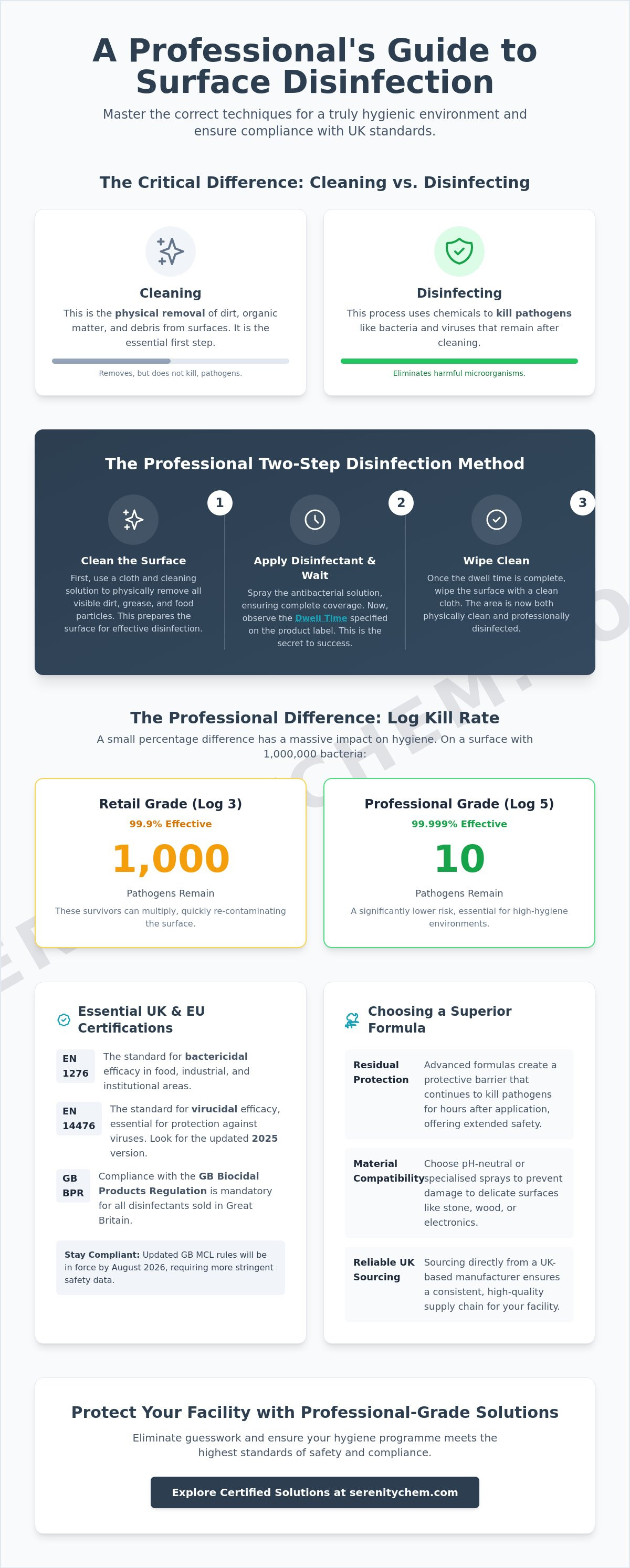
How to Use Antibacterial Multi Surface Spray: The Step-by-Step Method
Achieving a truly sterile environment requires more than a casual "spray and wipe" approach. To get the most out of your antibacterial multi surface spray, you must follow a methodical process that ensures the chemical agents have the opportunity to work as intended. Many retail instructions overlook the preparation phase, yet this is where professional hygiene standards are either met or missed. By following these five steps, you can ensure your cleaning programme is both efficient and effective.
- Step 1: Pre-clean the surface. Use a damp cloth or detergent to remove visible debris, dust, and grease. Organic matter acts as a physical shield for bacteria; if you don't remove the grime first, the disinfectant cannot reach the pathogens beneath.
- Step 2: Apply the spray liberally. Ensure the entire area is covered. The surface should be visibly wet to the touch. Inadequate coverage leads to "patchy" disinfection where colonies of microbes can survive and regroup.
- Step 3: Observe the 'Dwell Time'. This is the specific duration the product must remain wet on the surface to kill the targeted microbes. It's the most critical part of the process.
- Step 4: Wipe with a clean microfibre cloth. Use a methodical 'S' motion, moving from the top to the bottom of the surface. This technique prevents you from re-contaminating an area you've already wiped.
- Step 5: Allow to air dry. Resist the urge to buff the surface to a shine immediately. Letting the surface air dry naturally ensures any residual protective properties are properly established.
Mastering Dwell Time: Why 30 seconds isn't enough
Chemical disinfectants aren't instant. They require time to penetrate the robust cell walls of bacteria or the protein coats of viruses. Whilst a quick 30-second wipe might remove some surface dirt, it rarely achieves a full Log 5 kill rate. As a general rule, allow 2 minutes for basic sanitising and between 5 to 10 minutes for full professional-grade disinfection. Always check the manufacturer's label, as formulations vary in their chemical concentration and required contact time. If you're unsure about the specific requirements for your facility, you can request a technical demonstration from our team.
Preventing Cross-Contamination whilst Wiping
Using the same cloth to clean multiple desks or kitchen stations is one of the fastest ways to spread pathogens. To prevent this, adopt the 'fold and flip' technique with your microfibre cloths. By folding the cloth into quarters, you create eight fresh cleaning surfaces. Flip to a new side for every new area you touch. For high-risk zones, such as washrooms or areas where raw meat is prepared, we recommend using disposable wipes. This eliminates the risk of carrying dangerous bacteria between different zones of your building, keeping your staff and visitors safe.
Sourcing Professional Antibacterial Solutions in the UK
Buying direct from a UK chemical manufacturer provides distinct logistical and financial advantages that retail suppliers simply cannot match. You gain direct access to technical expertise and the latest safety data whilst bypassing the inflated costs found in third-party supply chains. A local supply chain is inherently more resilient; it ensures your facility never faces a hygiene deficit due to international shipping delays or global logistics failures. This stability is vital for maintaining the rigorous disinfection methodology discussed throughout this guide. In a 2026 landscape where supply chain transparency is a commercial priority, knowing exactly where your chemicals are formulated offers significant peace of mind.
Sourcing your antibacterial multi surface spray in bulk is a strategic decision that benefits both your budget and the environment. By purchasing larger volumes or utilising concentrated refills, you significantly lower the cost-per-use and reduce the amount of single-use plastic entering the waste stream. Professional suppliers also provide comprehensive Material Safety Data Sheets (MSDS). These documents are essential for COSHH compliance and meeting the updated GB Mandatory Classification and Labelling (GB MCL) rules required by August 2026. This technical transparency ensures your staff use chemicals safely and responsibly in every zone of your building.
The Serenity Chemicals Advantage
We produce high-performance, principled formulations right here in the UK. This allows us to maintain strict quality control over every batch, ensuring that our products meet the high standards expected by professional cleaning teams. Our alcohol-free formulations provide a safer alternative for environments where skin sensitivity or fire safety is a priority, such as schools or healthcare facilities. You can view our professional cleaning chemicals list for a full range of solutions tailored to the needs of modern British businesses.
Sustainability and Ethical Cleaning
Modern businesses are increasingly prioritising ethical sourcing as part of their broader corporate social responsibility goals. Our commitment to cruelty-free and vegan-friendly cleaning chemicals ensures that your hygiene standards don't come at an ethical cost. Using concentrated refills is one of the most effective ways to reduce your company's carbon footprint. Transporting less water means fewer vehicles on the road and a lower environmental impact overall. It's a pragmatic approach to sustainability that doesn't compromise on efficacy or safety.
Explore our range of professional antibacterial sprays and sanitiser solutions at Serenity Chemicals.
Elevating Your Facility's Hygiene Standards for 2026
Effective disinfection is a matter of discipline and methodology. By mastering the two-step cleaning process and respecting essential dwell times, you ensure that your facility remains a safe environment for everyone. Choosing an antibacterial multi surface spray that meets rigorous British standards like EN 1276 provides the technical assurance needed for professional compliance. We've explored how selecting the right formula for your specific environment prevents surface damage whilst maintaining a high Log 5 kill rate.
At Serenity Chemicals, we are committed to providing high-performance solutions that don't compromise on ethics. Our formulations are manufactured in the UK to ISO standards and are trusted by healthcare, school, and catering professionals across the country. Because our products are cruelty-free and alcohol-free, you can maintain a germ-free environment with a clear conscience. Shop our professional-grade Serenity Antibacterial Surface Spray today to see the difference a principled approach makes. Your journey toward a more efficient and responsible cleaning programme starts with the right partner.
Frequently Asked Questions
Is antibacterial multi surface spray safe for all surfaces?
No, the suitability of a spray depends entirely on its chemical pH and the material of the surface. Whilst many professional formulas are versatile, acidic or highly alkaline products can etch natural stone like marble or strip the protective lacquer from hardwood. Always check for a pH-neutral antibacterial multi surface spray if you are cleaning delicate materials to ensure you don't cause permanent surface degradation.
How long should I leave antibacterial spray on a surface before wiping?
You should typically leave the spray for between two and five minutes to achieve effective sanitisation. This duration, known as dwell time, allows the active biocides to penetrate the protective cell walls of pathogens. For full professional-grade disinfection, some formulations may require up to ten minutes of wet contact time as specified by the manufacturer's safety data sheet.
What is the difference between an antibacterial spray and a disinfectant?
The primary difference lies in the spectrum of microorganisms they are designed to target. Antibacterial sprays focus specifically on killing bacteria such as E. coli or MRSA. Disinfectants are generally broader solutions that also neutralise viruses, fungi, and spores, providing a more comprehensive level of hygiene for high-risk environments like clinical settings or washrooms.
Can I use antibacterial spray on food preparation surfaces?
You can use these sprays on food prep areas provided they are explicitly labelled as food-safe. It's best to choose a no-rinse formula to prevent chemical residue from contaminating ingredients during service. If the product isn't no-rinse, you must wipe the surface thoroughly with clean water after the dwell time has elapsed to ensure the area is safe for food contact.
Does antibacterial multi surface spray kill viruses like the flu?
A standard antibacterial multi surface spray is designed to kill bacteria and may not be effective against viruses like the flu or coronaviruses. To ensure viral protection, you must verify that the product meets the BS EN 14476 standard. This certification confirms the spray's efficacy against enveloped viruses, which is essential for maintaining safety during seasonal illness outbreaks.
Why is my surface streaky after using an antibacterial spray?
Streaks are usually caused by over-application of the product or using a microfibre cloth that is already saturated with dirt and oils. Many cheap retail sprays contain high levels of surfactants that leave a tacky residue behind. Using a professional-grade, low-residue formula and a fresh, dry cloth for the final wipe will typically result in a smear-free, polished finish.
How often should I disinfect high-touch surfaces in an office?
High-touch points should be disinfected at least twice daily in a standard office environment to break the chain of infection. Areas with very high turnover, such as lift buttons, reception counters, and shared kitchen taps, may require more frequent attention during peak hours. Regular intervals prevent the build-up of biofilms that allow bacteria to thrive and spread amongst your workforce.
What should I look for on the label to ensure a spray is professional grade?
Look for specific British and European standards, primarily BS EN 1276 for bactericidal efficacy and BS EN 14476 for virucidal protection. A professional-grade product will also clearly state its "Log Kill" rate, ideally aiming for Log 5, which represents 99.999% efficacy. Reliable labels will also include detailed safety instructions and clear contact times for different levels of disinfection.

Hand Hygiene in Food Preparation Areas: The 2026 Professional Guide
The Food Standards Agency estimates that foodborne illness costs the UK economy approximately £9 billion every year, with a s...

Sanitising Commercial Kitchen Hard Surfaces: The Professional UK Guide (2026)
Did you know that the average fine for food hygiene offences in the UK has more than tripled since 2016, now reaching over £7...