

You reach for your bottle of gel, but instead of feeling clean, you flinch as the liquid hits a painful crack on your knuckle. If you’ve noticed your skin becoming rough, red, or even bleeding after regular cleaning, you aren’t alone. Many professionals and families now struggle with the trade-off between rigorous hygiene and skin integrity. It’s frustrating when the very tools meant to protect your health end up damaging your first line of defence: your skin.
Understanding how to prevent dry hands from sanitiser is about more than just applying any old lotion; it requires a principled approach to skin health. In this guide, we’ll show you how to maintain soft, resilient skin whilst ensuring high hygiene standards through expert-backed techniques. You’ll discover the science behind the skin barrier, learn which moisturising ingredients actually work, and explore alcohol-free alternatives that offer effective protection without the stinging sensation. It’s time to move beyond the cycle of irritation and find a solution that prioritises both safety and comfort.
Key Takeaways
- Understand why alcohol-based products strip natural oils and how to recognise the early signs of sanitiser-induced irritant contact dermatitis.
- Learn how to prevent dry hands from sanitiser by applying the "Damp Skin Rule" to lock in moisture at the most effective moment.
- Identify the specific roles of humectants, emollients, and occlusives to ensure your hand cream actually repairs the skin barrier.
- Adopt a daily hygiene routine that uses lukewarm water and gentle pat-drying to reduce unnecessary stress on your hands.
- Explore the advantages of advanced alcohol-free sanitisers that maintain professional hygiene standards whilst remaining gentle on sensitive skin.
Understanding Why Hand Sanitisers Cause Dryness and Irritation
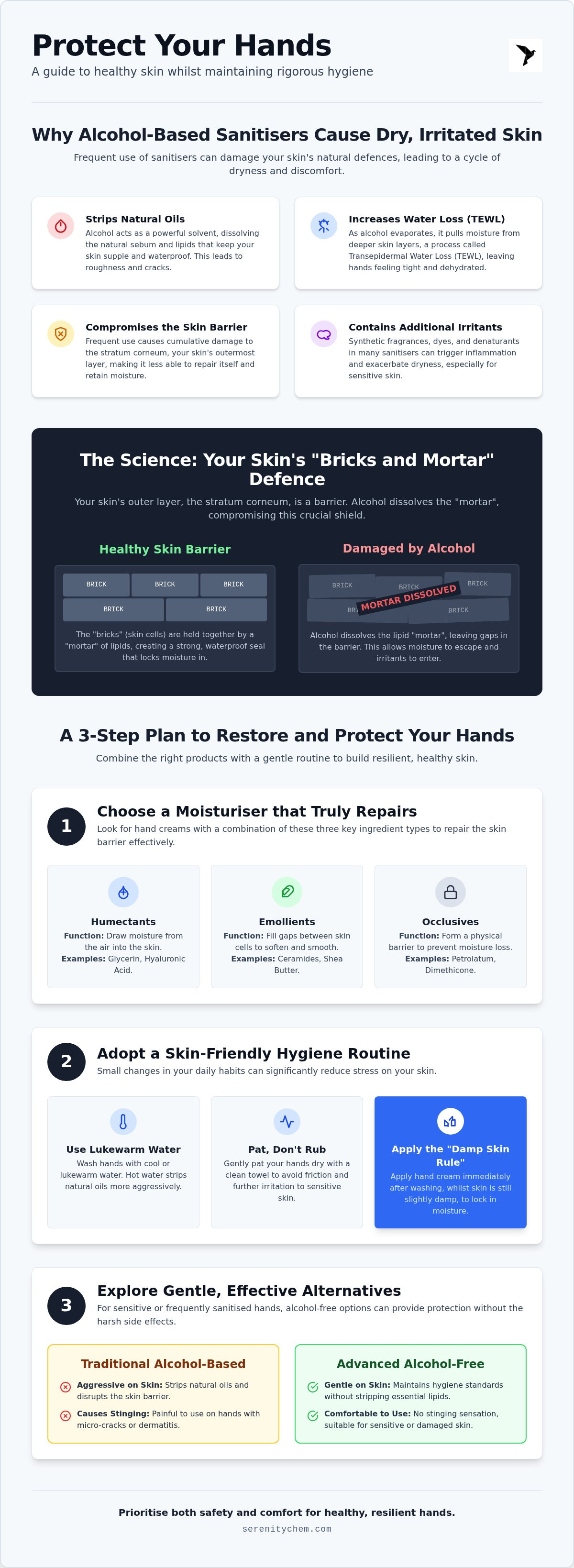
Alcohol-based sanitisers are incredibly effective at neutralising pathogens, but their chemical nature makes them aggressive towards human tissue. To understand how to prevent dry hands from sanitiser, you must first recognise that alcohol acts as a powerful solvent. It doesn't just sit on the surface; it actively dissolves the natural sebum and fatty lipids that keep your skin supple and waterproof.
When these protective oils are stripped away, the skin enters a state known as sanitiser-induced irritant contact dermatitis. This isn't an allergic reaction, but rather a physical breakdown of the skin's defences. Unlike temporary dryness, which a quick application of lotion might fix, frequent sanitising causes cumulative damage to the stratum corneum, the outermost layer of the epidermis. Without time to recover between applications, the skin loses its ability to repair itself, leading to persistent roughness and inflammation.
The Solvent Effect: How Alcohol Strips Protection
Ethanol and isopropanol are the primary active ingredients in most traditional sanitisers. As these alcohols evaporate, they draw moisture out from the deeper layers of the skin. This process significantly increases Transepidermal Water Loss, leaving the hands feeling tight and parched. The rapid evaporation that makes alcohol convenient for hygiene is the same mechanism that dehydrates the skin cells.
If you feel a sharp stinging sensation when applying your gel, it's a clear signal that your skin barrier is already compromised. This pain occurs because the alcohol is entering micro-cracks that are too small to see with the naked eye. Over time, this disruption of the lipid bilayer makes it harder for your skin to retain any moisture at all, leading to a chronic cycle of irritation. It's a sign that your hands are no longer just dry, but physically damaged.
Common Irritants Found in Standard Sanitisers
To effectively master how to prevent dry hands from sanitiser, one must understand the biological structure of the skin. The stratum corneum is the outermost layer of the epidermis, acting as the body's primary shield against the environment. It functions as a gatekeeper, regulating the movement of moisture out of the body through a process called Transepidermal Water Loss (TEWL). When this barrier is healthy, it keeps water in and pathogens out. Frequent exposure to harsh solvents disrupts this delicate balance, leading to a rapid increase in TEWL and subsequent dehydration of the skin cells.
The "Bricks and Mortar" Model of Skin Health
Dermatologists often describe the stratum corneum using a "bricks and mortar" analogy. In this model, the skin cells, known as corneocytes, are the bricks, while the lipid bilayer acts as the mortar. This lipid mortar consists of ceramides, cholesterol, and fatty acids that bind the cells together into a waterproof seal. Alcohol-based sanitisers are designed to be efficient at killing germs, but they also act as powerful degreasers. They dissolve the lipid mortar, leaving the bricks loose and the underlying layers exposed.
Once the mortar is compromised, the skin also loses its Natural Moisturising Factors (NMFs). These are water-soluble molecules that help the skin hold onto hydration. Without these essential components, the skin becomes brittle and prone to cracking. Following expert tips for protecting your skin can help mitigate this damage by reinforcing the barrier before it fails completely.
Why a Compromised Barrier is a Hygiene Risk
There is a significant irony in the pursuit of hand hygiene. If you sanitise so frequently that your skin cracks, you actually increase your risk of infection. Intact skin is a smooth, easy-to-clean surface. Cracked skin, however, creates deep fissures where bacteria and viruses can hide, protected from the reach of surface sanitisers. These micro-cracks also allow allergens and irritants to penetrate deeper into the tissue, causing chronic inflammation and long-term sensitivity.
Maintaining a slightly acidic skin pH, often called the "acid mantle", is another vital part of this defence system. This acidic environment inhibits the growth of harmful bacteria whilst supporting the skin's natural flora. Many traditional sanitisers disrupt this pH balance, further weakening the barrier's integrity. For organisations looking to balance safety with skin health, it's essential to consider the long-term impact of hygiene protocols on staff well-being. If you have questions about implementing gentler hygiene solutions, you can speak with our technical team for professional guidance.
Effective Moisturising Techniques to Combat Sanitiser-Induced Dryness
Hydrating your skin isn't just about comfort; it's a critical component of professional hygiene. When you're looking for how to prevent dry hands from sanitiser, the most effective technique is the "Damp Skin Rule". Instead of waiting for your hands to dry completely after washing, apply your moisturiser whilst the skin is still slightly moist. This simple change in timing traps existing water molecules on the surface, significantly boosting the efficacy of your cream. It’s a method that turns a basic routine into a powerful barrier-repair session by ensuring that hydration is locked deep within the epidermis before it has a chance to evaporate.
Humectants vs Occlusives: What Does Your Skin Need?
Humectants, such as glycerin or hyaluronic acid, act like magnets that draw water into the skin's surface. These are excellent for immediate hydration but can evaporate quickly if used alone. In contrast, occlusives like petrolatum or dimethicone create a physical seal that locks moisture in. For a professional setting, a product that balances both is ideal. It provides deep hydration without leaving the greasy residue that interferes with daily tasks. Emollients, including ceramides and plant oils, fill the gaps between skin cells to restore the smooth texture we discussed in the "bricks and mortar" model.
Timing Your Moisturisation Throughout the Day
Consistency is more important than volume. You don't need to apply cream after every single use of sanitiser, but a frequency of every third or fourth application is a sensible standard. If you're worried about making your hands too slippery for work, try applying the product only to the backs of your hands, which are usually the first areas to show signs of damage. Rubbing the backs of your hands together allows the skin to absorb the nutrients whilst keeping your palms and fingertips clear for better grip on tools or screens. Mastering how to prevent dry hands from sanitiser requires this proactive approach to timing.
Barrier creams also offer a proactive solution for those in high-use environments. These are specifically formulated to provide a durable shield that resists the solvent effect of alcohol. Applying a high-quality barrier cream at the start of your shift provides an extra layer of protection that lasts through several cleaning cycles. It acts as a sacrificial layer, allowing the sanitiser to do its job without reaching the delicate lipid layers of your skin.
Avoid products with heavy fragrances or artificial dyes. On a compromised skin barrier, these additives often act as irritants that trigger stinging or redness. For those dealing with severe dryness, overnight intensive treatments are a principled choice for recovery. Applying a thick, fragrance-free ointment before bed and wearing clean cotton gloves allows your skin's natural repair processes to work undisturbed for several hours. This nightly reset is often the difference between chronic irritation and resilient, healthy skin that can withstand the demands of modern hygiene standards.
A Daily Routine to Maintain Healthy Hands Whilst Sanitising
Adopting a structured hygiene routine is the most sustainable way to manage skin health. Many people ask how to prevent dry hands from sanitiser only when they are already experiencing pain, but the key is a preventative daily schedule. The goal is to balance effective pathogen removal with the preservation of your natural lipid barrier. By making small adjustments to how you wash and dry your hands, you can stop irritation before it starts. Mastering how to prevent dry hands from sanitiser involves a combination of the right products and the right habits.
Strategic sanitising involves knowing when to reach for the sink and when to use a portable solution. Use soap and water when your hands are visibly dirty, greasy, or after using the washroom. For routine disinfection between tasks, integrating an alcohol free hand sanitiser UK professionals trust can significantly reduce the cumulative chemical stress on your skin. These formulations provide the necessary antimicrobial protection without the aggressive solvent effect of traditional ethanol-based gels.
The Professional Handwashing Protocol
Temperature control is a vital, yet often overlooked, part of hand health. Always use lukewarm water rather than hot. While hot water might feel more thorough, it causes the blood vessels to dilate and makes the skin more permeable, which allows natural oils to be washed away more easily. Choose a pH-neutral, fragrance-free soap to minimise chemical irritation; for instance, the organic ingredients found in EDMSOAPS products are designed to be gentle on the skin barrier.
Once you've finished washing, your drying technique is just as important. Avoid the temptation to rub your hands vigorously with a paper towel. This mechanical friction can create micro-tears in the stratum corneum, which we previously identified as a major risk factor for infection. Instead, gently pat your hands dry. Ensure you remove all moisture, especially between the fingers, as damp areas can lead to fungal issues or further skin breakdown. Thorough drying prepares the skin for the moisturisation techniques mentioned earlier.
For those in industrial or clinical settings, managers play a principled role in maintaining staff well-being. Providing skin-friendly hygiene stations that include both high-quality sanitisers and accessible moisturisers is a sound investment. Encouraging "hand health breaks" allows employees to step away and apply barrier creams or intensive lotions without rushing. This proactive approach reduces the likelihood of staff developing severe dermatitis, which can lead to increased absenteeism.
Early intervention is essential. Look out for the first signs of a compromised barrier, such as a dull appearance, slight redness, or a feeling of tightness. If these symptoms are caught early, a simple adjustment to your routine can prevent them from escalating into painful cracks. If you're looking to upgrade your facility's hygiene standards with skin-conscious products, you can enquire about our professional range today. Consistency and high-quality formulations are the twin pillars of a successful hand health programme.
Switching to Alcohol-Free Alternatives for Long-Term Protection
The UK hygiene market has seen a significant shift towards advanced, alcohol-free formulations. While ethanol was once the default choice for rapid disinfection, many industries now recognise that the chemical trade-off is often too high for high-frequency use. Choosing a modern alternative is a principled decision that prioritises the long-term health of your team or family. It's a shift from reactive care to proactive protection.
When you're investigating how to prevent dry hands from sanitiser, the most effective long-term strategy is to eliminate the primary irritant. Traditional gels rely on high concentrations of alcohol to neutralise pathogens, but this also destroys the skin's natural defences. Switching to a water-based solution allows you to maintain professional hygiene standards without the risk of dermatitis or chronic inflammation. It's the final piece of the puzzle for maintaining a resilient skin barrier.
Efficacy Without the Burn: How Alcohol-Free Works
A common misconception is that only alcohol-based products are effective against a broad spectrum of viruses and bacteria. However, active ingredients like Benzalkonium Chloride (BKC) offer a different, often more durable, approach to hygiene. Unlike alcohol, which ceases to be effective the moment it evaporates from the skin, BKC can provide a level of residual protection. It works by disrupting the cell membranes of pathogens whilst remaining remarkably gentle on human tissue.
Foam-based sanitisers also offer superior comfort compared to traditional gels. They provide even coverage across the entire hand, including the delicate areas between fingers, without the "stinging" sensation associated with alcohol. Because they don't evaporate lipids, they leave the hands feeling soft rather than parched. This improved skin-feel is essential for compliance; people are much more likely to sanitise regularly when the process doesn't cause them physical discomfort.
Why Serenity Alcohol Free Hand Sanitiser is the Professional Choice
Serenity Alcohol Free Hand Sanitiser is specifically formulated for those who must sanitise dozens of times a day. Beyond the benefits to skin health, these formulations are non-flammable and non-toxic. This makes them much safer to store and transport in bulk compared to ethanol-based products, which are classified as hazardous materials. It's a solution that addresses both personal safety and workplace compliance with a single, effective product.
This sanitiser is a vital component of any professional cleaning chemicals list for UK businesses looking to balance efficacy with ethical responsibility. By choosing a solution that respects your biology, you ensure that your hygiene routine remains sustainable. Protect your hands whilst you protect your health; it's the most responsible way to maintain a safe and pain-free environment.
Prioritising Skin Integrity in Your Hygiene Routine
Maintaining high hygiene standards shouldn't come at the cost of your physical comfort. By understanding the biological needs of your skin barrier and adopting the "Damp Skin Rule", you've taken the first steps in learning how to prevent dry hands from sanitiser. True protection involves more than just a quick fix; it requires a principled approach to the products you use every day.
Switching to a formulation that respects your skin's natural lipids ensures that your hands remain resilient and pain-free. Our UK-manufactured solutions are specifically designed for frequent, professional use, providing an alcohol-free alternative for businesses that value both safety and well-being. You don't have to choose between effective sanitisation and healthy skin.
Switch to Serenity Alcohol Free Hand Sanitiser for gentle, professional protection and experience a more responsible way to stay safe. Your hands are your most important tools; it's time to treat them with the care they deserve.
Frequently Asked Questions
Does alcohol-free hand sanitiser actually kill germs as well as alcohol?
Alcohol-free formulations using Benzalkonium Chloride are highly effective and meet rigorous professional standards, such as EN 14476 for virucidal efficacy. Unlike alcohol, which kills germs through rapid protein denaturation and then evaporates, these alternatives often provide residual antimicrobial activity on the skin. They're a reliable choice for high-traffic environments where maintaining skin integrity is as important as eliminating pathogens.
What is the best type of moisturiser for extremely dry, cracked hands?
For severely compromised skin, fragrance-free ointments or thick creams are superior to thin lotions. Look for a balanced formula containing humectants like glycerin to draw in moisture, and occlusives like dimethicone or white soft paraffin to create a physical seal. These ingredients work together to repair the lipid bilayer and prevent further moisture loss. Applying these treatments overnight with cotton gloves can significantly accelerate the healing process.
Can I use hand sanitiser if I have eczema or psoriasis?
Individuals with eczema or psoriasis can use sanitiser, but they must be selective about the formulation. Alcohol-based gels often trigger painful stinging and can exacerbate inflammatory flare-ups by stripping away essential lipids. Switching to an alcohol-free foam is usually a more principled approach for sensitive skin. Always perform a patch test on a small area first and consult your dermatologist if you're experiencing an active flare-up.
How often should I moisturise my hands if I sanitise frequently at work?
You should aim to moisturise your hands every three to four times you sanitise. This frequency is a key part of how to prevent dry hands from sanitiser in professional settings. Applying a small amount of barrier cream to the backs of your hands ensures the most vulnerable areas stay protected without making your palms too greasy for work. Consistency's more effective than applying large amounts of product less frequently.
Why does my hand sanitiser sting when I apply it?
Stinging occurs because the alcohol in the sanitiser is reaching nerve endings through microscopic fissures in your skin barrier. Even if your hands look healthy, frequent cleaning can cause tiny cracks that're invisible to the naked eye. This sensation's a clear warning sign that your stratum corneum's compromised and requires immediate hydration. If the stinging persists, it's a strong indicator that you should switch to a gentler alternative.
Is it better to wash my hands or use sanitiser to prevent dryness?
Handwashing with lukewarm water and a pH-neutral soap is generally gentler on the skin barrier than using alcohol-based sanitisers. However, the best approach is a combination of both. Use soap and water when your hands are visibly soiled or after using the washroom, and reserve sanitiser for moments when a sink isn't accessible. Over-washing with hot water can be just as damaging as over-sanitising, so always follow with a moisturiser.
Are there specific ingredients I should avoid in hand sanitisers?
Avoid sanitisers that contain synthetic fragrances, artificial dyes, or harsh denaturants, as these are common irritants for sensitive skin. Fragrances are often added to mask the scent of chemicals but offer no hygiene benefit. Additionally, some high-concentration ethanol gels can be overly aggressive. Scrutinising the ingredient list for skin-conditioning agents like aloe vera or allantoin can help you identify products designed with long-term skin health in mind.
Can dry hands from sanitiser lead to more serious skin infections?
Yes, chronic dryness can lead to secondary infections like cellulitis or impetigo. When the skin cracks, it loses its ability to act as a waterproof shield, allowing bacteria to penetrate into deeper tissue layers. Understanding how to prevent dry hands from sanitiser is therefore a vital part of your overall infection control strategy. Intact, healthy skin's your body's most effective natural defence against environmental pathogens and long-term health complications.

Hand Sanitiser for Frequent Use: Professional UK Guide 2026
The very product you use to protect your health might be the primary cause of your skin's deterioration. While alcohol-based ...

Food Safe Antibacterial Spray UK: The Professional 2026 Hygiene Guide
Using the wrong disinfectant in a commercial kitchen isn't just a minor oversight; it's a direct threat to your Food Hygiene ...