

The UK cleaning and hygiene sector contributes nearly £72 billion to the economy, yet many facilities still fail basic safety audits due to inadequate inventory management. Maintaining a professional environment requires more than just domestic products; it demands a structured workplace cleaning supplies checklist that aligns with the latest UK safety regulations. At Serenity Chemicals Limited, we understand that facility managers often face the difficult task of balancing tight budgets with the need for high-performance solutions that actually protect their staff from pathogens whilst meeting COSHH requirements.
We believe that a hygienic workplace is a fundamental right for every employee. This guide provides a definitive path to mastering your facility hygiene by offering a comprehensive inventory of professional-grade supplies and a structured plan for 2026 regulatory compliance. We'll examine the specific formulations required for diverse surfaces, explain the economic benefits of commercial concentrates over supermarket brands, and provide a clear framework for daily, weekly, and monthly maintenance. By the end of this guide, you'll have the confidence to meet UK safety standards whilst improving workplace aesthetics and reducing staff illness.
Key Takeaways
- Learn how to implement a professional workplace cleaning supplies checklist that prioritises hygiene and risk management over simple tidying.
- Identify the essential categories of professional chemicals, such as alcohol-free sanitisers and heavy-duty degreasers, needed for a compliant facility.
- Understand the cost and environmental benefits of using concentrated commercial products, which offer faster contact times and reduced plastic waste.
- Ensure your facility meets the August 2026 GB CLP hazard standards and COSHH requirements to protect your staff and maintain legal compliance.
- Establish a structured cleaning rota that distinguishes between daily high-touch disinfection and periodic deep cleaning tasks.
The Fundamentals of a Professional Workplace Cleaning Supplies Checklist
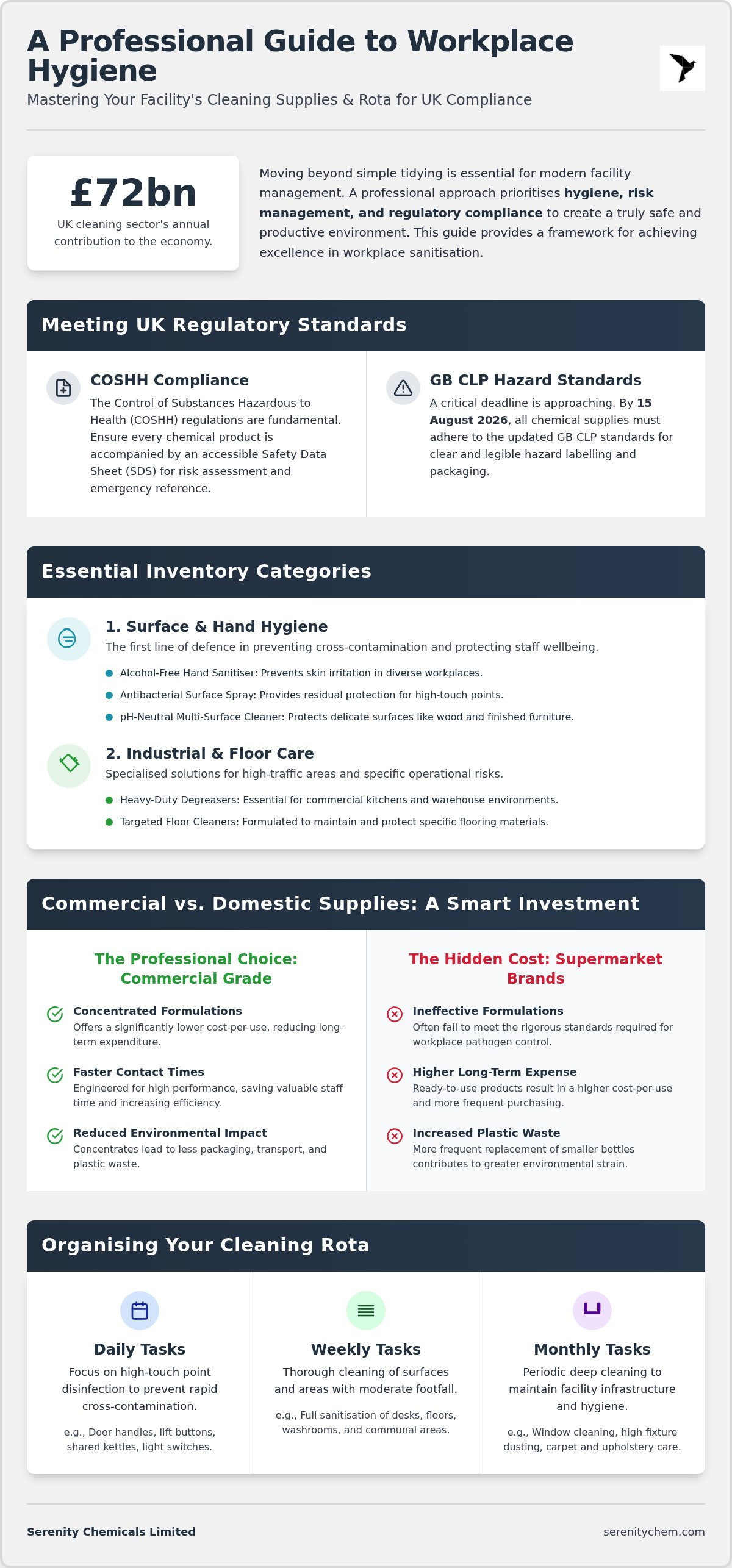
A professional workplace cleaning supplies checklist serves as a strategic roadmap for facility hygiene, moving beyond simple aesthetics to address the core requirements of safety and infection control. Whilst domestic cleaning often focuses on removing visible clutter or "tidying," professional protocols prioritise the elimination of pathogens and the maintenance of structural integrity through technical precision. Understanding the fundamentals of cleaning is essential for any facility manager who wants to transition from basic maintenance to a robust sanitisation programme. This principled approach ensures that every chemical and tool on your list serves a specific, documented purpose.
In the UK, failing to align your supplies with current health and safety legislation can result in significant legal and financial repercussions. The UK cleaning industry contributed nearly £72 billion to the economy in 2023, reflecting the high stakes involved in maintaining compliant environments. By organising your inventory according to surface types and risk levels, you protect your staff and demonstrate a commitment to ethical management. This methodical structure reduces waste and ensures that your budget is spent on high-performance solutions rather than ineffective domestic alternatives.
Meeting UK Regulatory Standards
Every professional workplace cleaning supplies checklist must integrate the Control of Substances Hazardous to Health (COSHH) regulations. This means every item must be assessed for risk before it enters the building. You must ensure that every chemical, from floor cleaners to heavy-duty degreasers, is accompanied by an accessible Safety Data Sheet (SDS) for your team to reference in an emergency. COSHH compliance is the foundation of workplace hygiene. By August 15, 2026, all supplies must also adhere to the updated GB CLP hazard standards for labelling and packaging, ensuring that hazard warnings are clear and legible for all users.
Assessing Workplace Footfall and High-Touch Zones
An effective inventory strategy starts with mapping "hotspots" where cross-contamination is most likely to occur. High-traffic areas such as lift buttons, communal kettles, and door handles require frequent intervention with antibacterial solutions. You should adjust your supply volumes based on actual occupancy levels; a site with high visitor frequency will deplete surface sanitisers much faster than a private office. Specialist environments, including commercial kitchens or warehouses, will necessitate targeted products like heavy-duty degreasers or kitchen sanitisers to manage specific risks that standard cleaners cannot address. Identifying these zones early prevents supply shortages and maintains a consistent standard of safety throughout the facility.
5 Essential Categories for Your Cleaning Inventory
Organising your supplies into functional categories prevents the dangerous misuse of chemicals and ensures that each surface receives the correct treatment. A professional workplace cleaning supplies checklist shouldn't just list products; it should group them by their application and risk profile. This systematic approach protects your investment in office infrastructure whilst maintaining the highest hygiene standards. By categorising your inventory, you can manage stock levels more effectively and ensure that your team always has the right tool for the task at hand.
Surface and Hand Hygiene Essentials
Protecting the well-being of your staff begins with skin-safe solutions. Choosing an alcohol-free hand sanitiser UK formulation is a principled choice for diverse workplaces, as it prevents the skin irritation and dryness often caused by traditional ethanol-based products. For communal areas, selecting an antibacterial surface spray UK with residual protection ensures that high-touch points remain hygienic between scheduled cleans. It's also vital to include a pH-neutral multi-surface cleaner on your checklist. Acidic or highly alkaline products can strip the finish from expensive office furniture and wooden desks, leading to premature wear and unnecessary replacement costs.
Industrial and Floor Care Solutions
Floor maintenance requires a balance of efficacy and safety to prevent accidents. Sourcing your inventory from a reputable commercial floor cleaner supplier ensures you have access to concentrated formulations that handle everything from reception area carpets to warehouse concrete. It's helpful to refer to HSE guidance on safe cleaning to understand how the right choice of chemical reduces slip risks. High-performance floor cleaners are designed to lift soilage without leaving a slippery residue, which is a critical safety consideration for any facility manager.
For industrial spaces and commercial kitchens, your checklist must include a heavy-duty degreaser. These solutions are essential for removing grease from kitchen extractors and oil from warehouse floors, where standard detergents fail. In client-facing areas, odour-neutralising carpet shampoos are necessary to maintain a fresh environment, especially in high-traffic zones during the winter months. If you're unsure which formulations best suit your floor types, you can contact our specialist team for a technical audit of your requirements.
Finally, don't overlook specialist glass and mirror cleaners. These products use fast-evaporating solvents to leave a streak-free finish on windows and glazed partitions, which is critical for maintaining a professional aesthetic. Washroom hygiene is equally vital; your checklist should feature dedicated toilet cleaners and odour neutralisers that target the source of bacteria rather than just masking scents. Food-safe kitchen sanitisers should be kept separate to ensure they're only used in food preparation areas, maintaining total integrity in your hygiene protocols.
Commercial Grade vs. Domestic Products: Making the Right Choice
When building a workplace cleaning supplies checklist, many businesses make the mistake of purchasing supermarket brands. Whilst these products are suitable for home environments, they often lack the chemical potency required for high-traffic facilities. Commercial grade products are formulated for specific contact times and soilage levels, ensuring a higher standard of hygiene that aligns with UK cleaning industry standards. Moving away from "clean smells" to verified sanitisation is a hallmark of professional facility management. Domestic products often rely on heavy perfumes to mask odours, whereas professional solutions use odour neutralisers to eliminate the source of the problem. This shift in focus ensures that "clean" is a measurable state of hygiene rather than just a pleasant scent.
The Economic Logic of Concentrated Chemicals
Professional chemicals are typically sold in concentrated forms. This approach significantly reduces plastic waste and shipping emissions, as you aren't paying to transport water. By using accurate dilution systems, you can calculate a precise cost-per-use for your professional cleaning chemicals. Buying in bulk direct from a UK manufacturer eliminates the "middleman" markup and ensures you have a consistent supply of industrial-strength formulations. This efficiency improves your bottom line whilst reducing the storage space required in your janitorial cupboards. A single five-litre container of concentrate can often replace dozens of standard ready-to-use spray bottles, making it a more responsible choice for both the environment and your budget.
Safety and Staff Well-being
The safety profile of your chemicals is just as important as their cleaning power. Traditional domestic cleaners often contain harsh solvents or high VOC levels that can lead to respiratory issues or contact dermatitis amongst cleaning staff. A principled approach involves selecting non-toxic, alcohol-free options that provide high efficacy without the associated risks. Alcohol-free sanitisers are non-flammable and safer for use in diverse environments like schools or care homes. It's essential to verify that your chosen products meet EN 14476 for antiviral efficacy and EN 1276 for bactericidal standards. This ensures your workplace cleaning supplies checklist actually delivers the protection it promises. By choosing products with a lower hazard profile, you create a safer environment for everyone in the building, supporting long-term staff health and reducing absenteeism caused by chemical sensitivities.
Extending this health-conscious approach to textile care is also beneficial; for example, using ecological laundry solutions from Nat’Clean helps maintain high standards of hygiene while avoiding the harsh chemicals often found in traditional detergents.
Organising Your Rota: Daily, Weekly, and Monthly Tasks
Daily tasks focus on breaking the chain of infection at high-touch points. Light switches, communal desks, and lift buttons should be treated with Serenity Hard Surface Sanitiser to ensure rapid microbial reduction in these shared zones. Entry-point hygiene is equally critical. Providing Serenity Alcohol Free Hand Sanitiser at reception desks and staff entrances encourages positive hygiene behaviour without causing the skin irritation associated with high-alcohol gels. Washroom integrity must also be a daily priority. Using Serenity Toilet Cleaner alongside antibacterial sprays ensures these spaces remain hygienic and odour-free throughout the working day, providing peace of mind for every user.
Weekly and Monthly Specialist Maintenance
Weekly tasks move beyond basic sanitisation to focus on the aesthetic and structural preservation of the building. Glazed partitions and mirrors should be polished with Serenity Glass & Mirror Cleaner to remove fingerprints and maintain a bright, professional environment. This is also the time to address floor buffing in reception areas to restore the protective finish of the surface. In kitchens or industrial zones, applying Serenity Heavy Duty Degreaser once a week prevents the buildup of carbonised grease and oils that can become fire hazards or slip risks.
Monthly protocols address deep cleaning requirements that support indoor air quality and long-term asset protection. Utilising Serenity Carpet Shampoo in high-traffic corridors lifts embedded allergens and soilage that daily vacuuming cannot reach. This monthly attention extends the life of your flooring and prevents the "greyed" appearance often seen in neglected office carpets. Don't overlook vent cleaning and upholstery care during these deep-clean cycles. Finally, a quarterly audit of your workplace cleaning supplies checklist allows you to review usage rates and ensure compliance with the March 31, 2026 waste separation rules for English workplaces.
If you need help designing a bespoke supply schedule for your facility, you can request a professional consultation with the technical team at Serenity Chemicals Limited.
Optimising Your Supply Chain with Serenity Chemicals Limited
Procurement efficiency is a critical component of facility management that is often overlooked when designing a workplace cleaning supplies checklist. Partnering with a dedicated cleaning products manufacturer UK ensures that your business benefits from direct national distribution and a consistent, high-performance product range. Serenity Chemicals Limited operates with a direct-from-manufacturer model, which eliminates the logistical delays and price fluctuations frequently associated with third-party wholesalers. This streamlined supply chain allows facility managers to maintain lean inventory levels without the risk of running out of essential hygiene solutions. By consolidating your procurement, you reduce administrative overheads and ensure that every item in your store cupboard meets the same high standards of ethical production and technical efficacy.
A Professional Solution for Every Surface
The product range from Serenity Chemicals Limited is engineered to provide a cohesive response to the challenges identified in a bespoke facility assessment. For environments with diverse requirements, such as multi-use office blocks or healthcare centres, having a single source for all specialist products ensures total chemical compatibility across the site. In catering settings, the integration of a food safe sanitiser for commercial kitchens is a vital safety measure that prevents cross-contamination during preparation. Choosing to source direct means supporting the UK manufacturing sector whilst upgrading your facility to industrial-strength standards. This alignment of ethical sourcing and professional performance creates a workplace that is both safe for employees and responsible in its consumption patterns.
Taking the Next Step in Workplace Hygiene
The transition toward a fully compliant facility begins with a comprehensive chemical audit. This process evaluates your current inventory against the 2026 GB CLP standards and identifies areas where domestic-grade products may be compromising your hygiene protocols. For large-scale national operations, standardising hygiene across multiple locations is essential for maintaining brand reputation and staff well-being. Serenity Chemicals Limited offers professional consultations to help you navigate these technical requirements and build a robust, future-proof workplace cleaning supplies checklist. By professionalising your procurement today, you secure your facility against emerging health risks and regulatory changes whilst ensuring long-term peace of mind. Contact Serenity Chemicals Limited to professionalise your workplace hygiene today and discover the benefits of a principled, manufacturer-direct partnership.
Securing Your Facility’s Future Hygiene Standards
Mastering your facility hygiene requires a shift from reactive tidying to a proactive, risk-based strategy. By implementing a professional workplace cleaning supplies checklist, you ensure that every product serves a documented purpose whilst meeting the stringent 2026 UK regulatory standards. You've seen how concentrated commercial chemicals reduce environmental waste and operational costs compared to domestic alternatives, and how a structured rota maintains safety across every surface. Professionalism in cleaning is an investment in your company’s health, reputation, and long-term efficiency.
As a UK-based manufacturer and alcohol-free formulation specialists, we're dedicated to providing a comprehensive COSHH-compliant range that protects both your staff and your building. Taking these steps today prepares your business for the legal and hygiene challenges of tomorrow with total confidence. We're here to guide you through every technical specification to ensure your site remains a safe and productive environment for everyone. It's time to elevate your standards with solutions built for the modern workplace.
Contact Serenity Chemicals Limited for a professional hygiene consultation to begin your transition to a safer, more sustainable workplace.
Frequently Asked Questions
What are the essential items for a workplace cleaning supplies checklist?
Essential items include surface sanitisers like Serenity Antibacterial Surface Spray, floor cleaners, and washroom essentials. Your workplace cleaning supplies checklist should also feature specialist items like heavy-duty degreasers for industrial areas and alcohol-free hand sanitisers for entry points. Don't forget high-quality microfibre cloths and colour-coded buckets to prevent cross-contamination. Having these professional-grade tools ensures you meet the hygiene standards required for 2026 and beyond.
How often should I update my workplace cleaning rota?
You should review your cleaning rota at least quarterly or whenever your facility's occupancy levels change. Adjusting frequency is vital if you move to a hybrid working model or increase staff numbers. Frequent audits help you manage your chemical inventory more effectively and ensure you remain compliant with the latest HSE guidance. Regular updates also allow you to incorporate new 2026 waste separation protocols for English workplaces.
Are alcohol-free sanitisers as effective as alcohol-based ones for offices?
Yes, alcohol-free sanitisers are highly effective for office environments when they meet EN 14476 standards for antiviral efficacy. Serenity Alcohol Free Hand Sanitiser provides a principled alternative that is gentler on the skin and non-flammable; this makes it safer for storage in large volumes. These formulations often offer residual protection that many ethanol-based products lack, ensuring your communal desks and high-touch zones remain hygienic for longer periods between applications.
What is COSHH and why does it matter for my cleaning supplies?
COSHH stands for the Control of Substances Hazardous to Health Regulations 2002. It is a legal requirement for UK employers to control substances that can harm staff. This matters for your inventory because every chemical must have an accessible Safety Data Sheet (SDS) and a documented risk assessment. Using a professional workplace cleaning supplies checklist helps you track these substances and ensures your facility remains compliant with national health and safety laws.
Can I use domestic cleaning products in a commercial workplace?
You should avoid using domestic products in a commercial setting because they aren't formulated for high-traffic soilage or professional contact times. Domestic cleaners often lack the technical certifications, such as EN 1276, required for workplace safety audits. They don't always comply with the August 2026 GB CLP hazard labelling standards. Professional-grade concentrates offer better value and more reliable results for the 1.51 million people working in the UK cleaning sector.
How do I choose a food-safe sanitiser for an office kitchen?
Selecting a food-safe sanitiser requires checking for specific labels that confirm the product is safe for surfaces in contact with food preparation. You should use a dedicated solution like Serenity Kitchen Sanitiser, which is formulated to eliminate bacteria without leaving toxic residues. It's important to keep these products separate from your general office cleaners to maintain total integrity in your hygiene protocols and prevent accidental misuse in non-catering areas.
What is the best way to clean high-traffic commercial carpets?
The most effective method for maintaining high-traffic carpets is a combination of daily vacuuming and monthly deep cleaning. Using a professional solution like Serenity Carpet Shampoo lifts embedded soilage and allergens that standard domestic machines miss. This regular maintenance improves indoor air quality and extends the lifespan of your flooring. For reception areas, ensure you use odour-neutralising formulas to maintain a fresh professional environment for visitors and staff alike.
Why should I buy cleaning chemicals direct from a UK manufacturer?
Buying direct from a UK manufacturer like Serenity Chemicals ensures a more resilient supply chain and better cost-efficiency through bulk procurement. You benefit from technical expertise and direct access to Safety Data Sheets, which simplifies COSHH compliance. This approach also supports ethical business practices by reducing transport emissions and strengthening the domestic economy. Direct distribution guarantees that you receive consistent, high-performance formulations that meet the latest 2026 UK hygiene and safety standards.

Hand Sanitiser for Frequent Use: Professional UK Guide 2026
The very product you use to protect your health might be the primary cause of your skin's deterioration. While alcohol-based ...

Food Safe Antibacterial Spray UK: The Professional 2026 Hygiene Guide
Using the wrong disinfectant in a commercial kitchen isn't just a minor oversight; it's a direct threat to your Food Hygiene ...