

Hard water stains are a chemistry problem, not a hygiene problem; therefore, finding the right toilet cleaner for hard water stains requires an understanding of mineral descaling rather than simple disinfection. You've likely spent hours scrubbing and wasted money on bottles of bleach, only to find those stubborn brown rings return within days. It's a common frustration to feel that your bathroom appears neglected despite your diligent cleaning routine, and the fear of permanently scratching expensive porcelain with abrasive tools is entirely valid.
In this guide, we'll show you how to use professional chemical solutions to dissolve limescale and mineral deposits at a molecular level, ensuring your fixtures remain pristine and undamaged. You'll gain a clear understanding of why these deposits form and discover a methodical approach to removal that requires minimal physical effort. We'll also cover the latest 2026 safety standards, including the updated GB CLP hazard regulations, whilst providing a long-term strategy to keep your porcelain spotless for good.
Key Takeaways
- Learn to identify mineral deposits by their distinct orange or brown colours and understand why these require a descaler rather than a standard disinfectant.
- Understand the long-term risks of using physical abrasives like pumice stones, which can permanently scratch and degrade your porcelain's protective glaze.
- Discover how to select an effective toilet cleaner for hard water stains by identifying the specific acidic active ingredients required to dissolve calcium and magnesium.
- Master the professional application process, including the essential steps of water removal and ventilation, to ensure maximum chemical efficacy and safety.
- Explore why professional-grade solutions are specifically formulated to manage the high mineral content found in water supplies across the UK.
Understanding the Chemistry of Hard Water Toilet Stains
Hard water stains are not a sign of poor hygiene, but rather a reflection of local geology. These deposits are a chemical reality for many properties across the UK, appearing as stubborn, crusty rings that refuse to budge with standard cleaning. To choose the right toilet cleaner for hard water stains, you must first identify the specific minerals you are fighting. Whilst these marks might look like simple grime, they are actually complex crystalline structures bonded to your porcelain.
The primary components of these deposits are calcium carbonate and magnesium. Understanding what limescale is helps clarify why these stains are so resilient. When "hard" water sits in the bowl or runs down the sides, it eventually evaporates or reacts with the surface, leaving behind solid mineral salts. These salts create a rough, alkaline crust that is physically difficult to remove without the correct chemical intervention.
Why Mineral Deposits Change Colour
Pure calcium carbonate is naturally off-white or chalky. However, it rarely stays that way in a domestic or commercial plumbing system. Trace elements like iron and manganese, often found in older pipes or specific water tables, react with oxygen to create the dreaded orange, rusted, or even blackish appearances. Because the mineral structure is incredibly porous, it acts like a magnet for organic waste and bacteria. This traps dirt within the layers of scale, making the toilet look unhygienic even after a surface scrub. The water line is the most common area for this build-up because it is the point of constant evaporation and mineral concentration.
The Failure of Standard Bleach
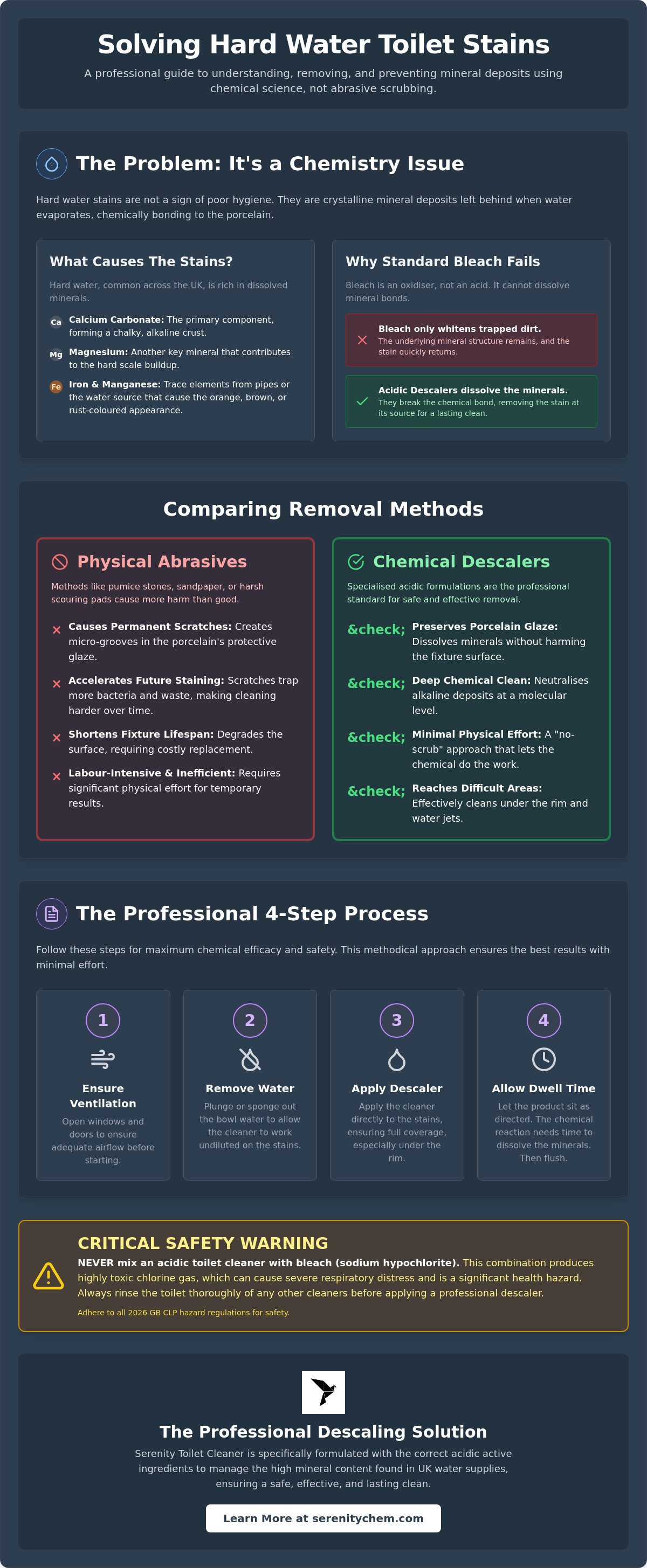
Many people reach for supermarket bleach to solve the problem, but bleach is an oxidiser, not a descaler. It is designed to kill bacteria and whiten organic pigments, but it cannot dissolve the alkaline bond of calcium. Using bleach on a hard water ring simply whitens the trapped dirt whilst leaving the mineral structure completely intact. Within a few days, the porous scale will trap fresh waste, and the stain will reappear.
Safety is a critical consideration when moving beyond standard cleaners. You must never mix bleach with a professional toilet cleaner for hard water stains. Most effective descalers are acidic, and when combined with chlorine-based bleach, they produce toxic chlorine gas. This is a significant health hazard that can cause immediate respiratory distress. Always ensure the bowl is thoroughly rinsed of any previous cleaning products before applying a professional-grade acidic solution.
Comparing Removal Methods: Chemical Descalers vs. Physical Abrasives
Many property managers and homeowners believe that removing a stubborn mineral ring requires aggressive physical force. Whilst sandpaper or pumice stones might provide immediate visual satisfaction, they often cause irreparable damage to the fixture. Professionals prioritise chemical descaling because it preserves the integrity of the porcelain whilst achieving a deeper level of cleanliness. Hard water is a persistent issue across many regions, and the goal should be a sustainable removal strategy rather than a destructive quick fix.
The Danger of Abrasive Cleaning
Using mechanical tools like pumice stones or heavy-duty scouring pads creates a hidden problem. These materials are often harder than the protective vitreous china glaze found on most toilets. As you scrub, you create thousands of micro-scratches on the surface. These tiny grooves act as a permanent home for bacteria and organic waste, making future staining happen significantly faster. For commercial facilities, this labour-intensive approach isn't just inefficient; it's a liability that shortens the lifespan of the hardware. Additionally, aggressive scrubbing near the flushing mechanism can damage delicate plastic or rubber seals, leading to silent leaks that can waste thousands of litres of water annually.
In mobile environments such as motorhomes, where seal integrity is even more critical for preventing leaks and odours, LeisureVan Service Solutions provides specialist mobile maintenance to ensure your vehicle's sanitation systems remain in optimal working order.
The Efficiency of Acidic Formulations
The professional standard involves using a specialised toilet cleaner for hard water stains that relies on precise chemistry rather than friction. Acidic formulations work by neutralising the alkaline minerals on contact, effectively breaking the bond between the calcium deposits and the porcelain surface. This "no-scrub" approach is far more effective for reaching difficult areas, such as the water jets under the rim where mineral build-up often restricts flushing power.
High-quality gel cleaners are particularly effective because they are designed to cling to vertical surfaces. This increased "dwell time" allows the active ingredients to penetrate thick layers of limescale without the need for constant reapplication. For janitorial staff, this translates to massive time savings and a more ergonomic workflow. You can apply the toilet cleaner for hard water stains, allow it to work, and simply flush away the dissolved deposits. If you are managing multiple facilities and need to ensure consistent, damage-free results, you might consider consulting with a technical expert regarding the best formulations for your specific water profile.
Choosing the Right Toilet Cleaner for Hard Water Stains
Selecting an effective toilet cleaner for hard water stains involves looking past the branding and scrutinising the active ingredient list. Professional-grade results depend on matching the specific chemical properties of the cleaner to the mineral density of your water supply. Whilst supermarket options often rely on diluted formulas, professional solutions use higher concentrations of specific acids to ensure the mineral bond is broken quickly and completely. This technical approach ensures that you aren't just moving dirt around, but actually dissolving the calcium and magnesium structures that hold the stain in place.
Active Ingredients That Actually Work
Professional labels typically feature one of three primary acidic agents. Phosphoric acid is often the preferred choice for commercial environments because it offers a professional balance of descaling power and surface safety. It's aggressive enough to dissolve thick limescale but remains more manageable for regular use than harsher mineral acids. This balance makes it a staple in high-traffic facilities where efficiency and fixture longevity are equally valued.
For lighter deposits or eco-conscious maintenance, citric and lactic acids are effective organic alternatives. These are safer to handle and biodegradable, though they may require longer contact times to achieve the same results. In extreme cases of long-term neglect, hydrochloric acid provides the necessary strength to move heavy mineral crust. However, it must be handled with extreme caution due to its corrosive nature. Removing hard water stains with these stronger acids requires strict adherence to dwell times to prevent etching the porcelain glaze or damaging the underlying material.
Safety and Surface Compatibility
The viscosity of your chosen cleaner is just as important as its chemical makeup. Liquid cleaners often run straight into the water trap, diluting the active ingredients before they can work on the stains above the waterline. Gel-based formulas are superior; they cling to the vertical surfaces of the bowl, allowing for the necessary dwell time to neutralise alkaline deposits effectively. This clinging action is particularly important for reaching the rim jets where mineral build-up often goes unnoticed.
You must also consider the surrounding hardware. Strong acids can cause immediate pitting or discolouration on chrome flush handles, stainless steel hinges, and even certain types of floor tiling if splashed. Professional products are designed to be used with precision, and understanding the pH level of your cleaner is vital for protecting these surfaces. A pH of 1 or 2 indicates a high-strength descaler that should be kept away from metal fittings, whereas a pH of 3 or 4 is generally safer for regular maintenance. This technical awareness separates professional janitorial standards from basic domestic cleaning and ensures the long-term protection of your bathroom assets.
A Professional Guide to Removing Stubborn Limescale
Safety is the foundation of any professional cleaning protocol. Before you begin, ensure the room is well-ventilated and that you are wearing appropriate personal protective equipment (PPE), including acid-resistant gloves and eye protection. Using a professional toilet cleaner for hard water stains requires a methodical approach to ensure the chemical works at its maximum concentration. Following a structured process prevents wasted product and ensures the porcelain remains in peak condition.
The "Dry Bowl" Technique
The most common reason professional descalers appear to fail is dilution. If you pour a high-performance chemical into a bowl full of water, you immediately reduce its potency. Professionals use a plunger to push the water over the trap, or "S-bend," creating a dry environment for the chemical to bond directly with the mineral scale. This technique ensures the active ingredients reach the very bottom of the trap where minerals often hide and accumulate. By eliminating the water buffer, you allow the toilet cleaner for hard water stains to attack the alkaline structure without interference. This step is what separates a superficial clean from a deep, professional restoration.
Dwell Time and Agitation
Once the bowl is dry, apply the gel specifically to the mineral ring and heavily under the rim jets. The science of contact time is vital; for most professional acidic formulations, 30 minutes is the professional sweet spot. This duration allows the acid to penetrate the crystalline layers of the limescale whilst preventing the product from drying out and becoming difficult to rinse. If the product dries, it can leave a film that requires additional effort to remove.
Whilst the chemical does the heavy lifting, a small amount of mechanical assistance is often beneficial. Use a non-scratch brush to gently disturb the softened minerals halfway through the dwell time. This helps the chemical penetrate deeper into the lower layers of the build-up. Avoid the temptation to use abrasive pads, as these will ruin the porcelain glaze and lead to faster re-staining. After the dwell time has elapsed, flush the toilet several times to rinse the bowl thoroughly. This ensures no acidic residue remains to irritate skin or damage the fixture. If you are managing a facility with decades of neglected build-up and require specific advice on application intervals, reach out to our technical advisors for a tailored maintenance plan. Final inspection should follow the final flush; for extreme cases, a second application may be necessary to remove the final remnants of the mineral "shadow."
Serenity Toilet Cleaner: The Professional Descaling Solution
Serenity Toilet Cleaner is engineered specifically for the unique challenges of British plumbing and infrastructure. It's featured prominently on our professional cleaning chemicals list because it bridges the gap between user safety and high-performance mineral removal. Whilst many supermarket brands rely on aggressive marketing, we focus on chemical integrity and technical efficacy. This toilet cleaner for hard water stains is formulated to handle the high mineral content found in water supplies across the UK, from the chalky deposits of the South East to the heavy limescale common in the Midlands.
The high-viscosity gel design is a deliberate choice for facility managers and homeowners alike. It ensures maximum dwell time on vertical surfaces, allowing the active ingredients to stay exactly where they're needed most. This prevents the product from simply sliding into the water trap, ensuring that every drop works to neutralise alkaline deposits. It's a solution that respects both your time and your budget by delivering results in a single, methodical application. It's safe for both commercial and domestic use when applied as directed, providing a reliable standard of care for any washroom environment.
Why Professionals Choose Serenity
Facility managers choose our formula because it prioritises the longevity of the porcelain. We've developed a chemical balance that aggressively attacks calcium carbonate without etching or dulling the protective glaze of the fixture. This principled approach to chemistry means you can achieve a "no-scrub" finish without the risk of creating micro-scratches that lead to faster re-staining. It's a dependable authority in washroom care, offering peace of mind that your assets are protected whilst remaining perfectly clean and hygienic for visitors and staff.
Maintaining a Limescale-Free Washroom
Consistency is the secret to preventing the return of stubborn brown rings and unsightly mineral build-up. Using Serenity Toilet Cleaner as a weekly maintenance tool prevents minerals from bonding to the surface in the first place, stopping the "stain magnet" effect before it starts. For a total washroom finish, pair our descaler with our specialised glass and mirror cleaner to ensure every surface, from the bowl to the vanity mirrors, remains crystal clear and streak-free.
Whether you're managing a single office or a large portfolio of commercial buildings, our toilet cleaner for hard water stains provides a reliable, ethical solution to a persistent problem. We offer bespoke support for bulk supply needs, ensuring your maintenance team always has the right tools for the job. If you have questions about specific application scenarios or safety protocols, our technical experts are available to provide direct, honest guidance tailored to your specific facility requirements.
Restoring Your Fixtures with Professional Precision
Effectively managing mineral build-up requires shifting your focus from aggressive scrubbing to precise chemical descaling. By understanding that these stubborn marks are alkaline crystalline structures, you can use targeted acidic solutions to dissolve them without risking the integrity of your porcelain. Remember that physical abrasives often cause permanent damage, whilst a high-performance toilet cleaner for hard water stains preserves the smooth, protective glaze of your fixtures for years to come.
Serenity Chemicals is a UK-based manufacturer trusted by commercial facilities nationwide to provide professional-grade acidic descaling formulas. Our solutions are designed to handle the toughest deposits whilst ensuring user safety and surface protection. If you're ready to move beyond ineffective supermarket bleaches and achieve a truly pristine washroom finish, we're here to help you select the right products for your specific needs. Shop Serenity Toilet Cleaner for Professional Results and regain confidence in the cleanliness of your facility. A sparkling, scale-free bathroom is well within your reach.
Frequently Asked Questions
Is it safe to use acidic toilet cleaners with a septic tank?
Acidic cleaners are generally safe for septic systems when used in moderation for periodic maintenance. Whilst these products are effective at descaling, pouring large volumes of high-strength acid into the system can disrupt the delicate bacterial balance required to break down waste. It's best to use a gel-based formula that stays in the bowl rather than a liquid that flushes away too quickly, and always check the manufacturer’s label for septic-safe confirmation.
Can I use a pumice stone and a chemical cleaner at the same time?
You shouldn't use a pumice stone and a chemical descaler simultaneously. The active ingredients in a professional toilet cleaner for hard water stains are designed to soften and dissolve minerals, making mechanical force unnecessary. Using a stone whilst the chemical is active significantly increases the risk of scratching the porcelain glaze, as the acid can react with the abrasive material and cause permanent surface damage.
How often should I descale my toilet in a hard water area?
A fortnightly descaling routine is usually sufficient for most properties in hard water regions. In high-traffic commercial facilities, a weekly application is often required to prevent minerals from bonding deeply with the porcelain. Establishing a regular schedule ensures that you only ever have to manage light surface deposits rather than thick, stubborn crusts that require intensive restoration work.
Why did my toilet turn brown again just a week after cleaning?
Stains often return quickly because the underlying mineral structure wasn't completely dissolved during the previous clean. If any porous limescale remains on the surface, it immediately begins trapping organic waste and bacteria again. This also happens if the porcelain has been previously scratched by abrasives, as the micro-grooves provide an ideal anchor for new mineral deposits to form and harden.
Will hard water cleaners damage the chrome parts of my toilet?
Strong acidic cleaners can cause permanent pitting or discolouration on chrome, stainless steel, and other metallic finishes. You should always avoid splashing these chemicals onto flush handles, hinges, or nearby taps. If a splash does occur, rinse the metal surface with plenty of fresh water immediately to neutralise the acid and protect the decorative finish from chemical burns.
What should I do if the hard water stain is below the water line?
To treat stains below the water line, you must remove the standing water using a plunger or a small container before application. Applying a toilet cleaner for hard water stains directly into a full bowl dilutes the active ingredients, rendering them ineffective against deep-seated minerals. Once the bowl is empty, apply the gel directly to the stain and allow it the necessary dwell time to break the alkaline bond.
Can I mix different toilet cleaners to make them stronger?
You must never mix different toilet cleaners, particularly acids and bleaches. Combining these chemicals can trigger a dangerous reaction that releases toxic chlorine gas, which is life-threatening if inhaled. Stick to a single professional-grade product for your descaling needs and ensure the bowl is rinsed thoroughly before you ever attempt to use a different type of cleaning agent.
How do I know if I have hard water in my area?
You can identify hard water by looking for chalky white build-up in your kettle or crusty deposits around the base of your bathroom taps. If your soaps don't lather easily or your glassware appears cloudy after a dishwasher cycle, these are also reliable indicators of high mineral content. For a technical measurement, you can consult your local water provider's website for a water hardness report based on your postcode.

Hand Sanitiser for Frequent Use: Professional UK Guide 2026
The very product you use to protect your health might be the primary cause of your skin's deterioration. While alcohol-based ...

Food Safe Antibacterial Spray UK: The Professional 2026 Hygiene Guide
Using the wrong disinfectant in a commercial kitchen isn't just a minor oversight; it's a direct threat to your Food Hygiene ...