

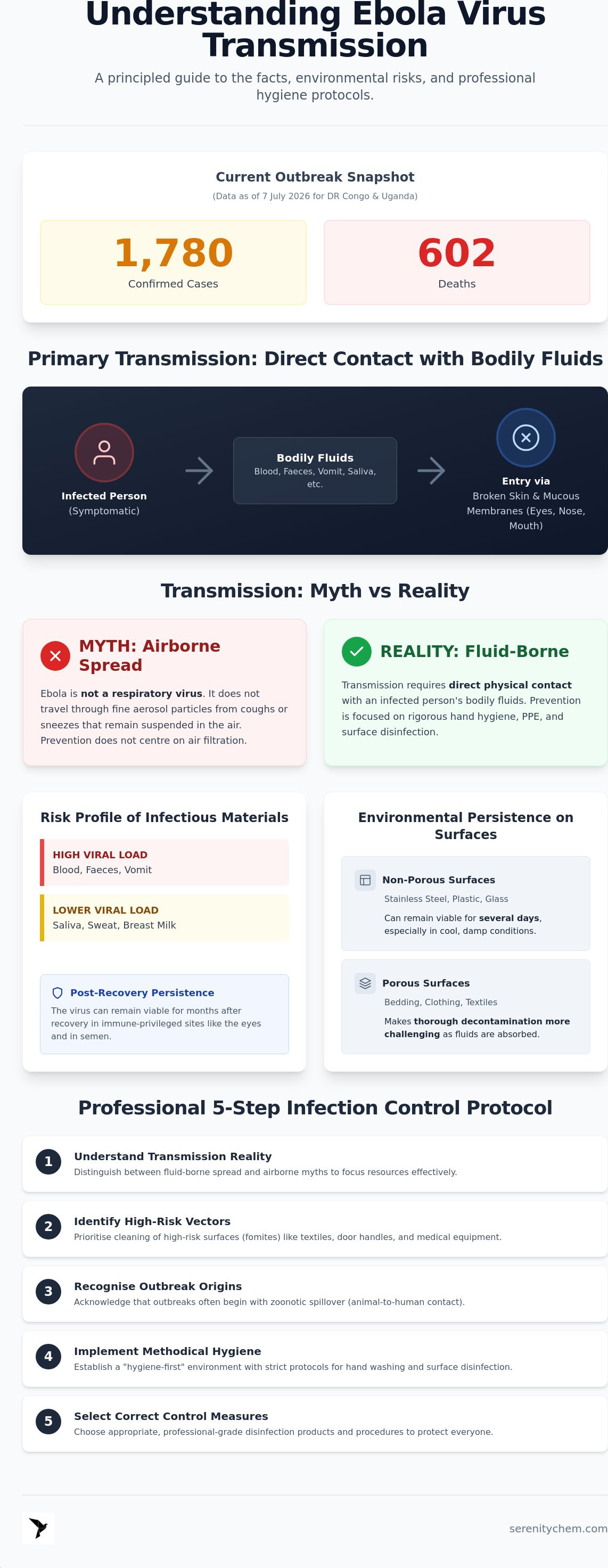
As of July 7, 2026, the current Ebola outbreak has recorded 1,780 confirmed cases and 602 deaths across the Democratic Republic of the Congo and Uganda. These figures are a stark reminder of the virus's impact; however, much of the public anxiety stems from a lack of clear information regarding exactly how is ebola transmitted. It's natural to feel concerned about environmental safety, especially when there is confusion between respiratory spread and the specific fluid-borne pathways that characterise this virus.
You deserve a reliable, principled guide that replaces uncertainty with expert-led clarity. We promise to help you understand the precise mechanics of viral transfer and the rigorous hygiene protocols required to secure your premises. Whilst the Bundibugyo strain currently affecting East Africa requires a heightened level of vigilance, we'll preview the essential steps to identify high-risk surfaces and establish a robust infection control strategy. You'll gain the confidence to manage risks effectively through methodical cleaning and professional-grade protection.
Key Takeaways
- Distinguish between respiratory myths and the biological reality of how is ebola transmitted through direct contact with infected bodily fluids.
- Identify high-risk environmental vectors, such as textiles and hard surfaces, where the virus can persist as a contaminating fomite.
- Recognise the secondary factors and zoonotic spillover events that lead to the initial introduction of the virus into human populations.
- Implement a methodical five-step protocol to establish a "hygiene-first" environment and maintain professional safety standards.
- Gain practical insights into selecting the correct infection control measures to protect your staff, clients, and the wider community.
Understanding the Primary Transmission Routes of Ebola
Ebola virus disease (EVD) is a severe, often fatal illness caused by infection with a group of viruses known as orthoebolaviruses. It is a zoonotic infection. This means it originates in animals and spills over into human populations through contact with infected wildlife. Once an initial infection occurs, the virus spreads through specific, direct interactions between people.
Understanding exactly how is ebola transmitted is the first step in establishing a safe environment. Unlike some pathogens that linger in the air, Ebola requires direct contact with the blood or other bodily fluids of an infected person. This contact must occur through broken skin or mucous membranes; these include the eyes, nose, and mouth. Without this direct entry, the virus cannot take hold.
It's vital to recognise that a person is not infectious during the incubation period. Transmission only becomes a risk once the individual begins to show symptoms. This window of time allows for targeted monitoring and isolation before the virus can spread further amongst the community. Early detection is a cornerstone of effective containment.
The Role of Bodily Fluids in Human-to-Human Spread
Not all fluids carry the same viral load. Blood, faeces, and vomit are considered high-load fluids. They contain the highest concentrations of the virus and pose the most significant risk to carers or cleaning professionals. Other fluids like saliva, sweat, and breast milk also carry the virus, though often at lower levels. Even a small amount of high-load fluid can be enough to cause an infection if it reaches an entry point.
A unique challenge in infection control is the persistence of the virus in immune-privileged sites. Even after a patient has recovered and the virus is cleared from their blood, it can remain in areas like the eyes or semen for months. This makes long-term vigilance and clear communication with survivors a priority for community safety. It's a reminder that recovery doesn't always mean the end of the risk period.
Why Ebola is Not a Respiratory Virus
There is often significant anxiety regarding the potential for Ebola to spread through the air like influenza or COVID-19. However, EVD is not a respiratory virus. It doesn't travel through tiny droplets that hang in the air after someone coughs or sneezes. Being in the same room as an infected person is generally low risk, provided there is no physical contact and no exposure to contaminated fluids.
Clarifying the distinction between respiratory spread and how is ebola transmitted is essential for any effective safety protocol. Addressing the misconception of airborne Ebola helps to reduce unnecessary panic and allows organisations to focus their resources on the real threats. Effective prevention centres on rigorous hand hygiene and the thorough disinfection of surfaces rather than air filtration systems. By focusing on the biological reality of the virus, we can implement more precise and effective safety measures.
Environmental Persistence: The Role of Contaminated Objects (Fomites)
While direct person-to-person interaction is a major concern, the role of inanimate objects in spreading the virus cannot be overlooked. These objects, known as fomites, become contaminated when they come into contact with the bodily fluids of an infected person. Understanding this pathway is essential to grasping the full scope of how is ebola transmitted in both clinical and domestic environments. High-risk materials include textiles such as bedding and clothing, as well as hard surfaces like door handles, bed rails, and medical instruments.
To further mitigate exposure risks when handling patients in clinical settings, many facilities utilise specialised mechanical aids; you can learn more about RIHA Industries and their advanced patient transfer and bed moving systems designed for the healthcare sector.
Orthoebolaviruses are particularly resilient in specific conditions. They tend to survive longer in cool, damp environments where they are shielded from desiccation. In professional healthcare or clinical settings, "sharps" such as needles represent a critical hazard. Even a microscopic trace of blood on a needle can lead to infection through direct contact with infected body fluids. This makes the management of medical waste a primary pillar of any infection control strategy.
Survival Times on Porous vs Non-Porous Surfaces
The physical characteristics of a surface significantly influence viral longevity. On non-porous materials like stainless steel or plastic, the virus can remain viable for several days, especially if it's embedded within organic matter like blood or mucus. Porous materials, such as cotton or polyester, may absorb the fluids; this often reduces the amount of virus available on the surface but makes thorough decontamination more difficult. Environmental factors like high temperatures and direct UV light are natural enemies of the virus, as they accelerate the degradation of the viral envelope. Under strictly controlled laboratory conditions, orthoebolaviruses have shown the ability to persist on surfaces for up to six days.
Managing Contaminated Waste and Laundry
Rigorous decontamination of shared equipment and laundry is a non-negotiable requirement for safety. Cleaning staff face significant risks during these processes and must be equipped with appropriate personal protective equipment (PPE) to avoid accidental exposure. For high-traffic areas and frequently touched objects, it's vital to utilise a high-specification hard surface sanitiser that meets professional standards. Establishing a clear, documented cleaning schedule helps ensure that no surface is missed. If you require guidance on implementing these measures, you can speak with our safety consultants to discuss the specific needs of your facility.
Zoonotic Spillover and Secondary Transmission Factors
The journey of the Ebola virus into human communities begins with what scientists call a "spillover event". This occurs when a person comes into direct contact with the blood, secretions, or organs of an infected animal. In many affected regions, high-risk activities such as hunting, butchering, and the preparation of "bushmeat" from the forest are the primary drivers of these initial cases. Understanding these environmental origins is a vital part of learning how is ebola transmitted on a global scale. Whilst the virus originates in wildlife, these initial encounters can quickly escalate into human-to-human outbreaks if they are not met with immediate and principled safety measures.
Beyond the initial spillover from animals, certain social and cultural activities act as powerful secondary transmission factors. Traditional burial ceremonies represent one of the most significant risks in an outbreak. During these rituals, mourners may have direct contact with the body of the deceased, which often carries an extremely high viral load at the time of death. These practices can lead to rapid clusters of infection within families and communities. Consequently, the implementation of safe and dignified burial protocols has become a critical component of international infection control measures designed to break the chain of transmission.
Animal Reservoirs and Geographic Risks
African fruit bats are widely considered the natural reservoir for orthoebolaviruses. These bats carry the virus without becoming ill themselves, but they can pass the pathogen to other wildlife through shared food sources or nesting areas. Non-human primates, such as gorillas and chimpanzees, as well as forest antelopes, often serve as intermediate hosts before the virus reaches humans. Although the direct risk to the UK population remains very low, the reality of global travel means that health professionals must maintain a sharp awareness of these geographic risks. Understanding the biological origins of the disease is essential for anyone involved in international health or logistics.
Persistence in Recovered Individuals
Recovery from the acute phase of the illness does not always signify that the virus has been entirely eradicated from the body. The virus has a documented ability to linger in "immune-privileged" sites, such as the eyes or the central nervous system, where the body's natural immune response is less active. This persistence is particularly notable in semen, where the virus can remain viable for several months post-recovery. Because of this, it is essential to understand how is ebola transmitted through sexual contact even after a patient appears healthy. For those in close contact with survivors, maintaining strict hand hygiene and following professional guidance on protective barriers is a necessary, responsible step for long-term community safety.
Professional Infection Control: Methods to Prevent Spread
Establishing a robust defence against viral outbreaks requires a methodical approach that goes beyond basic cleaning. By understanding how is ebola transmitted, organisations can implement a hierarchy of controls to mitigate risk effectively. This framework prioritises elimination and engineering controls, such as physical barriers and waste management systems, followed by administrative protocols like staff training and rigorous hygiene schedules. When these layers are applied consistently, they create a formidable barrier against environmental contamination.
A "hygiene-first" environment is built upon a principled 5-step protocol:
- Risk Assessment: Identify high-traffic touchpoints and potential exposure zones within the facility.
- Physical Isolation: Use engineering controls to separate clean zones from areas where contamination is likely.
- Hand Hygiene: Implement mandatory sanitisation stations at every entry and exit point to break the transmission chain.
- Surface Sterilisation: Use validated virucidal agents on all hard and soft surfaces according to a strict schedule.
- Waste Oversight: Secure the disposal of all potentially hazardous materials to prevent secondary exposure.
Hand Hygiene Protocols for High-Risk Environments
Hand hygiene remains the most effective way to break the chain of transmission. Whilst traditional soap and water are effective for removing organic soil, they aren't always accessible in fast-moving professional environments. In these instances, high-specification hand rubs provide a reliable alternative. For staff who must sanitise frequently, using an alcohol-free hand sanitiser offers a way to maintain skin integrity without compromising on antiviral efficacy. To ensure full protection, the sanitiser must be applied to all surfaces of the hands and rubbed until completely dry, ensuring no area is neglected.
Surface Disinfection and Chemical Efficacy
Effective surface management requires chemical solutions that are specifically tested against enveloped viruses. Any professional cleaning chemicals list should be scrutinised to ensure products meet EN 14476 standards. This certification guarantees that the agent has the virucidal power necessary to neutralise pathogens on contact. We recommend a "two-stage" cleaning process: first, use a detergent to remove visible dirt and organic matter; second, apply the disinfectant to the pre-cleaned surface. This ensures the chemical can work directly on the virus without being blocked by debris. If you need assistance in auditing your current protocols, you can contact our technical team for a professional consultation regarding your infection control strategy.
Maintaining Rigorous Hygiene Standards in Professional Settings
Proactive hygiene management in 2026 is a hallmark of operational integrity. As we've explored, the mechanics of how is ebola transmitted are specific and manageable when met with the correct technical knowledge. By focusing on direct contact pathways and environmental persistence, facility managers can replace general anxiety with a targeted, effective safety strategy. Serenity Chemicals Limited stands as a dedicated partner in this mission, providing the professional-grade tools and guidance necessary to maintain a secure environment for staff and the public alike.
Our commitment to ethical responsibility is reflected in every solution we develop. Whilst the current risk level within the UK remains low, the mark of a principled business is its level of preparedness. High-performance infection control isn't merely a response to an active threat; it's a permanent standard of care that protects your reputation and the well-being of everyone who enters your premises. By implementing these rigorous standards now, you ensure that your organisation is resilient against both known and emerging viral challenges.
The Importance of UK-Manufactured Solutions
Sourcing your supplies from a cleaning products manufacturer in the UK offers significant advantages for critical hygiene management. Local production ensures a shorter, more reliable supply chain, which is vital when global demand for infection control products fluctuates. At Serenity Chemicals Limited, we prioritise the development of high-performance, alcohol-free formulations that don't compromise on efficacy. These products, such as our Serenity Alcohol Free Hand Sanitiser, are designed to be used frequently without causing the skin irritation often associated with traditional alcohol-based rubs. This focus on user comfort encourages better compliance with hygiene protocols amongst your workforce.
Next Steps for Facility Managers
The first step toward enhanced safety is a comprehensive review of your current COSHH assessments and hygiene stocks. Ensure that your inventory includes virucidal agents that are specifically validated against enveloped viruses. We recommend the following actions for immediate implementation:
- Audit your chemical list: Verify that your surface sprays and sanitisers meet the EN 14476 standard for antiviral protection.
- Staff Training: Conduct sessions on the "two-stage" cleaning process and the correct application of hand sanitisers to eliminate user error.
- Update Protocols: Integrate the latest WHO clinical management guidelines into your internal safety handbooks.
We invite you to explore the full range from Serenity Chemicals Limited to find the specific solutions that fit your facility's needs. From our Serenity Antibacterial Surface Spray to our heavy-duty degreasers, every product is manufactured to our exacting standards. By choosing a partner that values integrity and technical precision, you can be certain that your approach to how is ebola transmitted is backed by the best in professional infection control. Your safety is our priority, and we're here to help you navigate these challenges with quiet confidence.
Securing Your Facility with Principled Infection Control
Grasping the biological reality of how is ebola transmitted allows for the implementation of precise, effective safety protocols. By focusing on direct contact pathways and environmental persistence, you can mitigate risks without falling into the trap of unnecessary panic. Our discussion has highlighted that whilst the virus is resilient on certain materials, it remains highly susceptible to validated chemical interventions and rigorous hand hygiene.
Serenity Chemicals Limited provides solutions that are UK-manufactured in our own facility and specifically formulated to meet EN 14476 standards. These products are already used by professional facilities across the UK to maintain the highest levels of safety and integrity. We invite you to explore Serenity’s range of professional antiviral sanitisers to strengthen your facility's infection control strategy. Taking these steps now ensures your business operates with the foresight and responsibility required in a modern, globalised landscape. You can move forward with the confidence that your staff and visitors are in principled hands.
Frequently Asked Questions
Can Ebola be transmitted through the air?
No, Ebola is not an airborne virus. Unlike influenza or COVID-19, it doesn't spread through tiny droplets suspended in the air. Transmission requires direct contact with infected bodily fluids. This distinction is vital for understanding how is ebola transmitted and helps prevent unnecessary panic in professional environments. Protective measures should focus on physical barriers and surface hygiene rather than air filtration.
How long does the Ebola virus live on surfaces?
The virus can survive on surfaces for several days under specific conditions. In cool, damp, and dark environments, it persists longer, particularly if it's protected by organic matter like blood or mucus. Research suggests survival for up to six days in controlled laboratory settings. Regular disinfection with professional-grade virucidal agents is essential to neutralise these environmental risks effectively.
Is it safe to use alcohol-free hand sanitiser against viruses?
Yes, provided the formulation is specifically tested and validated against enveloped viruses. Alcohol-free sanitisers that meet EN 14476 standards are highly effective at disrupting the viral envelope of pathogens like Ebola. These solutions are often preferred for frequent use in professional facilities as they maintain skin integrity whilst providing robust protection. They offer a principled alternative for staff who requires constant hand hygiene.
What are the first symptoms of an Ebola infection?
Initial symptoms typically include a sudden fever, intense fatigue, muscle pain, and a sore throat. These early signs are often followed by vomiting, diarrhoea, and in some cases, internal and external bleeding. Because these symptoms mimic other tropical diseases, immediate clinical assessment is necessary for anyone travelling from affected regions. Early detection is a cornerstone of the July 2026 public health response.
Can you catch Ebola from someone who does not have a fever?
No, individuals are generally only infectious once they begin to show symptoms. During the incubation period, which ranges from 2 to 21 days, the viral load is not high enough for transmission. A person must be symptomatic, often starting with a fever, for the virus to be passed to others through bodily fluids. This allows for the effective monitoring of potential contacts before they become a risk.
What should I do if I suspect I have been exposed to Ebola?
You should immediately isolate yourself and contact local health authorities via telephone. Do not visit a GP surgery or A&E department without prior notification to prevent accidental exposure to others. Following the July 2026 CDC and WHO guidelines, early supportive care significantly improves survival rates. Informing medical staff of your travel history is a critical step in the assessment and containment process.
Is there a vaccine available for Ebola in 2026?
As of July 2026, there is no licensed vaccine specifically for the Bundibugyo strain currently affecting the DRC and Uganda. Whilst the ERVEBO vaccine is approved for the Zaire ebolavirus, it doesn't protect against the current outbreak. Public health efforts currently focus on contact tracing and rigorous infection control measures. Research into new treatments is ongoing following the WHO clinical guidelines released in June 2026.
How does Ebola transmission differ from the flu?
The primary difference lies in the route of entry and the level of infectivity. The flu is highly contagious through respiratory droplets in the air. In contrast, understanding how is ebola transmitted reveals it's less contagious but far more lethal. It requires physical contact with contaminated fluids rather than simply sharing the same breathing space. This makes targeted surface disinfection and hand hygiene the most effective preventative measures.

Hand Sanitiser for Frequent Use: Professional UK Guide 2026
The very product you use to protect your health might be the primary cause of your skin's deterioration. While alcohol-based ...

Food Safe Antibacterial Spray UK: The Professional 2026 Hygiene Guide
Using the wrong disinfectant in a commercial kitchen isn't just a minor oversight; it's a direct threat to your Food Hygiene ...