

What if the very chemicals you rely on to sanitise your facility are quietly compromising your most expensive assets? It's a common dilemma for UK gym operators; you want to eliminate persistent odours and bacteria, yet harsh disinfectants often lead to cracked bench upholstery and tarnished fixtures. Learning how to clean gym changing rooms effectively requires a delicate balance between rigorous antimicrobial hygiene and long-term material preservation.
We understand that maintaining member trust in communal spaces is a significant challenge, especially with the 2026 transition to EN 14476:2025 standards and updated GB MCL labelling requirements. This guide promises to help you master a professional hygiene protocol that protects both member health and your facility's financial health whilst ensuring full regulatory compliance. We'll examine the technical requirements for residual protection, the necessity of alcohol-free formulations for surface integrity, and the operational shifts needed to reduce maintenance costs. By the end of this guide, you'll have a clear, standardised framework for achieving high-traffic hygiene without sacrificing your facility's aesthetic standards.
Key Takeaways
- Identify why high-moisture gym environments require specific chemical interventions to dismantle stubborn sweat and sebum biofilms.
- Protect your facility assets by using alcohol-free sanitisers that prevent plasticiser migration and the premature cracking of vinyl upholstery.
- Implement a standardised, professional protocol for how to clean gym changing rooms that prioritises ventilation and high-level hygiene.
- Verify that your cleaning solutions meet the latest UK compliance standards, including EN 1276 for bacteria and EN 14476 for virucidal efficacy.
- Optimise your operational budget by sourcing directly from a UK manufacturer to ensure batch consistency and professional-grade results.
The Unique Hygiene Challenges of Fitness Changing Rooms
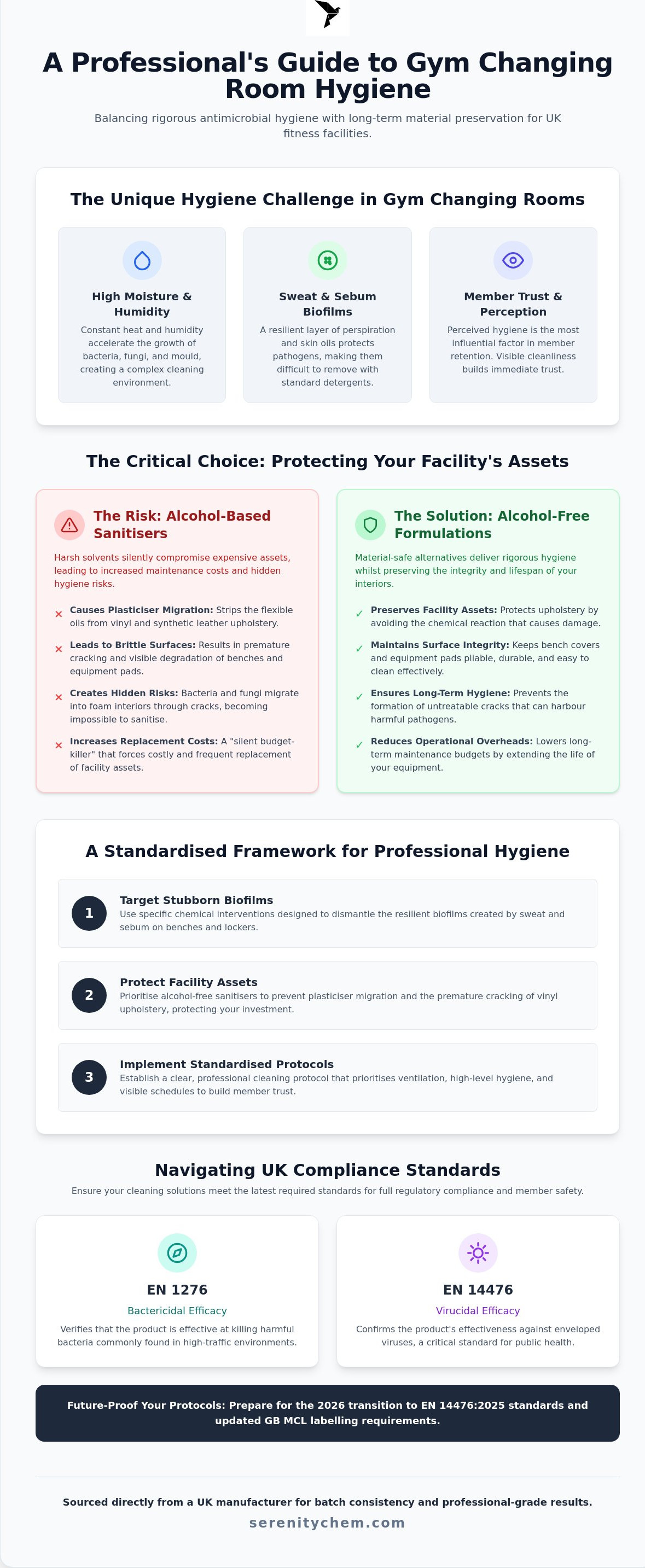
Fitness changing rooms present a complex cleaning environment that differs significantly from standard office or retail spaces. These areas are high-moisture zones where heat and humidity constantly accelerate the growth of bacteria, fungi, and mould. When considering how to clean gym changing rooms, operators must look beyond surface-level aesthetics. The daily influx of hundreds of members creates a constant cycle of pathogen transfer across communal touchpoints like locker handles, shower taps, and door plates. For many UK fitness facilities, the changing room is the primary area where member retention is won or lost; research consistently shows that perceived hygiene is the single most influential factor in a member's decision to renew their subscription.
The Bio-burden of Sweat and Humidity
The combination of perspiration and skin oils, known as sebum, creates a resilient biofilm on benches and locker surfaces. This biofilm acts as a protective layer for pathogens, making them remarkably difficult to remove with standard detergents alone. High humidity levels in shower areas further complicate the issue, providing the ideal climate for the spread of fungal infections such as athlete’s foot and ringworm. Porous surfaces, including certain types of grout or older bench materials, can trap these microorganisms deep within their structure if they aren't treated with professional, deep-penetrating sanitisers. To truly manage this environment, it's helpful to understand what are disinfectants and why their chemical composition must be strong enough to break down organic matter whilst remaining safe for frequent skin contact. Relying on products that merely mask odours with heavy fragrances is a common mistake; true hygiene requires neutralising the bacteria that cause the smell at the source.
Member Psychology and Hygiene Visibility
Maintaining a clean facility is only half the battle; members must also perceive that the environment is safe. Visible cleanliness builds immediate trust and protects your brand's reputation. One effective strategy is to communicate your cleaning schedule through clear, professional signage or digital displays. This transparency reassures members that hygiene is a priority, even if they don't see the staff in action. The presence of high-quality chemical dispensers and wall-mounted sanitisers also serves as a psychological cue of professional-grade care. For areas requiring specialised textile care, partnering with experts like carpetcleaninginstockport.co.uk demonstrates a commitment to deep-level hygiene that goes beyond surface-level cleaning. When members see that you've invested in specialised solutions rather than supermarket-grade cleaners, their confidence in your facility increases. Standardising how to clean gym changing rooms with a visible, methodical approach ensures that your team meets high expectations every single day, turning hygiene into a competitive advantage for your business.
Alcohol-Free vs Alcohol-Based Sanitisers: Protecting Your Assets
When managing a high-traffic fitness centre, the choice of disinfectant determines more than just hygiene levels; it dictates the longevity of your facility's interior. Many operators believe that high-percentage alcohol is the only way to ensure safety. However, understanding how to clean gym changing rooms without damaging expensive upholstery is vital for operational efficiency. Alcohol-based cleaners often cause "plasticiser migration," a chemical reaction where the solvent strips away the flexible oils in vinyl and synthetic leather. This leads to brittle, cracked seating that eventually requires costly replacement. To avoid these unnecessary overheads, you can speak with a specialist about transitioning to material-safe, alcohol-free alternatives.
Preventing Upholstery Degradation
Plasticiser migration is a silent budget-killer for UK leisure facilities. As alcohol evaporates, it draws out the chemical softeners that keep bench covers pliable. Once these materials become brittle, they develop hairline fractures that are impossible to sanitise effectively. Bacteria and fungi migrate into the foam interior, where they remain shielded from surface-level cleaning. By following established UK government cleaning protocols, you can ensure your staff use colour-coded, non-corrosive solutions that preserve the aesthetic appeal of your space. Using Serenity Multi-Surface Cleaner ensures that your premium benches remain soft and intact, maintaining member trust whilst significantly reducing long-term maintenance costs.
The Advantage of Residual Protection
The most innovative aspect of modern alcohol-free chemistry is residual antimicrobial protection. Unlike alcohol, which stops working the moment it dries, non-volatile biocides stay active on the surface. This creates a "latent protection" barrier that continues to kill pathogens amongst high member turnover. These barriers can even be re-activated by moisture; when a member sits on a bench, the slight moisture from sweat triggers the antimicrobial properties once more. Implementing these advanced solutions changes the fundamental approach to how to clean gym changing rooms by moving from reactive sanitisation to proactive surface management. Residual efficacy is formally defined under the BS EN 13697 standard as the ability of a disinfectant to maintain a significant reduction in microbial populations on a surface over a specified period after the initial application.
This steady, purposeful approach to hygiene provides peace of mind for both management and members. It ensures that your facility remains compliant with the highest UK standards without compromising the integrity of your physical assets.
The Professional Step-by-Step Changing Room Cleaning Protocol
Establishing a professional standard for how to clean gym changing rooms begins with a systematic clearance. Staff should remove all abandoned items and waste first to ensure every surface is accessible. High-level dusting follows; cleaning ventilation grilles is a critical step to manage humidity and maintain air quality, preventing the damp atmosphere that encourages microbial growth. By following a structured sequence, you ensure that no area is overlooked and that cleaning efforts aren't compromised by falling dust or debris.
Zone 1: Lockers and Communal Benches
Communal benches and lockers require meticulous attention due to frequent skin contact. Locker handles and internal surfaces often house damp sports kit, creating a breeding ground for pathogens. When using a professional antibacterial surface spray UK, it's essential to allow for the full contact time specified on the label to ensure a total bacterial kill. To prevent cross-contamination, your team should implement a strict microfibre colour-coding system. Using blue cloths for general surfaces like lockers and yellow for sinks ensures that bacteria from higher-risk areas aren't transferred to seating zones.
Zone 2: Showers, Toilets, and Wet Areas
Showers and toilets are the highest-risk zones for bio-burden in any fitness facility. Staff must focus on removing "pink mould" and limescale build-up, as these mineral deposits provide a physical scaffold for more dangerous bacteria to thrive. Regular sanitisation of shower heads is also necessary to mitigate the risk of water-borne pathogens. Following UK Health and Safety Executive guidance ensures your facility meets the legal requirements for washing facilities and general cleanliness. Using specialised solutions like Serenity Toilet Cleaner helps maintain a pristine appearance even in hard water areas, removing the body fats and soap scum that traditional cleaners often miss.
For facilities looking to go beyond hygiene and offer a premium experience, integrating wellness-focused bathroom accessories from ITAMILANO can help maintain cleaner shower environments by reducing the mineral deposits that often harbour bacteria.
Zone 3: Flooring and Drainage
The final stage of the protocol involves flooring and drainage. Bacteria and odours frequently reside deep within grout lines, so these areas require regular scrubbing with a heavy-duty solution. Sourcing from a reliable commercial floor cleaner supplier allows you to access no-rinse formulations that maintain slip-resistant safety standards whilst saving significant labour time. Finally, organising a weekly "drain flush" with Serenity Heavy Duty Degreaser will eliminate the stagnant odours that often plague communal shower blocks. This methodical approach to how to clean gym changing rooms guarantees a hygienic environment that supports member retention and facility safety.
Compliance and Safety: Understanding EN 1276 and EN 14476
Professional hygiene in the fitness sector relies on technical legitimacy rather than marketing slogans. When evaluating how to clean gym changing rooms, operators must prioritise chemical efficacy that is backed by specific European Standards (EN). The most fundamental of these is EN 1276, which proves a solution's bactericidal activity. For a product to pass this standard, it must achieve a 5-log reduction (killing 99.999% of bacteria) within a specific contact time, even in "dirty" conditions where organic matter like sweat is present. Relying on products that lack these certifications puts your members at risk and leaves your facility vulnerable during health and safety audits.
While EN 1276 handles bacteria, it does not guarantee protection against viruses. This is where EN 14476 becomes essential. This standard ensures that a sanitiser is effective against enveloped viruses, including influenza and coronaviruses. In a communal changing environment, virucidal efficacy is a non-negotiable requirement for member safety. It's a common misconception that a "99.99% kill rate" claim is sufficient; without the specific EN 14476 certification, there is no verified proof that the chemical can neutralise viral pathogens in a leisure setting.
Decoding Bactericidal vs. Antiviral Standards
A standard antibacterial spray often fails to provide the comprehensive protection needed in high-moisture changing areas. Modern pathogen strains require 2026-compliant testing to ensure the chemistry remains effective as microorganisms evolve. As of April 2026, the updated EN 14476:2025 standard has become the benchmark for virucidal activity in the UK. Before committing to bulk purchases, always request a supplier’s independent test certificates. Verifying these documents ensures your protocol for how to clean gym changing rooms is built on a foundation of proven science rather than unverified claims.
COSHH and Staff Safety in Bulk Handling
Compliance also extends to how your team handles these concentrated solutions. Under the Control of Substances Hazardous to Health (COSHH) regulations, you must provide clear COSHH information for cleaning chemicals to all staff members. This includes training on safe decanting practices when moving product from 5L or 20L containers into trigger sprays. To maintain a safe workplace, you should:
- Ensure all secondary containers are correctly labelled with updated GB MCL-compliant safety data.
- Provide easy access to Safety Data Sheets (SDS) for every product on your premises.
- Maintain an up-to-date professional cleaning chemicals list for annual health and safety audits.
Proper documentation doesn't just satisfy legal requirements; it empowers your staff to work with confidence and precision. If you need assistance in aligning your facility with the latest UK safety standards, you can contact our technical team for expert guidance on chemical compliance.
Operational Efficiency: Why Sourcing Direct from a UK Manufacturer Wins
Moving beyond the technical steps of how to clean gym changing rooms, operators must consider the logistical backbone of their hygiene strategy. Sourcing your supplies directly from a UK manufacturer like Serenity Chemicals Limited offers significant advantages over third-party retail platforms. When you buy direct, you're guaranteed batch consistency and chemical integrity that resellers simply cannot verify. This ensures that every litre of Serenity Floor Cleaner or Serenity Multi-Surface Cleaner performs exactly as specified in your COSHH assessments whilst maintaining the highest safety standards. Additionally, sourcing British-made solutions reduces the carbon footprint of your facility, aligning your operations with the increasing demand for sustainable business practices in the UK leisure sector.
The Economics of Bulk Refills
One of the most immediate benefits of direct sourcing is the reduction in your "cost per clean." Switching from single-use trigger bottles to 5L or 20L bulk refills significantly lowers the unit price of your chemicals. For large-scale leisure centres, the logistical advantages of high-capacity storage mean fewer deliveries and a more organised supply room. This shift also plays a vital role in corporate sustainability goals; by reusing existing spray bottles and decanting from bulk containers, your facility can reduce plastic waste by a substantial margin. It's a principled approach that values long-term fiscal health alongside environmental responsibility.
Supply Chain Resilience and Technical Support
In a landscape of shifting regulations, choosing a cleaning products manufacturer in the UK provides a level of supply chain resilience that international resellers can't match. Shorter lead times mean you won't be left without essential supplies amongst high member turnover. Beyond the products themselves, a direct relationship with the chemical blender gives you immediate access to technical experts. Whether you need bespoke advice on how to clean gym changing rooms with unique material challenges or require urgent assistance with updated Safety Data Sheets (SDS), having a principled partner ensures your facility remains compliant and safe.
Mastering changing room hygiene requires more than just a checklist; it requires the right chemical partner. Contact Serenity Chemicals Limited for professional bulk sanitisation solutions today to secure the integrity of your facility and the trust of your members.
Future-Proofing Your Facility Hygiene
Mastering how to clean gym changing rooms is an ongoing commitment to both member safety and asset protection. By moving away from aggressive, alcohol-based cleaners, you ensure the longevity of your upholstery whilst maintaining a sterile environment. Implementing a structured protocol that prioritises EN-certified efficacy ensures your facility remains compliant with the latest 2026 standards, providing your members with the peace of mind they expect from a premium fitness space.
Sourcing your hygiene solutions directly from a UK manufacturer guarantees batch consistency and provides the technical support necessary for complex facility management. Our alcohol-free formulations are specifically designed to extend the life of your equipment whilst meeting rigorous EN 1276 and EN 14476 requirements. This principled approach to hygiene doesn't just reduce maintenance costs; it builds long-term trust with your community. We understand the challenges of high-traffic environments and provide the tools needed to maintain them with quiet confidence.
Ready to optimise your cleaning protocol? Request a wholesale quote for bulk gym sanitiser and cleaning solutions to experience the benefits of professional-grade, British-made chemistry. We're here to help you maintain a pristine, high-performance environment for every member who walks through your doors.
Frequently Asked Questions
Is alcohol-free sanitiser strong enough for a busy gym changing room?
Yes, professional alcohol-free sanitisers are highly effective against a broad spectrum of bacteria and viruses. When these formulations are tested to EN 1276 and EN 14476 standards, they provide equivalent or superior protection compared to alcohol-based products. A significant benefit is their residual efficacy; they create a protective barrier that continues to work long after the surface has dried, unlike alcohol which stops working once it evaporates.
How often should gym changing rooms be deep cleaned?
High-traffic changing rooms require a full deep clean at least once per day, typically during off-peak hours or overnight. In addition to this daily schedule, "touchpoint cleaning" of benches, locker handles, and taps should occur every 2 to 4 hours based on member volume. Implementing a protocol for how to clean gym changing rooms that includes residual sanitisers can help maintain high hygiene levels between these scheduled staff interventions.
Will professional cleaning chemicals damage my gym benches?
Damage only occurs if you use unsuitable chemicals like bleach or alcohol-based sanitisers. These harsh substances cause plasticiser migration, stripping the flexible oils from vinyl and leather upholstery until the material becomes brittle and cracks. By choosing alcohol-free, pH-neutral sanitisers from a specialist UK manufacturer, you can ensure your equipment remains in excellent condition whilst staying perfectly hygienic for your members.
What are the essential EN standards for gym sanitisers in 2026?
The two non-negotiable standards are EN 1276 for bactericidal efficacy and EN 14476 for antiviral protection. You should also look for EN 13697, which covers surface disinfection testing for non-porous materials. Always verify that your supplier can provide up-to-date test certificates for these standards. This ensures your facility remains fully compliant with UK health and safety expectations and protected against modern pathogen strains.
How can I reduce the cost of cleaning supplies for my leisure centre?
Transitioning from single-use trigger sprays to bulk refill systems is the most effective way to lower your operational costs. Purchasing 5L or 20L containers directly from a UK manufacturer reduces the cost per litre and minimises plastic waste. Using concentrated formulas that allow for on-site dilution can also improve efficiency by reducing storage requirements and delivery frequency, providing a more sustainable and economical hygiene strategy.
What is the best way to eliminate locker room odours?
True odour control requires killing the bacteria thriving in damp grout or porous surfaces rather than simply masking the smell with fragrance. You should use a professional-grade sanitiser that neutralises odour-causing microorganisms at the source. Regular cleaning of drainage systems and maintaining adequate ventilation are also essential steps. This comprehensive approach ensures a fresh environment that supports member satisfaction and trust in your facility.

Hand Sanitiser for Frequent Use: Professional UK Guide 2026
The very product you use to protect your health might be the primary cause of your skin's deterioration. While alcohol-based ...

Food Safe Antibacterial Spray UK: The Professional 2026 Hygiene Guide
Using the wrong disinfectant in a commercial kitchen isn't just a minor oversight; it's a direct threat to your Food Hygiene ...