

The harshest chemical in your cleaning cupboard might actually be the greatest hidden threat to your patients' recovery. While traditional "bleach-everything" methods were once the industry standard, modern biosecurity requires a more nuanced and responsible approach. We understand that managing veterinary practice cleaning protocols is a constant balancing act. You need to eliminate resilient pathogens like Parvovirus and MRSA, yet you must also protect your staff from skin irritation and ensure your clinic remains a safe, non-toxic environment for every animal that walks through the door.
It's a significant challenge to meet strict RCVS standards whilst maintaining quick turnaround times between consultations. We agree that the safety of your team is just as vital as the health of the animals in your care. This guide will help you master the latest clinical standards for infection control whilst ensuring animal safety through a principled, evidence-based approach. We will examine how to implement a tiered disinfection strategy, navigate complex COSHH requirements, and select high-performance, alcohol-free solutions that provide total peace of mind for your professional practice.
Key Takeaways
- Learn how to modernise your veterinary practice cleaning protocols to align with the "One Health" approach, ensuring the safety of animals, staff, and the environment.
- Discover the three-tier disinfection system that allows you to organise cleaning schedules efficiently based on the specific risk level of each clinical area.
- Understand why moving away from traditional alcohol-based sanitisers reduces respiratory irritation for patients and prevents skin issues for your busy veterinary team.
- Find out how to conduct a comprehensive site-wide audit to identify infection "hot spots" and the benefits of partnering with a specialist UK cleaning products manufacturer.
- Explore how professional-grade, alcohol-free solutions can maintain hospital-grade hygiene whilst supporting your clinic's commitment to non-toxic, pet-safe care.
The Fundamentals of Veterinary Practice Cleaning Protocols
A veterinary cleaning protocol is a documented, systematic approach to hygiene that replaces guesswork with professional precision. It serves as the operational foundation for The Fundamentals of Veterinary Practice Cleaning Protocols, ensuring every surface, instrument, and staff member contributes to a sterile environment. By 2026, these standards have evolved to embrace the "One Health" model. This approach recognises that the health of animals is intrinsically linked to the wellbeing of staff and the safety of the local environment. It's no longer enough to simply kill germs; we must do so using methods that are sustainable and safe for all occupants of the building.
Effective veterinary practice cleaning protocols target the most resilient pathogens found in clinical settings. We're specifically combating threats like Parvovirus, Feline Calicivirus, and multi-drug resistant bacteria such as MRSA. Beyond patient safety, maintaining these rigorous standards is a professional necessity. Compliance with the RCVS Practice Standards Scheme requires clear, evidence-based hygiene routines that can be audited and verified at any time. A well-structured protocol ensures your practice isn't just clean by appearance, but biologically safe at a microscopic level.
The Role of Biosecurity in Modern Veterinary Care
It's vital to distinguish between simple cleaning and clinical disinfection. Cleaning involves the physical removal of organic matter, such as hair, soil, and biological fluids. Disinfection, however, focuses on the actual eradication of pathogens. If you don't clean first, organic matter can shield bacteria from the disinfectant, rendering the process ineffective. Preventing nosocomial, or hospital-acquired, infections is essential for maintaining your practice's reputation. A single outbreak can erode client trust and lead to devastating patient outcomes. By prioritising hygiene, we also support antimicrobial stewardship. A cleaner environment reduces the need for antibiotics and helps combat the rise of resistant "superbugs."
Key Areas of a Clinic Hygiene Plan
A successful plan divides the practice into distinct zones based on risk. These typically include high-traffic waiting areas, clinical consultation rooms, and sterile surgical suites. To prevent cross-contamination, your team should always follow a "clean-to-dirty" workflow. This means starting tasks in the most sterile areas, such as the theatre, and moving toward "dirtier" zones like the kennels or waste disposal areas. Using a high-quality antibacterial surface spray UK standards provide serves as a baseline for all zones. This ensures that even general surfaces meet a professional level of hygiene, providing the consistency needed for a safe, efficient clinic.
Establishing a Tiered Disinfection Strategy
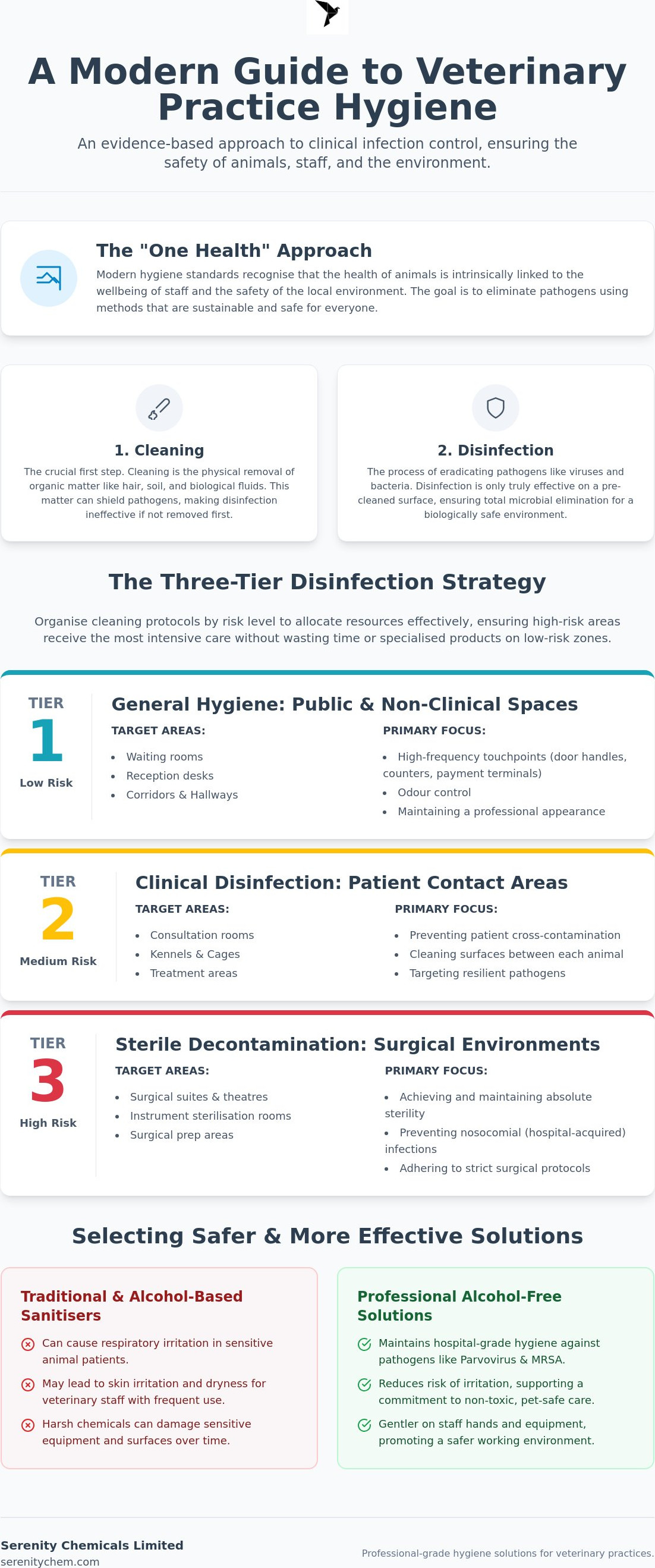
Not all areas of a clinic carry the same biological risk. Effective veterinary practice cleaning protocols rely on a three-tier system to allocate resources and time where they are needed most. This system categorises spaces into General Hygiene, Clinical Disinfection, and Sterile Decontamination zones. By organising your cleaning schedules this way, you ensure that high-risk areas receive the most intensive care without wasting specialised chemicals on low-risk zones. It's a methodical approach that respects both your team's time and your practice's budget.
Tier 1 focuses on public areas where the risk of surgical infection is low, but the risk of cross-contamination between waiting patients is high. Tier 2 addresses consultation rooms and kennels where patients are handled and housed. Tier 3 is reserved for the highest risk environments, such as surgical theatres and prep areas, where absolute sterility is the goal. This logical hierarchy ensures that every room is treated according to its specific needs, providing a consistent safety net across the entire facility.
Tier 1: Public and Non-Clinical Spaces
The waiting room and reception desk are the first points of contact for every client and patient. While these aren't sterile zones, they require constant attention to maintain professional standards. Focus on high-frequency touchpoints like door handles, reception counters, and card machines. Odour control is equally important here to ensure a calm and pleasant atmosphere for anxious pets. For large tiled or hard-floor areas, partnering with a reliable commercial floor cleaner supplier ensures you have the bulk volume needed for daily maintenance. We also recommend providing alcohol-free hand sanitisers for clients. This prevents skin irritation whilst encouraging visitors to play their part in your clinic's biosecurity.
Tier 2 & 3: Clinical and Sterile Environments
In consultation rooms and kennels, the protocol must be more rigorous. Examination tables must be disinfected between every single patient. This is the primary defence against the spread of respiratory infections like "kennel cough" or resilient feline viruses. Surfaces in these areas must be non-porous. This is crucial because porous surfaces allow for the formation of biofilms, which are microscopic bacterial colonies that can survive standard cleaning efforts.
Tier 3 zones, including surgical theatres, require sterile decontamination. Every surface, from the light fixtures to the floor, must be treated with hospital-grade solutions that eradicate spores and viruses. If you're looking to refine your clinic's specific hygiene zones, you can speak with our technical team for expert advice on chemical selection and application. Maintaining these high standards ensures that your most vulnerable patients remain safe during invasive procedures.
Chemical Efficacy and Safety: Selecting the Right Solutions
Selecting the right chemicals is a critical component of professional veterinary practice cleaning protocols. It isn't just about killing bacteria; it's about doing so without harming the patients under your care. A "pet-safe" designation is a non-negotiable standard. Animals are in constant physical contact with floors and surfaces, and they groom themselves frequently. This means any chemical residue left behind will likely be ingested or absorbed through their paw pads. We must ensure that our pursuit of sterility doesn't inadvertently introduce toxic risks to the animals we're trying to heal.
Traditional alcohol-based sanitisers present several practical challenges in a busy clinic. They're highly flammable and can be very drying to the skin of staff members who must use them dozens of times a day. For animals, the sharp, pungent scent of alcohol is often overwhelming. It can cause significant distress or even trigger respiratory irritation in sensitive species. Switching to alcohol-free formulations provides a safer alternative for both hands and surfaces. These solutions offer high-level protection and peace of mind without the harsh side effects associated with traditional spirits.
When reviewing COSHH Safety Data Sheets (SDS) for animal toxicity, use this checklist to ensure your choices align with modern safety standards:
- Confirm the absence of phenols or cresols, which are particularly toxic to felines.
- Check for a non-corrosive classification to protect both paws and equipment.
- Look for low or zero volatile organic compounds (VOCs) to maintain air quality.
- Ensure the solution is pH-neutral, ideally falling between 6 and 8.
Understanding EN Standards: EN 14476 and EN 1276
EN 14476 is the specific European standard that proves a disinfectant's virucidal efficacy against both enveloped and non-enveloped viruses. In areas where food is prepared for patients or staff, you must ensure that food safe sanitiser for commercial kitchens standards are strictly adhered to. A bacterial kill rate of 99.99% is the minimum benchmark for clinical safety. This ensures that the pathogen load is reduced to a level that the practice environment can safely manage without risking an outbreak.
The Problem with Phenols and Harsh Alcohols
Many common household disinfectants contain phenols, which are notoriously dangerous for cats because their livers cannot process these compounds effectively. Bleach, whilst a powerful disinfectant, is highly corrosive. It can damage sensitive paw pads and cause permanent pitting on expensive diagnostic equipment. Strong chemical odours can also hinder the recovery of animals in wards. Modern veterinary practice cleaning protocols favour pH-neutral, non-corrosive cleaners that protect your staff, your patients, and your investment in high-tech medical machinery.
Step-by-Step Implementation of Clinic Protocols
Moving from a general hygiene routine to professional veterinary practice cleaning protocols requires a structured approach. Implementation begins with a comprehensive site-wide audit. This process identifies "hot spots" for infection, such as kennel latches, keyboard covers, and equipment dials, where pathogens frequently accumulate. To ensure chemical consistency across all zones, it's best to select a primary cleaning products manufacturer UK clinics can rely on for technical support. Partnering with Serenity Chemicals Limited prevents accidental chemical reactions and simplifies the training process for new team members.
Developing clear, laminated checklists for every room provides a visual guide that ensures no step is overlooked during a busy shift. One of the most common failures in clinic biosecurity is neglecting contact times. Staff must understand the "wet time" required for a disinfectant to work effectively. If a solution is wiped away too quickly, it won't achieve its laboratory-tested kill rate against resilient viruses. To verify your results, establish a monitoring system that includes regular visual audits and objective tools like ATP testing to measure biological residue on surfaces.
Daily vs. Deep Cleaning Schedules
Your schedule should distinguish between immediate and long-term hygiene tasks. The "Between Patient" protocol in consultation rooms focuses on the rapid disinfection of the exam table and high-touch surfaces. The "End of Day" protocol covers general clinic areas, including floors and reception, to reset the environment for the next morning. Finally, a "Deep Clean" protocol is essential for surgical theatres and isolation wards. This involves moving heavy equipment and using high-level sanitisers to reach every corner of the room, ensuring total decontamination.
Staff Hygiene and Hand Care
Hand hygiene is the most effective way to prevent the spread of zoonotic diseases amongst your team. We recommend following the "5 moments for hand hygiene" standard, which includes sanitising before patient contact, before aseptic procedures, after body fluid exposure, after patient contact, and after touching the patient's surroundings. Using alcohol-free hand sanitisers is a principled choice that maintains staff skin integrity. Repeated use of harsh alcohols often leads to painful dermatitis, which can actually increase the risk of carrying bacteria. PPE, such as gloves and aprons, should always be used as a secondary barrier during the cleaning process to protect staff from both pathogens and chemical exposure.
If you require assistance in drafting specific checklists for your facility or selecting the right chemical concentrations for your equipment, you can contact our technical specialists for a professional consultation.
Optimising Practice Hygiene with Serenity Chemicals Limited
Implementing effective veterinary practice cleaning protocols requires more than just a well-documented plan; it demands high-performance chemistry that you can trust. Serenity Chemicals Limited is a specialist UK manufacturer dedicated to providing professional hygiene solutions that bridge the gap between clinical efficacy and animal safety. We believe that a clean clinic shouldn't come at the cost of staff comfort or patient wellbeing. By manufacturing our own range in the UK, we maintain total control over every formulation, ensuring that each product meets the rigorous standards required for 2026 biosecurity.
The Serenity Alcohol Free Hand Sanitiser is a core component of this approach. Busy veterinary teams often sanitise their hands dozens of times during a single shift. Traditional alcohol gels frequently lead to cracked skin and irritation, which can compromise the natural barrier against infection. Our alcohol-free formula provides hospital-grade protection whilst remaining gentle on the skin. It's an ethical, effective choice that supports your team's health and ensures they can maintain high hygiene standards without physical discomfort.
For the broader clinic environment, the Serenity Multi-Surface Cleaner serves as a versatile, non-toxic tool for Tier 1 and Tier 2 zones. It's specifically designed to handle the daily challenges of a veterinary setting, from reception desks to consultation tables. Because it's non-corrosive and pH-neutral, it's safe for use around animals and won't damage your expensive diagnostic equipment. Buying direct from a manufacturer like Serenity Chemicals Limited provides your practice with significant cost-efficiency and a reliable supply chain, removing the uncertainty often found with third-party distributors.
Why Vets Trust Serenity Solutions
Our commitment to transparency is one of the primary reasons veterinary professionals choose our range. We provide easy access to comprehensive COSHH data for all products, allowing you to integrate them into your veterinary practice cleaning protocols with total confidence. The gentle, non-irritating nature of our alcohol-free range is particularly beneficial for clinics treating sensitive species or animals with respiratory conditions. Every bottle represents British-made quality and a principled approach to manufacturing that prioritises long-term safety over short-term shortcuts.
Bulk Sourcing for Multi-Site Practices
Logistical efficiency is vital for larger veterinary groups and multi-site practices. We offer wholesale supply options that ensure every branch in your organisation uses the same high-quality chemicals, maintaining consistency in your biosecurity results. You can explore our professional cleaning chemicals list to identify the specific solutions needed for comprehensive clinic care, from floor cleaners to heavy-duty degreasers. This streamlined procurement process saves time and ensures your team always has the tools they need to protect their patients.
Advancing Your Standards for 2026 and Beyond
Maintaining a gold-standard clinical environment requires a constant commitment to both pathogen eradication and patient safety. By adopting a tiered disinfection strategy and focusing on alcohol-free formulations, you protect your staff's skin whilst ensuring your practice remains a non-toxic space for recovery. Implementing robust veterinary practice cleaning protocols is about more than just regulatory compliance; it's about building a culture of care that respects the health of every animal and team member.
Serenity Chemicals Limited is proud to support the UK veterinary sector with locally manufactured solutions that are fully compliant with EN 14476 standards. Our alcohol-free range provides the high-level efficacy you need without the irritation or respiratory distress often caused by traditional chemicals. We're here to help you navigate the complexities of modern biosecurity with principled, effective products that deliver total peace of mind for your professional team.
If you're ready to enhance your hygiene standards or need guidance on chemical selection for your specific facility, please Browse our Professional Hygiene Range for Veterinary Practices. We look forward to helping you create a safer, more efficient clinical environment for your patients and your staff.
Frequently Asked Questions
What is the most important part of a veterinary cleaning protocol?
The most important part of any veterinary practice cleaning protocols is the rigorous documentation and consistent execution of the plan. A protocol only works if every staff member follows the same steps every time. This ensures that no high-touch surface is missed and that all areas meet the necessary biosecurity standards. Consistency prevents the "weak links" that often lead to nosocomial outbreaks in a busy clinic.
Are alcohol-free hand sanitisers safe to use around animals?
Yes, alcohol-free hand sanitisers are considered safer for use in veterinary environments because they are non-flammable and lack pungent odours. Traditional alcohol gels can be distressing to an animal's sensitive sense of smell and may cause respiratory irritation. Using an alcohol-free alternative protects your staff's skin whilst ensuring a calmer, safer atmosphere for the patients you're treating every day.
How often should a veterinary consultation room be cleaned?
A consultation room requires a two-stage approach: the examination table must be disinfected between every single patient, while the floors and general surfaces should be cleaned at the end of each day. High-traffic touchpoints like door handles and computer keyboards should be wiped down several times throughout the shift. This tiered frequency ensures that the most immediate risks are managed without disrupting the flow of appointments.
Which EN standards should I look for in veterinary disinfectants?
You should prioritise disinfectants that meet EN 14476 and EN 1276 standards. EN 14476 is the European benchmark for virucidal efficacy, proving the product can kill both enveloped and non-enveloped viruses. EN 1276 confirms the solution's ability to kill bacteria like MRSA. Always check the product label or Safety Data Sheet to ensure these specific certifications are present before use in any clinical setting.
Can I use household cleaners in a professional veterinary practice?
Household cleaners are unsuitable for professional clinics because they rarely offer the specific kill rates required to eliminate resilient pathogens like Parvovirus. They also often contain phenols or fragrances that are toxic to cats and dogs. Professional-grade solutions provide the technical safety data needed for RCVS compliance and are specifically formulated to be non-corrosive on expensive medical equipment and diagnostic tools.
What is "contact time" and why does it matter for infection control?
Contact time, often called "wet time," is the specific duration a disinfectant must remain wet on a surface to effectively kill pathogens. If you wipe a solution away before the recommended time, you won't achieve the necessary kill rate. Most clinical disinfectants require between 1 and 5 minutes of contact to ensure the environment is truly decontaminated and safe for the next patient to enter.
How do I prevent cross-contamination between the waiting room and the theatre?
Preventing cross-contamination relies on a "clean-to-dirty" workflow and the use of dedicated cleaning equipment for different zones. Staff should always start cleaning tasks in sterile areas like the surgical theatre before moving to public spaces like the waiting room. Using colour-coded cloths and mops for different tiers ensures that bacteria from the reception floor never enter the sterile surgical suite during the cleaning process.
Is bleach safe for cleaning animal kennels?
While bleach is a powerful disinfectant, it isn't the best choice for kennels because it's highly corrosive and produces strong fumes. These fumes can be very irritating to an animal's respiratory system, especially during recovery. It can also damage the stainless steel or non-porous surfaces of your housing units. Modern veterinary practice cleaning protocols favour pH-neutral, non-toxic alternatives that offer equal efficacy without these harsh side effects.

Hand Sanitiser for Frequent Use: Professional UK Guide 2026
The very product you use to protect your health might be the primary cause of your skin's deterioration. While alcohol-based ...

Food Safe Antibacterial Spray UK: The Professional 2026 Hygiene Guide
Using the wrong disinfectant in a commercial kitchen isn't just a minor oversight; it's a direct threat to your Food Hygiene ...