

Effective carpet maintenance is not a matter of raw suction power; it is a precise science of fibre identification and pH-specific chemistry. You've likely experienced the frustration of "wicking," where a stubborn spill seems to vanish only to resurface days later, or perhaps you've hesitated to treat a mark for fear of causing permanent "browning" on natural fibres. These challenges are common in high-traffic environments, especially as UK office occupancy reached a peak of 44.1% in early 2026, putting unprecedented strain on flooring. Knowing exactly how to remove tough stains from commercial carpets is now essential for protecting your facility's professional image and ensuring a healthy workspace.
This guide provides a masterclass in industrial fabric care, ensuring your cleaning protocols meet the latest GB CLP hazard standards mandated in August 2026. We'll walk through the technical process of identifying carpet construction, applying the correct chemical balance, and using advanced extraction techniques. By following these principled methods, you can eliminate lingering odours and extend the lifespan of your assets while maintaining a pristine, hygienic environment for your team.
Key Takeaways
- Learn why identifying the specific fibre type, whether natural wool or synthetic nylon, is the non-negotiable first step to prevent permanent browning or yellowing.
- Understand the science of pH-correct chemistry and how surfactants work to lift deep-set grime without damaging the integrity of the fabric.
- Master the professional extraction sequence and learn how to remove tough stains from commercial carpets using a systematic method of dry vacuuming and targeted pre-spraying.
- Protect your investment by applying advanced spotting techniques, such as the "blot, don't rub" rule, to maintain pile texture while treating protein and tannin marks.
- Ensure full compliance with 2026 GB CLP and COSHH standards by sourcing industrial-strength cleaning solutions directly from a trusted British manufacturer.
Identifying Carpet Fibres: The Foundation of Professional Stain Removal
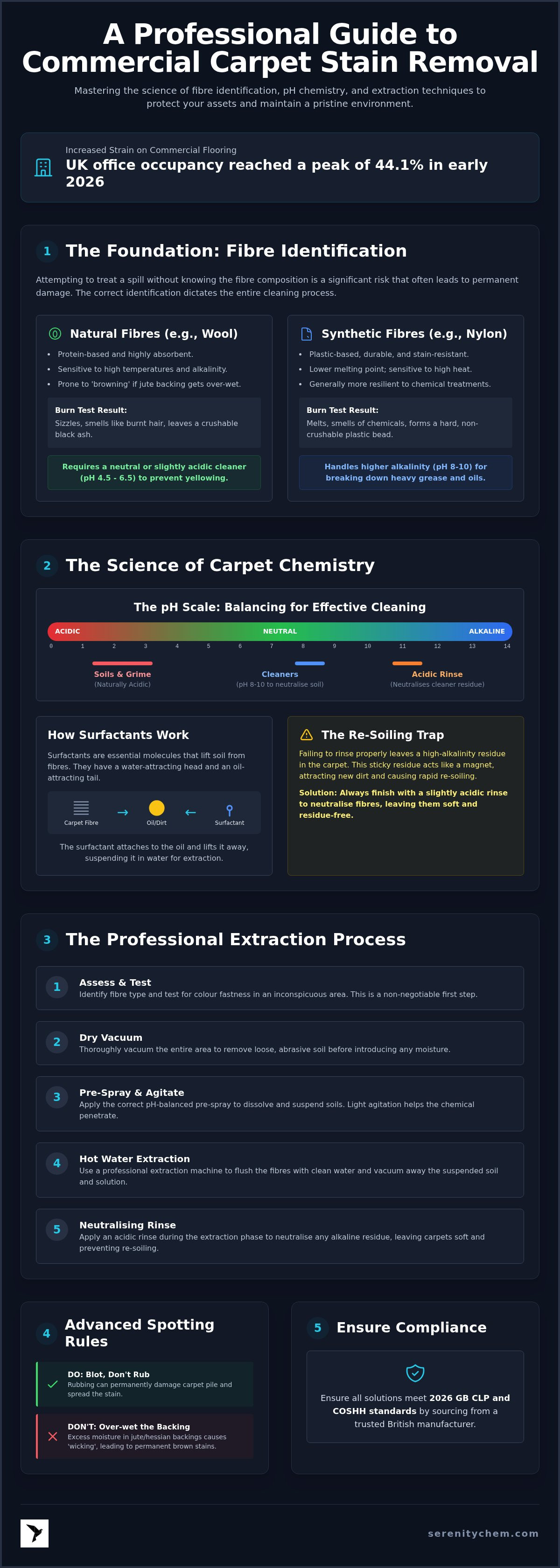
Every professional cleaning programme begins with a rigorous assessment of the material. Attempting to treat a spill without knowing the fibre composition is a significant risk that often leads to permanent damage. Understanding the substrate is the only way to determine how to remove tough stains from commercial carpets safely and effectively. Different materials react uniquely to moisture, heat, and chemical alkalinity; what works for a resilient synthetic might ruin a delicate natural weave.
Natural fibres such as wool are protein-based and highly absorbent. They are sensitive to high temperatures and alkaline chemicals, which can cause the fibres to become brittle or lose their natural sheen. Synthetic fibres like nylon, polyester, and polypropylene are essentially plastics. While they offer excellent durability and stain resistance, they have lower melting points and can be permanently distorted by excessive heat during the extraction process. Beyond the surface fibres, you must also consider the backing. Many older commercial carpets use jute or hessian backings. If these become over-wet, they release lignin through a process called wicking, resulting in permanent brown tea-like stains on the surface.
Natural vs Synthetic: The Professional Identification Test
Technicians often use a visual and tactile inspection, but the "burn test" remains a reliable method for on-site accuracy. By exposing a small snippet of fibre to a flame, you can observe the reaction. Wool sizzles, smells like burnt hair, and leaves a crushable black ash. Synthetic fibres like nylon will melt, smell chemically, and form a hard, plastic-like bead that cannot be crushed. This distinction is vital for safety. Wool requires a neutral or slightly acidic pH to prevent yellowing. Synthetic fibres are generally more resilient, which allows for the use of slightly higher alkalinity when breaking down heavy-duty grease or traffic film.
Testing for Colour Fastness
Before you apply any carpet cleaning methods or chemical agents, you must verify the stability of the dyes. Apply a small amount of diluted Serenity Carpet Shampoo to an inconspicuous area, such as a corner or a section normally covered by furniture. Press a clean, white damp cloth against the treated spot for approximately sixty seconds. If any pigment transfers to the cloth, the carpet is not colour-fast. In these instances, traditional wet extraction should be avoided. You should instead switch to low-moisture or dry cleaning methods to prevent dye migration and "bleeding" across the office floor.
The Science of Carpet Chemistry: pH Balance and Surfactants
Professional cleaning isn't just about strength; it's about chemical balance. Most soils found in a busy office environment, such as skin oils, food spills, and outdoor grime, are naturally acidic. To neutralise these substances, technicians use alkaline solutions with a pH typically between 8 and 10. This alkalinity reacts with the acidic oils, breaking them down into a state that can be easily extracted. Mastering this chemical shift is central to understanding how to remove tough stains from commercial carpets without resorting to aggressive scrubbing that damages the pile.
Surfactants, or surface-active agents, are the essential workhorses of any professional shampoo. They reduce the surface tension of water, allowing the cleaning solution to penetrate deep into the fabric. These molecules have a dual nature: one end attaches to water, whilst the other attaches to grease and oil. This action lifts the soil away from the fibre, suspending it in the cleaning liquid until it's vacuumed away. Without high-quality surfactants, water simply sits on top of the carpet instead of cleaning it.
A common mistake in facility maintenance is failing to rinse these chemicals away thoroughly. If a high-alkalinity residue remains in the carpet, it stays "active" and sticky. This attracts new dirt like a magnet, leading to rapid re-soiling where the floor looks dirty again just weeks after a clean. To prevent this, a slightly acidic rinse should be used during the extraction phase. This neutralises the fibres and leaves them soft and residue-free, protecting the long-term appearance of the asset.
Alkaline vs Acidic: Choosing the Correct Solution
Alkaline solutions are the standard choice for organic matter and high-traffic walkways where grease accumulates. However, certain issues like browning or yellowing require an acidic treatment to stabilise the dyes and reverse discolouration. The logic behind these antibacterial surface spray UK standards, which prioritise targeted chemical application for safety and efficacy, applies equally to industrial fabric care. Using the wrong pH can lead to "colour bleed" or permanent fibre damage.
The Danger of DIY Residues
Many online guides suggest using baking soda for odour removal, but this is a significant mistake in a professional setting. Baking soda creates abrasive crystalline residues that aren't easily vacuumed out. These crystals act like tiny knives, sawing through carpet fibres as staff walk over them, which shortens the carpet's lifespan. Similarly, failing to neutralise a stain can lead to "wicking," where the spill travels up the fibre via capillary action as it dries, causing the mark to reappear. Professional shampoos are formulated to rinse clean, ensuring how to remove tough stains from commercial carpets doesn't result in a recurring problem. If you're unsure about the chemical compatibility of your flooring, you can speak with our technical team for specific dilution advice.
The Professional Extraction Process: Step-by-Step Excellence
Preparation is the logistical foundation of a successful clean. Before any moisture touches the floor, you must remove as much dry particulate as possible. Approximately 80% of carpet soil is dry matter, such as grit and dust, which turns into an abrasive sludge if it isn't removed via a high-filtration dry vacuum. This step is a critical component of how to remove tough stains from commercial carpets because it prevents wicking and ensures the chemical treatment can focus on bonded oils rather than loose dirt.
Once the surface is clear, apply Serenity Carpet Shampoo as a pre-spray. This targeted application breaks down the traffic film that accumulates in walkways and under desks. After spraying, use a soft-bristled brush or a mechanical agitator to work the solution into the pile. This mechanical action ensures the shampoo reaches all sides of the fibre, not just the tips, which is essential for a thorough restoration. It moves the chemistry exactly where it's needed most.
The extraction phase involves a "wet pass" followed by multiple "dry passes." The machine injects a neutralising rinse into the carpet while simultaneously vacuuming the liquid and suspended soil into a recovery tank. To minimise drying times and prevent lingering damp odours in office spaces, a professional technician will perform at least two dry passes for every wet pass. This ensures the maximum amount of moisture is recovered from the carpet backing and the underlying padding.
Dwell Time: The Secret to Professional Results
Chemical reactions are rarely instantaneous. Dwell time is the period the shampoo sits on the fibre before extraction begins. Usually, ten to fifteen minutes is sufficient for the surfactants to emulsify grease and oil. However, you must monitor the environment to ensure the solution doesn't dry into the fibres, as this can leave a sticky residue that attracts new soil. In professional spray extraction machines, maintaining a consistent water temperature can significantly increase molecular activity and chemical efficacy without risking damage to synthetic backings.
Upholstery Specific Techniques
Office chairs and sofas require a more nuanced approach than floor coverings. Delicate seams and piping can trap moisture, leading to mould growth if not managed correctly. For velvet or chenille fabrics, use a low-moisture technique to avoid crushing the pile or causing permanent texture distortion. Ensuring adequate ventilation and airflow within commercial centres is the final step; using industrial air movers can reduce drying times from several hours to under sixty minutes, allowing the workspace to return to full operation quickly.
Advanced Spotting Strategies for Tough Commercial Stains
The most critical rule in emergency stain removal is to blot, never rub. While it's a common instinct to scrub a spill, this action permanently distorts the physical integrity of the fabric pile and pushes the liquid deeper into the backing. Scrubbing can also cause the fibres to "friz," creating a fuzzy texture that reflects light differently and makes the area look permanently worn. When considering how to remove tough stains from commercial carpets, your objective is to transfer the substance from the floor to an absorbent medium using a gentle, repetitive pressing motion.
Identifying the chemical nature of the spill is the next step. Protein-based stains, such as milk or blood, require cool water and neutral detergents; using heat can "cook" the protein, bonding it permanently to the fibre. Conversely, tannin-based stains like coffee, tea, or red wine are plant-derived and often require a slightly acidic approach to break the bond. For oil-based marks, grease, or the "blue tack" residues frequently found in UK office spaces, a solvent-based cleaner is necessary to dissolve the synthetic bond before extraction can take place.
True professional restoration moves beyond masking scents to achieve genuine odour neutralisation. Many off-the-shelf products use heavy perfumes to hide smells, but these eventually fade, leaving the original odour behind. A principled approach involves using chemistry that encapsulates or breaks down the odour-causing molecules at the source. This ensures a fresh, hygienic environment that supports employee well-being and productivity, especially in high-occupancy buildings where indoor air quality is a priority.
The Professional Spotting Kit
A well-prepared facility team should maintain a dedicated spotting kit. This should include several clean, white absorbent cloths to monitor colour transfer, a spotting spatula for lifting solid matter, and a pH-neutral cleaning agent. You can use Serenity Carpet Shampoo as a highly effective emergency spotter; simply apply it to the cloth rather than the carpet to maintain control over moisture levels. If a stain appears to return after drying, it's usually due to wicking. This can be resolved by re-treating the area and ensuring a thorough neutralising rinse to remove any sticky residues.
Long-Term Maintenance Schedules
A successful hygiene programme balances "interim" surface cleaning with periodic "deep" extraction. Interim cleaning, often using low-moisture methods, keeps the visible surface looking pristine. However, deep extraction is required to remove the grit that settles at the base of the pile. If left untreated, this grit creates a "sandpaper effect," where sharp particles grind against the fibres every time someone walks across the floor. By integrating commercial floor cleaner supplier choices into a structured maintenance plan, you can extend the lifespan of your assets and maintain a high standard of cleanliness. If you require technical guidance on specific stain challenges, please contact our support team for professional advice.
Optimising Facility Maintenance with Professional UK-Manufactured Solutions
Sourcing your maintenance supplies directly from a British manufacturer provides a level of quality control that imported alternatives often lack. When you're responsible for an entire facility's upkeep, knowing exactly how to remove tough stains from commercial carpets requires chemicals that are predictable, stable, and legally compliant. By dealing directly with a UK-based blender like Serenity Chemicals Limited, you eliminate the uncertainties of long-distance supply chains and gain access to technical expertise that understands the specific challenges of the UK commercial market.
Legal compliance is a cornerstone of professional facility management. By August 15, 2026, all cleaning products used in commercial settings within Great Britain must comply with the updated GB Classification, Labelling and Packaging (CLP) hazard standards. Serenity Chemicals Limited ensures that every product, from floor cleaners to sanitisers, is accompanied by comprehensive Safety Data Sheets (SDS) and Technical Data Sheets (TDS). This transparency is essential for fulfilling your COSHH obligations, ensuring that your staff are protected and that your organisation remains on the right side of health and safety regulations.
Concentrated formulas are a principled choice for the modern business. High-concentration solutions offer superior commercial value because you aren't paying for the transport of excess water. This approach reduces the frequency of deliveries and minimises plastic waste, aligning your cleaning protocols with broader sustainability goals. It's a no-nonsense way to manage a budget whilst maintaining the highest possible standards of hygiene and fabric care.
Serenity Carpet Shampoo: Performance and Reliability
Serenity Carpet Shampoo is engineered to be the reliable choice for machine extraction. Whether you're using a compact domestic spotter for emergency spills or an industrial-grade extraction machine for a full-floor restoration, the formula remains consistent. Its high-performance surfactants are specifically designed to tackle the oils and grit common in UK office environments. Adhering to cleaning products manufacturer UK standards ensures that every batch delivers the same industrial-strength results without risking the integrity of the carpet fibres discussed in previous sections.
Bulk Sourcing for Commercial Facilities
For large-scale maintenance, the economic benefits of bulk sourcing are clear. Moving to 5L or 20L containers significantly reduces the cost per litre and lowers your facility's carbon footprint by reducing packaging waste. When building your internal inventory, it's helpful to cross-reference your needs with a professional cleaning chemicals list to ensure you have the correct pH-specific agents for every eventuality. Having a principled, well-stocked chemical cupboard is the final step in mastering how to remove tough stains from commercial carpets and ensuring the long-term health of your facility's assets.
Securing the Future of Your Commercial Flooring
Mastering the science of fabric care involves more than reactive cleaning; it requires a proactive understanding of fibre identification and pH-balanced chemistry. By following a structured extraction process and applying targeted spotting strategies, you can prevent the rapid re-soiling and wicking that often compromise high-traffic office environments. This principled approach ensures that your maintenance programme remains effective, responsible, and compliant with the latest UK safety standards.
Understanding how to remove tough stains from commercial carpets is a vital skill for any facility manager looking to extend asset lifespan and maintain a hygienic workspace. Our Serenity Carpet Shampoo is an industrial-strength formula, proudly UK manufactured and specifically designed to be safe for machine extraction. It provides the consistency and performance needed for professional restoration and long-term maintenance. If you're ready to upgrade your facility hygiene plan with reliable, British-made solutions, we're here to help.
Contact our experts to source professional Serenity Carpet Shampoo direct. With the right chemistry and a methodical approach, you can ensure your flooring remains a pristine and professional asset for years to come.
Frequently Asked Questions
How often should I clean my commercial carpets according to this guide?
Commercial carpets should typically undergo a professional deep clean every 6 to 12 months. However, in high-traffic environments like reception areas or corridors, quarterly cleaning is often necessary to maintain the manufacturer's warranty and adhere to IICRC S100 standards. Given that UK office occupancy reached a peak of 44.1% in early 2026, regular maintenance is essential to prevent the build-up of abrasive grit that can lead to premature fibre wear.
Can I use the same carpet shampoo for my upholstery and office chairs?
Yes, Serenity Carpet Shampoo is formulated to be versatile enough for both industrial floor coverings and office upholstery. The high-performance surfactants effectively lift oils and grime from the synthetic fabrics commonly used in office seating. It's vital to perform a colour-fastness test on an inconspicuous area first, as the delicate seams and piping on furniture require a more controlled moisture application than standard flooring.
What is the best way to remove coffee and tea stains from deep carpet piles?
The most effective method for coffee and tea is to treat them as tannin-based stains using a slightly acidic spotting agent. After blotting the initial spill with a white absorbent cloth, use a professional extraction machine to rinse the area. This prevents the tannins from bonding with the deep pile fibres. Following a systematic approach is the most reliable way to understand how to remove tough stains from commercial carpets without leaving permanent marks.
Is professional carpet shampoo safe for use on wool-blend carpets?
Professional carpet shampoos are generally safe for wool blends provided they are pH-balanced. Because wool is a protein-based natural fibre, it's sensitive to high alkalinity, which can cause "yellowing" or make the pile feel brittle. Serenity Carpet Shampoo is designed to be effective whilst remaining gentle enough for various fibre types. Always check the carpet manufacturer's specific care instructions to ensure your chosen chemistry aligns with their warranty requirements.
What does 'pH neutral' mean for upholstery cleaning safety?
In the context of upholstery, 'pH neutral' refers to a cleaning solution with a pH value of approximately 7. This balance is critical for safety because it cleans without the risk of chemical burns to the fabric or dye migration. Using a neutral solution provides peace of mind when treating delicate or natural fibres that might otherwise react poorly to the more aggressive alkaline cleaners typically used on heavy-duty synthetic carpets.
How long do commercial carpets take to dry after a professional deep clean?
Most commercial carpets will be dry and ready for use within 4 to 8 hours. This timeframe depends heavily on the ambient temperature, humidity, and the number of "dry passes" performed during the extraction process. In a busy commercial centre, using industrial air movers can speed up this process significantly, often reducing the drying time to under two hours and preventing the development of damp odours.
What is 'wicking' and how can I prevent it after cleaning?
Wicking is the process where a stain trapped in the carpet backing travels up the fibres via capillary action as they dry, causing the mark to reappear on the surface. You can prevent this by ensuring a thorough dry vacuuming phase before you begin and by using a neutralising rinse during extraction. Mastering this technique is a fundamental part of how to remove tough stains from commercial carpets and ensures a long-lasting, professional result.
Can I clean my car's upholstery with these same professional methods?

Hand Sanitiser for Frequent Use: Professional UK Guide 2026
The very product you use to protect your health might be the primary cause of your skin's deterioration. While alcohol-based ...

Food Safe Antibacterial Spray UK: The Professional 2026 Hygiene Guide
Using the wrong disinfectant in a commercial kitchen isn't just a minor oversight; it's a direct threat to your Food Hygiene ...