

What if the most significant threat to your 2026 productivity isn't a market shift, but a preventable seasonal illness that your current policy isn't equipped to handle? You're likely aware that maintaining a healthy environment is essential for business continuity, yet the constant stream of conflicting hygiene advice often leaves leaders feeling uncertain. It's frustrating to manage high staff absenteeism when you know that many of these absences are avoidable with the right framework and a reliable workplace hygiene supplies checklist.
This guide provides the clarity you need to develop a robust infection control policy that ensures full regulatory compliance whilst protecting your team with high-performance hygiene solutions. We'll walk you through the 2026 COSHH updates and the latest British hygiene standards to give you total confidence in your safety protocols. You'll learn how to select skin-safe, effective products that meet rigorous antiviral requirements, ensuring your workplace remains both productive and principled.
Key Takeaways
- Master the legal requirements of the Health and Safety at Work Act 1974 to build a compliant and protective organisational framework.
- Streamline your procurement process using our comprehensive workplace hygiene supplies checklist to ensure all high-traffic zones are adequately equipped.
- Evaluate the efficacy of your cleaning agents by understanding the critical role of EN 14476 antiviral and EN 1276 antibacterial certifications.
- Improve staff well-being and compliance by adopting alcohol-free sanitisers that offer professional-grade protection without compromising skin health.
- Follow a logical, step-by-step guide to conducting risk assessments and establishing clear hygiene responsibilities across your entire team.
Understanding the Workplace Infection Control Policy
A workplace infection control policy is a formalised framework designed to mitigate the transmission of pathogens within a professional environment. It's more than a set of suggestions; it's a strategic shield. By establishing clear protocols, you protect your most valuable asset: your people. This policy serves as the foundation for your workplace hygiene supplies checklist, ensuring every product purchased serves a specific, verified purpose in breaking the chain of infection. When you codify these behaviours, you move from reactive cleaning to proactive protection.
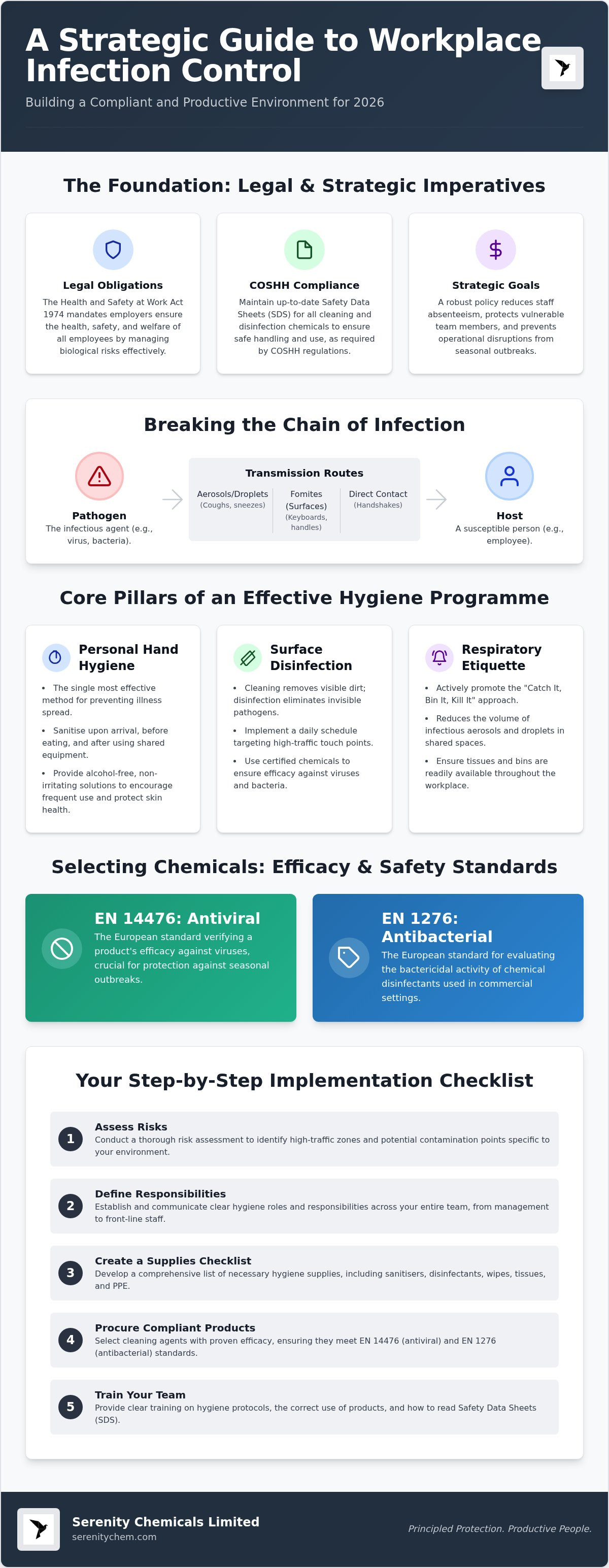
Under the Health and Safety at Work etc. Act 1974, UK employers have a clear legal obligation to ensure the health, safety, and welfare of their employees. This includes managing biological risks with the same rigour applied to mechanical or chemical hazards. Adopting the "Assumption of Risk" principle is vital here; this involves treating every environment and surface as potentially contaminated. Integrating Infection prevention and control principles into your daily operations helps meet these legal standards whilst safeguarding business continuity. The primary goals are straightforward: reduce staff absenteeism, protect vulnerable team members, and prevent operational disruptions caused by seasonal outbreaks.
Legal Requirements and COSHH Compliance
The Chain of Infection in Commercial Settings
Pathogens spread through various routes in an office, including aerosols, droplets, and fomites. Fomites are contaminated surfaces that act as vehicles for transmission. In a typical UK office, high-traffic touch points such as lift buttons, shared keyboards, and kettle handles are primary culprits. A robust policy must address both personal hand hygiene and environmental cleanliness. Without a structured workplace hygiene supplies checklist, these invisible threats can quickly compromise an entire department. Effective control requires a methodical approach to surface disinfection and a commitment to providing high-performance, skin-safe sanitisers at every entry point.
Core Pillars of an Effective Hygiene Programme
Building a resilient office environment requires a multi-layered approach to safety. It isn't enough to simply tidy up; you must actively break the transmission chains that allow pathogens to thrive. An effective programme focuses on three critical areas: personal hand hygiene, environmental surface disinfection, and respiratory etiquette. By following the "Catch It, Bin It, Kill It" approach for respiratory health, you significantly reduce the volume of aerosols and droplets in shared spaces. When compiling your workplace hygiene supplies checklist, these pillars form the strategic backbone of your inventory, ensuring every product serves a specific protective role. To ensure your facility meets the highest standards, you should integrate professional-grade solutions found on a professional cleaning chemicals list.
Hand Hygiene Protocols
Hand hygiene remains the single most effective method for preventing the spread of illness. You should define specific moments when staff are required to sanitise, including upon arrival at the building, before consuming food, and immediately after using communal equipment like printers or coffee machines. Whilst traditional hand washing with soap and water is vital, the convenience of strategic sanitising stations ensures compliance in high-traffic zones where sinks aren't available. It's essential to provide non-irritating, alcohol-free solutions. This reduces the risk of occupational dermatitis, which often discourages staff from sanitising as frequently as they should. Using a skin-kind formula demonstrates a commitment to employee well-being whilst maintaining a sterile environment.
Environmental Surface Disinfection
There is a fundamental difference between basic cleaning and true disinfection. Cleaning removes visible dirt and grease, but disinfecting eliminates the invisible pathogens that linger on surfaces. Your daily schedule must prioritise high-touch points such as door handles, light switches, and kitchen taps. A critical factor often overlooked is "contact time." This is the specific duration a disinfectant must remain wet on a surface to achieve its full antiviral or antibacterial efficacy. If you wipe a product away too quickly, you may be leaving active pathogens behind. Aligning your cleaning routines with the latest HSE guidance on workplace infection control ensures your team stays protected against evolving biological threats.
Developing a policy that balances rigorous efficacy with user safety can be complex. If you need assistance selecting the right products for your specific facility, you can enquire about tailored hygiene solutions to ensure your workplace hygiene supplies checklist is both comprehensive and compliant.
Selecting Chemicals: Efficacy, Safety, and Standards
Choosing chemicals for your facility shouldn't be based on price alone; it requires a deep understanding of efficacy standards. When you update your workplace hygiene supplies checklist, the presence of specific European Norm (EN) certifications is your primary indicator of quality. EN 1276 is the standard for chemical disinfectants, proving a product can kill 99.999% of bacteria within five minutes. For viral protection, look for EN 14476. This certification ensures the solution is effective against enveloped viruses, providing a level of security that domestic products often lack. Sourcing these high-specification solutions from a reputable cleaning products manufacturer UK ensures that your supply chain is transparent and your products meet stringent national safety regulations.
Integrating these standards into your policy aligns your business with the best practices outlined in the National Infection Prevention and Control Manual. This ensures that your approach to hygiene is evidence-based and professionally sound. By focusing on verified standards, you move away from guesswork and towards a principled safety strategy that genuinely protects your workforce from biological hazards.
The Case for Alcohol-Free Hand Sanitisers
There is a common misconception that alcohol-free formulations are less effective than traditional spirits. In reality, EN 14476 certified alcohol-free sanitisers provide robust protection against a wide range of viruses whilst offering significant operational advantages. They are non-flammable, which reduces fire risk in large offices or storage areas. More importantly, they are far kinder to the skin. Frequent use of alcohol-based products often leads to occupational dermatitis, causing discomfort and reducing staff compliance. Choosing an alcohol free hand sanitiser UK businesses can trust ensures that your team stays protected without the irritation associated with harsh chemicals.
Surface Sanitisers and Multi-Purpose Solutions
A comprehensive workplace hygiene supplies checklist must also account for diverse environments within the office, such as staff kitchenettes and break rooms. In these areas, using food-safe sanitisers is a legal and ethical necessity. Consulting a professional antibacterial surface spray UK guide helps you identify products that offer high-level disinfection without leaving harmful residues. You should also consider residual sanitisers. These advanced formulations continue to protect surfaces between scheduled cleaning cycles, providing an extra layer of security in high-traffic communal zones. This proactive approach ensures that your infection control measures remain effective throughout the working day.
Implementation: A Step-by-Step Policy Checklist
Translating a conceptual framework into a functioning workplace protocol requires a methodical approach. It isn't enough to simply order products; you must integrate them into a daily rhythm that staff understand and respect. A comprehensive workplace hygiene supplies checklist serves as your inventory guide, but the implementation steps below ensure those supplies are used effectively to maintain a safe environment. By following a structured path, you move from individual cleaning tasks to a unified organisational culture of safety. This transition ensures that your investment in high-performance solutions from Serenity Chemicals Limited translates into tangible health benefits for your team.
Conducting a Hygiene Risk Assessment
Conducting a hygiene risk assessment is your first priority. You should categorise workplace areas by risk level to determine the intensity of cleaning required. High-risk zones, such as washrooms and staff kitchenettes, require more frequent disinfection and a higher volume of specialised supplies. Medium-risk zones, including communal hot-desking areas or meeting rooms, need targeted attention at touch points like chair arms and table edges. During this audit, evaluate your current hand hygiene provision for accessibility and visibility. Are sanitising stations placed at every major transition point? Identifying these gaps allows you to refine your procurement and ensure your facility is never under-equipped.
Staff Communication and Training
Staff communication is the bridge between policy and practice. Organise short, focused training sessions to demonstrate correct hand sanitising and surface wiping techniques. It's vital to explain the reasoning behind these rules, such as the specific contact time required for disinfectants to achieve full efficacy. Use clear, professional signage at every sanitising station and in washrooms to reinforce these behaviours without being intrusive. Beyond physical cleaning, encourage a culture where staff feel empowered to stay at home if they're unwell. This proactive stance reduces the risk of pathogens entering the building in the first place, supporting the policy's overall integrity and effectiveness.
Once your protocols are established, procure your supplies from a trusted UK blender like Serenity Chemicals Limited to ensure consistent quality and regulatory compliance. Monitor adherence through regular walk-throughs and review the policy annually, or more frequently if local health alerts are issued. This ensures your safety measures remain relevant to current risks and that your workplace hygiene supplies checklist stays up to date. If you're ready to build a compliant and effective hygiene programme for your business, you can request a professional hygiene consultation to tailor these steps to your specific facility needs.
Partnering with Serenity Chemicals Limited for Workplace Safety
Choosing the right supply partner is the final, most significant step in finalising your workplace hygiene supplies checklist. Serenity Chemicals Limited operates as a leading UK manufacturer, delivering professional-grade solutions that combine technical rigour with ethical responsibility. We don't just supply cleaning agents; we provide a foundation of trust for businesses that value the health of their workforce as much as their operational efficiency. Sourcing directly from a specialist manufacturer ensures you have a dependable authority to guide your safety decisions and provide reliable technical support.
The Serenity Alcohol Free Hand Sanitiser is the centrepiece of our range, offering a principled alternative to harsh alcohol-based products. Because it's formulated to be kind to the skin whilst meeting EN 14476 standards, it encourages the frequent use necessary to break transmission chains. For comprehensive facility care, the Serenity Antibacterial Surface Spray provides a robust safety profile for daily disinfection. It's designed to be effective against a wide spectrum of bacteria and viruses, ensuring your communal areas remain safe without compromising user comfort or surface integrity.
Why UK Manufacturing Matters
Sourcing from a domestic manufacturer like Serenity Chemicals Limited provides essential supply chain security that international distributors often struggle to guarantee. You benefit from shorter lead times and a reduced environmental footprint due to the lower transport distances required for bulk deliveries. Every solution we produce is formulated to meet strict UK regulatory standards, giving you peace of mind that your facility is compliant with the latest HSE guidelines. This direct relationship also provides access to expert technical guidance whenever your policy requires refinement or a specific safety query arises.
Tailored Solutions for Every Business Sector
We understand that different environments require different approaches to infection control. Whether you're managing a single office or a multi-site organisation, our bulk-buy options ensure your workplace hygiene supplies checklist is always fulfilled. Products like the Serenity Multi-Surface Cleaner offer the versatility needed for diverse commercial spaces, simplifying your inventory management without sacrificing performance. If you need bespoke advice on building a robust hygiene programme tailored to your specific facility, we invite you to contact Serenity Chemicals Limited for a professional consultation.
Securing a Healthier Workplace Future with Serenity Chemicals Limited
A robust infection control policy is far more than a regulatory requirement; it's a strategic commitment to the safety and productivity of your team. By integrating the latest British hygiene standards and prioritising high-performance, skin-kind solutions, you move beyond basic compliance to true organisational resilience. For businesses that extend their safety protocols to include substance screening, using reliable tools from prperformancesupplies.com can further support employee welfare. Finalising your workplace hygiene supplies checklist with verified, EN-certified products ensures that every disinfection task contributes to a safer shared environment for your staff and visitors alike.
As a specialist UK manufacturer, Serenity Chemicals Limited provides the antiviral and antibacterial expertise needed to protect diverse commercial sectors. Our focus on alcohol-free hand hygiene and specialised surface cleaners allows you to maintain a sterile facility whilst supporting the long-term well-being of your staff. We invite you to protect your workforce with Serenity Chemicals Limited-explore our professional range today. Taking these principled steps now ensures your business remains a safe, dependable space for everyone who enters it.
Frequently Asked Questions
Is a workplace infection control policy a legal requirement in the UK?
Yes, implementing a robust policy is a legal necessity under the Health and Safety at Work etc. Act 1974. Employers have a duty of care to manage biological risks and ensure the welfare of their staff. This involves conducting thorough risk assessments and providing the essential items found on a professional workplace hygiene supplies checklist. Failing to manage these risks can lead to enforcement action from the Health and Safety Executive.
Are alcohol-free hand sanitisers as effective as alcohol-based ones?
Alcohol-free sanitisers are highly effective if they carry the EN 14476 certification for antiviral efficacy. These proprietary formulations provide high-level protection whilst being significantly kinder to the skin. Unlike traditional alcohol-based spirits, they are non-flammable and don't cause the dryness that leads to occupational dermatitis. This makes them a principled choice for high-use environments where consistent employee compliance is a priority.
How often should high-traffic surfaces be disinfected in an office?
High-traffic surfaces should be disinfected at least once every working day to maintain a safe environment. Areas such as staff kitchenettes, lift buttons, and door handles often require more frequent attention depending on the volume of people using the facility. Establishing a rigorous schedule ensures that pathogens don't have the opportunity to accumulate. Regular disinfection prevents the buildup of invisible contaminants that can compromise your safety protocols.
What is EN 14476 and why does it matter for my business?
EN 14476 is the rigorous European standard that proves a chemical's efficacy against enveloped viruses. For your business, this certification provides verified proof that your cleaning products actually kill the specific pathogens they claim to target. Using certified solutions ensures you're meeting British hygiene standards and protecting your team with professional-grade chemicals rather than domestic alternatives that may lack the necessary antiviral strength.
Do I need to provide hand sanitiser if there are hand-washing facilities available?
Whilst hand-washing facilities are essential, providing sanitiser at transition points significantly improves overall hygiene compliance. Strategic placement near entrances, lifts, and communal printers allows staff to break transmission chains without leaving their workspace. Including these stations in your workplace hygiene supplies checklist ensures that hygiene remains accessible and visible, which is vital for maintaining a healthy and productive office environment throughout the year.
How does COSHH affect my workplace hygiene policy?
COSHH regulations require you to assess and control the risks associated with hazardous substances, including biological agents and the chemicals used to treat them. You must provide staff with clear instructions and up-to-date Safety Data Sheets for all on-site products. This ensures that your hygiene policy is not only effective at killing pathogens but also safe for the employees who are responsible for implementing the cleaning routines.
What should I do if a staff member refuses to follow the hygiene policy?
You should lead with education by explaining the reasoning behind specific hygiene rules and the benefits they provide to the whole team. Most resistance stems from a lack of understanding or discomfort with specific products, such as skin irritation from harsh chemicals. Providing gentler, alcohol-free options often resolves these concerns. If non-compliance continues, it should be managed through your standard internal disciplinary procedures as a health and safety matter.
Can I use the same sanitiser for both hands and surfaces?
No, you shouldn't use the same product for both hands and surfaces because their chemical compositions serve fundamentally different purposes. Hand sanitisers contain skin-safe emollients that would leave a smeary residue on desks or glass. Conversely, surface disinfectants are often too harsh for direct skin contact and can cause irritation or dermatitis. Using the correct, specialised product for each task ensures maximum efficacy and the highest level of user safety.

Hand Sanitiser for Frequent Use: Professional UK Guide 2026
The very product you use to protect your health might be the primary cause of your skin's deterioration. While alcohol-based ...

Food Safe Antibacterial Spray UK: The Professional 2026 Hygiene Guide
Using the wrong disinfectant in a commercial kitchen isn't just a minor oversight; it's a direct threat to your Food Hygiene ...