

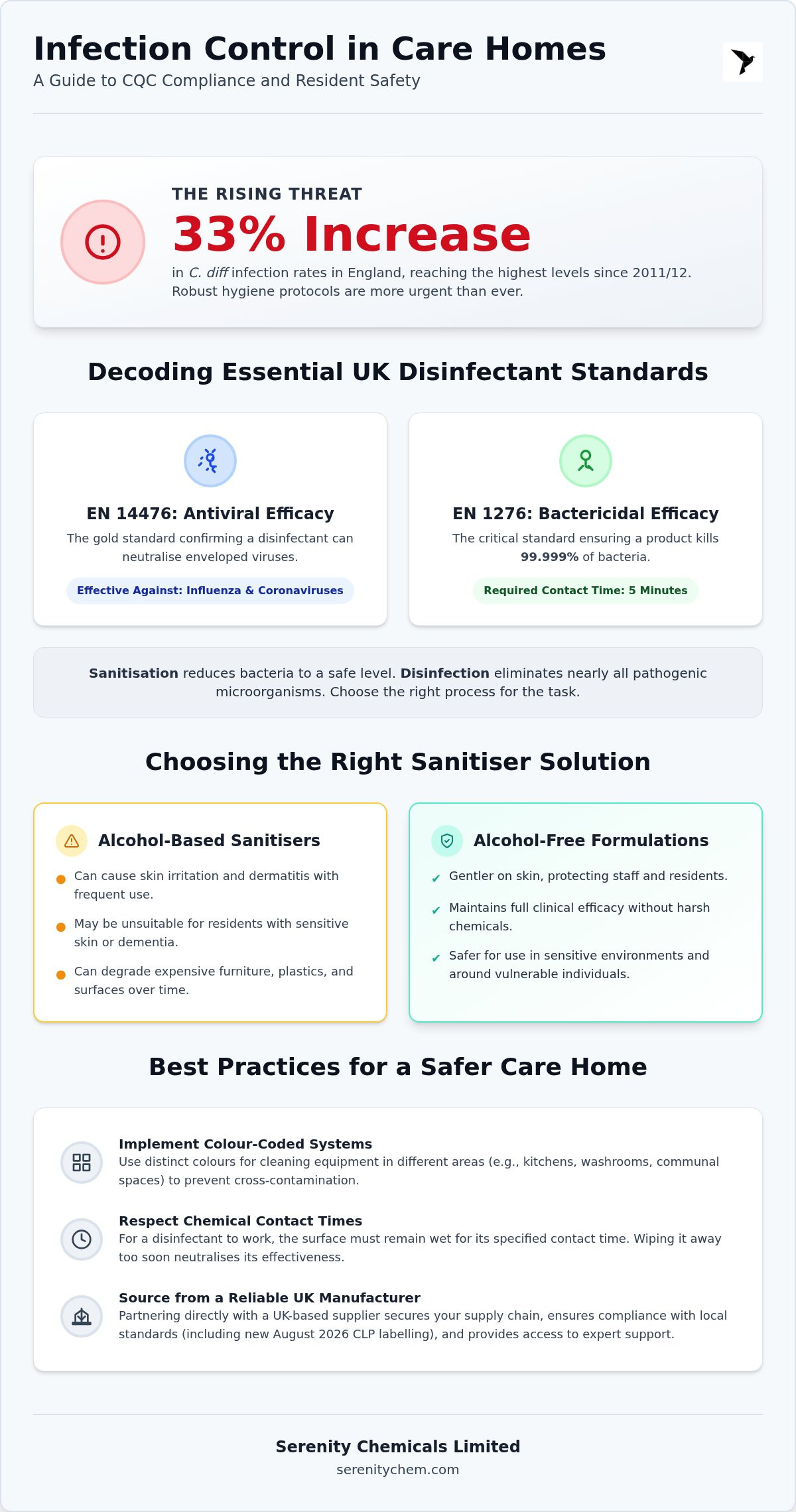
With C. diff infection rates in England reaching their highest levels since 2011/12 following a 33% increase, the necessity for robust hygiene protocols has never been more urgent. You're likely already aware that maintaining a safe environment requires a precise selection of infection control cleaning supplies for care homes, yet finding products that balance clinical power with resident safety remains a significant hurdle. It's difficult to manage the constant threat of viruses whilst ensuring that harsh chemicals don't irritate sensitive skin or degrade expensive furniture.
This 2026 guide provides the clarity you need to select effective, compliant, and ethical supplies that meet the latest CQC expectations. You'll learn how to navigate the new CLP labelling requirements and why switching to alcohol-free formulations can improve both safety and staff well-being. We'll also outline how partnering with a reliable UK manufacturer can streamline your procurement, ensuring you always have the right tools to maintain the highest possible standards of care for your residents.
Key Takeaways
- Learn how to decode essential UK standards like EN 14476 and EN 1276 to ensure your disinfectants provide maximum protection against viruses and bacteria.
- Discover why switching to alcohol-free infection control cleaning supplies for care homes can protect residents with sensitive skin or dementia whilst maintaining clinical efficacy.
- Understand how to implement robust colour-coded systems and cleaning schedules to prevent cross-contamination in communal living environments.
- Explore the advantages of sourcing directly from a UK manufacturer to secure your supply chain and ensure compliance with the August 2026 CLP labelling standards.
Understanding the Challenges of Infection Control in Care Homes
Managing hygiene in a residential setting presents a complex set of variables. Unlike a hospital, a care home is a place of rest and community, yet the biological risks are equally high. The core principles of Infection prevention and control (IPC) dictate that we must break the chain of transmission before it impacts vulnerable individuals. Achieving this requires a strategic approach to selecting infection control cleaning supplies for care homes that offer clinical-grade protection without making the environment feel sterile or cold. It's about finding a balance where safety is invisible but absolute.
Domestic "off-the-shelf" products are designed for low-traffic households and don't undergo the rigorous testing required for professional environments. In a care facility, surfaces are touched by dozens of people every hour. Using inadequate chemicals doesn't just leave bacteria behind; it creates a false sense of security that can lead to rapid transmission. Professional infection control cleaning supplies for care homes are necessary because:
- They meet specific EN standards for rapid pathogen neutralisation.
- The formulations are concentrated for high-volume commercial use.
- They are designed to be non-corrosive on professional-grade surfaces.
- Documentation like Safety Data Sheets (SDS) is readily available for compliance.
Protecting Vulnerable Residents and Staff
Residents often live with weakened immune systems or conditions like dementia, which can make it difficult for them to follow personal hygiene protocols. This places the burden of protection on the environment itself. Proactive cleaning is the first line of defence against Norovirus, MRSA, and seasonal influenza. When an outbreak occurs, the impact is more than just clinical; it disrupts the emotional well-being of the home and places immense operational strain on the team. High-quality personal hygiene solutions, such as Serenity Alcohol Free Hand Sanitiser, ensure that staff can sanitise their hands frequently without the risk of dermatitis or skin irritation.
The Role of High-Performance Cleaning Chemicals
True safety isn't about what you can see; it's about microbiological eradication. Moving beyond visible cleanliness requires a comprehensive professional cleaning chemicals list that specifies products tested to EN standards. These high-performance solutions are formulated to work quickly, reducing the time staff spend on deep-cleaning tasks whilst ensuring that pathogens are actually neutralised. By choosing the right chemicals, managers can maintain a homely atmosphere whilst knowing that every surface meets the highest safety benchmarks.
Essential Standards for Care Home Disinfectants
Selecting the right infection control cleaning supplies for care homes requires more than just checking for a "kills 99.9% of germs" label. To ensure compliance with the UK government infection control guidance, providers must look for specific European Standards (EN). These codes signify that a product has been independently tested and proven effective against specific pathogens under controlled conditions. Without these certifications, a cleaning regime may fail to meet the rigorous safety benchmarks required by the CQC.
EN 14476 is the gold standard for antiviral efficacy. It confirms that a disinfectant can neutralise enveloped viruses, including influenza and coronaviruses. For kitchens and washrooms, EN 1276 is the critical bactericidal standard. It ensures the product can kill 99.999% of bacteria within five minutes. Understanding the distinction between sanitisation and disinfection is also vital. Sanitisation reduces bacteria to a safe level, whereas disinfection involves a more rigorous process of eliminating nearly all pathogenic microorganisms. If you're unsure which standards your current inventory meets, you can speak with our technical team for a full compliance review.
A common failure in real-world application is ignoring contact times. This is the duration a surface must remain wet with the chemical to achieve its stated kill rate. If a cleaner is wiped away too quickly, it won't be effective. Professional supplies are formulated to balance rapid action with the practicalities of a busy care environment, ensuring that hygiene is maintained even when staff are working under pressure.
Residual Efficacy and Surface Protection
High-touch surfaces like handrails and door handles are re-contaminated almost immediately after cleaning. This is where residual efficacy becomes a game-changer. Residual efficacy is the ability of a product to continue killing pathogens after it has dried. Using a high-quality antibacterial surface spray UK providers trust helps maintain a protective barrier between scheduled cleaning cycles. This ongoing protection is a cornerstone of modern infection prevention, providing peace of mind in communal living areas whilst reducing the burden on cleaning teams.
COSHH Compliance and Safety Data Sheets
Safety is as important as efficacy. Under COSHH regulations, care homes must maintain accessible Safety Data Sheets (SDS) for every chemical used on-site. These documents provide essential information on handling, storage, and emergency procedures. Serenity Chemicals supports care homes by providing clear, transparent SDS for all products, including our Serenity Hard Surface Sanitiser. By opting for safer, often alcohol-free formulations, facilities can significantly reduce the risks of chemical burns or accidental ingestion, creating a more secure environment for residents with complex needs.
Choosing Between Alcohol-Based and Alcohol-Free Solutions
Whilst alcohol-based gels have traditionally dominated the market, care providers are increasingly evaluating their suitability within residential environments. Alcohol is an effective disinfectant, but it carries inherent risks that can be difficult to manage in a care home. These include high flammability, the potential for accidental ingestion by residents with cognitive impairments, and the tendency to cause painful skin irritation. When selecting infection control cleaning supplies for care homes, it's vital to choose solutions that offer high-level protection without introducing new hazards to the facility.
A common misconception is that alcohol-free alternatives are less effective than their ethanol-based counterparts. This is not the case. As long as a product meets the EN 14476 and EN 1276 standards discussed in the previous section, it provides the necessary antiviral and bactericidal protection. In fact, many modern alcohol-free formulations offer superior residual efficacy, continuing to protect surfaces long after the initial application. Adhering to the National standards of healthcare cleanliness requires a methodical approach to product selection where safety and efficacy are given equal weight.
The Benefits of Alcohol-Free Hand Sanitiser
Maintaining hand hygiene is the most effective way to prevent the spread of infection, yet frequent use of alcohol can lead to contact dermatitis. This is a significant issue for staff who must sanitise their hands dozens of times per shift. Switching to a high-quality alcohol free hand sanitiser UK formulation ensures a non-drying, comfortable experience. These products use advanced surfactants to neutralise pathogens whilst remaining gentle on sensitive skin, making them ideal for residents whose skin may be thinner or more prone to damage. Beyond dermatological benefits, eliminating alcohol gels removes a significant fire risk and an ingestion hazard. This is a critical safety consideration in dementia care settings where residents may not understand the danger of the products placed around them.
Surface Compatibility and Material Care
The longevity of your facility's assets is often overlooked during the procurement of infection control cleaning supplies for care homes. Alcohol is a powerful solvent that can cause significant aesthetic and structural damage over time. It can crack medical-grade vinyl upholstery, strip the finish from wooden furniture, and cause plastics to become brittle. Selecting materials-safe chemicals like Serenity Multi-Surface Cleaner allows for thorough disinfection without the risk of costly damage. By using pH-neutral, alcohol-free cleaners, care homes can extend the replacement cycles of their furniture and equipment. This leads to substantial long-term savings whilst maintaining a homely, well-cared-for environment that residents appreciate.
Best Practices for Care Home Cleaning Protocols
Establishing a robust cleaning programme is the foundation of any successful hygiene strategy. A structured schedule ensures that no area is overlooked, categorising tasks into daily, weekly, and monthly cycles. Daily efforts should focus on high-traffic zones, whilst weekly and monthly tasks allow for deeper disinfection of less accessible surfaces. To maintain CQC readiness, these protocols must be documented and audited regularly. Consistent monitoring doesn't just satisfy inspectors; it provides tangible evidence that you are prioritising the safety of your residents and staff through the diligent use of infection control cleaning supplies for care homes.
Colour-coded cleaning equipment is a non-negotiable component of modern infection prevention. By assigning specific colours to different zones, such as red for bathrooms and green for kitchens, you effectively eliminate the risk of cross-contamination. Equally important is staff training regarding chemical application. Using concentrated chemicals requires precision; staff must understand correct dilution rates to ensure efficacy whilst avoiding wastage. Over-diluting a product renders it useless against pathogens, whilst under-diluting can leave sticky residues that actually attract more bacteria. Providing your team with clear, visual mixing guides is a simple but effective way to maintain high standards.
Focus on High-Touch Areas and Communal Spaces
Pathogens often spread through frequent contact with shared surfaces. Light switches, handrails, door handles, and television remotes require multiple disinfections throughout the day to break the chain of transmission. Communal lounges and dining areas are particularly vulnerable to "super-spreader" events due to the density of residents. In these environments, using a rapid-action antibacterial spray ensures surfaces are safe for the next person within minutes. For meal preparation areas, it's essential to use a food safe sanitiser for commercial kitchens. These formulations provide the necessary bactericidal protection without leaving behind chemicals that could contaminate food or cause unpleasant taints.
Odour Control and Specialist Floor Care
Managing a care facility involves addressing specific challenges like incontinence-related odours. Standard domestic air fresheners merely mask smells; professional-grade neutralisers are required to break down the organic matter causing the odour. Floor care also demands a specialised approach. You must balance the need for deep disinfection with the requirement to maintain non-slip safety standards. Choosing the right infection control cleaning supplies for care homes means selecting floor cleaners that remove bio-burden without compromising the floor's grip. Partnering with an experienced commercial floor cleaner supplier can help you identify the best solutions for various surfaces, from safety vinyl to carpets. For a bespoke assessment of your facility's requirements, you can contact our team for expert guidance on bulk procurement and protocol implementation.
Sourcing Reliable Infection Control Supplies from a UK Manufacturer
Choosing where to source your infection control cleaning supplies for care homes is as critical as the chemicals themselves. When you buy through a distributor, you're often distanced from the manufacturing process, making it harder to verify ethical standards or technical specifications. By partnering directly with a UK-based manufacturer like Serenity Chemicals, you gain complete transparency. You aren't just buying a product; you're securing a direct line to the experts who formulated it. This relationship ensures that your facility remains compliant with evolving UK standards whilst avoiding the logistical delays often associated with imported goods.
We believe that efficacy shouldn't come at an ethical cost. Our formulations are cruelty-free and vegan-friendly, reflecting a commitment to responsible chemistry. This ethical stance is increasingly important for care providers who want their procurement choices to align with their core values of compassion and integrity. It provides peace of mind that the products protecting your residents haven't caused unnecessary harm elsewhere in the supply chain.
Bulk procurement is another area where care homes can make significant gains. Ordering in larger volumes reduces the amount of single-use plastic entering your facility and lowers your overall cost-per-use. It's a methodical, sustainable approach that supports both your operational budget and your environmental goals. By consolidating your orders, you reduce the administrative burden on your team and ensure that essential items are always in stock.
The Serenity Chemicals Commitment to Care
Our approach is rooted in the persona of the "Principled Expert". We don't just supply chemicals; we provide solutions that prioritise human safety and long-term well-being. This is why we've pioneered alcohol-free technology for the healthcare sector. It eliminates the risks of skin damage and fire hazards whilst maintaining the antiviral power required to meet EN 14476 standards. Whether you're managing a large care group or an independent facility, we offer tailored support to ensure your hygiene protocols are as effective as possible.
Bulk Sourcing and Consistent Supply Chains
Streamlining your inventory management becomes much simpler when you work with a dedicated cleaning products manufacturer UK. We help you organise your supplies of antibacterial sprays, floor cleaners, and sanitisers to ensure you never face a stockout. A resilient, local supply chain is your best defence against the unpredictability of global logistics. Ready to upgrade your care home hygiene? Contact our expert team today for professional guidance and discover how our bespoke solutions can support your facility's safety.
Elevating Hygiene Standards for a Safer Care Environment
Maintaining a safe environment for residents requires a methodical approach to hygiene that balances clinical power with resident well-being. By prioritising EN 14476 and EN 1276 compliant disinfectants, you ensure your facility is protected against the most resilient pathogens. Transitioning to alcohol-free technology offers a significant advantage, protecting vulnerable skin and reducing fire risks whilst maintaining the rigorous standards expected by the CQC. Selecting high-quality infection control cleaning supplies for care homes from a dependable UK manufacturer provides the supply chain resilience needed to navigate future challenges with confidence.
Our UK-manufactured formulations support your team in delivering the highest levels of care without compromising on safety or ethical standards. Whether you are managing a single facility or a large care group, we are here to help you streamline your procurement and enhance your hygiene protocols. Please request a professional consultation and quote for your care home supplies to see how our principled approach to chemistry can benefit your facility. We look forward to helping you create a safer, more comfortable home for everyone in your care.
Frequently Asked Questions
What are the most essential infection control cleaning supplies for a new care home?
The foundation of your inventory should include high-performance disinfectants that cover all facility zones. Essential infection control cleaning supplies for care homes include alcohol-free hand sanitisers, antibacterial surface sprays, and specialised floor cleaners. You'll also need dedicated kitchen sanitisers and heavy-duty degreasers for food preparation areas. It's vital that every product meets EN 14476 and EN 1276 standards to ensure clinical efficacy whilst satisfying the fundamental safety requirements for new provider registrations.
Is alcohol-free hand sanitiser as effective as alcohol-based gel for care home use?
Alcohol-free hand sanitisers are just as effective as alcohol-based gels, provided they meet the EN 14476 antiviral standard. Serenity Alcohol Free Hand Sanitiser is formulated to neutralise 99.99% of pathogens without the risks of flammability or skin irritation. These solutions are often preferred in care settings because they don't cause the dryness or dermatitis associated with frequent alcohol use. They also eliminate the danger of accidental ingestion by vulnerable residents with cognitive impairments.
How often should high-touch surfaces in a care home be disinfected?
High-touch surfaces like door handles, handrails, and light switches should be disinfected multiple times throughout the day. In high-traffic communal areas, a frequency of every two to four hours is recommended to break the chain of transmission effectively. Using products with residual efficacy, such as Serenity Antibacterial Surface Spray, provides an extra layer of protection between these cycles. Regular scheduling ensures that hygiene remains a proactive habit rather than a reactive response to an outbreak.
What EN standards should I look for when buying disinfectants for a care facility?
You should prioritise products certified to EN 14476 and EN 1276. EN 14476 is the essential standard for antiviral efficacy, proving the product can neutralise enveloped viruses like influenza and coronaviruses. EN 1276 is the bactericidal standard, confirming effectiveness against common bacteria like MRSA and E. coli. Checking for these specific codes on your infection control cleaning supplies for care homes ensures your facility uses chemicals proven to perform in professional healthcare environments.
Can I buy infection control supplies in bulk direct from a UK manufacturer?
Yes, you can source your supplies directly from Serenity Chemicals, a UK-based manufacturer and blender founded in 2020. Buying direct ensures a more resilient supply chain and avoids the logistical delays common with imported goods. Bulk procurement also lowers your cost-per-use and reduces plastic waste within your facility. We provide national coverage, offering care homes a direct relationship with the experts responsible for the chemical formulations used in their daily hygiene protocols.
Are Serenity Chemicals products safe for residents with sensitive skin or allergies?
Serenity Chemicals products are specifically designed with safety and skin health in mind. Our alcohol-free hand sanitiser formulation is non-drying and gentle, making it ideal for staff who wash their hands frequently and residents with sensitive or thinning skin. By removing harsh alcohols and focusing on pH-balanced surfactants, we significantly reduce the risk of contact dermatitis and allergic reactions. This principled approach ensures that high-level disinfection doesn't come at the cost of resident comfort.
What is the difference between a sanitiser and a disinfectant in healthcare?
In a healthcare context, sanitisers and disinfectants serve different purposes based on their kill rates. A sanitiser reduces the number of microorganisms on a surface to a level deemed safe by public health standards, typically killing 99.9% of bacteria. A disinfectant is more powerful, designed to eliminate nearly all pathogenic microorganisms, including viruses and fungi. For care homes, using a disinfectant that meets EN standards is necessary for high-risk areas to ensure complete microbiological safety.
How do I ensure my care home stays compliant with CQC hygiene regulations?
Compliance requires a combination of high-quality supplies and robust documentation. You must ensure all chemicals have accessible Safety Data Sheets (SDS) and that staff are trained on correct dilution and contact times. CQC inspectors look for evidence of consistent cleaning schedules and the use of professional-grade products that meet EN 14476 and EN 1276. Regularly auditing your protocols and maintaining a reliable supply of certified chemicals will demonstrate a well-led, safe environment.

How to Prevent Cross-Contamination in a Commercial Kitchen: A Professional Guide
A single lapse in hygiene isn't just a mistake; it's a direct threat to your business's survival and your customers' health. ...

Developing a Robust Workplace Hand Hygiene Policy in the UK: A 2026 Guide
In 2025, minor illnesses and infectious diseases accounted for nearly half of the 148.8 million working days lost across the ...