

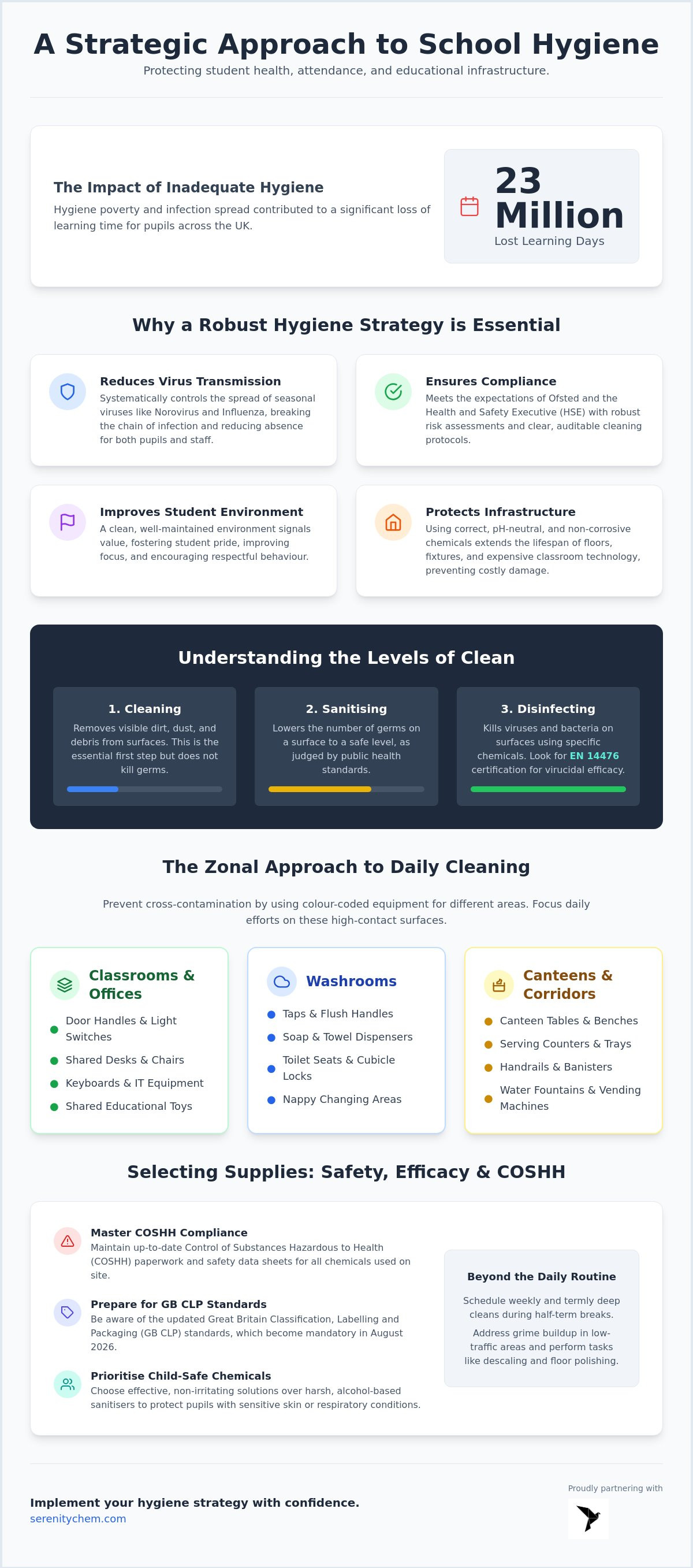
Did you know that hygiene poverty and the spread of infection led to an estimated 23 million lost days of learning for UK school children last year? For site managers and headteachers, maintaining a hygienic environment is a significant responsibility that goes far beyond simple aesthetics. It's a vital investment in student attendance and staff wellbeing. However, balancing budget constraints with the need for a comprehensive school cleaning supplies checklist can feel overwhelming, especially when faced with complex COSHH paperwork and the updated August 2026 GB CLP labelling standards.
We understand that you need solutions that are both effective and responsible. You likely want to reduce infection rates without resorting to harsh, alcohol-based sanitisers that cause skin irritation amongst pupils. This guide provides a safety-first roadmap to maintaining a compliant learning environment whilst protecting those in your care. We'll outline the essential supplies needed for every area of your school, from the canteen to the classroom. You'll learn how to source child-safe chemicals that simplify your safety data sheets and ensure your facility remains a healthy place for children to grow and learn.
Key Takeaways
- Learn how a robust hygiene strategy reduces virus transmission and improves student focus and pride in their learning environment.
- Discover how to implement a zonal cleaning approach to effectively manage high-contact surfaces like door handles and shared desks.
- Access a comprehensive school cleaning supplies checklist designed to meet 2026 UK health standards whilst simplifying your procurement process.
- Understand why EN 14476 certification is essential for virucides and how to distinguish between cleaning, sanitising, and disinfecting.
- Master the scheduling of weekly and termly deep cleans to address grime buildup in low-traffic areas during half-term breaks.
Why a Robust School Cleaning Supplies Checklist is Essential
A well-structured school cleaning supplies checklist acts as more than a simple inventory; it's a live document that underpins the safety and operational efficiency of the entire site. In a high-traffic educational setting, hygiene is the invisible foundation of attendance. When infection control is managed systematically, the spread of seasonal viruses like Norovirus and Influenza is significantly curtailed. This isn't just about meeting basic standards. It's about fulfilling the legal and ethical duty of care schools owe to their communities.
Regulatory bodies like Ofsted and the Health and Safety Executive (HSE) expect schools to demonstrate robust risk assessments and clear cleaning protocols. A comprehensive checklist ensures that no high-risk area is overlooked, providing a clear audit trail for inspections. Beyond compliance, there is a profound psychological benefit. A pristine environment signals to students that their education is valued, which directly fosters a sense of pride and improves focus within the classroom. When pupils see a well-maintained school, their own behaviour often mirrors that level of respect.
Reducing Student and Staff Absence
High-density communal environments are natural breeding grounds for bacteria. Breaking the chain of infection requires more than a cursory wipe-down; it demands the strategic use of Cleaning agents that offer residual antibacterial protection. By selecting products that continue to work on surfaces between cleaning cycles, schools can create a safer buffer for students. This approach is particularly vital for protecting vulnerable pupils with respiratory conditions or sensitive skin who might react poorly to harsh, traditional chemicals. Reducing the viral load in a classroom doesn't just keep children in their seats; it protects the health of staff, reducing the need for expensive supply cover.
Protecting Educational Infrastructure
School budgets are under immense pressure, making the preservation of existing assets a financial priority. Using the wrong chemicals on specialist surfaces can lead to costly damage that requires premature replacement. For instance, partnering with a reliable commercial floor cleaner supplier ensures you are using pH-neutral solutions that preserve the integrity of wood, vinyl, or stone flooring. This prevents the stripping of protective layers that would otherwise leave floors porous and difficult to sanitise.
The same principle applies to modern classroom technology and washroom facilities. Non-corrosive descalers and specialised screen cleaners extend the lifespan of expensive fixtures and interactive whiteboards. A detailed school cleaning supplies checklist helps site managers track which products are safe for specific materials. This prevents the accidental degradation of laboratory benches and stainless steel fittings. A methodical approach ensures that your cleaning budget protects your infrastructure rather than eroding it over time.
The Daily School Cleaning Checklist: High-Contact Zones
Daily cleaning routines form the frontline of school hygiene, focusing on the areas where students and staff interact most frequently. A comprehensive school cleaning supplies checklist must prioritise high-contact zones, such as door handles, light switches, keyboards, and shared desk surfaces. These points are primary vectors for the transmission of pathogens. According to official guidance on Health protection in schools and other childcare facilities, establishing a consistent, documented schedule is vital for effective risk management and infection control.
Implementing a "zonal" cleaning approach is a technical discipline that prevents cross-contamination throughout the site. This involves colour-coding equipment, like mops and microfibre cloths, to ensure that tools used in washrooms are never introduced to classrooms or food preparation areas. This simple but principled method maintains a high standard of care whilst protecting the integrity of your hygiene protocols. If you require guidance on tailoring these protocols to your specific site, you can speak with our technical team for expert advice on product application.
Canteen hygiene also requires strict daily adherence to food-safe protocols. Using a specialised kitchen sanitiser ensures that prep surfaces and dining tables are free from bacteria without leaving harmful chemical residues. Integrating these tasks into your daily school cleaning supplies checklist ensures that every communal space remains safe, welcoming, and compliant with UK health standards.
Classroom and Shared Learning Spaces
Classrooms require thorough daily disinfection of all desks and chairs. It's essential to use a high-performance antibacterial spray and respect the required contact time; wiping a surface too quickly can leave pathogens active. Waste bins should be emptied daily, and the bins themselves should be sanitised to prevent bacterial growth and unpleasant odours. Additionally, site managers must ensure that hand hygiene stations are fully replenished with alcohol-free sanitiser. This protects students with sensitive skin whilst encouraging frequent hand hygiene amongst the pupil population.
Washrooms and Hygiene Stations
Washrooms demand intensive daily sanitisation to manage both bacteria and odour control. Toilets, urinals, and sinks should be cleaned with a professional toilet cleaner that effectively removes limescale and organic matter without damaging fixtures. Polishing mirrors and glass surfaces with a dedicated cleaner helps maintain a bright, professional atmosphere that encourages students to respect the facilities. Finally, monitoring and refilling soap dispensers and hand-drying facilities is a critical task that prevents the breakdown of hygiene habits during the school day.
Beyond the Daily Routine: Weekly and Termly Deep Cleaning
Daily maintenance keeps a school operational, but weekly and termly deep cleaning cycles preserve the facility's long-term health. These sessions allow site teams to address the buildup of grime in low-traffic or hard-to-reach areas that daily routines often miss. High-level dusting, window tracks, and the spaces behind radiators require periodic attention to maintain the Hygiene and cleanliness standards expected in modern education. Neglecting these areas can lead to poor indoor air quality and the accumulation of allergens that affect student wellbeing.
A robust school cleaning supplies checklist must distinguish between these restorative tasks and standard daily upkeep. Scheduling these intensive cleans during half-terms and seasonal breaks is a strategic necessity. It ensures that powerful chemicals have sufficient contact and drying time without pupils being present. This methodical planning is essential for maintaining safety whilst achieving a level of cleanliness that isn't possible during the busy term-time week. It's a principled approach that values thoroughness over quick fixes.
Floor and Fabric Maintenance
Hard floors in assembly halls and corridors endure thousands of footsteps every day. Weekly machine-buffing is necessary to maintain slip resistance and a professional shine. During the summer break, these surfaces often require stripping and re-sealing to prevent permanent staining. For carpeted areas such as libraries and staff rooms, a deeper approach is required. Using an odour-neutralising carpet shampoo removes trapped allergens and deep-seated dirt that standard vacuuming leaves behind. This process doesn't just clean; it refreshes the environment, making communal spaces more comfortable for students and staff alike.
Specialist Educational Environments
Certain areas of a school require a more technical approach to hygiene. Science laboratories and Design and Technology rooms accumulate chemical residues and fine dust that require heavy-duty degreasers to remove safely. Your school cleaning supplies checklist should include high-strength solutions specifically designed to break down oils and synthetic resins without damaging sensitive equipment. In sports halls and changing rooms, the focus shifts to preventing fungal spread. Sanitising gym equipment and mats with virucidal agents is a non-negotiable weekly task. Finally, school kitchens must meet HACCP standards. Deep cleaning extractors and prep surfaces with food-safe degreasers ensures that the heart of the school remains a safe environment for meal preparation.
Selecting the Right Supplies: Safety, Efficacy, and COSHH
Building a school cleaning supplies checklist requires a precise understanding of chemical efficacy. It isn't enough to simply "clean" a surface; site managers must distinguish between cleaning, sanitising, and disinfecting. Cleaning involves the physical removal of dirt and organic matter. Sanitising reduces bacteria to levels considered safe by public health standards. Disinfecting, however, uses specific chemicals to kill pathogens on surfaces. For a school to be truly protected, its virucides must carry the EN 14476 certification. This standard is non-negotiable, as it proves the product's effectiveness against enveloped viruses, providing the peace of mind that communal spaces are genuinely safe.
Operational safety also relies on the physical organisation of your equipment. Colour-coded tools are essential to eliminate the risk of cross-contamination between high-risk washrooms and food preparation areas. Beyond the tools themselves, the storage of chemicals must be strictly managed. A COSHH-compliant chemical store requires clear, up-to-date Safety Data Sheets (SDS) and appropriate hazard signage. This methodical approach ensures that staff are protected and that the school remains compliant with Health and Safety Executive expectations. If you need assistance with choosing the correct products for your facility, contact our team for a professional consultation.
The Alcohol-Free Advantage for Schools
Traditional sanitisers often rely on high concentrations of ethanol, which can be problematic in an educational setting. Switching to an alcohol free hand sanitiser UK schools prefer offers significant safety benefits. Alcohol-based products can cause painful dryness or dermatitis on young, sensitive skin, leading to poor hygiene compliance amongst students. By removing alcohol, you also eliminate the risks of accidental ingestion and the presence of flammable hazards in classrooms. Modern foam formulations are particularly effective; they provide better coverage than liquids and are more cost-efficient, as they're harder to spill or waste.
Navigating Chemical Safety Standards
With the 2026 updates to GB CLP hazard standards, it's vital to correctly identify the symbols on your antibacterial surface spray UK labels. Choosing no-rinse sanitisers is a practical decision for fast-paced school environments, as it allows staff to disinfect surfaces quickly without the need for a secondary water wipe. This efficiency doesn't come at the cost of safety. Sourcing your supplies from a UK manufacturer ensures full supply chain transparency and guarantees that every product on your school cleaning supplies checklist meets the rigorous safety requirements of the British education sector.
Implementing Your Hygiene Strategy with Serenity Chemicals Limited
Buying direct from a UK manufacturer like Serenity Chemicals Limited offers a clear logistical and financial advantage. By eliminating intermediaries, schools can significantly reduce their educational overheads. This ensures that every pound spent on your school cleaning supplies checklist goes directly into the quality and safety of the products themselves. Our commitment to principled hygiene means we prioritise the health of the student population whilst ensuring our solutions are powerful enough to meet the most rigorous inspection standards. It's a dependable approach that values the well-being of users as much as the efficacy of the chemicals.
Efficiency is a core part of our service. Our concentrated formulas, such as Serenity Floor Cleaner and Serenity Multi-Surface Cleaner, are designed to be diluted on-site. This approach reduces the volume of plastic waste generated by the school and minimises the physical space required in the chemical store. It's a practical, no-nonsense way to manage resources while maintaining a high standard of care. School business managers can rely on our team for expert guidance on application, ensuring that every product is used to its full potential without unnecessary waste.
Bulk Sourcing for Educational Budgets
Procuring supplies in 5-litre concentrates provides substantial economic benefits for floor and surface care. This bulk approach is far more sustainable than purchasing ready-to-use bottles. For hand hygiene, our refillable systems for Serenity Alcohol Free Hand Sanitiser further reduce single-use plastic consumption. Streamlining your procurement through a single, reliable UK supplier simplifies the administrative burden on your office staff. It ensures a consistent supply of essential items, making it much easier to maintain an accurate school cleaning supplies checklist throughout the academic year.
Expert Support and Safety Compliance
Maintaining a COSHH folder is a complex task that requires meticulous attention to detail. Serenity Chemicals Limited supports site managers by providing easy access to comprehensive Safety Data Sheets (SDS) for every product in our range. Our team also offers training guidance on effective chemical dilution to prevent waste and ensure safety. Because every educational facility is unique, we help you customise your supply list based on your specific school size and the types of facilities you manage. This service-oriented approach builds long-term trust, ensuring your hygiene strategy remains both effective and compliant with latest UK safety standards.
Creating a Healthier Future for Your School Community
Maintaining a safe learning environment is a continuous commitment that requires both strategic planning and the right tools. By integrating a systematic school cleaning supplies checklist into your daily and termly routines, you do more than just meet regulatory standards. You actively protect the health of your students and staff, reducing absence and fostering a culture of pride within your school. We've explored how zonal cleaning, EN 14476 certified formulations, and specialised maintenance can transform your site management from a reactive task into a proactive educational investment.
As a UK-based manufacturer, Serenity Chemicals Limited is dedicated to providing principled hygiene solutions that respect both the user and the environment. Our specialised alcohol-free hand hygiene range and high-performance, concentrated cleaners are designed to meet the unique demands of the 2026 educational landscape. Choosing effective, non-irritating chemicals ensures that your hygiene strategy is as responsible as it is thorough. We invite you to browse the Serenity range of school-safe cleaning chemicals to see how our technical expertise can support your facility. Together, we can ensure your school remains a clean, safe, and inspiring space for every child to thrive.
Frequently Asked Questions
What are the most essential cleaning supplies for a primary school?
Essential items include a high-performance antibacterial surface spray, professional toilet cleaner, and a food-safe kitchen sanitiser. These form the core of any school cleaning supplies checklist. You also need colour-coded microfibre cloths and mops to prevent cross-contamination between zones. Ensuring these basics are always in stock allows site teams to maintain consistent hygiene levels across classrooms and communal areas whilst protecting the student population.
Is alcohol-free hand sanitiser as effective as alcohol-based versions for schools?
Yes, alcohol-free hand sanitisers are highly effective when they meet the required EN standards for virucidal activity. They offer a significant advantage for schools as they are gentler on young, sensitive skin and eliminate the risks of accidental ingestion or fire hazards. These formulations often provide longer-lasting protection on the skin compared to alcohol-based versions, which evaporate almost immediately after application.
How often should high-traffic areas in a school be disinfected?
High-traffic areas and touch points, such as door handles and light switches, should be disinfected at least once daily. During periods of high infection spread, increasing this frequency to twice daily is a principled approach to safety. Implementing a systematic schedule ensures that communal surfaces don't become vectors for seasonal viruses, helping to keep both students and staff healthy and in the classroom.
What is the difference between EN 1276 and EN 14476 standards?
EN 1276 is the European standard for chemical disinfectants against bacteria, while EN 14476 specifically tests for virucidal activity. For a school cleaning supplies checklist to be truly comprehensive, it must include products that meet EN 14476. This ensures the chemicals are capable of killing enveloped viruses, which is critical for managing outbreaks of influenza or other viral infections within a school setting.
How can schools reduce the cost of cleaning supplies without compromising safety?
Schools can reduce costs by purchasing concentrated formulas direct from a UK manufacturer rather than buying ready-to-use bottles from retail outlets. Using 5-litre concentrates and on-site dilution systems significantly lowers the price per litre and reduces plastic waste. Additionally, buying in bulk helps streamline procurement and ensures that you aren't paying a premium for third-party distribution or unnecessary packaging.
Are professional cleaning chemicals safe to use around children with asthma?
Many professional chemicals are safe, but it's vital to choose formulations that are low in Volatile Organic Compounds (VOCs) and free from harsh fragrances. Alcohol-free sanitisers and non-toxic multi-surface cleaners are generally better for students with respiratory sensitivities. Always follow the manufacturer's dilution instructions strictly to ensure the environment remains safe and comfortable for all pupils, including those with asthma or sensitive skin.
What is the best way to store cleaning chemicals in a school environment?
Chemicals must be stored in a dedicated, lockable area that is inaccessible to students, strictly following COSHH regulations. This store should be well-ventilated and clearly marked with appropriate hazard signage. Keeping a folder with up-to-date Safety Data Sheets (SDS) in the storage area is a legal requirement. This ensures that site staff have immediate access to safety information in the event of an accidental spill or ingestion.
Does my school need a different cleaner for different floor types?
Yes, using a pH-neutral floor cleaner is essential to avoid damaging specific materials like wood, vinyl, or natural stone. A universal cleaner might strip the protective finish from a hall floor, leading to costly repairs and reduced slip resistance. Selecting specialised solutions ensures that each surface is sanitised effectively whilst its structural integrity is preserved. This methodical approach protects your educational infrastructure for the long term.

Hand Sanitiser for Frequent Use: Professional UK Guide 2026
The very product you use to protect your health might be the primary cause of your skin's deterioration. While alcohol-based ...

Food Safe Antibacterial Spray UK: The Professional 2026 Hygiene Guide
Using the wrong disinfectant in a commercial kitchen isn't just a minor oversight; it's a direct threat to your Food Hygiene ...