

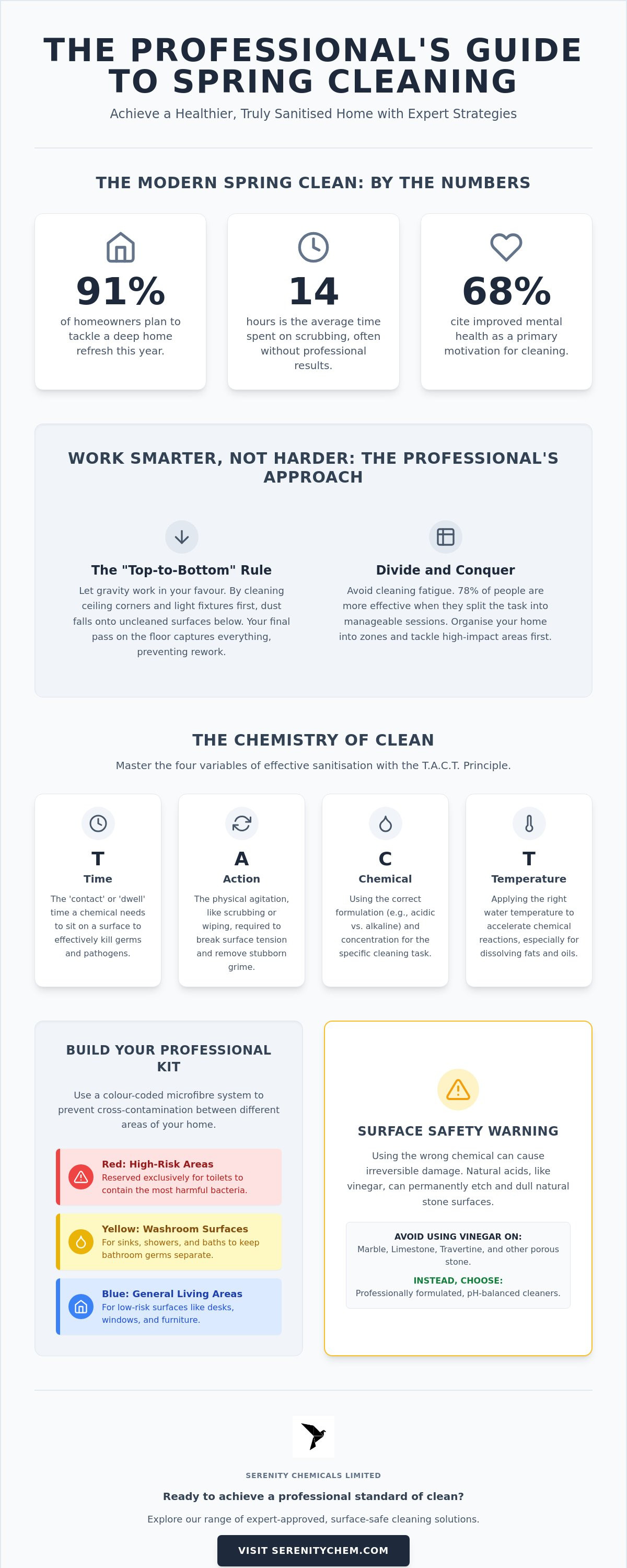
Recent data indicates that 91% of homeowners plan to tackle a deep refresh this year, yet many will spend an average of 14 hours scrubbing without achieving the professional standard they desire. It's easy to feel overwhelmed by the scale of a top-to-bottom clean, especially when you're unsure if you're truly disinfecting or simply moving dust around. Accessing the right spring cleaning tips is vital for those who want to achieve a healthier home environment whilst avoiding the risk of damaging expensive surfaces with incorrect chemical applications.
We recognise that the distinction between basic cleaning and thorough sanitisation can be confusing, and the fear of harming your property is a valid concern. This article provides the clarity you need, promising to help you master professional-grade results through systematic strategies and expert-approved solutions. We'll outline a methodical plan of action that ensures streak-free surfaces and a revitalised environment that remains fresh and hygienic for the long term.
Key Takeaways
- Master the "Top-to-Bottom" sequence to ensure gravity works in your favour, preventing dust and debris from settling on surfaces you've already polished.
- Apply the professional T.A.C.T. principle, which balances Time, Action, Chemical, and Temperature, to your spring cleaning tips for more efficient sanitisation.
- Protect your home's value by learning why natural acids like vinegar can permanently damage marble and limestone surfaces compared to pH-balanced professional solutions.
- Target high-touch zones and hidden areas, such as extractor fans and grout lines, to move beyond superficial tidying to a genuinely hygienic environment.
- Adopt sustainable maintenance habits and cost-effective dilution strategies that reduce plastic waste whilst keeping your home in professional condition year-round.
The Strategy of Spring Cleaning: Planning for a Healthier Environment
The practice of spring cleaning has evolved from a simple seasonal tradition into a vital health intervention for the modern home. In 2026, the focus has shifted. It's no longer enough to merely tidy away winter clutter; the goal is deep sanitisation. With 91% of people planning a refresh this year, the difference between a frustrating weekend and a successful overhaul lies in your logistical approach. Effective spring cleaning tips always begin with a fundamental understanding of physics and planning.
Professional results rely on the "Top-to-Bottom" rule. This isn't just a suggestion; it's a strategy dictated by gravity. When you begin at the highest point of a room, such as ceiling corners, light fixtures, or the tops of wardrobes, any displaced dust and chemical mist falls onto the surfaces below. By working downwards, you ensure that your final pass on the floors captures every last particle. If you reverse this order, you'll find yourself cleaning the same surfaces twice.
Efficiency also requires a realistic schedule. Statistics show that homeowners spend an average of 14 hours on their yearly routine, but 78% of people find it more effective to split this into multiple sessions. Rather than attempting a marathon, organise your property into manageable zones. Focus on high-impact areas like the kitchen or bathrooms first. This methodical progression prevents the "cleaning fatigue" that often leads to rushed work and missed spots.
The Health Benefits of a Deep Spring Clean
A thorough clean serves as a reset for your home's internal ecosystem. Beyond the aesthetic appeal, deep cleaning removes a significant allergen load, including dust mites, pollen, and pet dander that accumulates in soft furnishings and vents. The psychological impact is equally measurable. Since 68% of homeowners cite mental health as a primary motivation, the transition to a decluttered, fresh-smelling environment provides immediate stress relief. Improving indoor air quality through meticulous dusting and vacuuming ensures that your sanctuary is as healthy as it is beautiful.
Creating Your Professional Cleaning Kit
To achieve professional standards, you must move beyond basic sponges. High-quality microfibre cloths are essential because their structure traps microscopic debris rather than just pushing it around. We recommend a colour-coded system to maintain integrity and safety: use red for high-risk areas like toilets, yellow for washroom surfaces, and blue for general living areas. This prevents the cross-contamination of bacteria between zones. Safety remains our priority; always ensure adequate ventilation by opening windows whilst working. Even with advanced, safer formulations, maintaining airflow is a core principle of responsible cleaning that protects your respiratory health.
The Chemistry of Clean: Understanding Efficacy and Safety
A surface that appears sparkling to the eye isn't necessarily safe to the touch. While removing visible dirt is an essential first step, your spring cleaning tips should prioritise the invisible world of pathogens. Research into the health benefits of cleaning suggests that a meticulous approach reduces physiological stress and environmental triggers. To achieve this, professionals rely on the T.A.C.T. principle, a balanced formula of four variables that dictate cleaning success:
- Time: The "contact time" a chemical requires to dwell on a surface to kill bacteria effectively.
- Action: The physical agitation, such as scrubbing or wiping, needed to break surface tension and biofilms.
- Chemical: The specific formulation, its pH level, and its concentration.
- Temperature: The thermal energy used to dissolve fats or increase the speed of chemical reactions.
Understanding pH levels is equally vital for surface preservation. Acidic cleaners, such as a dedicated toilet cleaner, are necessary for dissolving mineral deposits like limescale, but they can etch natural stone. Conversely, alkaline solutions, like a heavy-duty degreaser, are superior for emulsifying grease and oils in kitchens. Choosing the wrong balance can lead to permanent damage on expensive worktops or flooring. This is why many are moving toward alcohol-free solutions. These formulations offer a safer alternative for sensitive surfaces and skin whilst maintaining high efficacy. If you're unsure which solution suits your specific environment, you can speak with our technical experts for advice.
What is a Sanitiser? A Professional Definition
Sanitisation is the process of reducing microbial populations to a safe level as determined by public health standards. Unlike basic detergents that only remove soil, sanitisers are designed to actively reduce the presence of bacteria and viruses. Modern professional products often include residual protection. This creates an invisible barrier that keeps surfaces cleaner for longer, preventing rapid recolonisation after the initial clean is complete. Integrating these chemical principles into your spring cleaning tips ensures you're creating a truly hygienic environment rather than just a superficial shine.
Why Standards Matter: EN 14476 and Beyond
When selecting products for a deep spring clean, look for European (EN) standards to ensure reliability. EN 14476, for instance, is the benchmark for virucidal activity. Using certified products provides peace of mind that your home or business meets rigorous safety benchmarks. For a deeper look at how these standards apply to skin-safe options, read our Alcohol-Free Hand Sanitiser UK: The Professional Guide (2026). Relying on verified chemistry ensures that your efforts result in a measurably safer space for everyone.
Professional Solutions vs DIY Methods: Choosing Your Arsenal
Many popular guides suggest that common kitchen items are the ultimate solution for a seasonal refresh. However, following generic spring cleaning tips without considering material science can lead to costly errors. Whilst white vinegar is often praised as a natural alternative, its high acidity can permanently etch and dull natural stones like marble, limestone, and travertine. Understanding these spring cleaning do's and don'ts is essential for protecting your property's value whilst ensuring a deep clean.
Professional chemicals are formulated with surfactants specifically engineered to lift grease and suspension soils that pantry staples cannot touch. Beyond efficacy, there is a significant financial argument for choosing professional-grade concentrates. Supermarket brands are often pre-diluted. This means you are paying for water and excess plastic packaging. By opting for bulk-buy professional solutions, you reduce your environmental footprint and lower the cost-per-use. It is a more responsible choice for both your budget and the planet.
The Limitations of Pantry Staples
Lemon juice and vinegar may offer a pleasant scent, but they lack the complex surfactants required to emulsify heavy kitchen grease or industrial soot. DIY mixtures often lack the necessary preservatives found in commercial products. This can lead to rapid bacterial growth within the cleaning bottle itself if the solution is stored for more than a few days. Whilst DIY methods might suffice for polishing copper or brightening a sink, they fall short when the goal is true sanitisation of high-touch worktops or flooring.
The Case for Specialised Formulations
Choosing a certified antibacterial surface spray UK ensures consistent and measurable results. Manufacturers test these formulations for non-etching properties, ensuring they are safe for a wide variety of modern finishes. During a large-scale clean, time is a critical factor. Professional no-rinse formulas allow you to move through rooms quickly without the need for a secondary water pass. This increases your efficiency without compromising on hygiene standards. By integrating these professional spring cleaning tips into your routine, you ensure a deeper, safer, and more durable result.
The Professional Room-by-Room Spring Cleaning Checklist
Transitioning from planning to execution requires a structured approach that respects the specific needs of each surface. Whilst 73% of homeowners include appliances in their routine, few use the industrial-grade techniques necessary for a truly professional finish. By applying these spring cleaning tips room-by-room, you can ensure that every corner of your property meets high hygiene standards without risking damage to delicate finishes.
Kitchen and Food Preparation Zones
The kitchen is often the most demanding area due to the accumulation of carbonised grease and food residues. Start by applying a heavy-duty degreaser to your oven hood and extractor filters; these areas are fire hazards if left unmaintained. When cleaning the interior of your fridge and worktops, avoid standard household sprays that may leave toxic residues. Using a dedicated food-safe sanitiser is essential for maintaining a healthy environment. For more detailed standards on prep area hygiene, refer to our food safe sanitiser for commercial kitchens guide.
Floor and Carpet Restoration
Floors endure the highest level of wear and require specific chemical interventions to restore their lustre. We recommend the "Two-Bucket" mopping method: one bucket for your diluted floor cleaner and one for rinsing your mop. This prevents the redistribution of dirty water across your tiles or hardwood. For carpets, pre-treating high-traffic stains with a targeted spot cleaner before using a machine shampoo will yield significantly better results. If you're managing larger spaces or specialised flooring, consulting a commercial floor cleaner supplier can provide the technical guidance needed for industrial-strength solutions.
Glass and High-Shine Surfaces
Achieving a streak-free finish on mirrors and windows is a matter of technique and chemical choice. Professional cleaners avoid ammonia-based products, which can leave a "blue film" or cloudy residue over time. Instead, use a pH-neutral glass cleaner and an "S-motion" wiping pattern to ensure you don't simply move lint from one side to the other. For modern workspaces, don't forget your electronics. Use anti-static treatments on screens and keyboards to repel dust and keep your equipment functioning at its best. If you need assistance selecting the correct chemicals for your specific surface types, please contact our technical support team for a professional consultation.
Maintaining Serenity: Sustainable Habits Beyond the Spring
Completing a deep clean provides an immediate sense of accomplishment, but the true value lies in how you maintain that environment throughout the year. Adopting a "clean as you go" philosophy is one of the most effective spring cleaning tips for long-term home health. By addressing small spills and dust accumulation daily, you reduce the physical and mental burden of the next annual overhaul. This proactive approach ensures your living space remains a sanctuary of hygiene rather than a source of stress.
Sustainability and efficiency go hand-in-hand when you transition to professional-grade procurement. Most supermarket products are ready-to-use formulations that contain a high percentage of water. This leads to excessive plastic waste and higher transport emissions. Choosing professional concentrates allows you to dilute solutions as needed, significantly reducing your environmental footprint. It's a principled choice that benefits both your household budget and the planet by minimising the volume of single-use plastics entering the waste stream.
Safe storage is a critical yet often overlooked aspect of home management. Your cleaning cupboard should be organised according to safety best practices, ensuring that acidic and alkaline chemicals are stored separately. Always keep products in their original packaging whenever possible. If you must use secondary spray bottles for diluted solutions, they must be clearly and accurately labelled to prevent accidental misuse. This "COSHH-lite" approach brings professional safety standards into the domestic environment, protecting children, pets, and visitors alike.
Organising Your Professional Inventory
Maintaining a professional inventory requires more than just a well-stocked shelf. You must monitor expiry dates on sanitisers to ensure their antiviral and antibacterial efficacy remains intact over time. Sourcing your supplies directly from a cleaning products manufacturer UK based provides the assurance of local quality control and adherence to strict British safety standards. This direct relationship ensures you're using formulations designed for modern materials and high-traffic environments.
The Serenity Commitment to Safety
At Serenity Chemicals, we prioritise the well-being of our users by focusing on alcohol-free, non-toxic formulations. Our products provide the same high-level sanitisation as traditional chemicals without the harsh odours or skin irritants. To simplify your maintenance routine, our professional cleaning chemicals list serves as a guide for selecting the right tools for every zone in your home. We invite you to explore our full range of Serenity professional solutions to ensure your next set of spring cleaning tips leads to a measurably healthier, safer environment.
Achieving Lasting Results with Professional Standards
Transitioning from a superficial tidy to deep sanitisation requires a blend of strategy and science. By applying the "Top-to-Bottom" rule and understanding the T.A.C.T. principle, you ensure every hour spent cleaning delivers a measurably healthier home. These spring cleaning tips help you move beyond traditional "pantry hacks" that can damage surfaces, opting instead for scientifically backed methods that protect your property's value.
As a UK-based manufacturer, Serenity Chemicals provides alcohol-free and skin-safe formulations that are trusted by commercial and domestic users nationwide. Our commitment to safety ensures that your fresh environment is achieved without the use of harsh irritants. We encourage you to maintain these standards throughout the year by adopting sustainable habits and professional procurement strategies. It's about more than just a seasonal refresh; it's about establishing a foundation of hygiene that lasts.
Browse the Serenity Professional Cleaning Range to find the ideal solutions for your property. Your path to a pristine and hygienic home is much simpler when you have the right expertise by your side.
Frequently Asked Questions
How do I get my mirrors streak-free during spring cleaning?
Achieving a streak-free finish requires a pH-neutral glass cleaner and a clean microfibre cloth. Avoid ammonia-based solutions, as these often leave a cloudy residue or "blue film" on the glass over time. By using the "S-motion" wiping technique and working from the top of the mirror downwards, you prevent the redistribution of lint and ensure a professional, polished result.
Is vinegar really a safe alternative to professional floor cleaners?
Vinegar is not a universal substitute and can be destructive on several common household surfaces. While it is a popular DIY option, the high acid content permanently etches natural stones like marble, limestone, and travertine. Professional floor cleaners are specifically pH-balanced to emulsify soil and grease safely without compromising the structural integrity or the protective finish of your flooring.
What is the most efficient order to spring clean a house or office?
The most efficient sequence follows a logical hierarchy: work from the highest point of a room downwards and from the back of the property toward the exit. This strategic approach ensures that any displaced dust doesn't settle on surfaces you've already polished. By concluding with the floors in the entrance hall, you avoid walking over freshly sanitised zones during your routine.
How often should I deep clean high-traffic commercial carpets?
High-traffic commercial carpets should ideally undergo a deep mechanical clean every three to six months to maintain hygiene and appearance. Regular vacuuming only removes surface debris; however, a professional carpet shampoo is required to lift ground-in soil and allergens. This frequency protects the longevity of the carpet fibres and ensures a healthier indoor air quality for all occupants.
Can I use industrial degreasers on domestic kitchen surfaces?
Industrial degreasers are safe for domestic use provided they are compatible with the surface material and used at the correct dilution. These powerful formulations are particularly effective on heavy carbonised grease found on oven hoods and splashbacks. Always ensure the room is well-ventilated during use and perform a small patch test on an inconspicuous area before proceeding with a full application.
What is the difference between a cleaner and a sanitiser?
A cleaner is designed to physically remove visible dirt, dust, and grease from a surface. In contrast, a sanitiser contains active antimicrobial agents that reduce bacteria and viruses to safe, health-standard levels. For a truly hygienic environment, cleaning must always precede sanitisation, as pathogens can often hide beneath layers of organic soil or biofilm that a sanitiser alone cannot penetrate.
Is it better to buy cleaning chemicals in bulk for home use?
Purchasing professional cleaning chemicals in bulk is both a cost-effective and environmentally responsible strategy for most households. Buying concentrates reduces the amount of single-use plastic waste and significantly lowers the price-per-litre compared to supermarket ready-to-use sprays. These spring cleaning tips regarding procurement allow you to maintain a professional-grade inventory whilst reducing your environmental footprint over the long term.
How do I ensure my cleaning products are safe for pets and children?
To ensure maximum safety, prioritising alcohol-free and non-toxic formulations that are manufactured to strict UK safety standards is essential. Always store chemicals in a secure, high cupboard and keep them in their original, clearly labelled containers. Following spring cleaning tips that focus on principled, skin-safe products provides peace of mind that your deep clean won't introduce harsh or harmful irritants into your family's living space.

Hand Sanitiser for Frequent Use: Professional UK Guide 2026
The very product you use to protect your health might be the primary cause of your skin's deterioration. While alcohol-based ...

Food Safe Antibacterial Spray UK: The Professional 2026 Hygiene Guide
Using the wrong disinfectant in a commercial kitchen isn't just a minor oversight; it's a direct threat to your Food Hygiene ...