

Did you know that as of 15 August 2026, every cleaning chemical on your business premises must strictly adhere to the updated GB Mandatory Classification and Labelling rules? Managing a facility is a complex task, and the constant shift in UK safety regulations can make even a small supply cupboard feel like a compliance minefield. It's difficult to balance the need for high-performance results with the legal requirement to maintain a precise COSHH register for every substance on-site.
We understand that your priority is a safe, hygienic environment that doesn't compromise on efficiency or ethical standards. This guide provides a definitive commercial cleaning supplies checklist tailored specifically for the UK market. We'll help you cut through the noise of overwhelming product varieties to identify the essential, British-made solutions your facility actually needs. From alcohol-free sanitisers to heavy-duty degreasers, you'll learn how to build an inventory that ensures full compliance with 2026 standards whilst improving your daily cleaning flow. We will also explore how the latest "Simpler Recycling" rules impact your waste management to keep your operations both lean and responsible.
Key Takeaways
- Learn how to organise a professional commercial cleaning supplies checklist to ensure consistent hygiene standards whilst reducing procurement waste.
- Identify the core EN-standard chemicals required for effective surface disinfection and 2026 UK compliance.
- Discover specialist solutions for floor and washroom maintenance that handle high-traffic areas without damaging surfaces.
- Master high-risk area hygiene with food-safe sanitisers and alcohol-free hand protection for staff and visitors.
- Understand the logistical and economic advantages of sourcing professional-grade chemicals directly from a UK manufacturer.
Essential Commercial Cleaning Supplies: Why a Structured Checklist Matters
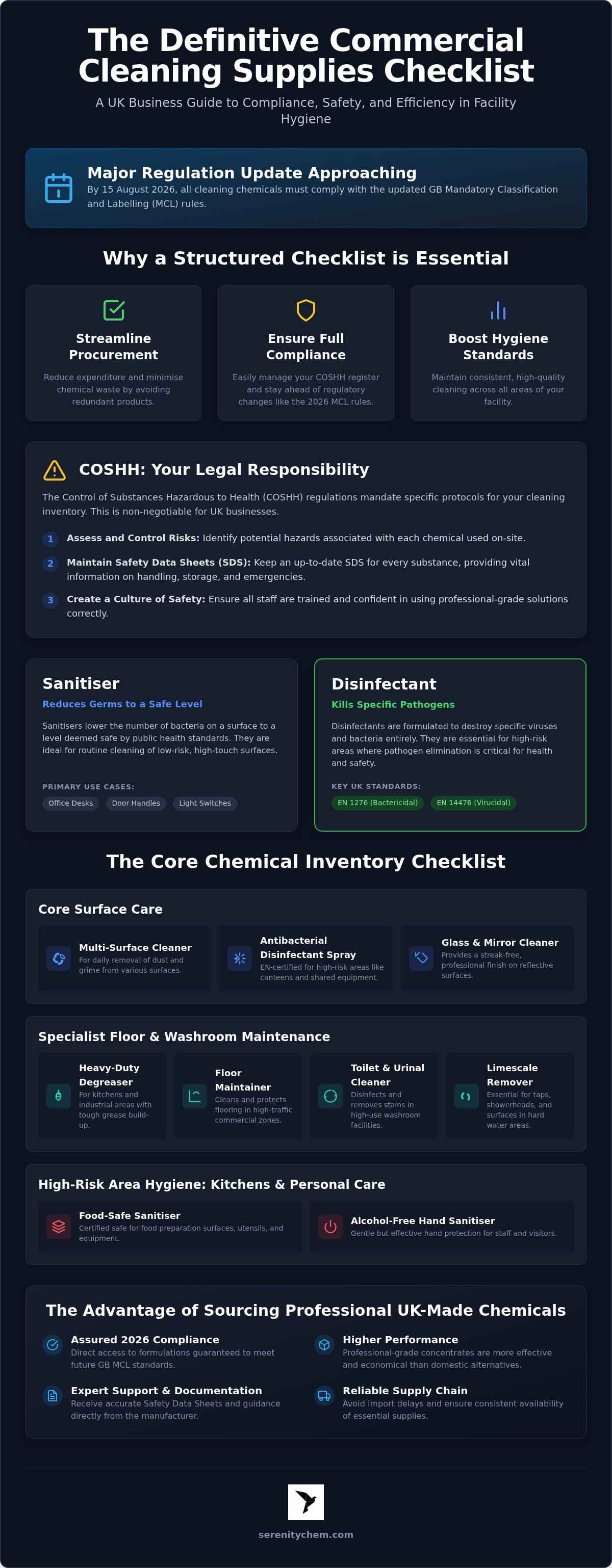
Maintaining a professional facility involves more than just buying products; it's about establishing a system that guarantees safety and efficiency. A well-organised commercial cleaning supplies checklist acts as the backbone of your hygiene strategy. By categorising your inventory, you ensure that every zone of your business, from the reception desk to the staff kitchen, receives the correct level of care. This structured approach prevents the common "cluttered cupboard" syndrome, where businesses waste money on redundant products that often perform the same function. Streamlining your procurement doesn't just reduce expenditure; it minimises chemical waste and ensures your staff always have the right tools for the job.
When you understand the fundamentals of cleaning, it becomes clear that using the correct chemical formulation isn't just about appearance. It's about removing pathogens and protecting surfaces from long-term damage. High-performance, British-made chemicals are designed to work effectively at specific concentrations, providing a level of protection that domestic products simply can't match. Relying on a professional-grade inventory keeps your facility hygienic and reassures both staff and visitors that their well-being is a priority.
The Role of COSHH in Your Cleaning Inventory
Under the Control of Substances Hazardous to Health (COSHH) regulations, UK businesses have a legal duty to assess and control the risks associated with cleaning chemicals. Professional-grade formulations, such as heavy-duty degreasers or concentrated sanitisers, require specific handling, storage, and usage protocols to remain compliant. You must keep an up-to-date Safety Data Sheet (SDS) for every item on your commercial cleaning supplies checklist. These documents provide vital information on chemical properties, potential hazards, and emergency procedures. Organising your inventory according to COSHH standards doesn't just keep you on the right side of the law; it creates a culture of safety where staff feel confident using the solutions provided.
Setting Your Cleaning Frequency and Standards
A comprehensive checklist helps you distinguish between daily maintenance tasks and periodic deep-cleaning requirements. Whilst daily floor mopping and surface wiping are essential, certain areas require more intensive, scheduled intervention. Establishing specific protocols for "high-touch" zones, such as door handles, light switches, and shared equipment, is critical for effective antibacterial protection. By using a standardised list, you prevent "cleaning fatigue" amongst your team. This ensures that less visible areas, which might otherwise be neglected, are consistently maintained to the same high standard as your public-facing spaces.
The Core Chemical Inventory: Surface Sanitisation and Disinfection
The first priority for any facility manager is the daily upkeep of shared spaces. Your commercial cleaning supplies checklist should lead with the solutions that handle the highest volume of work. Multi-surface cleaners are the primary tool for removing dust and grime, whilst specialised antibacterial sprays target the microscopic threats that linger on desks and equipment. To achieve a truly professional finish, glass and mirror cleaners must provide streak-free clarity without leaving a film that attracts more dust. By focusing on high-performance chemicals, you ensure that surfaces don't just look clean but are hygienically safe for every occupant.
Sanitiser vs Disinfectant: Choosing the Right Strength
It's vital to understand that sanitisers and disinfectants serve different purposes. Sanitisers reduce the number of germs on a surface to a level considered safe by public health standards. Disinfectants, however, are formulated to kill specific pathogens entirely. When high-level hygiene is non-negotiable, selecting a high-quality antibacterial surface spray UK businesses trust is essential. You should match the chemical's strength to the risk level. For example, a standard office desk might only need a sanitiser, but a shared canteen table requires a disinfectant tested to EN 1276 or EN 14476 for proven antiviral effectiveness.
Multi-Surface Efficiency for Modern Workplaces
Using a versatile commercial multi surface cleaner simplifies your inventory and reduces the risk of staff using the wrong product on a sensitive material. Modern workplaces feature a mix of laminates, metals, and plastics. A single, high-performance formulation ensures compatibility across all these surfaces without causing degradation or discolouration. This streamlined approach also follows Health and Safety Executive guidance on cleaning, which emphasises the importance of using the right equipment for the environment. By reducing the number of individual bottles, you make staff training more straightforward and procurement more predictable.
For high-traffic areas, hard surface sanitisers provide an extra layer of residual protection that remains active long after the initial wipe. This is particularly useful in corridors and reception areas where footfall is constant. If you're unsure which formulations best suit your specific facility requirements, you can speak with our technical team for expert advice on building a compliant inventory. This ensures every product on your list serves a clear, principled purpose in your maintenance strategy.
Specialist Floor and Washroom Maintenance Checklist
Floors and washrooms often represent the most significant challenge on any commercial cleaning supplies checklist. These areas endure the highest levels of footfall and are subject to stringent hygiene expectations from both staff and visitors. Whilst surface wiping handles the immediate environment, floors and sanitaryware require specialist formulations to prevent the gradual buildup of grime and bacteria. Maintaining these zones isn't just about aesthetics; it's about preserving the integrity of your building's materials and ensuring a safe, slip-free environment for everyone on the premises.
Floor Care Solutions for Every Surface
The variety of flooring in modern UK businesses, ranging from industrial polished concrete in warehouses to high-end carpets in executive suites, demands a targeted approach. When you partner with a dependable commercial floor cleaner supplier, you gain access to formulations designed for specific substrates. For high-traffic retail or office thoroughfares, no-rinse floor cleaners are particularly effective. These solutions reduce the time surfaces remain wet, significantly lowering the risk of slips and trips whilst maintaining a high-gloss finish. For deeper intervention, using a dedicated carpet shampoo in extraction machines ensures that allergens and deep-seated dirt are removed from soft fibres, extending the life of your flooring investment.
Washroom Hygiene and Stain Removal
Washrooms require a methodical approach to prevent cross-contamination and the accumulation of limescale, which is a common issue in many hard-water areas across the UK. A professional commercial cleaning supplies checklist must include a specialist toilet cleaner and descaler. These acidic formulations are essential for breaking down mineral deposits and organic stains that standard cleaners might miss. To maintain a truly hygienic environment, antibacterial sprays should be used on all high-touch points, such as flush handles and cubicle locks. This prevents the spread of pathogens in shared facilities and provides peace of mind to users.
True freshness in a washroom comes from neutralisation rather than masking. Odour neutralisers work by breaking down the molecules that cause unpleasant scents at the source, rather than simply layering an artificial fragrance over the top. This creates a clean, neutral atmosphere that reflects a well-managed facility. Finally, ensuring a consistent supply of alcohol-free hand sanitiser and high-quality soaps at every station is a simple yet vital step in supporting personal hygiene and staff well-being. By keeping these specialised items stocked, you move beyond basic cleaning toward a comprehensive facility protection strategy.
For facilities that provide on-site grooming or shower amenities, choosing eco-friendly options like Reset Razor can further support your sustainability objectives and reduce the environmental impact of your daily operations.
High-Risk Areas: Kitchen Hygiene and Hand Sanitisation
Kitchens and hand hygiene stations are the front line of any facility's defence against illness. A comprehensive commercial cleaning supplies checklist must treat these zones with specific technical rigour. Unlike general office spaces, kitchen environments deal with organic fats, proteins, and the constant risk of cross-contamination. Similarly, hand hygiene is no longer just about availability; it's about providing solutions that staff will actually use without suffering from skin irritation or increasing fire risks. By prioritising these high-risk areas, you protect your workforce and ensure your business remains a safe place to operate.
Ensuring Food Safety Standards
In a professional kitchen, every surface that comes into contact with food must be treated with a certified food safe sanitiser for commercial kitchens. These formulations are specifically designed to kill bacteria like E. coli and Salmonella whilst ensuring no toxic residues remain to taint the food. Efficiency is also a vital factor. Implementing no-rinse sanitisers allows for a faster turnaround between prep tasks, which is essential in high-pressure culinary environments. This methodical approach ensures that hygiene doesn't come at the cost of operational speed.
Beyond the worktops, heavy-duty degreasers are vital for maintaining extractors and cooking equipment. The buildup of carbonised grease isn't just a hygiene failure; it's a significant fire hazard. Regular degreasing keeps your equipment running efficiently and ensures your facility remains compliant with UK fire safety regulations. Including these powerful agents on your commercial cleaning supplies checklist prevents the long-term degradation of expensive catering assets.
The Move Toward Alcohol-Free Hand Hygiene
Traditional ethanol-based gels often lead to "cleaning fatigue" due to their drying effect on the skin. This is why many organisations are switching to alcohol free hand sanitiser UK businesses can rely on for frequent use. These advanced formulations use proprietary biocides that provide a broad spectrum of protection against viruses and bacteria without stripping the skin's natural oils. This encourages better compliance amongst staff, as the product is comfortable to use throughout a full shift.
Safety is another major driver for this shift. Alcohol-free sanitisers are non-flammable, making them the preferred choice for schools, hospitals, and high-risk environments where fire safety is a priority. When paired with antibacterial hand soaps at every sink, these sanitisers create a multi-layered defence system that protects your workforce. If you need help selecting the right kitchen or hand hygiene products for your specific sector, you can contact our specialists for a bespoke consultation on your facility's needs.
Sourcing and Managing Your Professional Supply Chain
Building a robust commercial cleaning supplies checklist is only the first step; the second is ensuring that these essentials are always available and correctly managed. A fragmented supply chain often leads to panic buying at retail prices, which erodes your maintenance budget and leads to inconsistent results. By centralising your procurement, you gain better control over your inventory and ensure that every product meets your facility's specific hygiene and safety standards. For hospitality businesses, working with specialists like Infinity Hotel Supplies can help streamline the acquisition of essential textiles and guest amenities alongside your core cleaning inventory. Efficient management means you're never caught without the tools needed to maintain a professional environment.
Buying Direct from a UK Manufacturer
Selecting a cleaning products manufacturer UK businesses trust offers significant logistical and ethical advantages. When you source directly from Serenity Chemicals Limited, you eliminate the middleman, ensuring consistent formulation quality and more reliable lead times. This direct relationship provides transparency regarding the ethical standards of production and the technical specifications of the chemicals you use. Sourcing British-made chemicals also reduces the carbon footprint associated with international shipping, aligning your hygiene practices with broader corporate sustainability goals and supporting the local economy.
Organising your supply cupboard is a matter of safety as much as operational efficiency. Chemicals should be stored according to their COSHH risk profiles, with the most frequently used items, like Serenity Multi-Surface Cleaner, kept at an accessible height. Setting a fixed replenishment schedule, rather than waiting for a bottle to run dry, prevents emergency stockouts that can compromise your hygiene protocols. A simple "one-in, one-out" system helps maintain steady stock levels without over-ordering, keeping your storage areas tidy and manageable.
Finalising Your 2026 Supplies Checklist
To maintain a high-performance facility, your inventory should be audited quarterly. This ensures you aren't holding expired stock whilst allowing you to adjust orders based on seasonal occupancy changes or new safety requirements. Below is a summary of essential solutions for a complete commercial cleaning supplies checklist:
- General Areas: Serenity Multi-Surface Cleaner, Serenity Glass & Mirror Cleaner.
- Washrooms: Serenity Toilet Cleaner, Serenity Antibacterial Surface Spray.
- Kitchens: Serenity Kitchen Sanitiser, Serenity Heavy Duty Degreaser.
- Floors: Serenity Floor Cleaner, Serenity Carpet Shampoo.
- Hygiene Stations: Serenity Alcohol Free Hand Sanitiser.
Ready to optimise your facility hygiene? Contact Serenity Chemicals Limited for professional supply advice to ensure your 2026 inventory is both compliant and cost-effective. Our team can help you identify the precise formulations required for your sector, ensuring your facility remains a safe and welcoming space for everyone.
Optimising Your Facility for a Safer Future
Maintaining a professional facility in 2026 requires more than just a well-stocked cupboard; it demands a strategic approach to hygiene and compliance. By implementing a structured commercial cleaning supplies checklist, you ensure that your business remains a safe, productive environment whilst meeting the latest UK safety regulations. Integrating specialised zonal cleaning with high-performance chemicals creates a resilient maintenance strategy that can withstand evolving regulatory pressures and occupancy demands.
As a dedicated UK manufacturer, Serenity Chemicals Limited provides a comprehensive range of professional-grade solutions, including our proprietary alcohol-free hand sanitisers and specialised floor care. Our team offers expert guidance on COSHH standards and hygiene best practices to help you build an inventory that is both effective and responsible. Don't leave your facility's safety to chance or unverified products. It's time to elevate your standards with solutions designed for the modern workplace.
Request a professional hygiene consultation from Serenity Chemicals Limited today to refine your supply chain and protect your most valuable assets. We look forward to helping you achieve a higher standard of clean.
Frequently Asked Questions
What are the essential items for a commercial cleaning supplies checklist?
An effective commercial cleaning supplies checklist should include multi-surface cleaners, floor care solutions, and specialised agents like heavy-duty degreasers and toilet descalers. You also need antibacterial sprays and food-safe kitchen sanitisers to meet hygiene standards. Hand hygiene products, such as alcohol-free sanitisers, are equally vital. Having a categorical list ensures you don't miss high-risk zones whilst avoiding redundant purchases that clutter your storage areas.
How do I ensure my cleaning chemicals are COSHH compliant?
You must maintain a formal register of all hazardous substances on your premises and keep up-to-date Safety Data Sheets (SDS) for every product. Ensure all bottles are correctly labelled under the latest GB Mandatory Classification and Labelling rules. Training staff on correct dilution and storage protocols is also a legal requirement. This systematic approach protects your workforce and ensures your facility remains fully compliant with UK health and safety laws.
Is alcohol-free hand sanitiser as effective as alcohol-based versions?
Yes, alcohol-free hand sanitisers are highly effective when tested to standards like EN 1276 and EN 14476. These formulations use advanced biocides to provide broad-spectrum protection against viruses and bacteria without the drying effects of ethanol. They are also non-flammable, making them a safer choice for schools and high-risk environments. Many UK businesses prefer them because they encourage better staff compliance through improved skin comfort.
Can I use the same cleaner for all surfaces in my office?
It isn't advisable to use a single cleaner for every surface because different materials have varied chemical sensitivities. Whilst a high-quality multi-surface cleaner handles many tasks, glass requires residue-free agents to prevent streaking, and floors need specific formulations to manage slip risks. Using the wrong chemical can lead to surface degradation or discolouration. A tailored commercial cleaning supplies checklist helps you match the right product to the specific substrate.
What is the best way to clean commercial kitchen grease?
The most effective way to remove carbonised grease and fats is using a professional-grade heavy-duty degreaser. These alkaline formulations emulsify oils, making them easy to wipe away from extractors, ovens, and preparation surfaces. Regular degreasing is a critical part of your fire safety strategy, as it prevents flammable buildup in ventilation systems. For food preparation areas, always follow up with a food-safe sanitiser to ensure total hygiene.
Why should I buy cleaning chemicals in bulk from a manufacturer?
Buying direct from a UK manufacturer like Serenity Chemicals Limited provides better quality control and more consistent formulations than buying through third-party retailers. You benefit from significant economic savings through bulk pricing whilst reducing the carbon footprint associated with international shipping. Sourcing British-made chemicals also ensures shorter lead times and provides a direct line to technical experts who understand UK compliance and EN standards.
How often should I update my commercial cleaning inventory?
We recommend conducting a thorough audit of your cleaning inventory at least once every quarter. This allows you to check for expired products and adjust your stock levels based on seasonal changes in office occupancy or footfall. It's also an ideal time to ensure your COSHH register and Safety Data Sheets are up to date. Regular reviews prevent emergency stockouts and help you identify opportunities to streamline your procurement process.

Hand Sanitiser for Frequent Use: Professional UK Guide 2026
The very product you use to protect your health might be the primary cause of your skin's deterioration. While alcohol-based ...

Food Safe Antibacterial Spray UK: The Professional 2026 Hygiene Guide
Using the wrong disinfectant in a commercial kitchen isn't just a minor oversight; it's a direct threat to your Food Hygiene ...