

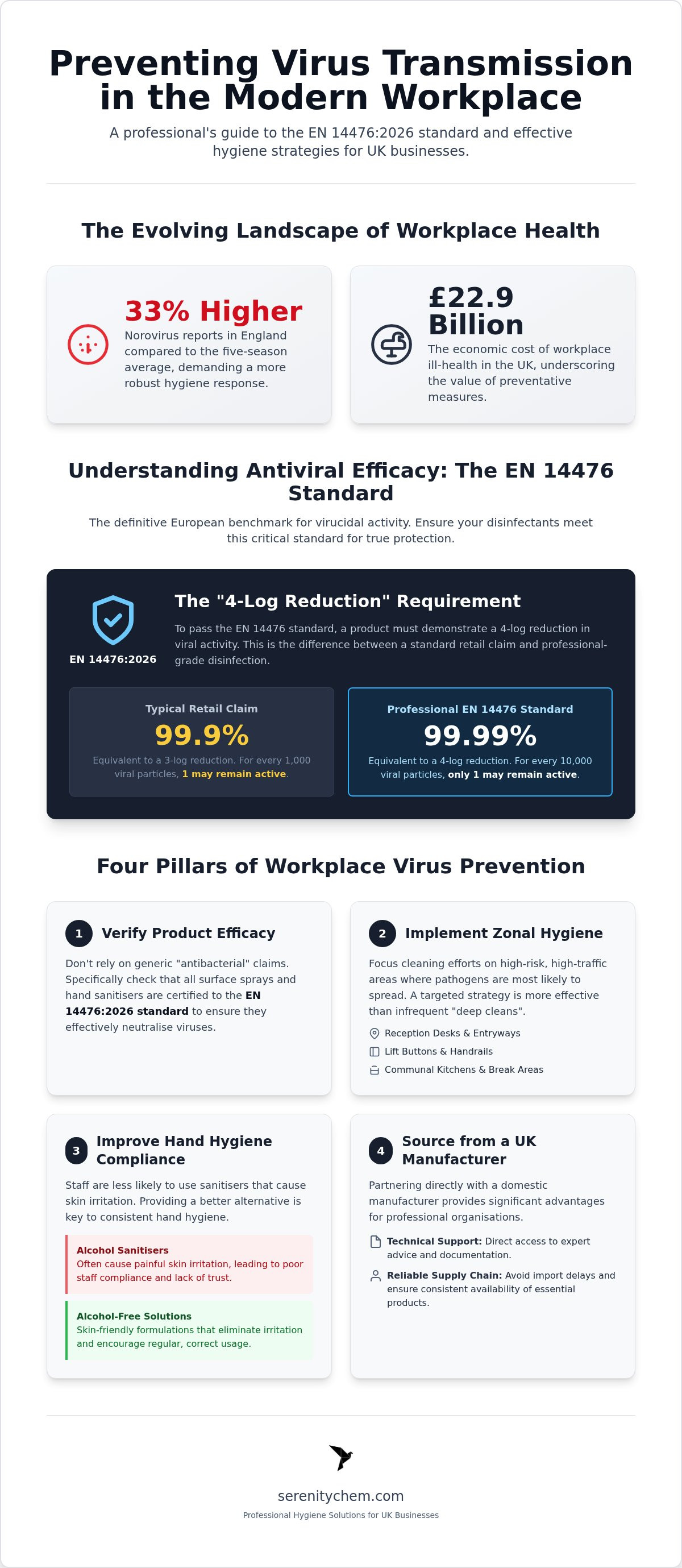
With norovirus reports in England 33% higher than the five-season average by March 2026, the traditional approach to office hygiene is clearly struggling to keep pace. You're likely all too familiar with the disruption caused by seasonal outbreaks, from the logistical headache of staff absenteeism to the rising economic cost of workplace ill-health, which has now reached £22.9 billion in the UK. It's frustrating to manage hygiene protocols when low-quality alcohol sanitisers cause painful skin irritation, leading to poor compliance and a genuine lack of trust in the products provided.
This guide provides the clarity you need for preventing virus transmission in the workplace whilst ensuring your team remains comfortable and protected. We'll explore the updated EN 14476:2026 efficacy standards and explain why modern, alcohol-free formulations are becoming the preferred choice for principled employers. You'll discover how to integrate these evidence-based strategies into your risk assessments to maintain a safe, productive environment that respects both health and skin integrity. By the end of this guide, you'll have a clear roadmap for professional compliance that balances chemical performance with employee well-being.
Key Takeaways
- Verify the virucidal efficacy of your cleaning protocols by ensuring all surface sprays and sanitisers meet the updated EN 14476:2026 standard.
- Implement a targeted zonal hygiene strategy to effectively manage high-risk areas such as reception desks, lift buttons, and communal kitchens.
- Improve staff compliance for preventing virus transmission in the workplace by providing skin-friendly, alcohol-free hand sanitisers that eliminate irritation.
- Secure supply chain reliability and access essential technical support by sourcing professional disinfectants directly from a UK manufacturer.
The Evolving Landscape of Workplace Virus Prevention in 2026
UK businesses have shifted towards a 'Hygiene-First' culture, where health and safety are no longer back-office concerns but central to operational resilience. This evolution moves away from the reactive "deep clean" after an outbreak occurs and focuses on integrated, evidence-based prevention. Seasonal viruses like Flu, Norovirus, and RSV continue to be significant drains on productivity, yet many organisations still rely on outdated cleaning methods. In a professional environment, virus transmission refers to the movement of pathogens via respiratory aerosols suspended in the air and the contact transfer of infectious material from contaminated surfaces, known as fomites, to employees. Effectively preventing virus transmission in the workplace requires a dual focus on both pathways.
The Cost of Poor Hygiene Compliance
The economic impact of workplace ill-health in the UK has reached £22.9 billion, a figure that highlights the critical need for robust infection prevention and control principles. Beyond the raw data of absenteeism, poor hygiene standards damage morale. Employees who see visible, professional hygiene protocols feel valued and safe, which is essential for retention. Hybrid working models have complicated these requirements. With hot-desking and communal hubs becoming the norm, the frequency of surface contact has increased. Traditional weekly cleaning schedules are no longer sufficient; instead, businesses need a continuous approach to preventing virus transmission in the workplace that accounts for high-turnover seating and shared equipment.
Moving Beyond Basic Cleaning
There's a fundamental difference between a surface that looks clean and one that is hygienically safe. Simple detergents are designed to remove organic matter and visible dirt, but they often lack the chemical properties required to neutralise resilient viral pathogens. Relying on basic cleaning alone leaves gaps in your defence, especially during peak norovirus seasons. To achieve true safety, businesses must transition to specialist antiviral solutions. Using a high-quality antibacterial surface spray UK standards recommend ensures that surfaces are not just polished, but decontaminated. Proactive prevention relies on choosing products that offer residual protection, creating an environment where the chain of infection is broken before it can impact your workforce.
Understanding Antiviral Efficacy: The EN 14476 Standard
The European standard EN 14476:2026 is the definitive benchmark for measuring the virucidal activity of chemical disinfectants. For any business serious about preventing virus transmission in the workplace, understanding this certification is non-negotiable. Whilst many products claim to be "antibacterial", this doesn't guarantee they can neutralise viruses like norovirus or influenza. Bacteria and viruses are biologically distinct. A product that excels at killing bacteria might have zero effect on viral pathogens. When you evaluate an antibacterial surface spray UK suppliers offer, ensure it specifically carries the EN 14476 mark to confirm its antiviral properties.
Contact time is another critical factor often overlooked in fast-paced office environments. Professional disinfectants require a specific duration of "wet contact" to effectively inactivate pathogens. If a cleaner is wiped away too quickly, it won't achieve its full efficacy. This is why following UK government guidance on thorough cleaning protocols is essential for maintaining a safe facility. It isn't just about the chemical used; it's about the discipline of the application.
How EN 14476 Testing Works
The methodology behind EN 14476 involves measuring "log reductions" in viral activity. To pass the standard, a product must demonstrate at least a 4-log reduction, which equates to a 99.99% inactivation of the test virus. In a high-risk commercial environment, the common retail claim of "99.9%" is often insufficient. That remaining 0.1% can still represent a significant infectious dose. Independent laboratory testing is the only way to verify these results, ensuring that formulations provide the level of protection required for industrial durability and peace of mind.
Selecting the Right Surface Sanitiser
When reviewing your professional cleaning chemicals list, consider the practicalities of daily application. Residual protection is a significant advantage for high-traffic touchpoints like lift buttons and door handles. This technology leaves a microscopic barrier that continues to work after the initial application, providing an extra layer of security between scheduled cleans. Material compatibility is equally vital. A professional-grade sanitiser should be effective without damaging office assets like treated wood, polished metals, or glass partitions. If you're unsure which formulation suits your specific environment, you can speak with our technical team for tailored advice on preventing virus transmission in the workplace.
Implementing a Zonal Hygiene Strategy for High-Traffic Offices
Blanket cleaning protocols often lead to 'cleaning fatigue', where resources are wasted on low-risk areas whilst critical touchpoints are overlooked. A zonal hygiene strategy prioritises high-traffic 'Hot Zones' where the risk of preventing virus transmission in the workplace is most acute. By identifying reception areas, lift buttons, and door handles as primary vectors, facilities managers can deploy targeted disinfection cycles that respect both staff time and chemical budgets. This structured approach ensures that the most dangerous surfaces receive the highest frequency of care.
Communal food preparation spaces and breakout areas require a specific, uncompromising protocol. These zones are often the site of rapid cross-contamination. Effective management must include the frequent sanitisation of fridge handles, kettle switches, and microwave buttons. Similarly, washroom hygiene must extend far beyond the application of a basic toilet cleaner. Full sanitisation of taps, flush handles, and hand dryer surfaces is essential to break the chain of infection in these high-moisture environments. In hot-desking environments, encouraging personal responsibility is equally vital. Providing employees with the tools to sanitise their own workstations at the start and end of each shift creates a decentralised but highly effective layer of protection.
Zone 1: Entry and High-Frequency Touchpoints
The first line of defence is the building entrance. Positioning hand sanitisation stations at every entry and exit point encourages immediate compliance upon arrival, reducing the volume of pathogens brought into the facility. Communal technology, such as printers, touchscreens, and shared tablets, should be disinfected at least twice daily. For office tea points and dining areas, using a food safe sanitiser for commercial kitchens ensures that surfaces remain hygienically safe without the risk of chemical tainting or irritation.
Zone 2: Communal and Collaborative Spaces
Meeting rooms are high-density zones where aerosols and surface contaminants accumulate quickly. Sanitising tables and shared equipment between sessions is a fundamental step in preventing virus transmission in the workplace. Floor care is an often-neglected aspect of this strategy. Footwear can track pathogens throughout the office, which are then disturbed and potentially inhaled during foot traffic. Partnering with a specialist commercial floor cleaner supplier allows you to source antiviral floor solutions that maintain surface integrity whilst providing a deeper level of protection than standard retail detergents.
Hand Hygiene Compliance: Why Alcohol-Free Solutions are Essential
The most sophisticated facility plan will fail if the people within it don't participate. This is known as the 'Compliance Gap', a phenomenon where staff stop using provided hygiene products because they find them unpleasant or painful. High-alcohol sanitisers are notorious for stripping natural oils from the skin, leading to discomfort that discourages frequent use. When employees avoid sanitising, the chain of preventing virus transmission in the workplace is broken. Transitioning to an alcohol free hand sanitiser UK organisations can rely on removes this barrier by providing a product that feels like a premium skincare solution rather than a harsh chemical treatment.
Common myths suggest that alcohol is the only effective way to neutralise pathogens, but modern chemical engineering has surpassed this limitation. Advanced alcohol-free formulas are rigorously tested to meet the same EN 14476 standards as their traditional counterparts, proving they are just as effective against enveloped viruses. Beyond efficacy, there are significant logistical advantages. Alcohol-free supplies are non-flammable, meaning they don't require the specialised fire-safe storage or hazardous goods handling that high-volume alcohol stocks demand. This makes them a safer and more practical choice for large-scale office environments and industrial sites alike.
Dermatological Health and Workplace Safety
Dermatological integrity is a vital component of infection control. When alcohol use leads to dry, cracked skin, it creates microscopic fissures that can actually increase the risk of infection by providing a direct entry point for pathogens. An inclusive workplace must consider staff with sensitive skin or existing conditions like eczema. By offering non-drying, fragrance-free options, you ensure that every team member can protect themselves without physical penalty. A better user experience, characterised by a lack of sticky residue, naturally promotes the high-frequency behaviour needed for preventing virus transmission in the workplace.
Choosing the Right Dispensing Systems
The method of delivery is just as important as the liquid itself. Wall-mounted dispensers in high-traffic corridors drive higher engagement through visibility, whilst portable bottles are essential for individual desks and meeting rooms. To manage costs and support sustainability goals, businesses should look for bulk-buying refill options. This reduces plastic waste and ensures a steady supply of essential hygiene products. Finally, the hardware must be backed by education. Training staff on the 'WHO Hand Rub Technique' ensures that the sanitiser reaches every part of the hand, including the fingertips and thumbs, for maximum efficacy. If you're ready to upgrade your facility's hygiene infrastructure, contact our specialists for a bespoke supply plan.
Sourcing Professional Disinfectants Direct from a UK Manufacturer
Buying direct from a cleaning products manufacturer UK organisations can hold accountable is a strategic decision for long-term safety. It ensures that every batch of sanitiser or surface spray meets the rigorous EN 14476:2026 standards discussed throughout this guide. When you source directly, you gain a transparent view of the chemical formulations used in your facility. This level of oversight is fundamental to preventing virus transmission in the workplace, as it guarantees that the products you deploy are exactly as specified on their technical data sheets. Beyond quality, direct sourcing provides business buyers with essential COSHH (Control of Substances Hazardous to Health) documentation and direct technical support, ensuring that your hygiene protocols are both compliant and effective.
Supply Chain Reliability and Bulk Sourcing
The risks of relying on imported hygiene products became painfully clear during previous global disruptions. By partnering with a UK-based chemical blender, you secure your supply chain against international logistics failures. For multi-site organisations, wholesale procurement offers significant cost-efficiencies without compromising on chemical grade. This direct relationship also allows for a customised hygiene kit tailored to your specific environment. Whether your facility requires heavy-duty degreasers for industrial zones or gentle hand foams for executive suites, a manufacturer can provide a cohesive range of products that work together to maintain a virus-free environment.
The Role of Technical Expertise
Retail products are often designed for domestic use and frequently fail to stand up to the rigours of a high-traffic commercial setting. Professional environments require chemicals with industrial durability and specific application methods to be truly effective. Accessing expert advice on chemical dilution and application is a major benefit of the manufacturer-direct model. Serenity Chemicals supports UK businesses by providing high-efficacy, principled hygiene solutions that prioritise both performance and user safety. Our commitment is to offer a dependable authority in the field, helping you make informed decisions that protect your workforce. By choosing ethical and sustainable chemical sourcing, you contribute to a responsible supply chain whilst preventing virus transmission in the workplace with quiet confidence.
Future-Proofing Your Facility Hygiene
Effective hygiene isn't just about the chemicals you use; it's about creating a culture where safety and comfort coexist. By aligning your protocols with the latest EN 14476:2026 standards and adopting a targeted zonal strategy, you can significantly reduce the impact of seasonal outbreaks. Prioritising employee well-being through skin-friendly, alcohol-free solutions is the most reliable way of preventing virus transmission in the workplace whilst maintaining high daily compliance.
Serenity Chemicals has been trusted by UK businesses since 2020 to provide high-performance, ethical hygiene solutions. As a dedicated manufacturer of EN 14476 certified sanitisers, we specialise in alcohol-free formulas that protect sensitive skin without compromising on efficacy. We're here to help you navigate the technical complexities of professional disinfection with principled expertise and dependable support. Secure your workplace with Serenity's professional antiviral range today. Your team's health is your business's greatest asset, and we're ready to help you protect it.
Frequently Asked Questions
What is the most effective way to prevent virus transmission in an office?
The most effective method is a multi-layered strategy that combines high-frequency hand hygiene with the targeted disinfection of shared surfaces. Focus on 'Hot Zones' like door handles and communal kitchens whilst ensuring staff use EN 14476 certified products. This approach breaks the chain of infection at multiple points. It's essential to move beyond basic cleaning to proactive, evidence-based prevention that respects both chemical efficacy and employee comfort.
Is alcohol-free hand sanitiser effective against viruses like COVID-19 and flu?
Yes, advanced alcohol-free hand sanitisers are highly effective against enveloped viruses, including COVID-19 and influenza, provided they meet the EN 14476 standard. These modern formulations work by disrupting the viral envelope, inactivating the pathogen without the skin-stripping side effects of traditional alcohol. They're particularly useful for preventing virus transmission in the workplace because they encourage higher compliance amongst staff who find alcohol-based products irritating or drying for frequent daily use.
What does the EN 14476 standard mean for cleaning products?
EN 14476 is the specific European benchmark that verifies a chemical product's virucidal activity. For a sanitiser to carry this certification, it must undergo rigorous independent laboratory testing to prove it can achieve a 4-log reduction in viral pathogens. This means it inactivates 99.99% of the tested viruses. Business owners should prioritise this standard over generic antibacterial claims to ensure their facility is genuinely protected against resilient viral outbreaks.
How often should high-traffic surfaces be disinfected in a workplace?
High-traffic surfaces should be disinfected at least twice daily, although communal touchpoints like lift buttons and reception desks benefit from more frequent attention during peak hours. Implementing a zonal hygiene strategy allows you to allocate resources where they're needed most. Surfaces in shared kitchens or breakout areas should be cleaned after every high-use period. Using products with residual protection can also provide a continuous barrier between these scheduled disinfection cycles.
Can antibacterial sprays also kill viruses on office surfaces?
Not all antibacterial sprays are capable of killing viruses, as bacteria and viruses require different chemical mechanisms to neutralise. Whilst many retail products focus solely on bacteria, professional-grade solutions like Serenity Antibacterial Surface Spray are formulated to meet antiviral standards too. Always check the product label for EN 14476 certification. Relying on a product that isn't specifically tested against viruses can lead to a false sense of security in your hygiene protocol.
What are the common mistakes businesses make with workplace hygiene?
A common mistake is adopting a reactive approach, only increasing cleaning efforts after an outbreak has already occurred. Other errors include ignoring the required chemical contact time or choosing harsh products that cause skin irritation. When staff experience discomfort, compliance drops significantly. Businesses also frequently overlook floor hygiene and communal technology, which act as significant vectors for preventing virus transmission in the workplace if left untreated by professional-grade disinfectants.
How can I improve employee compliance with hand hygiene protocols?
Improving compliance starts with providing products that are gentle on the skin, such as Serenity Alcohol Free Hand Sanitiser. Staff are much more likely to use a foam that is non-drying and fragrance-free. You should also ensure that sanitisation stations are highly visible and conveniently located at every entry point and communal hub. Clear signage and brief training on effective hand-rub techniques further reinforce these habits without feeling like an unnecessary imposition.
Is it better to buy cleaning chemicals in bulk or smaller quantities?
Buying in bulk from a UK manufacturer is generally better for commercial environments as it ensures supply chain reliability and significant cost-efficiencies. Wholesale procurement allows for a consistent hygiene standard across multiple sites and reduces plastic waste through the use of refills. It also ensures you have a steady stock of essential supplies, preventing the need for emergency retail purchases that may not meet the professional EN 14476 standards required.

How to Prevent Cross-Contamination in a Commercial Kitchen: A Professional Guide
A single lapse in hygiene isn't just a mistake; it's a direct threat to your business's survival and your customers' health. ...

Developing a Robust Workplace Hand Hygiene Policy in the UK: A 2026 Guide
In 2025, minor illnesses and infectious diseases accounted for nearly half of the 148.8 million working days lost across the ...